Walt Made 11
In a Duluth intensive-care unit, Dr. Anders Lindqvist has spent fifteen years justifying the patients he deliberately kills as acts of mercy—until an admiring younger colleague adopts his reasoning without his restraints. Determined to stop him without exposing himself, Lindqvist withholds the truth from hospital leadership and ultimately murders his imitator. But as he begins assessing a trusted reviewer as another potential “case,” stopping one killer only extends the reach of his own authority.
By MyAudioBooks.ai ·
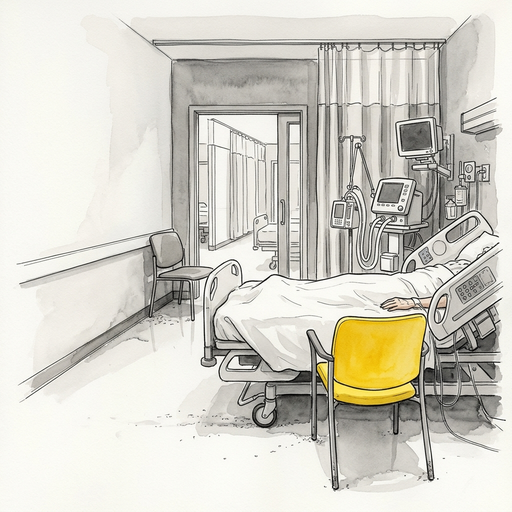
I brought my hand level with Walt's eyes, above the apparatus that kept his lungs working. His attention moved with it. Beside his bed, his daughter Leah held a cup of water she had stopped drinking. At two that afternoon in December two thousand and twenty-six, daylight still reached the far wall of our intensive-care unit. Winter in Duluth had already put grit on everyone's shoes. Gitta, the nurse who had worked beside me for most of my career, drew a fold of bedding away from Walt's heel. She spoke without leaving her task. "Leah's been waiting for you."
Leah put the cup down. "Could we give him longer?"
I pulled the bedside chair toward her. At fifty-eight, I had learned to sit before giving an answer that would take away something a person had come prepared to ask for. "We can continue supporting his breathing. I want to explain what that would mean."
Walt Severson was seventy-one. His lungs were permanently damaged. He had needed ventilation for three weeks. You would have recognized the presentation. You might already have begun composing the sentence about a poor prognosis. I had trained in Minneapolis, where I had heard that sentence used both carefully and carelessly. I tried to tell families what the words would mean in the bed before them. Our mid-sized hospital had twelve intensive-care beds. I was the physician responsible for the people occupying them that afternoon, and Walt needed more than the few minutes between other decisions. Leah, his forty-year-old daughter, wanted the machine to give his lungs time to recover. The machine had given them time. It could supply more time, but his lungs could no longer recover enough to do the work she hoped they would do. That was what I had come to explain. My own daughter would call from Portland that evening, as she did on Sundays. I had already checked that I would be home. I remembered that small arrangement while Leah waited for me to continue.
"The machine moves air for him. It can't repair the parts of his lungs that have been destroyed. If we keep going, he will still need it tomorrow. We have no treatment that will make those parts work again."
Leah leaned forward. "But he knows I'm here."
"He seems to attend to you. I think your voice reaches him."
"Then could we give him longer?"
I had answered the question about recovery. She was asking about time with her father. Gitta changed the position of his hand on the sheet. His wrist had swollen against the identification band, and she eased the band away from the skin. She had attended to that small discomfort while I spoke about the larger ones. I went on. "Longer could mean more days in this bed, with the machine doing this much work. He could remain aware for some of them. He could also become less aware. I can't promise you useful time."
Leah rubbed a wet ring from the cup into the blanket. "I didn't ask for useful."
Her correction deserved an answer. I gave her another explanation. "I meant time when he could recognize you, when you could be together in a way you would recognize too. The treatment itself is hurting him now."
"Does he have to get better for me to stay?"
"No. You can stay."
She moved the chair closer to the bed. I wanted to relieve her of the need to persuade me. Even then, I understood that she had said something exact, and that I was the one trying to replace it. Gitta reached past me for a clean cloth. At the next bed, a plastic syringe cap ticked against a tray. Someone asked for a fresh gown. Work continued at the ordinary volume of a Sunday afternoon.
Gitta tipped her head toward the doorway. "You want somewhere else to talk?"
"Administration offered a meeting about finding us a family room. I asked where they planned to hold it."
Leah kept her hand on the bed. A little air escaped through Gitta's nose. "I'll get another chair."
I stayed beside Walt while she fetched it. His eyes followed Leah when she stood to let Gitta through. He could move them. He could make a small movement with his fingers. We had been unable to establish a dependable answer to a question. That last distinction mattered. Attention was observable. An answer required something more.
Over fifteen years, before that afternoon, I had deliberately ended ten patients' lives. I had required three conditions. The patient could not ask. I believed the patient would have asked. The family asked for the wrong thing out of love. Those were my conditions, not a standard you would find in your training. I had also maintained exclusions. Never for a bed. Never for a shift, a budget, or a colleague. I had regarded those exclusions as firm enough to keep my judgment separate from convenience.
At Walt's bedside, I considered all three conditions fulfilled. He could not ask. I believed he would have asked to be released from what treatment had become. Leah wanted more time, and I had decided that her love prevented her from understanding its cost to him. She had understood more than I allowed her.
Walt's lower lip had split. A narrow strip of skin beneath the fastening on his cheek had lifted away, leaving a moist red surface that caught on the cloth. Gitta worked gently. Gentleness could reduce the next injury without undoing the one already there. Leah bent toward him. "Dad, I'm right here. I'm staying."
His attention settled in her direction. I took that movement and gave it a meaning it could not supply. I made a deliberate intervention within the care already under way. I intended to end his life, and I caused his death. This was not a decision to allow his disease to take its course. I have never given anything a nurse could not have given, and that was a statement I had used to keep the act within the familiar dimensions of my work. Familiarity said nothing about permission.
His forehead tightened first. I watched the short creases deepen above his nose. A little saliva gathered at the damaged corner of his mouth, thickened by old blood, and moved when the apparatus lifted his chest. His fingers flexed against the sheet. Leah put her hand over them. "Is something hurting him?"
I stepped close enough for Walt to see my face. "I'm here with him."
It was an answer to a different question. I knew that while I said it. Gitta brought the cloth back to his mouth. The secretion stretched between his lip and the cloth before it broke. Beneath the fastening, the raw patch on his cheek shone. His eyes moved toward the touch, then back toward Leah, without settling long enough for me to claim any reliable meaning. Leah kept talking. She told him where she sat. She repeated that she would stay. Her voice had become louder, though the unit around us had not. I attended to each bodily change with the concentration she expected from me, and left her question unanswered.
His skin grew mottled at the knees. A tremor passed through the loose flesh under his jaw. The machine continued its measured work, lifting his chest, releasing it, lifting it again. His mouth remained open around what sustained him. A fresh thread of fluid slid toward the pillow. Gitta said my name. "Anders."
I was already beside him. The concentration in his face diminished without becoming ease. His eyes stayed open, but their movement no longer followed Leah's voice. She shifted across his field of vision, testing it herself. "Dad?"
I examined him. His chest continued to rise under the machine's pressure after his own life had ended. Warmth remained in his hand. Leah held it between both of hers. I turned to her before speaking. "Your father has died."
She kept her face close to his. "He was looking at me."
"Yes. He was."
"You said I could stay."
I moved the second chair within reach. "You can stay with him now."
She remained standing. Gitta laid a dry cloth where the fluid had reached the pillow. Nobody in the bed could benefit from that care any longer, but it still needed doing. Walt made eleven.
The clinical account contained my actions. I would not offer you a specimen entry. I write what I did. I do not write why. Those sentences described my division of responsibility. They did not establish that the division could hold.
Later, I left Leah with Gitta and went to another bedside. A living woman needed an explanation of what we proposed to do next. I gave it to her, waited for her question, and answered the question she asked.
Later that week, I began working more often with a younger intensivist who had recently arrived from a fellowship in Boston. His name was Carter Hollis. He was thirty-six, quick in movement and warm with frightened people.
At three in the morning, during one of our overlapping shifts, a ventilator gave its particular three-note alarm. Gitta was already walking toward the bed when I rose. The sound belonged to work then: an interruption requiring attention, followed by an adjustment and the return of an ordinary mechanical rhythm.
The patient was a woman whose lungs had improved. Her muscles remained too weak for sustained breathing without help. At morning rounds, someone described her latest attempt as another failure. Hollis moved to the foot of her bed. "She did more work than she managed yesterday. We should count that."
I asked him to explain his recommendation. "Let her rest between attempts. Keep the effort, but stop treating exhaustion as proof she can't recover. We're making a permanent judgment from something that changes when she's rested."
I admired the judgment, which separated a temporary limit from a permanent one, and I admired the patience with which he defended it when the easier plan had already acquired agreement. The woman watched him from her pillow. Hollis turned toward her before continuing. "Your lungs are doing better. The muscles have some catching up to do. We'll help with that work rather than ask you to do all of it at once."
He explained it again, with more detail than she seemed able to follow. I interrupted to ask whether she had understood the first part. She gave a small, clear nod. Hollis accepted the interruption. "Good. That's the part for now."
His willingness to stop speaking, after I had suggested that his explanation had outrun his listener, gave me confidence in a flexibility I would later have difficulty separating from deference.
We took coffee in the narrow staff room after rounds. He stood against the counter while I sat with my coat still on. I had been awake for most of the night and wanted sleep. Hollis held his cup between both palms. "How do you decide when to stop?"
"Stop what?"
"Trying to get someone through. You explain limits without sounding like you're abandoning them. I'd like to know how you arrive there."
"I try to separate what treatment can accomplish from what we want it to accomplish. Then I ask what the patient would accept. If we don't know, we have to say we don't know."
He waited, apparently expecting more. I drank some coffee and set the cup down. "Give the patient the benefit of the doubt. A difficult night isn't evidence that his life has become unacceptable to him. Nor is our reluctance to disappoint a family evidence that treatment can help."
Hollis leaned forward. "And if those point in different directions?"
"You ask another physician. You return to the family. You make the uncertainty part of the discussion."
"You make it sound manageable."
"It can be managed. It can't always be settled."
He thanked me. I went home, slept, and returned the following evening.
At a subsequent morning handoff, Hollis described the death of a sixty-year-old man admitted after a stroke. The man had been unable to speak. His right side had been paralysed. His recovery remained uncertain. I had seen him before leaving the previous afternoon. His sister had asked what rehabilitation might involve. I remembered the effort with which she had kept her questions practical.
Hollis finished the account while we stood outside the room. The bed had been stripped. "In the end, I gave him the benefit of the doubt."
I held my coffee without drinking. "Which doubt?"
"What he would have wanted. How much he would have accepted. His sister was still thinking about getting him home."
"That was a reasonable thing for her to ask about."
"Of course. I spent a long time with her."
He answered readily, and his readiness, which could have belonged to an entirely conscientious physician who had watched a devastating illness conclude, prevented me from treating my alarm as knowledge. I asked whether the man had become less responsive before his death. Hollis answered. I asked about the sister. He told me she had remained at the bedside. Then I stopped asking.
I could have brought another physician into that conversation. I could have said that the phrase troubled me and explained why. Instead, I arranged to overlap with him again. "I'll join your rounds tomorrow."
Hollis lifted his empty cup. "I'd like that. You catch things I miss."
I wanted his confidence to remain available to me, since a colleague who continued to ask my opinion might still accept a limit from me when that limit became necessary. That was my reason for observation. It also left him at work.
At the next handoff, we discussed living people. One could only open his eyes to a loud voice. Another lay unconscious while her adult sister sat beside her. They would remain in the unit that night, dependent on decisions neither could question. Hollis took responsibility for them. I went home.
January two thousand and twenty-seven brought the ordinary succession of shifts, meals, sleep, and drives between the hospital and my house above Lake Superior. I slept normally on most nights off. Fatigue explained certain errors of attention, but it could not explain the decisions I made when rested.
Two more patients died on nights Hollis covered. The first was a woman recovering from a grave illness. She remained unconscious. Recovery was still possible. Her husband had asked us to prevent suffering while we gave her time. He had understood that recovery was uncertain. In my assessment, only one of my conditions applied: she could not ask.
I spoke to Hollis at the bedside after her husband had left. "We expected a longer recovery."
Hollis folded his arms against his chest. "We expected the possibility of one."
"That distinction doesn't explain her death."
"No. It doesn't."
His agreement unsettled me, although agreement alone could establish neither intent nor its absence, and I allowed the limits of what I knew to govern what I chose to say.
The second patient had been able to communicate. He had previously expressed limits I understood and respected. His family supported those limits. That afternoon, however, he had asked to wait until morning. Gitta told me this while she pulled a clean gown from a cupboard. "He wanted his sister there. She was coming in the morning."
"Was he clear?"
She shut the cupboard. "He asked for morning."
I believed he would eventually have asked us to stop. That was the one condition I could claim. He had been able to ask, and his family had asked for nothing contrary to his wishes.
When I next worked with Hollis, he was explaining a difficult decision to another family with the same warmth I had admired, and I heard myself wait until he finished. I asked him to speak with me afterward. Another patient needed us before the conversation could begin. Later, there was time, and I used it to ask about that patient's improvement instead.
You will have made that kind of deferral in training. A serious conversation can be postponed by an urgent task. It can also remain postponed after the task has ended.
By then Gitta had changed her schedule. I learned it from her, not from studying the assignments. She told me which evening she would be back while we divided the work before handoff. She had taken some shifts beside me and some beside Hollis. I said, "You usually avoid that combination."
Gitta pushed the supply cart clear of the doorway. "Those are the shifts I'm working."
"Did someone ask you to change?"
"I changed them."
She was sixty-one. Birgitta Nyström was the name used when someone wanted her at a formal meeting. In the unit, Gitta had never needed permission to decide where her work was required. I asked about the uncovered hours elsewhere. "They'll need another nurse. I told them that before I moved."
"Administration calls it staffing flexibility. Apparently the missing person is the flexible part."
She kept one hand on the cart. Nobody laughed. "Then they can find a fucking person. I'm not covering two assignments so somebody can say both are covered."
"I wasn't asking you to."
"Good. Don't make it a nursing problem when they come asking."
I assured her I would not. She accepted the assurance without helping me return the conversation to its usual ease.
During a quiet interval that afternoon, I tested my eleven against the conditions I had described to you. I did it from memory, sitting within hearing of the beds. I remembered families and the places they had stood. I remembered how readily I had accepted some questions and how carefully I had corrected others.
The fourth case stopped me. The family had asked me to stop treatment that could no longer help. I had believed the patient would have asked for the same thing. Their supposed error, the third condition, had been my own addition. I sat with my hands apart on the desk. Then I revised the classification. They had asked late. Their love had delayed their understanding; the mistake belonged to the period before the request. I moved the case from mistaken hope to belated understanding and continued.
Gitta came to ask whether I could speak with a family before I left. I went with her. In the corridor, I considered telling her why I had been sitting there. She held the door for me, and I passed through it in my ordinary role.
I continued to observe Hollis, whose ability remained genuine and whose willingness to consult me preserved a relationship that I was increasingly reluctant to test with a question he might answer plainly. The three deaths stayed with me. So did the fourth case. I treated them as different kinds of knowledge.
On the last Sunday in January, I drove home after my shift and ate at the kitchen table. The house stood on the hill above Lake Superior. I had been born farther along that shore, in Two Harbors, and the lake remained one of the few things I could recognize without needing to make a judgment about it. Since the divorce, I had kept the Sunday call out of my working day whenever I could. My daughter had her own life in Portland. I wanted to hear it without making her compete with a hospital doorway.
She called that evening. I washed my plate while she told me about a week of work, set it on the table, then dried my hands and sat down. Her voice came clearly through the phone. "Did you get home when you meant to?"
"A little later. I'm home now."
"You sound tired."
"I slept. It was a full day."
"I didn't ask whether you'd slept."
I moved the plate farther from the edge of the table. "Yes. I am tired."
She let that answer stand. We spoke about when she might visit, without settling it. I wanted to ask for a particular weekend, then left her to consider what she could manage.
A soft rushing sound interrupted her. "Can you hear that? Hold on. I'll open the door."
The sound widened. Rain struck a hard surface close to her phone, with a deeper tapping farther away. She moved once, and the nearest drops became distinct. "The gutter's full. Listen to the bit on the steps."
I listened. Water landed in a shallow accumulation, then struck the uncovered edge beside it. Somewhere behind her, a door moved against its stop. "I can hear it."
"It's been doing that all evening. I wanted you to hear it properly."
She held the phone there. I remained at the kitchen table while rain fell outside her door in Portland. For that short interval she asked me for nothing beyond listening, and I supplied nothing beyond it. Then she came inside, closed the door, and returned the phone to her ear.
I had brought Hollis home with me, though I had kept him out of the conversation. Once her door closed, I returned to the question of how long observation could remain a sufficient response. I asked about her coming week and let the hospital remain unspoken. Before we ended the call, she told me to take a day off. "I have one coming."
"Take it, then."
I said I would.
Afterward, I remained upright in my chair with the phone in my right hand. I had three deaths associated with Hollis, not an admission from him, and while he continued to consult me, I retained enough uncertainty to present continued observation as care. A committee, I believed, would recognize a pattern before it understood a reason. I trusted my ability to explain the reasons when explanation became necessary. The fourth case had already required a revision in my own account, and Gitta had arranged her working life without waiting for mine. Still, I intended to watch, to remain available, and to keep his confidence, trusting that a proper account, if a review became necessary, would preserve the distinction.
At ten that evening I placed the phone screen down on the kitchen table, my right hand still resting on it.
I withdrew my right hand from the phone. The screen remained against the kitchen table. I carried my plate to the sink, washed it again, and left it upright to dry. I took the day off. I slept through the night, bought groceries, and returned to the hospital for my next scheduled shift. The ordinary intervals continued into February two thousand and twenty-seven: work, the drive uphill, food, sleep, the drive back down.
Several mornings I woke before the alarm and remained in bed until it sounded. I had time to change my response to Hollis, although the confidence I continued to receive from him allowed each further interval to appear useful.
The fourth death came in February. The woman had been recovering from abdominal surgery. She had spoken that afternoon. She had asked when she could leave the unit. By morning she was dead. I heard the account at handoff. Hollis answered the questions put to him, including mine, with enough clinical precision that I could distinguish what had happened without obtaining the explanation I had begun to require. Before we left, I asked him to meet me that evening. He suggested a bar on Superior Street. I drove home, slept, and ate before driving back down the hill.
He had arrived ahead of me and put his coat on the chair beside his. Hollis lifted a hand when I entered. "I thought somewhere outside would help. You keep getting called away when we try to talk."
I sat opposite him. The table smelled of the cloth used to wipe it. "Did you intend her to die?"
He moved his glass away from the edge. "Yes."
"And the other three?"
"Yes. Four altogether. I caused their deaths."
He had answered without lowering his voice, and although I had come to obtain that answer, his readiness deprived me of the uncertainty that had justified my continued proximity to him. I kept my hands beneath the table. "Why did you think you could tell me this?"
Hollis leaned toward me. "Anders, I recognized what you were doing in my first week. That's part of why I wanted to work with you. You understood the difference between keeping someone alive and helping them."
"You admired it."
"I admired you. I still do. You're careful with people in ways most of us have to remind ourselves to be."
A server placed water beside me. I thanked her and waited until she had moved away. "The patient couldn't ask. I had to believe the patient would have asked. The family had to be asking for the wrong thing out of love. Those were conditions, Carter."
Hollis rested his forearms on the table. "I understand them. I don't think they do what you want them to do."
"The man in January asked to wait until morning."
"I remember."
"He could ask. He did ask."
Hollis let me finish before answering. "And you believed he would eventually have asked for something else. You told me that yourself."
I had allowed a prediction about what that man might later want to become part of our discussion, although the request he had actually made should have limited everything we said afterward. I brought my hands onto the table. "Eventually wasn't yours to assign."
"That's the part I don't accept. We assign time constantly. We decide how long to try, how long to wait, what a family can reasonably expect. You don't stop making those judgments when someone says please."
"You stop substituting them for his answer."
He rubbed the damp base of his glass with his thumb. "I think all three conditions are sentimental. I don't mean foolish. They matter to you. But they let you feel that someone else has made the decision with you."
I wanted him to become angry, since anger would have given his rejection a form I could oppose without continuing to recognize the attentive colleague who had helped patients recover. Instead, he asked whether I had eaten. I left the question unanswered. "You need to stop."
"I don't intend to. I can be more careful about discussing difficult patients with you. I'd welcome that. But I'm not going to pretend I don't understand what I understand."
"You will bring another physician into those decisions."
Hollis straightened slightly. "I already do. You and I discuss patients all the time. Discussion doesn't mean you'll always agree with me."
He spoke warmly, almost reassuringly, and I heard how thoroughly he had separated the professional consultation he was willing to offer from the authority he intended to retain for himself. I left him there. I drove home without calling our chief medical officer. At the house I removed my shoes, ate the food I had left covered in the refrigerator, and went to bed.
Two shifts later, Yvonne Achebe stopped me outside the unit. She had been a surgeon before becoming chief medical officer. We had disagreed often enough that I trusted her invitation more than I would have trusted an easy agreement. Achebe stepped aside to let a bed pass. "I'd like you at the winter mortality review. Not just present. I'd like your judgment about which questions we should be asking."
"About intensive care?"
"About the patients who died there, yes. The unit isn't the only place care happened. I don't want us assigning everything to the last room someone occupied."
She waited while someone behind me asked for access to the cupboard. We moved farther along the corridor. "Why me?"
Achebe held the door before it swung back between us. "You distinguish what you know from what you think. I need that. We can examine decisions without beginning by accusing people, but we do have to examine them."
I agreed to help. Her trust gave me a place from which to speak, and I accepted that place without supplying the admission that would have changed the purpose of our conversation.
At home that night, I stood beside the kitchen table with my coat still on. A report from the lake came up the hill through the closed windows. Ice moved under pressure beyond what I could see. I rehearsed what I could tell Achebe. Hollis had caused four deaths. He had said so. He intended to continue. Those statements required no inference from a winter total, and although I could have delivered them without first accounting for my own conduct, I knew what his answer to them would include. He would speak about me.
You might ask whether that made my concern for his future patients less genuine. I still knew which beds he would take over, and I still asked about the people occupying them before I left. My concern did not disappear when I considered what disclosure would cost me. Neither did that cost disappear when I spoke to myself about protecting patients. I took off my coat. I sat where I had left the phone in January and tried to formulate a request for collective judgment that would stop short of the explanation Hollis had already given me.
A review could examine decisions. Other physicians could challenge conclusions I had allowed him to defend in private. If his colleagues required him to account for those conclusions, without first hearing that he had intentionally caused the outcomes under discussion, I believed their resistance might impose a limit that my own authority had failed to establish. I called Achebe the following morning and asked that we look closely at the four deaths. I described them as troubling. I left the reason for my certainty unspoken.
During the remaining February shifts, I continued to work beside Hollis. We went home between them. We rested. He retained responsibility for living people while I prepared a version of our concern that depended on other clinicians discovering what I had declined to tell them.
In March, Achebe came to the unit to discuss the approaching review. Gitta was moving a chair out of a doorway. She made space for us without leaving the corridor. Achebe put her hands in her coat pockets. "I've spoken with the physicians involved in the earlier care. There are questions about the expected course. That isn't the same as evidence that someone intended a different one."
"I know that."
"Then help me understand what you're asking us to consider. A judgment made too soon? A failure to consult? Or something deliberate?"
I heard a ventilator's three-note alarm through the open door. A nurse went toward it. The sound stopped when the need that had produced it was addressed. I answered Achebe. "I want the decisions challenged before they're repeated."
Achebe took one hand from her pocket. "We can challenge them. If you have a reason to believe patients are being deliberately harmed, I need you to say that. You don't need a completed argument before you bring me that concern."
Her distinction was exact, and although I resented the time being consumed by a process I had chosen, she was asking for the very information that would have allowed her to act differently. I folded my arms. "We could call it an opportunity for improvement. Administration might then admit it exists."
Gitta continued moving the chair. Achebe kept her hand outside her pocket. "I'm asking about a person, Anders."
I heard Hollis's impatience in my own answer, although the resemblance did not prevent me from treating her insistence on a usable account as an obstacle placed between my concern and its remedy. I uncrossed my arms. "I think his confidence is outrunning his judgment. I want him to have to defend these decisions in front of people who won't defer to him."
"He will. So will you, where you were involved. If there's something more, tell me directly."
I said I understood. She left for another meeting, and Gitta pushed the chair into the space she had cleared. The review remained scheduled for the last week of March. The figures were truthful. The accounts of individual care contained actions that could be questioned. They did not contain the conversation at the bar, and although another physician might still recognize the harm without my assistance, I was asking the review to supply an interpretation I already possessed.
Hollis continued to consult me. He could describe a patient's improvement with genuine pleasure, then accept responsibility for another bed whose occupant could neither question his judgment nor know what his confidence permitted. I had no fifth death to add to his four. I had no basis for treating that absence as restraint, since he had told me what he intended and had accepted none of the limits I had tried to place upon him.
Later that month, I met Leah in the staff ramp before an evening shift. I had driven down from the house after sleeping most of the day. Her shoes made a dry scraping sound on the salt grit. She had come to leave something for the nurses. She held an empty bag folded against her coat. Leah stopped beside the pedestrian door. "I wanted to thank you. I didn't see you when I came up."
"You didn't need to come back for that."
"I know. I wanted to."
I kept my hand off the door handle. She had more to say. "I've been thinking about what you said. That he wouldn't get better. I understand that now. I think I understood it then, but I kept asking you something else."
"You asked for more time."
She tightened the folded bag between her palms. "Could he have had another month?"
I remembered Walt's attention following her across the bed. I remembered the answer I had supplied in place of his, and the further answers I had supplied in place of hers. "I don't know."
Leah pressed the bag flat again. "I don't mean a good month. I know you couldn't promise that."
"I understand. I don't know whether he could have had it."
She stayed beside the door. A car moved up the next level, its tires making the same dry sound her shoes had made. "All right."
I wanted to give her something beyond that answer. I could describe what the month might have contained, but she had already told me that she understood its limits. I held the door while she adjusted the bag beneath her arm. She thanked me for that, too, and went toward her car.
I entered the hospital and took handoff. A patient needed a conversation about a procedure he feared. I sat beside him, asked what he understood, and corrected only the part he had misunderstood. When he asked for time to think, I gave him time.
That night Gitta found me in the staff room. I had told her about meeting Leah, including the answer I had given. She stood beside the counter while the kettle heated. Gitta pulled a chair out with her foot. "You finally said you didn't know."
"I didn't know."
"I heard you."
I waited for the kettle to finish. She left it where it stood. "How long have you known?"
Gitta sat down. "Nineteen years."
I had counted eleven deaths over fifteen years. Her answer belonged to neither the count nor the period I had assigned it. "That's longer than—"
Gitta laid both hands on the table. "Don't tell me what I mean."
The kettle clicked off. I left the water untouched. I could have asked her to distinguish what she had observed from what she believed, although I had avoided that same distinction when Hollis's admiration made his willingness to remain close appear protective. "The schedule changes. You were trying to be there when he was working."
"I changed it around the time that family asked you to stop, too."
She let the extra sentence remain between us. I remembered my fourth case, the family whose request I had reclassified as late, and I could no longer place Gitta's presence beside that bed within the account I had given myself. "What were you trying to do?"
Gitta pushed the chair back. "I worked the shifts I took. You don't get to turn that into a fucking answer for you."
"I'm asking what you knew."
"No. You asked how long. I answered."
She went to the doorway when someone called from the unit. I followed her. Neither of us returned to the kettle. I had wanted her proximity to Hollis to establish that someone else was containing him, although the same proximity to me had continued through years for which she had offered no explanation I could safely adopt.
Before my shift ended, I went downstairs to the emergency department to see a patient being considered for intensive care. Afterward, I walked toward the outside doorway with Tomasz Wieliczko, whom I had known through his visits to the unit. The priest stepped out to smoke. I stood beneath the entrance canopy while he lit his cigarette. Tomasz cupped the flame against the movement of the door. "You keep coming down here without going anywhere."
"I came to see a patient."
"I know. I saw you."
He drew on the cigarette. The door opened behind us, admitting a smell of warmed floor cleaner. Tomasz moved aside for the person coming out. "People tell me they do something out of mercy. Sometimes they do. Then it becomes a habit, and they keep using the first word. You can still count. That ought to fucking trouble you."
"Did someone ask you to speak to me?"
"No."
I kept my hands in my coat pockets. "What do you think I'm counting?"
Tomasz lowered the cigarette. "I don't know. I'm not asking you to confess in a doorway. I'm saying you haven't heard a fucking word I've said the last three times."
I could have told him about Hollis, although a confession restricted to another man's four deaths would have repeated the division I had already asked Achebe to accept without knowing it. Instead, I said I had work upstairs. He let me go. I finished the shift, drove home, and slept.
When I returned, Hollis was discussing a living patient's care with Gitta. They stopped to include me. I answered the question they asked, and the ordinary ease of the exchange allowed me to continue treating his restraint and my own protection as objectives that could still be achieved together.
In the last week of March, after an afternoon shift, I left the unit with Hollis. Gitta was scheduled inside for the evening. Before we went, she asked me to clarify a patient's request, and I returned to the bed long enough to hear the request myself. Hollis waited near the doors. He buttoned his coat as I joined him. "That was worth going back for. I thought he wanted his brother called. He wanted to call him himself."
We took the elevator down and walked through the hospital exit into the staff ramp. Our cars were on the same level. Salt grit shifted beneath our shoes. I had a syringe from the unit. Hollis walked beside me with his hands free. He asked whether I was going straight home. I said I was. His continuing warmth had ceased to offer any prospect of restraint, although I had preserved it through weeks in which a direct account of his admission could have exposed both his intentions and my own.
I stopped near the concrete divider between the parking spaces. Hollis stopped with me. "I asked you to stop."
Hollis loosened the scarf at his neck. "I know. I've thought about what you said. I haven't dismissed you."
"You dismissed the conditions."
"Yes. Those aren't the same thing."
He had given me his history plainly enough, and although he stood before me as a healthy colleague rather than a patient, I began arranging that history within the form I had used beside beds. He was thirty-six. He had killed four people. He intended to continue. I considered him unable to ask for the restraint he required, since his confidence prevented him, in my judgment, from recognizing the condition from which I had decided he needed release. He could speak. He had spoken clearly. I believed he would have asked if he could have understood what his future conduct would mean, although that belief required me to set aside the answer he had already given. The unit valued him, and although no one there had asked me to preserve his clinical access, I made its reliance on his skill into the request of a family asking wrongly out of love. I had excluded action for a colleague. I made this action about the patients who would remain in his care.
The small plastic cap made its familiar tick. I used the syringe to kill Hollis. I intended his death, and my deliberate act caused it. You need no account of its mechanism to understand what I decided, or what happened to the man standing within reach of me.
Hollis brought one hand toward his coat. He tried to speak before he found enough air. "Anders. What have you done?"
His mouth remained open. Saliva gathered beneath his lower lip. I took his arm when his knees gave. His weight pulled against my hand, and I went down far enough to keep his head from striking the divider. His knee struck the concrete. His palm scraped across the grit. He tried to lift himself with that hand. The effort moved his shoulder without raising his body, and the scraped skin left a damp mark among the white grains beneath him.
Hollis turned his face toward mine. "Help me."
He had asked, and although the request contradicted the incapacity I had assigned him, I continued to understand it within the emergency I had created rather than as a limit on my decision. I held him as his body worked against the loss of its ordinary powers. His jaw trembled. Fluid ran onto his collar. His heel scraped the concrete. He made another effort to rise. His fingers closed on the front of my coat, then opened when they could no longer hold the cloth. I recognized the strength required for that small attempt, just as I had recognized the effort of patients whose recovery I had defended.
His face pressed against my sleeve. A wet sound came from his throat. I moved him clear of the divider. Grit adhered to the moisture along his cheek, and one small piece remained at the corner of his mouth while his lips moved against it. He still tried to breathe. I had wanted a boundary that would end his killing without surrendering the authority I regarded as protective, and I remained beside the body that demonstrated what preserving that authority had required.
His efforts weakened. His eyes moved without settling. There had been nothing in his preceding warmth that withdrew his humanity, and nothing in his admission that gave me permission to treat his future as a prognosis over which I held final authority. His hand lay open on the concrete. His chest became still. I examined him. I stayed close enough to see that the movement I waited for did not return. Hollis was dead.
Only then did I call for help. He was my twelfth deliberate killing. He had never been a patient in the eleven I had counted before him. The ramp became the site of an emergency. People came from inside. I took part in what followed, and my actions became part of the hospital's factual account. That account existed beyond the meaning I wanted to give it. Hollis remained dead.
Later that week, after intervening work and a night at home, I sat at the scheduled mortality review. Gitta took the chair beside mine. Achebe sat across the ordinary meeting table and read the winter totals aloud. A cart passed outside. Somewhere along the corridor, someone asked another person to hold a door. Hollis would not return to the unit. I registered his absence as a fact before I began to arrange it as an outcome, and the distinction lasted only as long as it took Achebe to move from admissions to deaths.
Gitta rested her forearms on the table. She left space between her chair and mine. Achebe stopped reading. "We need to separate what happened from what we believe about why it happened. Where we don't know, we need to leave that visible."
I knew the form she wanted. I had taught younger physicians to use it. History, findings, reasoning, decision: each part should make the next part open to correction. I could still present Hollis within that form, although the conditions I had stretched over him had failed to exclude the very act for which I had needed them. Achebe continued speaking. I heard less of what she said as I attended more closely to the person saying it. She had been a surgeon. She trusted an account to become more useful when its uncertainty remained visible. Her hands rested on the table where everyone could see them. I began to consider whether she could ask, and watched her eyes move from Gitta's face to mine.