Three Letters Before Dawn
At a London station’s lost-property office, lonely clerk Ada Keating receives three letters through a mysterious suitcase, each sending an unclaimed belonging to someone in need. Discovering that the case was hers as a child and the letters fulfil a deceased clerk’s promise, Ada must answer before dawn or lose their words—and accept that no more will follow. She chooses to answer, returns a child’s mitten she has selfishly withheld, and risks her job by recording the truth, before stepping into the morning with a colleague whose kindness she is finally ready to accept.
By MyAudioBooks.ai ·
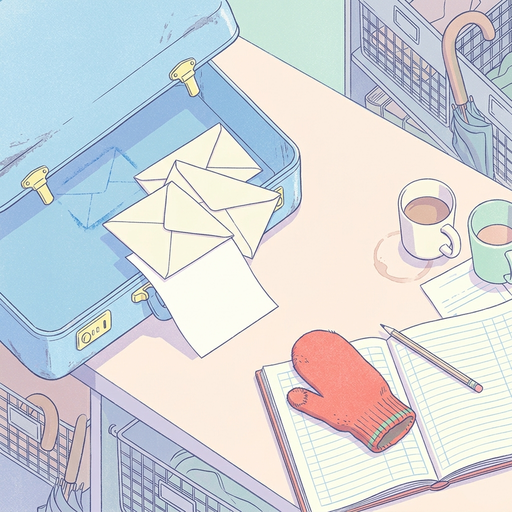
Listen free: Three Letters Before Dawn
At the basement counter beneath Calder Street Terminus, Ada Keating tightened a scarf's tag while trolley wheels squeaked outside. She pushed the red mitten deeper into her drawer and shut it with her knee.
Nearly midnight. The last northbound train had left, and Callum Briggs, the platform supervisor, brought down its abandoned belongings. Late October in London meant more gloves than sunglasses. Ada wrote the date, October twenty-seventh, two thousand twenty-six, beneath the night's entries.
"Tea?" Callum set down two mugs. "I apologise in advance."
At forty-two, Ada had spent three years being temporary here. The stationery firm had closed; this desk had offered work until something permanent came along. Now her end-of-month review waited beside the property book.
She tagged what passengers left behind. After ninety days, unclaimed stock went to auction. Tonight she needed to finish the trolley, clear the collection requests and account for every item in her care.
The mitten had been stored for eighty-four days. For the last fortnight, its father's requests had stayed unanswered beneath Ada's blotter. He described the red wool, the darned thumb, the narrow green stripe inside the cuff. Each evening she found some further detail worth checking.
Callum drank his tea with care.
"The street stall opens at dawn," he said. "Coffee remains an option."
Ada kept her mug between both hands. He often stayed until she finished tagging. Neither had yet suggested meeting anywhere without a counter between them.
"Edith left you something." He passed over a folded note from the retired day clerk. Another reminder to turn the umbrella stand so its drip tray faced the wall. Edith Penrose still sent instructions through anyone willing to carry them.
During the final catalogue, the busker Graham Holt arrived to claim his violin. After proving ownership, he requested a hold until Sunday. His beginner daughter was practising; he wanted her to ask for his help rather than hear him playing over her.
Ada entered the limit and his signature. A considerate arrangement.
"Could I borrow that umbrella meanwhile?"
"That belongs to somebody else."
"So does the violin, technically. My daughter has ambitions."
"Sunday," Ada said, and returned to her tags.
Once Graham had gone, she touched the drawer handle. A little longer could spare somebody trouble. Then she slid his signed hold form into its proper sleeve. The mitten had no such form.
Callum took the empty trolley upstairs. Ada closed the night's catalogue and reached for the collection requests.
A blue suitcase stood against the cage.
She paused with her pencil raised. Nothing blue had come down on the trolley. She checked beneath the counter, then the trolley's duplicate list. The case appeared on neither.
Its handle carried no outer label. Scuffed corners, brass catches, a shallow dent near one foot. Ada lifted it onto the counter. The catches opened easily.
An envelope lay inside, addressed to Ada Keating.
She took it.
"Dear Ada," the letter began. "A red mitten can be kept too long. Let it find its way home. Put your pencil across the page when you stop, so you can find your place again. I hope you have come back."
Ada moved her pencil from across the open property book.
She read the letter twice. The writing pressed firmly into the paper, with a little hook beneath each final letter. She knew that hook. Somewhere.
No signature. No demand for anything.
She put the envelope in her coat.
Before dawn, the suitcase vanished. Ada had left it beside the cage while she dealt with a telephone enquiry. Returning to the counter, she found bare floor and an outgoing claim slip.
An umbrella's stock number filled the first box. Beneath it, in the same hooked hand, someone had written, "Received where needed."
Ada checked the stand. One black umbrella was missing.
"Oh, bloody hell."
The recipient's name and verification boxes were blank. She went to enter an unauthorised release, stopped, and tucked the slip beneath her blotter instead.
On the short bus ride north, she read the letter again. At home she slept with her coat hanging close enough to reach. Twice she woke and checked its pocket.
The next night, she finished the trolley faster than usual. A belt, a walking stick and three separate earphones received tags. She kept moving her tea away from the empty stretch of counter.
After the last entry, the blue suitcase stood there.
Ada opened it before checking its stock number. Another envelope waited inside.
"Dear Ada. A violin waiting for its player is no tragedy. Nor is bad tea, when somebody has brought two cups. You may accept small kindnesses without making them into a test. I hope you have come back."
Callum was collecting the outgoing paperwork. Ada held the page towards him.
"Have you been writing these?"
He read the first few lines.
"No."
"You could have found an old sample of the writing. On the archive shelf."
"Why would I do that?"
She folded the page along its existing crease. "I thought perhaps you wanted to say something."
"If I want to say something, I sign it."
He put the paperwork into his folder. Ada caught his sleeve, then released it.
"It would have been rather nice."
"The tea has my name on it, Ada."
He rinsed his mug, checked that she needed nothing from upstairs, and took the trolley away. Usually he left his mug until the end of their conversation.
Ada waited through the first part of his rounds. His footsteps passed the door without stopping.
She put the second letter beside the first in her coat, then climbed the small step to the archive shelf. Old night books filled the lowest row. Their entries had taught her where to put a description, how to distinguish a hold from a claim, how much space to leave for a signature.
She pulled out the volume whose writing she had copied during her first week.
Margaret Pell. The name appeared inside the cover.
Ada laid the letter against an entry for a child's raincoat. The same firm pressure. The same small hooks.
She sent Edith a message asking whether she was awake, then photographed the pages. Edith rang back at once.
"Keep the case there. I'll come down."
Half an hour later, Edith arrived in a raincoat with its collar buttoned crookedly. Ada let her in and put both letters on the counter.
"Margaret wrote these?"
"In spring. Before she died."
Ada remembered the small notice posted beside the staff entrance. Margaret Pell, sixty-six. Flowers from former colleagues. Ada had signed the card.
"But the violin was here tonight."
"Margaret dealt with violins. And mittens. And men bringing dreadful tea." Edith set the pages straight. "These aren't reports on your life. She wrote them then. What you find in them belongs to you."
"Why are they arriving now?"
"She put in a request for Ada Keating to receive them after finishing the ordinary night catalogue. I witnessed it. The case delivers only to that name."
Edith drew a chair up to the counter.
"Three letters, on three consecutive shifts. Taking each one sends an unclaimed item to somebody who needs it. You don't get to choose which."
Ada brought out the umbrella slip.
Edith said, "Held property is excluded."
"So that's what this means."
"Yes. Locks won't stop it. Before dawn on the third night, you can put a handwritten, signed answer in the case. That completes the promise. Your letters keep their ink, and the suitcase becomes ordinary claimed luggage."
"And if I leave it?"
"The promise ends. Its ink lifts from the letters."
Ada held the second page flat beneath her palm.
"What happens after I answer?"
"Nothing further arrives."
"There isn't another set?"
"No. Answering and refusing both end the letters."
For several seconds Ada pressed at the crease. She had pictured another envelope tomorrow, and one the night after. Something addressed to her before she had done anything to earn it.
"Who was she trying to find?"
"There's a tag beneath the lining, and a carbon of her request. You can read them."
Edith rested a finger beside the outgoing slip.
"You'll still have to account for this. The promise doesn't do your job."
After Edith left, Ada lifted one corner of the lining. A seam had already opened there. She could have drawn it back with two fingers.
Instead she closed the suitcase and locked it in the cage.
At dawn it vanished from behind the bars. A second slip waited on the counter. An unclaimed vacuum flask had gone.
Ada entered its stock number beside the umbrella's in her unresolved notes. Then she put the slip beneath the first.
The northbound bus smelt of wet coats. She slept most of the day, woke too early and reread both letters. Before returning to work, she nearly left them at home. She put them back in her coat.
On the third night, the father's newest message waited among the collection requests. He could come before sunrise. His daughter was still asking about the mitten; would Ada please confirm whether the description matched?
She opened the drawer. The green stripe showed inside the cuff.
"Stop it, you silly woman."
Ada rang him using the number on his original request. Yes, they had the mitten. Yes, he could collect it in the morning. She apologised for the delay without adding a qualification.
Then she completed the ordinary catalogue.
Callum's handover remained exact. He pointed out a cracked spectacle lens, obtained her signature and left. Ada closed the office door after him.
The suitcase appeared beside the locked cage.
She left it there through the remaining enquiries. Each time her coat brushed the drawer, the two envelopes made a dry sound together.
As the street stall began setting up above, Callum knocked. He was making his last round.
"Do you need a hand?"
"Not yet. Will you be upstairs?"
"Until the day supervisor arrives."
He waited beyond the door while she brought the case to the counter, then moved away when she asked for a few minutes.
Ada took the final envelope.
"Dear Ada. My name is Margaret Pell. I made a promise to the six-year-old whose name is on the tag. I would keep asking after her, even when she went away without her case.
"I cannot know the woman she has become. If you can answer for that child, please do. If you cannot, you owe me no invented answer. I hope you have come back."
From the cage came a faint scrape. Ada checked the hanging stock. A brown coat had gone; its outgoing slip rested beneath her elbow.
She placed the third letter with the other two.
The loose seam offered no resistance. Beneath the lining lay a child's luggage tag, a short length of red wool and a carbon copy folded into quarters.
Ada Keating. Aged six.
She rubbed the tag's softened corner. A handle slipping from her hand. Feet failing to reach the floor. A woman lowering herself beside the chair and holding a pencil ready until Ada could speak.
Only that much returned.
The wool caught against her thumbnail. It belonged to this case, to that old journey. Across the counter, the father's mitten waited with its own green stripe and its own recorded owner.
Ada opened the carbon. Margaret's spring request named the suitcase and repeated the terms Edith had given her. Beneath them, one ordinary sentence explained what Margaret had asked the office to preserve.
"Please let her know that I kept my word."
Ada sat down. She could leave the case open until dawn. The envelopes would remain in her pocket, light and blank. Or she could answer, and keep three letters that would never become four.
She took a sheet of office paper.
"Dear Margaret. I have come back. I am forty-two, and I work at your desk. I still put my pencil across the page. I am returning the mitten to its owner this morning.
"Thank you for waiting with me when I was six. I can answer now.
"Ada Keating."
Her signature fitted beneath the last line. She placed the page inside the suitcase and lowered the lid. The child's tag went into her pocket.
Before sunrise, the father arrived carrying his matching mitten. Ada checked the darned thumb against his original description, verified his identification and recorded the handover.
He cupped the two mittens together.
"She'll be pleased."
"I should have called you sooner."
"Thank you for calling."
She passed them across. He signed and left with both.
When the grey strip above the stair brightened, the blue suitcase stayed. Ada opened it once. Her answer lay where she had placed it.
She checked the letters in her coat. Their ink remained.
Her hand lingered inside the pocket, touching the three envelopes. Then she withdrew it and pulled the unresolved notes towards her.
Each outgoing item received its true entry: no verified claimant, no recorded handover by Ada. She attached the slips and wrote a plain account of what she had found. Beneath that, she recorded the fortnight's delay in returning the mitten.
The review could still cost her the job. She signed the account.
The day clerk arrived and began checking the handover. Ada registered the old suitcase as claimed, using its tag and the original description in Margaret's book. She left the cage open by a finger's width while the clerk worked through the stock.
Callum waited beside the stair.
Ada handed him the completed collection slip for his folder.
"I was unfair to you."
He kept the folder open.
"I made your tea into something that needed proving. I'm sorry."
"You could have asked me for coffee."
"Would you have coffee with me now?"
"Yes."
He fetched two cups from the stall while she collected her coat and suitcase. At the foot of the stair, he passed hers over without spilling it.
Ada touched his sleeve.
"May I?"
He bent towards her, offering his cheek. She kissed it once. Then he offered his arm, and she took it with her free hand.
They climbed the familiar stair towards the bus stop. The suitcase bumped an ordinary step. In her pocket, the child's tag pressed against the three letters. Behind them, the cage waited slightly open under the day clerk's hand.
Ada tried her coffee.
"Already cooling."
"We've been busy," Callum said.
She gave a small laugh and kept hold of his arm.