The Yield: What the Bond Market Is Telling America Right Now
The most important number in the world economy is the yield on the 10-year Treasury — and it just hit 5.24%, the highest in a generation, against $40 trillion of debt. What a bond is, what a yield really measures, why the seesaw rules everything — and what the market is screaming, in the Treasury's own documents.
By MyAudioBooks.ai ·
Listen free: The Yield: What the Bond Market Is Telling America Right Now
The most important number in the world economy is not a stock price, a currency, or a commodity. It is the yield on the ten-year United States Treasury note — the interest rate the American government pays to borrow money for ten years — and as this article is written, that number stands at five point two four percent, the highest it has been in a generation, up more than a full percentage point from where it sat a year ago. Almost nothing you own is untouched by that number. Your mortgage is priced off it. Your company's borrowing costs are priced off it. The valuation of every stock, every building, every retirement account on Earth is, at the mathematical bottom of the model, priced off it. And yet almost nobody outside finance can say what a yield actually is — what the number means, why it moves, and what it is trying to tell us right now, as the United States crosses forty trillion dollars in debt and the world's safest investment starts paying like a risky one. This is that explanation, from the beginning: what a bond is, what a yield really measures, why the seesaw rules everything, and then — with the machinery understood — what the bond market is currently screaming, in numbers published by the Treasury itself, about the fiscal condition of the United States.
At My Audio Books dot A I, you can create your own audiobooks from prompts, turn your documents into audio, all with one subscription, and store your items in your own personal library.
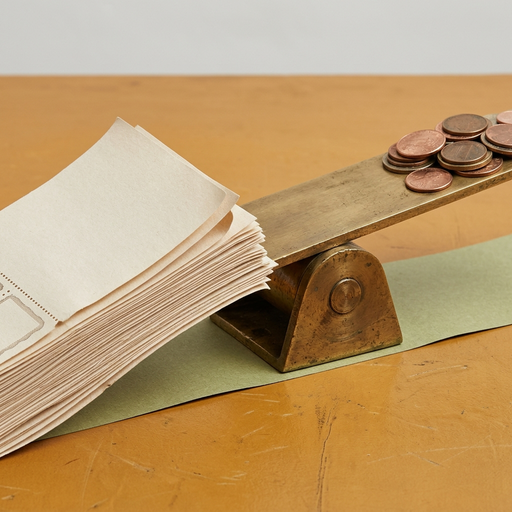
Start with the object itself, because a bond is simpler than the vocabulary around it. A bond is an IOU — a formal, tradable promise. When the United States Treasury sells a ten-year note, it is selling a piece of paper that says: lend me a thousand dollars today, and I will pay you a fixed amount of interest every six months — that payment is called the coupon, the word left over from when investors literally cut paper coupons off the bottom of the certificate and mailed them in to collect — and then, ten years from now, I will give you your thousand dollars back. That is the entire instrument. The coupon is fixed at sale and never changes. What changes, every second of every trading day, is the price investors are willing to pay for that promise in the open market — and the yield is simply the answer to the question: at the price you would actually pay today, what return does this fixed stream of payments give you? Pay full price for the thousand-dollar promise, and your return is the coupon rate. Pay less, and your return is higher, because you get the same payments for less money. Pay more, and your return is lower. That is the whole relationship, and it has one consequence so central that everything else in this article hangs on it: prices and yields move in opposite directions, on a seesaw. When investors rush to buy bonds, prices rise and yields fall. When investors dump bonds, prices fall and yields rise. The yield is not a number the government sets. It is a number the market discovers, continuously, by trading — which means the yield is, at every moment, a live vote on how much the world trusts the borrower.
So what moves the vote? Four things, and the current moment has all four working at once. The first is inflation: a bond pays fixed dollars, and dollars that will buy less in the future are worth less to the lender, so when investors expect more inflation they demand a higher yield as compensation. The second is the central bank: the Federal Reserve sets the overnight rate that anchors the short end of all lending, and its policy ripples outward along the curve of maturities, raising or lowering the floor under every other rate. The third is supply: the yield is a price, and like every price it answers to how much of the thing is for sale — and the United States is currently selling more of it than at any time in peacetime history, over two and a half trillion dollars of new borrowing a year, which means the market must be offered a price attractive enough to absorb a flood that never stops. The fourth is fear — the least quantifiable and, right now, the most important: the extra yield investors demand simply for the risk of lending to this particular borrower for this particular length of time, over and above everything the first three explain. That fourth component has a name — the term premium — and the Federal Reserve Bank of San Francisco publishes a model measuring it every day. A year ago, the term premium on the ten-year note stood at one point one two percent. Today it stands at one point three five percent and rising. The fear component of America's borrowing costs is growing.
Before the current situation, one more piece of machinery, because it produced the defining bond-market disaster of the decade and it is the piece almost everyone gets wrong: duration — the sensitivity of a bond's price to changes in yield. The longer a bond's life, the more its price moves when yields move, because you are locked into its fixed payments for longer. A one-year bill barely notices a percentage-point rise in yields. A thirty-year bond loses roughly a fifth of its value. This is the mathematics that destroyed Silicon Valley Bank in twenty twenty-three: the bank had parked its deposits in long-term government bonds — the safest assets in the world by credit rating — and when yields rose, the prices of those perfectly safe bonds fell so far that the bank was technically insolvent, and the depositors ran, and the bank died in two days. The lesson the whole financial system learned in a weekend: government bonds carry no credit risk — the borrower will always pay — but they carry enormous price risk, and the longer the bond, the more of it there is. Safety, in the bond market, is two different things that happen to share a name.
At My Audio Books dot A I, you can listen to this story and thousands of others that explore the hidden science and mechanics behind the headlines.
Now, with the machinery in hand, the current situation — and it is best told in the Treasury's own documents, because they are more alarming than any commentary. The first document is called Debt to the Penny, published daily by the Treasury's fiscal data service, and as of September twenty-fifth, twenty twenty-six, it reads: total public debt outstanding, forty point zero nine seven trillion dollars — of which thirty-two point four trillion is owed to the public markets, growing by more than two point six trillion dollars a year. The second document is the Quarterly Refunding Statement, the Treasury's own account of its borrowing machine, issued in August: the government is now refunding a hundred and twenty-five billion dollars of maturing debt every quarter in the core auctions alone — fifty-eight billion in three-year notes, forty-two billion in ten-year notes, twenty-five billion in thirty-year bonds — while raising its total third-quarter borrowing estimate to seven hundred and thirty-nine billion dollars, and quietly increasing the share of short-term bills it sells to keep the machine fed. The third document is the yield itself: five point two four percent on the ten-year, up from four point one six a year ago, at the same time as the San Francisco Fed's term premium — the fear gauge — climbs from one point one two to one point three five. Read the three together and the story tells itself: the United States is borrowing more than two and a half trillion dollars a year, and the market is charging it a higher and higher price to do it — and the part of that price that is pure fear is rising fastest of all.
The natural question is: who is charging, and why now? The buyers of American debt come in four great categories, and the mix is shifting in ways that explain the yield. The Federal Reserve, which for over a decade bought trillions in Treasuries to hold rates down, has been shrinking its holdings — the largest buyer of the last era is selling, or at best standing aside. Foreign governments and central banks, the second great bloc, have been slowly reducing the share of their reserves held in Treasuries — not dumping, but diversifying, at the margin, year after year. That leaves the market increasingly in the hands of the third and fourth categories: domestic investment funds, pensions, insurers, and money-market funds, and the vast global pool of private capital that buys the auctions as investments rather than as reserves. These buyers are price-sensitive in a way central banks are not. They do not buy America's debt out of diplomatic loyalty or reserve policy. They buy it when the yield compensates them for the inflation, the supply, and the fear — and they set the price accordingly, auction by auction, which is why the auctions themselves have become events: each one watched like an earnings report for signs of weak demand, with the bid-to-cover ratios — the measure of how many buyers showed up — flashing occasional softness in the note auctions this year. The world's most important market is repricing the world's largest borrower, in real time, and the direction of the repricing is the five point two four.
The strongest case that this is all healthy — stated at full strength, because there is a real argument that the market is working exactly as it should — begins with the observation that a five-and-a-quarter yield on the world's safest asset is not, by historical standards, a crisis number; it is close to the long-run normal that prevailed before the aberrant era of zero rates, and the return of normal pricing for money is, on this view, not a warning but a cure. The auctions are still filling — every refunding finds buyers, at size, and the mixed demand signals are wobbles, not failures; the bid-to-cover ratios fluctuate around solid averages, and the short-bill machinery is absorbing the supply smoothly. The economy is growing, the tax base is expanding, and the debt's burden is best measured against the economy that carries it, which is also larger than it has ever been. And the buyers' shift is, in the healthy reading, a normalization of its own: a market priced by price-sensitive investors is more honest than a market propped by a central bank's printing press, and the term premium's rise is simply the market rediscovering that lending for ten years carries uncertainty — a discovery it was always supposed to make.
And the strongest case against — stated with the arithmetic that the optimists prefer not to do aloud — begins with the interest bill itself, because at five point two four percent on forty trillion, the mathematics of the debt has entered a new regime. The United States now spends more on interest than on defense — a threshold crossed quietly in the last few years and widening since — and every additional point of yield, applied to a debt that grows by two and a half trillion a year and must be constantly refinanced at the new rates, compounds the bill in ways that feed back into more borrowing, more supply, and more upward pressure on yields: the debt trap's own flywheel. The term premium's rise is the part the healthy reading cannot explain away: the market is not merely pricing inflation and supply — it is charging an extra premium for the political process itself, for the fiscal trajectory that no election, budget deal, or crisis of the last decade has altered, and the San Francisco Fed's gauge says that premium has never been higher in the model's modern history. The vigilantes are the old name for this phenomenon: the bond-market investors who, in earlier eras, punished governments for fiscal recklessness by selling their debt until the yields forced discipline — and the strongest version of the bear case is simply that the vigilantes, dormant for a generation of free money, are awake again, and that the five point two four is their first invoice.
Three developments would disprove or confirm which reading of the bond market is right, and each is published in the same Treasury documents. First, the refunding calendar: every quarter brings a new Quarterly Refunding Statement, and the auction sizes it contains are the supply pressure made official — if the sizes keep growing at the current pace, the flood only rises; any quarter the Treasury signals restraint is the first sign the arithmetic is biting politically. Second, the term premium: the San Francisco Fed publishes its model daily, and the fear gauge's trajectory is the purest single number in the whole story — if it keeps climbing toward two percent, the market is pricing something closer to fiscal crisis than normalization; if it stabilizes, the vigilantes have made their point and stopped. Third, the auctions' demand ratios: the bid-to-cover numbers on the ten- and thirty-year auctions are the market's live attendance sheet, and a sustained run of weak coverage — fewer buyers per dollar offered, quarter after quarter — is the signal that the world's appetite for American debt is finally being outrun by the supply of it.
It is worth saying what this article has not claimed. It has not claimed default is coming or even plausible; the United States borrows in its own currency and the claim here is about price, not solvency. It has not claimed the yield will keep rising; the falsifiers above are the honest limits of prediction. It has not claimed the healthy reading is wrong; it is presented at full strength, and the long-run-normal argument is genuinely strong. And it has not claimed any of this is new in kind; America has carried heavy debt before and outgrown it — the question is always the trajectory, and the trajectory is what the documents measure. The claim here is narrower and more durable: the world's most important number is telling the world's largest borrower that the price of its promises is rising, that the fear component of that price is rising fastest, and that every American with a mortgage, a business, or a retirement account is already paying the difference.
Which returns to the seesaw, and the strange democracy of the bond market. Elections happen every few years, in a handful of countries, on days everyone notices. The bond market votes every second of every day, in every currency, on every government on Earth — and it publishes the results in the yield. The Treasury's own documents now read forty trillion dollars owed, seven hundred and thirty-nine billion borrowed this quarter, five point two four percent charged, one point three five of it pure fear. The market is not panicking; panics look different. It is doing something quieter and, for a government, harder to answer: it is repricing, calmly and continuously, what it costs to be the United States. The seesaw never sleeps. And right now, the world's side of it is sinking, slowly, in the direction nobody who borrows wants it to go.
At My Audio Books dot A I, you can create fiction, non-fiction, and turn your documents into audio, all stored in one place with a single subscription — plus get instant access to thousands of audiobooks and deep-dive investigations. Learn more today at My Audio Books dot A I.