The Unfinished Examination
During an understaffed overnight shift overwhelmed by a Cleveland warehouse collapse, veteran emergency physician Miriam Haddad discovers that her gifted resident falsified an injured worker’s assessment—and initially shields him with an incomplete account. When the worker deteriorates, she must disclose both his dishonesty and her own concealment, jeopardizing his fellowship prospects, her teaching role, and the trust of her closest colleague. The patient survives surgery with recovery uncertain, and Miriam finishes the shift by accepting scrutiny, relinquishing control, and handing over care without the comfort of absolution.
By MyAudioBooks.ai ·
Listen free: The Unfinished Examination
Doctor Miriam Haddad steadied the paper cup while the man on the stretcher took another sip. His fingers shook against the rim. When he had swallowed, she lowered his hand to the blanket rather than taking the cup away.
“Still turning when you sit up?”
“Less. I’d call it an improvement.”
“Let’s aim higher before you walk.”
Her Saturday evening shift at Riverbend Municipal Hospital in Cleveland had begun with a nurse covering two assignments and Miriam covering the space between them. It was October eighteenth, two thousand twenty-five. At fifty-four, she had spent most of her career in this emergency department, serving the industrial neighborhoods along the river. She knew which stretchers aggravated her back and which cupboard required a knee against the door. This stretcher required her to bend.
She straightened carefully. The man had lost enough fluid through vomiting and diarrhea to become dizzy on his feet. He had kept down water, and the fluid through his intravenous line had helped. Getting him safely to his bathroom at home mattered more than getting him out of a bed here.
Her senior resident appeared beside her before she asked for him.
“Standing blood pressure repeated, no significant drop,” Doctor Adam Kowalski said. “He’s kept fluids down for forty minutes. I wanted another walk before discharge.”
It pleased her, that small anticipation. Adam usually knew which missing detail would hold up a decision. In the last year he had also learned to wait for the answer.
“Good,” Miriam said. “What does he need to do at home?”
“Small amounts often. Return if he can’t keep anything down, has worsening pain, faints—”
“You’ve told us,” said the charge nurse behind him. “Tell him.”
Joyce Bell stepped around the stretcher with a fresh bag of fluid. She and Miriam had worked together long enough that neither needed to soften every correction. Adam turned back to the patient.
“When you get home, don’t try to drink a whole glass at once. A few mouthfuls every few minutes. If you’re still too dizzy to walk safely, we haven’t finished here.”
The man raised his cup. “That version I understood.”
“Joyce prefers the audience to be included,” Miriam said.
“I’m difficult that way.” Joyce checked the tubing, then addressed Miriam. “Paula needs you in the next bay. Her patient has chest discomfort. Repeat blood test is due.”
“I’ll see her.”
“You also have food in your bag.”
“I remember buying it,” Miriam said. “That isn’t the same activity.”
Miriam left the cup with its owner and went next door. From seven in the evening until seven in the morning, her immediate job was to get the people already there through those twelve hours safely, then give an accurate account to the next attending. Riverbend’s public emergency department had opened the shift two bedside nurses short and without the extra doctor usually assigned to the evening rush. Patients would continue to come. Each decision to watch someone longer required a person to do the watching.
At the central desk, Adam caught up while she waited for the next patient’s tracing to print.
“The fellowship coordinator called this afternoon. They need your recommendation before Tuesday.”
“They’ll have it Monday.”
“You’re still comfortable with what we discussed?”
“An unqualified recommendation. Yes,” Miriam said.
He nodded once and put the tracing in her hand. “I appreciate it.”
“Give me reasons to enjoy writing it.”
“I thought I had.”
There it was, the confidence she had spent years encouraging. Miriam let herself smile before going into the bay. The woman with chest discomfort had become pain-free, but the second blood test was still pending. Miriam explained why an early normal result could leave a question unanswered. The woman agreed to stay.
By the time Miriam returned to the desk, her lower back had tightened again. Doctor Evelyn Price, the hospital’s chief medical officer, was speaking to Joyce beside the telephone.
“I need two monitored places,” Evelyn said. “The surgical service has accepted both transfers.”
“What do they need?” Miriam asked.
“Postoperative infections. Both on intravenous antibiotics, both stable for transport. No upstairs beds yet.”
“Then they aren’t places we can create by discharging someone early.”
“The woman in Six is listed as pain-free,” Evelyn said.
“She is pain-free. She is also waiting for a test that determines whether she can go home.”
Evelyn rested her hand beside the telephone. “The referring hospital has patients waiting for those beds too.”
“I believe you.”
“These transfers are part of an agreement we need to keep viable. That agreement pays for services this hospital loses money providing.”
Miriam pressed her thumb into the sore muscle above her hip. Evelyn’s patients were real, and so were the consequences if their referring surgeons stopped trusting Riverbend to take them. Neither fact supplied another nurse.
“Two of our stable patients can wait in the chair area after I reassess them,” Miriam said. “No one who needs continuous monitoring. Hold the transfers until Joyce confirms someone can watch them.”
Joyce turned toward her. “Gail will have the chair patients. That takes her out of the monitored bays.”
“I can cover the reassessments.”
“Gail gives the medicines and answers when somebody needs the toilet. You can’t cover her by walking past.”
Miriam had already opened her mouth to offer more of herself. She shut it.
“Tell me what you can safely assign,” she said.
“Two chairs. After that, we stop calling empty floor space capacity.”
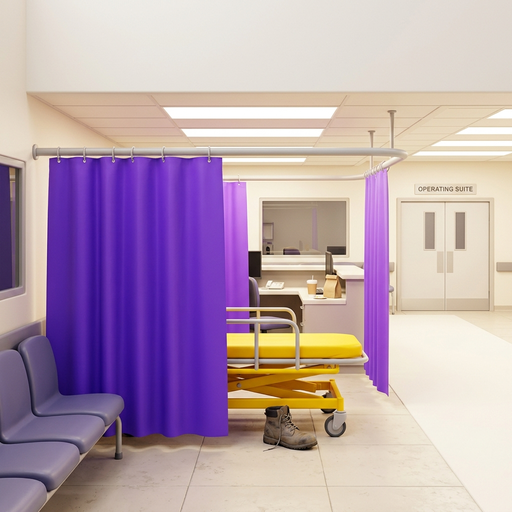
Evelyn agreed to two chairs and to wait for Joyce’s confirmation. Joyce moved a spare chair away from the staff-side passage behind the trauma bays. That route connected the department to the operating-suite corridor; anything leaving in a hurry had to fit through it. Miriam helped lift the chair over a cable.
“The trauma surgeon’s in the building?” she asked Evelyn.
“On the surgical floor. Operating team is here. The emergency activation goes through the usual number.”
“Good.”
Miriam reached the staff cupboard, touched the strap of her food bag, and heard Paula call her name. She left the bag where it was.
Miriam pushed through the ambulance doors when the first crew arrived with dust on their sleeves and a man holding his injured leg rigid. Behind him, a second stretcher was already coming off another ambulance. The paramedic spoke while they moved.
“Warehouse storage platform came down. More coming. Dispatch has several crews on scene.”
Miriam glanced at the wall clock inside the entrance: eight fifteen in the evening.
“Activate the hospital response,” she told Joyce. “Tell surgery what we have, not what we might have. Keep the staff-side passage clear.”
The activation brought the trauma surgeon down and put the existing operating team on notice. It brought a respiratory therapist and the hospital coordinator to the desk. It also meant another part of the hospital would wait longer for those people.
“Who’s leading through handoff?” the coordinator asked.
“I am. Until seven.”
Joyce was already directing stretchers toward the monitored bays and walking patients toward triage chairs. Miriam assigned Adam rapid assessments of the walking injured, with instructions to bring her abdominal, chest, breathing, or circulation concerns immediately. A junior doctor went to assist the surgeon. The ordinary waiting room stayed full.
The first man’s leg required a splint, pain relief, and repeated checks that his foot remained warm and well supplied with blood. Miriam knelt to examine it while the surgeon took the second arrival. When she stood, the pull in her back made her place one hand on the stretcher rail.
“Doctor?” the injured man said.
“An objection from my spine. Yours is the leg we’re discussing.”
He managed a tight smile. She stayed until his pain medicine began to work.
At the desk, Joyce stopped her with an assignment question before she could reach Adam.
“Gail has the chair patients now. Paula’s giving antibiotics in Three. I need you to tell me which of these new people can wait.”
“Let’s do it together.”
They went from chair to chair. Miriam examined hands, checked breathing, asked where people had been struck. Adam brought her concise summaries, then returned to the next patient. Some needed wound cleaning or splints. One needed the surgeon. Another had to be moved from a chair when his breathing became painful. Each move displaced somebody else.
By the time the warehouse owner arrived, Miriam had blood dried along the edge of a glove cuff and no memory of putting it there. Leonard Dwyer sat upright on his stretcher, his right arm supported against his chest. He gave his age as sixty-one and explained that he had been at the warehouse for late inventory before a lender’s visit.
“I’d prefer not to be out in the open,” he said.
“We’ll examine you behind a curtain.”
“I mean afterward as well.”
“Let’s deal with the shoulder first,” Miriam said.
She checked the circulation and sensation in his hand, then arranged an X-ray and pain relief. He answered accurately, though each attempt to move the arm interrupted him.
“Is there someone from administration I can speak to?”
“Doctor Price is here. We’ll let her know.”
“I’d appreciate that being done promptly.”
“It will be passed on,” Miriam said. “Your shoulder comes first.”
The X-ray showed a fracture that could be supported in a sling while he waited for orthopedic advice. He received a screened space for the examination, then a chair away from the ambulance entrance. His request for a private room remained a request.
Miriam was returning from checking him when another ambulance crew brought in a man who insisted on walking the last few steps.
“Curtis Baines,” the paramedic said. “Forty-seven. Loading supervisor. Hit across the abdomen by the edge of a pallet. He stayed to help get people clear.”
“Didn’t stay by choice,” Curtis said. “Somebody had to tell them which door wasn’t blocked.”
Miriam guided him toward the assessment area. The clock above triage showed ten ten at night.
“Show me where it caught you.”
He laid a broad hand across his waist. “Here. Knocked the wind out. I’m moving all right.”
“Walking doesn’t answer every question.”
“It answers the one my supervisor usually asks.”
“What does your work involve?” Miriam asked.
“Loading. Lifting. Fixing whatever breaks before we can load again.”
He eased himself onto the stretcher. “No desk option, if that’s where this is going.”
“I’m finding out what an injury would mean for you.”
“It means I need it to be a bruise.”
Miriam rested her fingers briefly on the rail. His work trousers were dusty to the knees. One bootlace had broken and been tied in two places.
“Anyone you want us to call?”
“My wife. She’s at work.”
“May we tell her why you’re here and discuss what care you need?”
“Yes,” Curtis said. “Just tell her I’m talking to you. Don’t start with warehouse collapse.”
“We can start with you being awake and speaking. We won’t promise anything we haven’t established.”
He gave the number to the nurse.
Paula called Miriam from a monitored bay. Miriam asked Adam to complete Curtis’s assessment and came back several minutes later to find the resident beside Joyce.
“Baines is stable,” Adam said. “Pressure came up on repeat. Abdomen soft, no focal tenderness. Walking, talking. I’d observe him, reassess, then decide about discharge.”
Miriam could hear a patient calling from behind her. She had another tracing tucked under her arm.
“That’s a reasonable assessment,” she said in front of Joyce and the nurse waiting for an assignment. “Keep him for reassessment. No discharge without coming back to me.”
Adam nodded and went to the next chair.
Joyce called Curtis’s wife from the desk while Miriam answered a question about another patient’s medicine. Miriam heard the call connect, heard Joyce identify herself and explain that Curtis had authorized the conversation. Afterward, Joyce gave her the answer.
“She finishes at six in the morning. Leaving early costs her the rest of the shift, and she’d need a taxi instead of the work van. She’ll come if we need her. She wants a call if anything changes.”
“Tell Curtis we reached her.”
“Already done.”
The hospital coordinator returned with the confirmed count shortly before the last group came through: twenty-two injured workers, plus their owner, Leonard Dwyer—twenty-three patients at Riverbend altogether. Other hospitals had taken others. The warehouse arrivals finally stopped around ten thirty, but their care had scarcely begun to clear.
Miriam asked for another pain assessment on the man with the splinted leg. Joyce told her Paula was still finishing antibiotics elsewhere and would be late with it.
“I’ll go,” Miriam said.
“And then you’ll be late for the woman in Six.”
Miriam checked the desk, chose the leg first, and asked Adam to bring her the woman’s repeat test result. Joyce sent a nurse when she could.
Miriam was cutting the last end of a suture when Joyce told her Curtis had asked when somebody would come back. The man whose scalp she had repaired thanked her. She gave him the warning signs to watch for and asked the junior doctor to finish his discharge.
At the central desk she peeled off her gloves. It was around twelve thirty in the morning. Her food remained in the cupboard. Hunger had become a faint sourness that she noticed only when she stopped moving.
Curtis lay in the observation area beyond the chairs. Earlier, he had tried to sit forward whenever someone spoke to him. Now he answered without moving his trunk.
“What’s changed?” Miriam asked.
“Nothing much.”
“Tell me what ‘nothing much’ feels like.”
“Still sore.”
“More sore?” Miriam asked.
He took time over that. “Harder to get comfortable.”
Miriam pulled the curtain far enough to examine him properly.
“I’m sorry. I needed to find that.”
“Are we still talking about going home?”
“We’re talking about checking this further. I want blood tests and a scan of your abdomen. Don’t eat or drink until we know more.”
He accepted that with a short nod, though his gaze went toward the open edge of the curtain. Miriam gave Paula the orders and asked her to arrange an urgent scan. She wanted Curtis on a continuous monitor while they waited, with frequent blood-pressure checks rather than another stretch in the chair-side observation space.
“Trauma Four’s empty,” Paula said. “Who can watch him there?”
“Joyce will have to tell you.”
Miriam found Adam at the staff-side work counter, about to pocket a folded assessment sheet. She asked him to come a few steps farther from the patients.
“Show me what you examined on Curtis Baines.”
His hand stopped at the pocket. “His abdomen was reassuring at the time.”
“Tell me what you did.”
“I palpated it. He was talking through it. There wasn’t—”
“Where?”
Adam rubbed the folded edge of the paper with his thumb. “Upper abdomen.”
“And the lower abdomen?”
“I was called away.”
Miriam kept her voice low. “What was the low blood-pressure reading?”
“Ninety-two systolic. The next one was one hundred eighteen.”
“Did you confirm it?” Miriam asked.
“The machine repeated it.”
“Was he still? Correct cuff? Did you recheck it yourself?”
“No.”
She felt the counter edge against the back of her hand. “You told me his abdomen was soft, without focal tenderness.”
“I thought it was muscular. He was walking. He’d stayed at the site for nearly two hours.”
“What did you put in the chart?”
Adam glanced toward the open passage, then brought his attention back to her.
“Soft. Nontender.”
“You hadn’t completed that examination.”
“I know.”
“Did you know when you wrote it?” Miriam asked.
His jaw shifted. “Yes.”
Miriam waited.
“I fucking lied,” he said. “I wanted one person I could finish. I had six people waiting, you were tied up, and I thought I knew what this was.”
“You could have said you needed me.”
“I know that now.”
“You knew it then,” Miriam said.
“Yes.”
The answer came sharply, but he stayed where he was. Miriam wanted a different account from him. She wanted an interrupted examination that had accidentally become a completed one, a mistaken click, something she could correct without changing what she had promised him that evening.
“Has anyone else been assessed that way?” she asked.
“No.”
“Anything else you need to tell me before I make another decision based on what you say?”
“No. Curtis is the one.”
She would have to verify his other assessments. The work required by that answer was already taking shape.
“For now, no independent intake. No new trauma assessments. You do assigned tasks, and you bring decisions to me.”
“Miriam—”
“That starts now.”
He kept the folded sheet in his hand. “All right.”
Her first attending had once moved a conversation out of a busy corridor when she had made a dangerous prescribing error. She remembered the relief of being allowed to keep working beside him. Standing with Adam, she reached first for that part of the memory.
“Help me get Curtis moved,” she said.
Joyce met them at the observation area. Miriam gave her the new examination findings and the plan for imaging.
“He needs Trauma Four and close observation.”
“Paula has two people due medicines now,” Joyce said. “Gail can’t leave the chair row.”
“Can you take him until the scan?”
“If Beth takes the desk. She’ll have to stop helping with discharges.”
“Then we’ll be slower discharging,” Miriam said.
Joyce studied Adam, who had remained behind Miriam. “What’s happening with his intake?”
“I’ve stopped it,” Miriam said. “He’s overloaded. I’m narrowing his work.”
“Is there something specific I need to know?”
“Curtis needs reassessment and closer monitoring. Adam will work under me.”
“That tells me the assignment,” Joyce said. “I’m dealing with the rest.”
Joyce held her gaze long enough for Miriam to want to add something. Instead, Miriam turned toward Curtis and explained the move.
They wheeled him into Trauma Bay Four. Paula placed an intravenous line in his left forearm and drew blood while Joyce connected the monitor. Curtis asked whether the line meant he would stay overnight.
“It gives us access for medicine or fluid if you need it,” Miriam said. “It doesn’t decide the length of your stay.”
The monitor showed a pulse in the nineties and an acceptable blood pressure. Miriam asked Joyce for pressure measurements every five minutes while they awaited the scan. Increasing pain, faintness, a faster pulse, or any fall in pressure required an immediate call.
“Don’t wait for a number if he changes,” she said.
“I won’t,” Joyce replied.
Miriam asked Adam to stay with Curtis, obtain the repeat measurements, and bring her the blood results as soon as they were available. He could carry out those tasks; he could not decide on discharge or take another patient on his own.
The ambulance phone rang at the desk. Beth answered, then called across to Miriam.
“New arrival. Severe trouble breathing. They’re at the door.”
Miriam closed her eyes once, opened them, and addressed the staff-side counter rather than anyone in the bay.
“Fuck.”
She returned to Joyce. “You have him?”
“I have him. Beth has the desk. The discharges wait.”
Miriam told Adam where she would be and went to the ambulance entrance. The new patient could speak only a word at a time. Miriam stayed at his stretcher while oxygen and inhaled medicine were started, then brought the junior doctor beside her and made him repeat the immediate plan. When the man could answer a short question, she left the doctor and nurse with clear instructions to call her for any loss of that improvement.
On her return toward Trauma Four, Miriam paused at the chair row while a wheelchair crossed ahead of her. Two warehouse workers sat beside the wall. One had a dressed hand; the other held a cold pack against his jaw. The first man leaned toward him.
“Hold still. Your wife’s coming in.”
“What?”
“Your hair.”
The man with the cold pack raised his free hand, then stopped. His hairpiece had shifted to one side. His coworker used the uninjured fingers of his bandaged hand to straighten it, pressing once at the front.
“Better?”
“Don’t make a thing of it.”
“I’m fixing it.”
A woman came through from reception. The man lowered his hand before she reached him, and his coworker shifted a chair so she could sit.
Miriam continued to the desk. Evelyn was there with a telephone against her shoulder. Leonard sat a few feet away, his arm now secured in a sling.
“Has the orthopedic doctor answered?” he asked Miriam.
“The request is in. Your hand still feels normal?”
“Yes. My shoulder still hurts.”
“I’ll ask the nurse when your next pain medicine is due,” Miriam said.
“I’d also like someone to explain why I’m still in a chair.”
“Anyone needing closer monitoring has to take priority for a bed.”
Leonard turned toward Evelyn. “I was told there would be someone who could make arrangements.”
“I can speak with you,” Evelyn said. “I can’t change the clinical priorities.”
She covered the telephone and addressed Miriam. “The referring surgeon wants to know when we can take the second transfer. The first is already here.”
“We’ve used the last place with a nurse available to watch it.”
“The infection needs treatment.”
“Then they need to continue it there until we can receive safely,” Miriam said. “I’ll speak to the doctor if that helps.”
“It may. It won’t help the agreement.”
“I know.”
Evelyn uncovered the telephone. She gave the referring hospital the answer herself. Miriam asked Beth to check Leonard’s pain medicine, then crossed the short distance to Trauma Bay Four. Evelyn and Leonard remained outside, near the central desk.
Joyce stood at the foot-side workstation. Adam waited at the left rail, his folded assessment sheet held against his thigh. Curtis lay with a blanket over his legs, the intravenous line secured in his left forearm. The scan was being arranged; the scanner team would call when they could receive him.
Miriam had come back ready to give him a short update and continue moving. She stopped beside the right rail.
“How is it now?”
“Same when I keep still.”
“And when you move?”
“I’m trying not to.”
She asked Joyce for the latest pressure. It remained acceptable. Adam began to give her the pulse, then stopped when Joyce answered. His grip tightened on the folded paper. Miriam wanted him to speak plainly now, to be useful, to begin undoing what he had done. Yet Joyce had heard only that he was overloaded. Miriam had chosen those words and refused the next question.
Curtis turned his head toward her. “They said you got hold of my wife.”
“We did.”
“She’s meant to finish at six in the morning. If she leaves before that, they don’t pay the rest, and her ride’s gone.” He adjusted his right hand on the blanket. “Should she come now, or am I going to be home before she gets off?”
Miriam had no sound discharge estimate to give him. She released the rail. The clock at Joyce’s workstation changed to one in the morning on Sunday, October nineteenth. Miriam pulled the spare chair close to Curtis’s right side and remained standing beside it, empty-handed.
“She should come now,” Miriam said. “I can’t give you a discharge time. We’ll call her and explain what’s changed.”
“Tell her I said to get the taxi.” He shifted his right hand across the blanket, then pressed it against his abdomen. “That’s worse.”
Miriam lowered the rail and asked where. His answer came between shallow breaths. When she touched his abdomen, he pushed his shoulders into the mattress and held himself rigid.
“Joyce, repeat his pressure now.”
The cuff tightened. Curtis turned his face toward Miriam.
“I need to sit up.”
“Let us help you.” She raised the head of the stretcher a little. He drew two breaths, then asked her to stop. Sweat had gathered above his lip.
Joyce read the pressure aloud. It had fallen sharply. His pulse had risen.
Miriam leaned close enough to keep his attention. “I’m concerned you’re bleeding inside your abdomen. We’re bringing the trauma surgeon here now.”
Adam had already reached for the telephone at the left-side counter. Miriam gave him the immediate message for surgery, then told Joyce they needed blood available urgently. Joyce called Paula into the bay.
“Beth needs to know I’m staying here,” Joyce said. “She still has the desk.”
Paula went straight to Curtis’s other arm to establish additional access. Miriam kept a hand near his shoulder while he tried to find a position that hurt less.
“Am I still getting the scan?”
“Your circulation has changed. Right now, taking you away from the people and equipment you need could be unsafe. The surgeon will examine you here.”
“I was walking.”
“I know.”
He swallowed and asked for water. Miriam explained that they needed his stomach empty in case he required an operation. Joyce moistened his mouth instead, then checked the line in his left forearm. The monitor sounded again.
The trauma surgeon came through the staff-side entrance with the portable ultrasound machine. Miriam gave the changed findings while he moved to the stretcher. Adam supplied the latest measurements without adding an interpretation.
Curtis flinched at the pressure of the ultrasound probe. Miriam told him what the surgeon was checking: fluid where blood might collect after an injury. The surgeon finished, set the probe aside, and asked the operating team to prepare for an emergency abdominal operation.
“We need to find the bleeding and stop it,” he told Curtis. “I don’t think waiting for a scan is safe now.”
Curtis worked his jaw before answering. “You mean cut me open.”
“Yes.”
“Then do it.”
The surgeon continued with the essential explanation while the nurses worked. Miriam stayed where Curtis could see her. His pressure improved slightly with intravenous fluid, then slipped again. Blood was on its way from the hospital supply; the operating team was preparing to receive him.
There would be no quiet interval in which to make this easier.
Joyce called Curtis’s wife from the bay telephone while Paula stayed at his arms. Miriam heard Joyce identify herself, confirm whom she was speaking to, and explain the need for urgent surgery. At Curtis’s request, she held the handset to his ear.
“Get the taxi,” he said. “Yes, now. They’re getting me ready.”
He listened, his eyes closed.
“I know what it costs. Just come.”
Joyce took the handset when he offered it back. She gave his wife the entrance to use and confirmed that the surgical team would update her. Afterward, she told Miriam, “She’s leaving work. She loses the remaining hours and she’s paying for the cab. She knows where to come.”
Curtis heard her. He nodded once, then asked Miriam to lower the head of the stretcher again.
Miriam helped him settle while the blood arrived.
Joyce checked the blood with Paula, watched it begin through the line, and then asked Miriam to step to the adjoining staff work position. The surgeon remained with Curtis. Adam stood at the counter, waiting for a task.
Beyond the bay, telephone bells overlapped with a patient calling for help to the toilet. They stood beyond the patients’ hearing, though Miriam could still see Curtis’s feet beneath the blanket.
“Why did you stop his intake?” Joyce asked quietly.
“His assessment of Curtis was unreliable.”
“What does that mean?”
“He hadn’t completed the abdominal examination. He reported and documented a reassuring examination anyway. He also accepted the repeat pressure without properly checking the earlier low one.”
Joyce kept her voice level. “When did you learn that?”
“Before we moved Curtis here.”
“Before I asked you what I needed to know.”
“Yes.”
Miriam pressed her palm against the counter. “I gave him too much work, and then I accepted his summary without examining Curtis myself. This is my—”
“You assigned the work,” Joyce said. “You accepted the report. Adam chose to describe an examination he hadn’t done. Then you told me he was overloaded. Those are separate things.”
Miriam’s first impulse was to explain the restriction, the observation, all the work she had set in motion. Joyce knew those things. She had been doing much of it.
“I knew he’d been dishonest,” Miriam said. “I withheld that from you.”
“I needed to know whether I could rely on what he told me.”
“You’re right.”
Joyce checked the bay before continuing. “I’ve taken Paula off medicines in Three. Beth has stopped discharges to run the desk. Gail still has the chair row. Tell me the actual problem when you ask me to move people.”
“I will.”
Joyce went back to Curtis without offering the familiar small gesture that usually ended a disagreement between them.
Miriam followed, but Evelyn met her at the entrance. She had moved far enough from Leonard to keep her voice private.
“The second transfer is still waiting. They want a time.”
“I can’t give one. We’re preparing an emergency operation here, and Joyce has had to pull another nurse from the other bays.”
“After he goes upstairs?”
“The stretcher will be empty. We’ll still need to reassign the nursing work he’s displaced.”
Evelyn glanced into the bay. “I’ll tell them we can’t receive yet. I need you to speak to their doctor when you’re free.”
“I will.”
“They’ve already asked whether this agreement can keep working.”
Miriam nodded. She had no answer that would make a nurse available.
Leonard called from his chair before Evelyn could move away.
“Doctor Haddad. I’ve asked three times when somebody will tell me what happens next.”
Miriam stopped outside the bay, leaving the staff-side entrance clear. “The orthopedic doctor has been contacted. I’ll have Beth check for the answer and ask someone to reassess your pain.”
“I have a broken shoulder. I’ve spent hours sitting here. Every answer is that someone else needs something more.”
“You’re entitled to an explanation of your own care. You’re still waiting for that advice, and I’m sorry we haven’t kept you updated.”
“Is that another person from the warehouse?”
“I can’t discuss another patient.”
“I’m not asking for a medical history. I’m asking why every arrangement I was told about disappears.”
“I can speak with you about your care,” Evelyn said. “Doctor Haddad needs to go back in.”
Leonard drew his sling closer against his body. “I want the delay included in my complaint. Not just the injury. This.”
“It will be,” Evelyn said.
Miriam went back to Curtis. Necessary care had continued throughout the exchange. Joyce gave her the latest pressure; it had improved enough for him to answer the surgeon clearly, though he remained pale and guarded every movement.
Evelyn touched Miriam’s elbow at the entrance.
“We’ll keep the transfer route clear,” she said. “That’s what I can promise.”
Miriam thanked her and returned to the right rail.
Adam met Miriam at the side counter while the surgeon spoke with the operating suite. He had put the folded assessment sheet down. Both hands rested flat beside it.
“Can we wait until he’s out?” he asked.
“For what?”
“To talk to him about what happened.”
Miriam kept her voice low. “He needs an answer before he goes.”
“He needs the operation. You just said that.”
“Yes.”
“So get him there. Then we know what we’re explaining.”
She reached for a pair of gloves, then stopped. Adam shifted nearer, still well away from Curtis.
“You told me to help you get him moved. You kept me working with you.”
“I did.”
“You made it sound like we were dealing with it together.” His voice tightened. “Give me until he’s through surgery.”
Miriam wanted to know the outcome first too. She wanted to be able to put survival in the same sentence as the harm. She had already let that wish govern what she told Joyce.
“We’re getting him ready for surgery,” she said. “That time is necessary. Waiting to see whether the news makes this easier for us isn’t.”
Adam pocketed the folded sheet. “Easy. Right.”
Curtis called her name before she could answer.
Miriam went to his right side. Joyce was checking the blood as Paula secured the lines for transport. The surgeon had finished his call and was confirming that the team could receive him.
“You two keep stopping when you talk,” Curtis said.
Miriam lowered herself just enough to meet him without making him turn his head. Her back pulled sharply.
“What do you need to ask me?”
“I told him it hurt. Earlier. Did that get missed?”
“Yes,” Miriam said. “We underestimated your injury.”
Curtis turned his head toward Adam, who had remained at the left-side counter.
“Was that before you said it was all right?”
Miriam answered before Adam could begin. “Doctor Kowalski didn’t complete the examination of your abdomen. He described it to me and recorded it as normal. He has told me he knew the examination wasn’t complete. I relied on his account.”
Joyce adjusted the tubing across the blanket. Miriam paused while she checked the connection.
“Does that mean you left me bleeding all that time?” Curtis asked.
“It means we delayed recognizing how serious your injury might be. That delay may have increased the danger. I can’t tell you how much it changed the bleeding or what your recovery will be.”
“So you don’t know.”
“I don’t know that part. I do know the examination wasn’t completed and the reassurance wasn’t justified.”
Curtis shut his eyes while the pressure cuff tightened. Miriam waited for Joyce to read the result. It held better than the previous measurement.
“When did you find out?” he asked.
“Before we moved you here.”
“And nobody told me.”
“No. After I learned what had happened, I told Joyce that Doctor Kowalski was overloaded instead of telling her the full reason I’d restricted his work. I was trying to handle it privately.”
Curtis opened his eyes. “For him?”
“Yes.”
Adam took a step toward the stretcher. Curtis raised his right hand from the blanket.
“I want him out.”
Miriam turned at once. “Adam, leave the bay.”
He stopped. His mouth tightened, but he went through the entrance without speaking.
Curtis watched until he had gone. “Can I still have the operation without him?”
“Yes. He won’t be part of your bedside care.”
“Tell the people upstairs that.”
“I will.”
Miriam wanted to say that she was sorry and that she had wanted him watched closely, wanted him safe. The second part belonged to her need for him to understand her. She kept it out.
“I’m sorry I withheld this from you.”
“Don’t ask me to say it’s all right.”
“I won’t.”
The surgeon came to the rail. He explained that the operating team was ready and asked whether Curtis had any last questions before they moved.
“My wife knows where to go?”
“Joyce has told her,” Miriam said. “The surgeon will update her after the operation.”
“And lifting? My work?”
“We can’t tell yet,” the surgeon said. “We need to get the bleeding controlled first.”
Curtis rubbed his thumb along the edge of the blanket.
“Fine. Get on with that.”
They moved promptly. Paula checked that nothing pulled at his left forearm as the stretcher rolled. Joyce went alongside him with the blood. The staff-side route remained clear, and nobody had to move a chair before they could pass.
Miriam walked as far as the department’s transfer point. Curtis kept his face toward the ceiling. She gave the receiving nurse the current treatment and repeated his instruction that Adam was not to return to his bedside.
Behind them, well away from Curtis’s stretcher, Adam gave the surgeon the earlier low pressure and the limits of his examination. Miriam heard him say that the reassuring description had been his and had not been supported by a completed assessment.
The surgeon asked one short question. Adam answered it directly.
Then the surgeon followed the stretcher, and Curtis went through the doors with the team that would operate on him. It was still less than half an hour since he had asked whether his wife should come.
Miriam stayed until the doors closed. Her right hand had curled around the edge of her coat. She opened it, returned to the desk, and asked Beth which patient had waited longest for a reassessment.
Beth pointed her toward Three.
Miriam finished the delayed reassessment while Paula returned to medicines. The woman in Three wanted to know whether the delay meant her treatment had changed. Miriam explained what she knew, checked what had been given, and named the nurse who would return. When she came back to the desk, two discharge conversations were still waiting for a nurse.
Adam stood at the staff counter.
“What do you want me to do?”
Miriam assigned him follow-up calls and supervised reviews of the patients he had already seen. His restriction remained in place. She checked his findings with him rather than allowing another complete-sounding summary to pass. He answered without argument, sometimes correcting himself before she asked.
The extra checks took time. People in the chairs continued to wait.
Near two in the morning, Miriam found Evelyn at the staff-side telephone. They moved into the workroom, where they could close the door without losing sight of the department through the window.
“I need an independent review,” Miriam said. “Not only of Adam’s assessment. Of my supervision and what I did after he told me.”
Evelyn set down the telephone. “What did you do after he told you?”
Miriam gave her the sequence plainly: the restriction, the move to closer observation, the incomplete explanation to Joyce. She described the bedside disclosure without suggesting that it had repaired the withholding.
“I want my response to his admission included,” she said.
“It has to be.”
“Yes.”
“Has Curtis asked for someone else?”
“He asked for Adam to leave. We honored that. He accepted continuing care from the rest of us.”
Evelyn drew a chair out, but remained standing behind it. “I can initiate the review. I can’t tell you what it will conclude.”
“I’m not asking you to.”
“What are you asking for tonight?”
“Keep Adam on assigned work under direct supervision pending review. And arrange for someone else to supervise residents on my teaching assignments while my conduct is examined. Starting with the incoming shift.”
“Denise is coming to take your patients. She can’t take every resident as well.”
“I know. The assignments will have to change.”
Evelyn was quiet long enough for Miriam to hear a trolley pass outside.
“I’ll speak with the education lead and the day team,” she said. “The other scheduled attending will have to absorb some supervision. They’ll take fewer patients themselves. This doesn’t produce coverage.”
“No.”
“And temporary relief from supervision isn’t a finding one way or the other.”
“I understand.”
Evelyn opened the door. Before returning to the telephone, she said, “Leonard’s complaint is already going to administration. I’m not putting it aside while we deal with this.”
Miriam nodded. She went back to the people still waiting for her.
By three, the man who had arrived struggling to breathe could speak in full sentences. Miriam reviewed him with the junior doctor, checked his response to treatment, and explained why he still needed observation. Elsewhere, she examined a hand after a splint was applied and returned to a woman whose pain medicine had worn off.
She continued to notice the operating-suite doors whenever she crossed the central desk. No update came through them. The telephone worked; the team knew how to reach her. She left them to operate.
Leonard’s orthopedic advice arrived through the ordinary call-back. Miriam checked him again, including the circulation and sensation in his hand, and explained the plan for the sling, pain treatment, and prompt follow-up. He repeated the instructions accurately.
“Then I could have been doing this at home,” he said.
“You needed the examination and the specialist plan first. We should have explained the wait more clearly.”
“That’s a very small part of what I’ll be saying.”
“I understand.”
He left later with his arm supported and his discharge instructions explained, still dissatisfied. Evelyn spoke with him near reception. Miriam heard none of that conversation and asked for none of it afterward.
The first contracted transfer still occupied nursing time in a monitored bay. The second remained at the referring hospital. No agreement had been settled by the fact that Curtis had reached surgery.
Adam caught Miriam at the staff work counter after they completed a review together. He waited until the nurse beside them had gone, then lowered his voice.
“You knew what I thought you meant.”
Miriam put down the telephone she had been about to use. “Yes.”
“You let me stand there thinking you were going to help me handle it. Then you told everybody.”
“I gave you reason to expect I would keep it between us.”
“So this isn’t just me being a fucking idiot about what you said.”
“No.”
He pulled the folded assessment sheet from his pocket, then pushed it back without opening it. “I told you the truth. Privately. And you used that.”
“You told me the truth after I pressed you. I still encouraged you to believe I would contain it.”
Adam rubbed both hands over his face. “What was I supposed to think when you said to keep working with you?”
“That I would supervise you and help you do the next task safely. I left you room to hear more than that. I wanted it to mean more.”
“Does Monday still happen?”
She knew which promise he meant.
“I can’t give an unqualified recommendation.”
He turned away from her, then turned back. “One night.”
“One deliberate false account, Adam. And my response to it. It needs to be considered with the rest of your work, but it can’t be left out.”
“You think that fellowship will hear anything after that?”
“I don’t know what they’ll decide.”
He gave a short, angry laugh. “You used to be more useful than ‘I don’t know.’”
Miriam kept her hands still on the counter.
“I can tell them about the work I’ve seen you do well. I can tell the review exactly what happened tonight, including how I responded. I’ll attend with you if that’s permitted and you want me there. I won’t describe this as an accidental entry.”
“I’m not asking you to lie.”
“You’re asking what protection I can still offer. That’s the honest answer.”
His jaw worked before he spoke again. “I don’t know if I want you in the room.”
“All right.”
She left the choice with him. When the telephone rang, Adam stepped aside so she could answer. A few minutes later he returned to an assigned call, gave his name and role, and asked for the information he actually needed. Miriam heard him correct a detail before passing it to her.
It mattered. It did not restore the recommendation.
Shortly after five, the trauma surgeon called Miriam directly. She took the call at the staff-side counter and put a finger against her other ear to hear him over the department.
They had controlled the bleeding from Curtis’s abdominal injury. He had survived the operation and had been transferred to intensive care. He still needed close support and observation.
Miriam asked about further bleeding, then about the next immediate concerns. The surgeon answered what he could. It was too early to predict the extent of Curtis’s recovery.
“His wife?”
“I’ve spoken with her. She’s here.”
“Does she know he’s in intensive care?”
“Yes. I’ve told her what we did and what we’re watching.”
Miriam thanked him and ended the call. Her knees had begun to ache as well as her back. She stood still long enough to read the name of the next patient she needed to see, then went to find Joyce.
“He’s alive. The bleeding’s controlled. He’s in intensive care.”
Joyce stopped sorting medicines. “His wife’s been told?”
“The surgeon spoke with her here.”
“Good.”
Miriam waited, then recognized that she was waiting for something more. Joyce resumed her work. There would be no return to their old ease merely because the operation had gone well.
Before six, Evelyn confirmed the temporary arrangement. Adam would continue on restricted, assigned work under the incoming team. The scheduled morning attendings would divide supervision, reducing the intake they could each carry. Miriam’s supervisory assignments would be covered pending further discussion and review; her clinical work would be considered separately.
“No one has made a final decision tonight,” Evelyn said.
“I know.”
“The day team needs the whole account.”
“They’ll have it.”
Miriam returned to Four, which now held an older woman waiting for an inpatient bed. She checked the woman’s treatment, answered a question about the wait, and explained that the incoming doctor would continue her care after seven. She avoided promising when an upstairs bed would be available.
On the way back to the desk, Miriam put one hand against her lower back.
Joyce appeared with Miriam’s food bag.
“You’ve had this here all night.”
“I know.”
“Banana. Crackers. Nothing requiring a chef.”
Miriam accepted the bag. “A sound purchasing decision, poorly executed.”
Joyce set a chair at the staff side of the central desk, out of the transfer route. “Sit for handoff. I’m getting Denise.”
Miriam began to say that she could stand. She put the bag on the desk instead and sat. The change in pressure through her back hurt, then eased. She peeled the banana while Joyce answered another nurse’s question.
When Denise arrived in the shift’s final quarter hour, Miriam had eaten half the banana.
Denise closed the door to the staff work area and pulled up the other chair. “Active patients first.”
Miriam gave her the department’s current needs: who required close observation, what was pending, where the nursing assignments had become stretched. Denise asked concise questions and repeated back the decisions that would need attention soonest.
Then Miriam gave her Curtis’s course, including the missed assessment, Adam’s admission, and her own incomplete explanation to Joyce.
Denise set down her pen. “You knew about the false reassurance before you called it overload?”
“Yes.”
“And Curtis now knows both?”
“Yes. He asked Adam to leave. That boundary went with him to the receiving team.”
“Current condition?”
“In intensive care after surgery. Bleeding controlled. The surgeon updated his wife directly. Recovery remains uncertain.”
Denise asked about Adam’s other assessments, the checks completed overnight, and the remaining supervised tasks. Miriam answered each question. She included the temporary supervision arrangement and the request for independent review without presenting either as a settled judgment.
“Anything you’re leaving for me to infer?” Denise asked.
Miriam took time before answering. “No. If I remember something relevant, I’ll contact you directly.”
Denise went back through the active patients. Miriam corrected one detail about a pending review, named the clinician who had agreed to provide it, and gave the limits of what had been confirmed.
They finished with the patients still waiting in chairs and the unresolved transfer request. Evelyn’s capacity problem would cross the shift boundary with them. So would the complaints.
Joyce opened the door once the confidential handoff was complete. Adam remained at the far work counter, finishing an assigned task for the incoming team. He raised a hand to Denise, then continued speaking into the telephone.
Miriam folded the banana skin into the bag. For once, she had eaten enough to notice that she was still hungry. She opened the crackers.
Denise stood and checked the time. It was seven in the morning.
From Trauma Bay Four, the older woman called toward the desk. “Doctor Haddad? Who’s looking after me now?”
“Doctor Denise Walton,” Miriam said. “She’s your doctor now.”
Miriam stayed seated with the open food bag beside her as Denise entered Trauma Bay Four and took her place at the woman’s right rail.