The Undruggable Target Falls: The 40-Year War on One Cancer Gene
For forty years RAS was the most wanted target in cancer biology and the most famous failure. In August 2026 the first broad RAS drug nearly doubled survival in the hardest common cancer. This is how the wall came down — and what it means for every 'undruggable' target still standing.
By MyAudioBooks.ai ·
Listen free: The Undruggable Target Falls: The 40-Year War on One Cancer Gene
On August twenty-sixth, twenty twenty-six, the Food and Drug Administration approved a drug called daraxonrasib for metastatic pancreatic cancer, and in doing so ended one of the oldest losing streaks in modern medicine. The drug is the first broad therapy aimed at RAS — a family of genes that, when broken in the wrong way, drives roughly a third of all human cancers and more than ninety percent of pancreatic ones. For forty years, RAS was the most wanted target in cancer biology and the most famous failure: the gene every lab knew was the enemy and no lab could touch. Textbooks called it undruggable — not as rhetoric but as verdict, a settled judgment that the protein RAS makes had no handle a drug could grip. Entire careers were spent trying to prove the verdict wrong. Almost all of them failed. The ones that finally succeeded took a route so indirect that, for most of those forty years, almost nobody thought to look there — and the story of how they found it is the story of what undruggable actually meant all along.
The results that forced the approval are, by the standards of this particular disease, close to unbelievable. In the pivotal trial — five hundred patients, published in the New England Journal of Medicine, led out of Dana-Farber — patients whose pancreatic cancer had already spread and already failed prior treatment lived a median of thirteen point two months on the new drug, against six point seven months on standard chemotherapy. The risk of death was cut by sixty percent. The response rate nearly tripled. Pancreatic cancer is the disease oncologists dread discussing with patients, the one whose five-year survival has sat in the low teens for decades, the one that kills within months of a typical late diagnosis — and a pill just nearly doubled the survival of its sickest, previously treated patients, in a randomized trial, against the standard of care. Months ahead of schedule, the FDA made it official. The speed is itself data: the agency's oncology reviewers, who see every promising molecule and every dashed hope, looked at the same numbers the journal's readers did and moved the approval forward rather than waiting out the calendar. Within days, the trial's lead investigators were using the phrase new standard of care in public, and the major cancer centers were rewriting their protocols for the disease's second line — the unglamorous machinery by which a trial result becomes, within a year, the thing a patient in a community hospital in Ohio actually receives.
This is the story of how a forty-year wall came down — of why RAS was considered impossible, what actually cracked it, and why the crack matters far beyond one drug and one cancer. It is also a story about what doubling survival does and does not mean, because honesty about that difference is the price of taking the breakthrough seriously.
At My Audio Books dot A I, you can create your own audiobooks from prompts, turn your documents into audio, all with one subscription, and store your items in your own personal library.
First, the enemy, because it earns the buildup. Every cell in your body runs on switches — proteins that flip between on and off states to pass growth signals from the cell's surface to its nucleus. RAS is one of the oldest and most fundamental of these switches: when it is on, the cell gets the message grow; when it is off, the message stops. The system is exquisitely regulated in healthy tissue. Cancer, at its core, is what happens when the regulation fails. A mutated RAS gene — an oncogene, in the vocabulary cancer biology has used since the nineteen eighties, meaning a normal gene whose mutation helps drive cancer — produces a switch stuck in the on position: a protein that never stops saying grow, hour after hour, year after year, until the cell and its descendants have forgotten how to do anything else. When researchers first proved, in nineteen eighty-two, that a single mutated human gene could do this — three laboratories, racing independently, fished the same gene out of human tumor cells within months of one another and showed that the mutation alone could transform a healthy cell — RAS became the founding oncogene of molecular cancer biology, the proof that cancer was, at root, a genetic disease. It is hard, from this side of the genomic age, to feel how large that proof loomed. Before it, cancer was a fog of suspected causes — viruses, chemicals, bad luck. After it, cancer had a parts list, and the first part on the list was a switch. It was also, immediately, the most obvious drug target imaginable. Fix the switch, stop the cancer. The idea wrote itself.
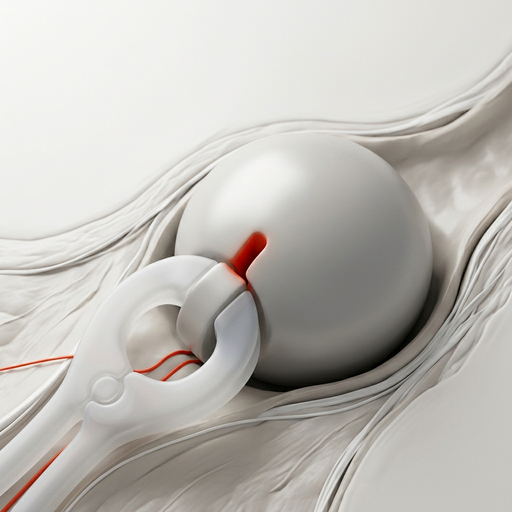
The problem was the shape of the thing. A conventional drug works like a key in a lock: it fits into a pocket on its target protein and jams the mechanism. The RAS protein, when scientists finally mapped its structure, offered almost no pockets. Its surface was smooth, rounded, featureless — a billiard ball where a lock should be. Worse, its on-switch works by gripping a small molecule called GTP, and RAS grips GTP with an affinity so ferocious that no drug candidate could pry it loose; trying to outcompete the cell's own chemistry at that binding site was like trying to outbid someone with infinite money. Decade after decade, the pharmaceutical industry threw everything at it — drugs aimed upstream, drugs aimed downstream, drugs aimed at the cell membrane where RAS does its work — and decade after decade, the programs failed in trials or died in the lab. The biggest of those failed assaults deserves its own paragraph, because it was big enough to carry an era's hopes. RAS does its work at the inner face of the cell membrane, and to reach the membrane it must first be dressed in a lipid tail by an enzyme — so the industry reasoned that blocking the tailor would keep the switch from ever reaching its post. A whole class of drugs was built on the idea, pushed through trials by some of the largest companies in the world, and the results were a slow-motion catastrophe: the drugs worked beautifully on the enzyme, and the tumors shrugged, because the cell had backup tailors the biologists had not accounted for. The episode cost billions, consumed a decade, and taught the field the lesson that would eventually unlock everything: you cannot fight RAS head-on. You have to find the one place its armor is thin — and that place might be different for every variant of the protein.
By the two thousands, undruggable had hardened from description into doctrine. A generation of young scientists was actively steered away from RAS, because brilliant people had spent thirty years proving there was nothing there.
The crack came, as cracks in walls usually do, from someone looking at a slightly different wall. In twenty thirteen, a team at the University of California, San Francisco, led by the chemist Kevan Shokat, reported something subtle and decisive: one particular mutant version of RAS — a variant called G12C, in which a single amino acid is swapped for a cysteine — had a narrow crevice that appeared only when the protein was in its off state, and the cysteine's chemistry allowed a drug to dock in that crevice and weld the switch permanently off. Not outcompete GTP. Not jam the active site. Slip into a hidden pocket — an allosteric pocket, in the structural biologist's term, a site away from the active center that nonetheless controls the machine — and lock the protein in the off position. It worked only for G12C, one variant among many. It was enough — a foothold is not a summit, but a foothold is a start, and forty years of failure had produced not even that. Within eight years, the first drug built on that insight was approved for lung cancer patients whose tumors carried that specific variant — sotorasib, in twenty twenty-one, followed by a second, adagrasib — and the forty-year doctrine was dead: RAS was druggable, at least in pieces. The approvals were scientifically historic and clinically modest, as first versions usually are: responses measured in months, resistance arriving on schedule, benefit confined to the sliver of patients carrying that one variant. But their real function was proof of concept. The hidden pocket was real, the welding trick worked in actual human beings, and now the race was to generalize the trick from one rare variant to the whole family of switches — which is to say, from a foothold in lung cancer to the diseases where RAS does its worst damage.
At My Audio Books dot A I, you can listen to this story and thousands of others that explore the hidden science and mechanics behind the headlines.
But the pieces mattered, because G12C is rare in the cancers where RAS does the most killing. Pancreatic cancer — the disease where RAS mutation is nearly universal — runs mostly on other variants: G12D, G12V, G12R. The first-generation drugs locked onto a variant pancreatic tumors almost never have. This is where the story's second act belongs to a company called Revolution Medicines and to an idea called state-selective inhibition. The biology of the RAS switch has two shapes — the on-state, bound to GTP, and the off-state, bound to its spent form — and the mutant proteins that drive pancreatic cancer spend most of their time jammed in the on-state. Rather than hunt each variant's private crevice, the company's chemists built a molecular bear hug, and the hug's mechanics are worth a moment because they are genuinely clever. The drug does not work alone. It first recruits one of the cell's own abundant proteins — a chaperone called cyclophilin A, present in every cell — and the two together form a composite surface that clamps selectively onto the on-state of mutant RAS, multiple variants at once. The cell's own machinery is conscripted into holding the switch down. It is less like picking a lock than like persuading the building's doorman to help you hold a door shut. One drug, many mutants. Daraxonrasib is the first of these multi-selective RAS(ON) inhibitors to reach patients, and the pancreatic trial is the proof the approach works in the clinic: a single molecule taking down the entire family of switches that drive the deadliest common cancer. Behind it comes a deliberate family: compounds aimed selectively at the G12D variant that dominates pancreatic tumors, others at G12C and the resistance mutations that emerge under treatment — a platform, in the industry's honest sense of that word, where the bear-hug chemistry is the reusable chassis and the targeting is swapped per variant. The forty-year war produced, in the end, not a single weapon but a weapons program.
The disease context makes the trial's numbers legible, so it is worth three sentences of stage-setting. Pancreatic ductal adenocarcinoma kills roughly fifty thousand Americans a year, is climbing the ranks of cancer killers even as other cancers decline, and is usually found late, because the pancreas hides its tumors deep and quiet until they have already spread — which is why most patients meet their oncologist at stage four, where the five-year survival rate sits in the low single digits. The tumor is also physically defended: it wraps itself in a dense scar-like stroma that drugs penetrate poorly, which is one reason chemotherapy's gains in this disease have been counted in weeks, not years. Into this landscape walked a pill.
The trial deserves its own careful reading, because it is both better than it sounds and less than a cure, and the honest listener deserves both halves. The better half comes in two statistics, each of which earns its own explanation. The first is the hazard ratio — the statistic that compares death rates between the two arms of a trial, where one point zero means no difference — which came in at zero point four, a sixty percent reduction in the risk of death, extraordinary in any solid tumor and unheard of in this one.
The second is median overall survival — the time by which half the patients have died, the field's hardest and least gameable endpoint, the one no biomarker can substitute for when the disease is this fast. Doubling it, from six point seven months to thirteen point two, against standard chemotherapy, in previously treated metastatic patients, is the kind of result pancreatic oncology has quite literally never seen from a targeted drug. The less half: thirteen months is not remission; the control arm was second-line chemotherapy, a weak and weakening standard; and the entire history of targeted cancer therapy says the tumors will adapt — resistance is not a risk but an expectation, usually within a couple of years. The drug is a reprieve, not a pardon. In pancreatic cancer, a reprieve measured in doubled months is still the largest advance in a generation.
The strongest case against the breakthrough framing — the argument for calling this a foothold rather than a summit — deserves a full hearing, because the history of cancer breakthroughs is a history of tempered enthusiasms. Single-agent targeted therapies in solid tumors have a brutal track record of resistance: the tumor finds a bypass, a second mutation, an alternative pathway, and the median benefit, real as it is, fades. The trial's population was selected and its comparator modest; real-world performance in sicker, messier patient populations will likely look worse. The drug's price, like every new cancer drug's price, will be high enough to become its own news cycle. And the multi-selective approach, precisely because it grips the on-state shared by normal as well as mutant RAS, has a therapeutic window that will need watching — the line between hitting the cancer's switch and jostling the body's is the line the trial was really testing. All of that is true. And none of it changes what the trial established: the wall is down. The target that ate forty years of failure now has a drug on it, with a mechanism that generalizes.
It is worth pausing on what doubled months mean in a disease like this, because the arithmetic of survival statistics hides a human reality that deserves one unflinching paragraph. A median of six point seven months is a diagnosis in autumn and a funeral by spring; a median of thirteen point two is another birthday, another school year for a grandchild, another summer, the time to finish the things a person decides to finish. Doubling is not a cure and this article has said so. But in a disease where progress has been measured in weeks for fifty years, a doubling is not a statistic either. For the five hundred families inside that trial, it was the difference between one season and two, and that is what the phrase practice-changing actually refers to.
Three developments would disprove or confirm whether the foothold becomes a high-water mark, and each is observable. First, the resistance readouts: as the trial's patients are followed, the mechanisms by which their tumors escape the drug will be mapped, and whether second-generation combinations — the drug plus a pathway partner — can beat the escape is the single most important question in the field right now. Second, the frontline move: the drug is already being tested in newly diagnosed patients, where the bar is different and the potential far larger; if the benefit holds there, pancreatic cancer's standard of care changes entirely, not incrementally. Third, the family effect: the same tri-complex chemistry is being aimed at the specific variants that dominate lung, colorectal, and other RAS cancers, and the speed with which this first approval converts into a class of drugs will tell us whether the forty-year war ends in one battle or in a campaign already won.
It is worth saying what this article has not claimed. It has not claimed a cure; no credible voice in oncology uses that word for this result, and this article follows them. It has not claimed the drug works for all RAS cancers or all pancreatic cancers; the trial was specific, and the label is specific. It has not claimed resistance will be beaten; it has claimed the question is now testable, which is new. And it has not claimed the era of chemotherapy is ending; the drug arrives as a partner to existing therapy, not a replacement for it. The wall came down. The city beyond the wall is still being fought over, block by block.
The rest of the wall-map is already being redrawn on the RAS template. MYC, the amplifier gene behind a huge share of cancers, long considered as featureless as RAS ever was, is being hunted with the same find-the-hidden-pocket logic. The broken safeguard p53, the most commonly mutated gene in human cancer, is the target of drugs designed to refold the mutant protein into working shape. The fusion proteins that drive childhood leukemias and sarcomas, once dismissed as undruggable for the same smooth-surface reasons, are being attacked with molecular glues that force them into the cell's own disposal machinery — a trick that owes its confidence, directly, to the lesson that RAS taught: no target is undruggable, only un-drugged-so-far.
Which returns to the word that defined the problem for two generations: undruggable. It was never a property of the protein, it turns out — it was a property of the era's chemistry, a verdict about the tools available, mistaken for a fact about the target. The switch was always there, on-state and off-state, waiting for a molecule shaped like the answer. The lesson generalizes in the way the best scientific lessons do: today's undruggable targets — the transcription factors, the fusion proteins, the tangles of Alzheimer's — are not walls either. They are just walls we have not yet found the hidden pocket in. Somewhere in a lab right now, someone is looking at a slightly different wall. That is how every one of these stories has ever ended.
At My Audio Books dot A I, you can create fiction, non-fiction, and turn your documents into audio, all stored in one place with a single subscription — plus get instant access to thousands of audiobooks and deep-dive investigations. Learn more today at My Audio Books dot A I.