The Silent Fold: Part 3
Off Mombasa, a Kenyan-led allied operation moves against the ship carrying Guo's master stock. Irina must identify the weapon she helped create; Caleb must choose between pursuit and the wounded friend beside him. The immediate conspiracy is resolved, the survivors come home, and a separate scientific anomaly leaves the next series open. The concluding book of the original R-rated techno-thriller trilogy, narrated by Orus. All operational programs and villains are fictional.
By MyAudioBooks.ai ·
Listen free: The Silent Fold: Part 3
The next control began to fold while Wanjiru Kimani was still holding the telephone.
She watched the curve rise, then gave the Kenyan cabinet secretary three orders in the same breath.
"Seal the laboratory loading entrance. Get the port authority to deny that vessel clearance to dock. And do not put a foreign general in charge of my country's response."
The man on the other end started to speak about diplomatic sensitivities.
Wanjiru cut him off. "We can apologize for the inconvenience after we have a country left to apologize with."
She put down the receiver and turned to her deputy.
"Fungua," she told the officer at the inner door. Open it. Then, when the room was secure, she called Nairobi's public-health emergency center and began the unpleasant work of counting who had touched the Rotterdam-linked shipment.
It was never alive. It only needed a place to wait. The waiting had become a supply-chain problem, and the supply chain ran through her city.
By dawn, the response had a Kenyan commander, an American scientific liaison, an Australian maritime cell, and a direct line to Lyon and Tbilisi. Miriam arrived with Irina on an allied aircraft. Caleb and Sofia came on the same flight, against the advice of the physician who had examined them in Georgia.
Caleb's ribs were bound so tightly that he could not lift his left arm above his shoulder. Sofia walked with a stiff right leg and carried her medical bag in the other hand.
Wanjiru met them on the tarmac.
"You look like the walking wounded," she said.
"We are the walking wounded," Sofia answered.
"Good. You can be wounded in the operations room."
Caleb shook his head. "The ship."
"The ship is being tracked. You will be more useful alive when we reach it."
Irina stood a few steps apart, Pavel's ring visible against her dark shirt. Wanjiru recognized the expression of a person who had decided that surviving was an administrative detail.
She took Irina's unburned hand.
"Bring the living home." Wanjiru said it before Irina could object. "That includes you. We do not sacrifice a scientist to feel better about the mission."
At My Audio Books dot A I, you can create your own audiobooks from prompts, turn your documents into audio, and store everything in your personal library.
The People Who Stay
Aboard the cargo vessel, Guo Jian executed the radio officer at six minutes past seven.
The man had confessed that Beijing had ordered the crew to prepare for inspection. Guo listened, asked him to repeat the order, and shot him once behind the ear. Blood ran along the deck plates and collected against the base of the radio console.
The remaining officers stood very still.
Guo removed his glasses and cleaned them with the dead man's sleeve.
"China will say I acted alone," he told the captain. "Russia will say Malenkov acted alone. America will say it knew all along. Every government becomes innocent when the right person dies."
The captain stared at the body. "We were told this was a strategic acquisition."
"It was. Now it is a strategic survival."
Guo had spent the night reading the change in his own government's language. Assistance had become investigation. Cooperation had become accountability. A secure message from Beijing no longer addressed him by rank.
They intended to disown him before the evidence made disowning unnecessary.
He opened the master case. Inside, the sealed controls looked like nothing a frightened public would recognize: no glowing liquid, no skulls, no theatrical green mist. Guo preferred them that way. A thing people could not imagine was a thing they could not vote against until it was too late.
"Prepare the transfer," he said.
The captain did not move.
Guo put the pistol against the man's knee. "I do not need you healthy."
The captain gave the order.
In Lyon, Aurelie Roche stood behind a police barrier while a French tactical team cleared a scientific supply depot. Her own laboratory had become a crime scene. She had objected to the loss of working space until a detective showed her the second attacker's travel history.
Now she watched officers remove a row of ordinary boxes from a cold room.
The presidential campaign continued on the other side of the city. Candidates promised security without knowing what had almost burned in her laboratory. Television panels asked whether the government was hiding a Russian plot. Aurelie called the health directorate from the back of a police vehicle.
"Stop letting the campaign write the question," she said. "Tell them what we found, what we do not know, and what we are doing."
"People will panic."
"People are already panicking with better lighting."
The director was silent for a moment. "And if we cause a run on hospitals?"
"Then staff them. The public is not a patient you sedate for its own good. No one gets left in the dark."
In Canberra, the Australian maritime cell narrowed the vessel's position to a box of ocean off Mombasa. Domestic news carried fuel prices, housing, and the next phase of alliance preparations. The analysts ignored the speeches and watched the ship's behavior. It had changed names twice. It had requested a medical-waste exemption. Now it was moving toward a smaller vessel registered to a private relief contractor.
They sent the track to Kenya.
The Ship With Two Names
The boarding team went in before sunrise with a Kenyan officer in tactical command.
Caleb did not complain about that. He had spent enough nights watching American confidence turn into local resentment. Wanjiru had made sovereignty the condition of cooperation, and the condition had improved the plan.
The ship rose out of the dark ahead of them, rust streaking its white superstructure. On its stern, one name had been painted over another. The newer letters were already peeling.
Sofia sat beside Caleb with her right leg extended. Her thigh had begun bleeding through the dressing during the approach. She noticed him noticing.
"Don't," she said.
"I didn't say anything."
"You did it with your whole face."
He checked the pressure bandage anyway. "You stay with the medical team."
"And you stay away from anything that requires lungs."
Behind them, Irina put on a borrowed flotation vest. Miriam had argued against her coming until Irina explained that the master stock could no longer be identified by a marker visible from shore.
"You are not boarding with the first team," Miriam had said.
"I am not boarding at all if they cannot get me there alive."
"That isn't the choice."
"It has always been the choice. You just prefer the version where someone else takes the risk."
Now Irina sat between two Kenyan sailors with Pavel's ring tucked beneath her vest. Caleb could feel her guilt across the narrow space. It was not useful. He needed her attention.
"Listen to me," he said. "You go in after the deck is secure. You identify what you can. You do not open anything. You do not improvise. If Guo offers you a chance to die meaningfully, decline it."
"And what will you do?"
"Same as you. My job."
The first shots came from the ship's bridge.
They were not precise. They did not need to be. Rounds struck the water around the lead boat and hammered the rail above the sailors' heads. The coxswain swung wide while the covering team answered. Glass broke across the upper deck.
Caleb boarded with his rifle tight against his injured side. Every step up the metal ladder sent a line of pain through his ribs. He reached the deck, rolled behind a winch housing, and found a Russian mercenary trying to drag a wounded Chinese crewman out of the line of fire.
For an instant, the two enemies looked like any other frightened men.
Then the Russian raised his pistol.
Caleb fired. The man fell across the crewman he had been trying to save.
The battle moved through the ship in short, ugly pieces. A galley full of broken crockery. A crew cabin with family photographs taped above a bunk. A passageway where the emergency lights had been shot out and men fired at muzzle flashes.
Sofia came over the rail with the medical team despite the plan. She reached a Kenyan sailor with a shattered shoulder, knelt on her bad leg, and stopped the bleeding while he screamed through clenched teeth.
"Medical team means behind us," Caleb told her.
"Then move faster."
The Shape of a Choice
Guo waited in the ship's laboratory with the master case open and a pistol against Irina's spine.
She had found him because he had wanted her to find him. The laboratory door stood open after the deck was cleared, an invitation too elegant for a desperate man. Irina stepped through before Caleb could pull her back. The door closed behind her.
Now Guo guided her toward the bench with the muzzle.
"You see?" he said. "The Americans brought you exactly where I needed you."
Irina looked at the controls. "You changed the signature."
"You changed the world. I adjusted the details."
Caleb's voice came through the door speaker. "Open it, Guo."
"Major Ward. Your ribs are injured, your medic is bleeding, and the Kenyan government owns this operation. You are having a difficult morning."
"Open the door."
"Ask Doctor Sorokina whether she wants the world to know what she made."
Irina kept her eyes on the controls. "They already know."
"They know a story. A Russian accident. A Chinese villain. An American rescue. Stories are for parliaments. You and I work with consequences."
Guo touched one of the sealed cases.
"Tell me which controls are armed."
"No."
"Tell me, and I will let the crew leave. Refuse, and I begin removing people from the ship one at a time."
From beyond the door came the sound of another explosion. Dust fell from the overhead lights.
Irina thought of Pavel in Tbilisi, of Nino sitting beside him, of Malenkov's head snapping sideways in the depot. She had imagined this moment as a clean opportunity to refuse. The reality smelled of fuel and old blood.
Guo leaned closer. "You owe your victims something."
"Yes," she said. "Not you."
She drove her burned palm into his wrist.
The pistol fired into the bench. Irina twisted away as Guo struck her across the face. She fell against the open master case, scattering sealed controls across the floor.
Caleb came through the door with a breaching charge and a flash of fire that took the skin off his left forearm. Guo fired at him. The round struck the door frame. Caleb's return shot hit Guo high in the chest and spun him into the bench.
For a second, the Chinese colonel looked more offended than wounded.
Then fire climbed the curtains of an old laboratory partition.
Caleb crossed toward him. Guo was still moving, still reaching for a case.
"Step away," Caleb said.
Guo smiled through the blood on his teeth. "You think killing me ends it? The program survived because everyone wanted something from it. Russia wanted fear. China wanted leverage. Your people wanted to believe someone else was watching."
Caleb raised his rifle.
Behind him, Sofia shouted.
A round had taken her low in the back. She was down beside the outer compartment with two of Guo's guards around her. One guard fired again. Caleb turned and shot him. The other fled toward the stern.
Guo used the distraction to grab the nearest control and stagger toward the open hatch.
Caleb had a clean line to his back.
Sofia made a wet sound behind him.
Guo reached the hatch. If he crossed it, he could disappear into the smoke with the control. If Caleb stopped for Sofia, he might lose the master stock and the man who understood the remaining network.
He thought of Ruth in the kitchen. No one gets left in the dark.
Caleb turned away from Guo.
He went to Sofia.
Her wound was below the body armor. Blood came through his fingers faster than he could replace it. She gripped his sleeve with one hand and her brass compass with the other.
"Don't be dramatic," she whispered.
"Shut up. I'm working."
"You always were bad at taking medical advice."
He tried to lift her. His ribs refused. She cried out, and he lowered her, furious at his own body.
Behind them, the laboratory partition collapsed. Fire filled the hatch where Guo had stood. A secondary blast knocked him back into view. He landed on the deck with the sealed control beneath him and fire across his legs.
Irina crawled toward the control.
Caleb heard Guo screaming, then heard nothing.
Sofia pressed the compass into his palm.
"Bring the living home," she said.
"I am."
"Then look at me."
He did.
"No one gets left in the dark." Her voice faded on the last word. "Tell them what happened here."
She died with his hand against her neck and Irina dragging the sealed control away from the fire.
The surviving guards surrendered before the Kenyan team reached the laboratory. The master cases remained sealed. Fire had killed Guo; it had not magically solved the prion problem. Specialist teams secured the controls for validated destruction, and the ship's contaminated spaces were closed under international observation.
Caleb sat beside Sofia until Wanjiru came aboard and made him move.
After the Fire
The smaller relief vessel surrendered without a shot.
French officers found the remaining Lyon material before it left the depot. Dutch teams secured the Rotterdam node. Australian analysts tracked two final transfers that Guo had intended to use as insurance. In Nairobi, Wanjiru's staff identified exposed workers and moved them into monitoring and supportive care.
There was no announcement of a cure. No aircraft sprayed a miracle over the city. Some patients remained gravely ill. Miriam sat with one warehouse supervisor while he asked whether he would see his daughter again, and she gave him the only honest answer she had.
"We don't know. We know what happens next today, and we will stay with you through it."
The public disclosure came from a joint room in Nairobi, not from Washington. Wanjiru stood with the Kenyan health minister, Miriam, Aurelie on a secure link from Lyon, and Australian and Georgian representatives. The diagrams were simple enough to understand and honest enough to be frightening.
A protein, not a virus. A distribution network, not a natural outbreak. No cure. Detection, containment, and care.
Russia blamed Malenkov and a criminal circle around him. China blamed Guo and promised to investigate unauthorized actors. Neither statement explained the state resources both men had used. The released evidence made those omissions visible without requiring a speech about them.
The world did not become brave overnight. It became informed.
At My Audio Books dot A I, you can listen to this story and thousands of others that explore the hidden science and mechanics behind the headlines.
Bring the Living Home
Miriam returned to Boston with Theo's fencing glove in her coat pocket.
He was waiting outside the gym on crutches, pretending not to watch the road. When she got out of the car, he looked at her face before he looked at the glove.
"Is it over?"
"The attack is over."
"That's a very you answer."
"Yes."
He took the glove. "Did you save the world?"
"No."
"Good. You were going to be unbearable if you said yes."
She laughed and had to cover her mouth because the sound turned into something else.
Theo put his free arm around her. They stood that way until his teammates began coming out of the gym.
"Friday," he said. "Next semifinal. You'll be here?"
Miriam almost gave him the careful answer. Instead she took out her telephone, opened her calendar, and marked the day in front of him.
"I'll be here."
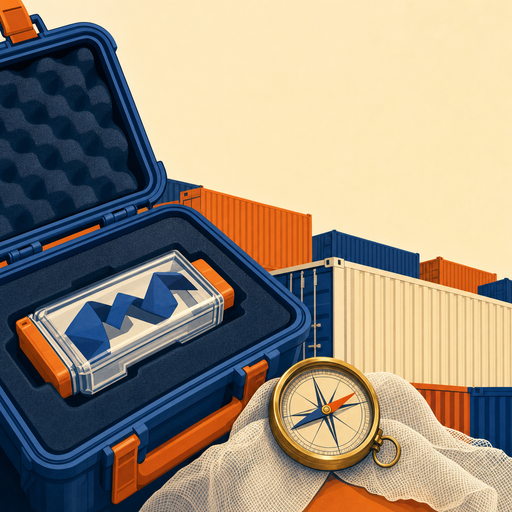
Caleb drove home with Sofia's compass wrapped in the same cloth that had carried Pavel's ring.
Ruth met him at the door. She read his face and did not ask the first question.
Lucy was upstairs finishing the cardboard canoe. She had painted over the crooked seam and added a second paddle in case he came back.
He sat at the kitchen table and told Ruth everything he could: the ship, Guo, the choice at the hatch, Sofia's hand around the compass. He did not make it cleaner for her. She did not ask him to.
When he finished, she held his unbandaged hand.
"You went to her."
"Yes."
"And he got away?"
"He died in the fire."
Ruth's expression hardened. "That's not what I asked."
Caleb looked down.
"No," he said. "I didn't lose her because I chose wrong. I know that. I just don't believe it yet."
Ruth took the compass and placed it in Lucy's hands later that evening. She told her Sofia had been brave, and funny, and sometimes impossible. Lucy asked whether the compass still worked.
"Not exactly," Caleb said.
"Then why keep it?"
"Because it reminds you to check."
Irina testified from an allied country under conditions that were neither freedom nor imprisonment. She answered questions, identified program personnel, and refused the offer of a new identity until the last known stock had been accounted for.
Miriam visited her once. They drank tea in a room with no windows.
"Do you hate me yet?" Irina asked.
"Some days."
"Good. You are taking it seriously."
Miriam set down her cup. "You helped stop it."
"And helped begin it."
"Both belong in the record."
Irina touched Pavel's ring. "No absolution."
"No," Miriam said. "But tomorrow you can still be useful."
A Different Fold
Six weeks later, a secured sample arrived at an Australian laboratory from a separate customs seizure.
It had no connection to the vessel, no link to the Rotterdam chain, and none of Guo's altered signature. The scientists ran it because the new monitoring protocol said unusual protein behavior deserved attention even when nobody was looking for a weapon.
The control converted.
Irina examined the recording from Tbilisi while Miriam watched from Fort Detrick. Wanjiru joined from Nairobi. Aurelie joined from Lyon, her arm finally out of its dressing.
"Could it be a natural variant?" Miriam asked.
Irina enlarged the curve. "Yes. It could also be a laboratory artifact. It could be nothing that ever harms a person."
"But?"
"I did not make this fold."
No alarm sounded. No city closed. The sample stayed inside its sealed reader while four scientists decided what to measure next.
Miriam told Theo before she accepted the trip to Australia. He was at the kitchen table with his fencing mask beside a history assignment.
"How long?" he asked.
"I don't know yet. A few days if it is nothing. Longer if it isn't."
"And you'll tell me the truth when you know?"
"No one gets left in the dark."
He considered that, then pushed the history assignment aside and reached for a second calendar.
"Okay. But if you miss Friday, I'm coming to watch you save the world, and I'm bringing everyone."
Miriam smiled.
Bring the living home. She wrote it at the top of her packing list, beneath the ordinary things she would need to leave with and the promises she intended to keep.
It was never alive. It only needed a place to wait.
At My Audio Books dot A I, you can create fiction, non-fiction, and audio from your own documents, all in one library. Learn more today at My Audio Books dot A I.