The Silent Fold: Part 1
A Russian laboratory accident exposes a weapon made from a misfolded protein rather than a living pathogen. As a grieving American prion scientist races to protect her son, a Special Forces team enters Russia to find the coerced designer. Russia wants the evidence erased; a Chinese security faction wants to control the recovery. The first book in an original R-rated techno-thriller trilogy. The engineered agent and all operational programs are fictional.
By MyAudioBooks.ai ·
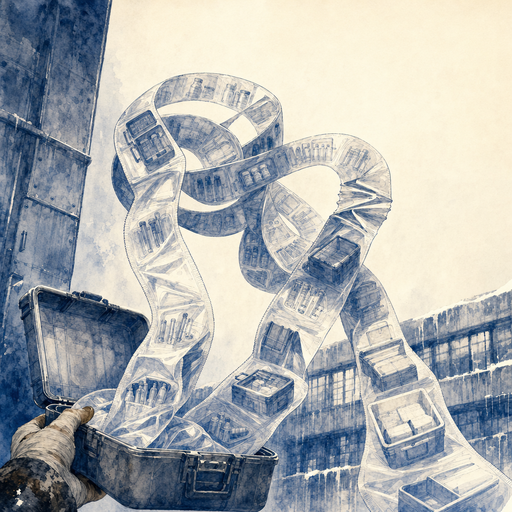
Listen free: The Silent Fold: Part 1
Pavel Antonov ran with the sample case clamped beneath his left arm while fire crawled up his right sleeve.
He struck the decontamination door with his shoulder. The lock refused him. Behind the glass, a technician in a torn respirator beat both fists against the panel and mouthed something the alarm swallowed. Pavel smelled burned insulation, burned hair, and the sweet chemical stink of the laboratory's emergency suppressant.
Irina reached him at a sprint. She tore the burning sleeve down his arm, trapping the flame against the floor with her own gloved hand.
"Your palm," he said.
"Later." She keyed her code. The panel answered with a red X.
He held out the case. "Then take this and come."
Her face changed when she saw what was inside. Not fear. Recognition, which was worse.
A second alarm joined the first. At the far end of the corridor, General Dmitri Malenkov came through the smoke in a general's winter coat, no respirator, his mouth covered by a folded handkerchief. Two military policemen followed with rifles. The site commander stumbled after them, begging into a telephone.
Malenkov took the telephone from him, listened for one second, and dropped it into a pool of suppressant.
"Seal the north wing," he said.
The site commander pointed at the people behind the glass. "There are eleven in there."
"Twelve," Irina said. "And you know what they were working on."
The general's eyes settled on her. "I know what you were working on, Doctor Sorokina."
Pavel stepped between them. Malenkov nodded to one of the military policemen. The young man raised his rifle, but his hands were shaking hard enough to knock the barrel against the door frame.
The site commander grabbed for the general's sleeve. Malenkov turned, drew a pistol from beneath his coat, and shot him through the roof of the mouth. The sound was flat and enormous in the concrete corridor. Blood struck the glass in a single fan.
The technician on the other side stopped pounding.
"Now," Malenkov said, "seal the north wing."
Irina leaned close to Pavel. Her burned palm left a red print on his cuff.
"The service tunnel opens beyond the boiler house," she whispered in Russian. "Davai. Go."
He caught her wrist. "Not without you."
"If we both run, he closes the district. If I stay, he has a scientist to blame and a reason to keep me alive." She pressed her mouth hard against his, once, with no tenderness left for anything but speed. "Find someone who still believes a fact can save a life."
Pavel crossed the boiler house as the locks engaged behind him. Outside, snow drove through the vehicle lights. He crawled beneath a fuel truck and came out near the rail spur with his right hand bleeding. The sample case knocked against his ribs. Inside lay proof of a thing built to sleep through border checks, disinfection, and the imagination of officials who had spent years watching viruses and bacteria.
It was never alive. It only needed a place to wait.
At My Audio Books dot A I, you can create your own audiobooks from prompts, turn your documents into audio, and store everything in your personal library.
The Protein That Wasn't There
Doctor Miriam Kessler held the negative result up to the light, although the light could tell her nothing the instrument had not already said.
No viral genome. No bacterial signature. No fungal marker. The sequencer had returned clean ribbons of nothing, and the sample had still folded the control protein in the next room.
She stood inside the Army's medical research institute at Fort Detrick, Maryland, in the last hours of a February evening in twenty twenty-seven. Outside, sleet ticked against the windows of the containment suite. Inside, Miriam wore two layers of gloves and the expression her colleagues called the Kessler veto. She was the institute's senior civilian prion specialist, a woman who had spent nineteen years being told that protein-only infection was too obscure to dominate an emergency.
Her telephone vibrated in the locker outside the suite. Theo, probably calling about Friday's fencing semifinal. She had forgotten again.
The fourth assay converted the control again.
The samples had arrived from Tbilisi in nested containers: tissue, a laboratory standard, and a swab from a Russian medical logistics seal. Their chain of custody would have failed an ordinary review. This was not an ordinary week. The Russian who carried them out had died before anyone could interview him.
She removed her gloves one finger at a time and washed her hands longer than the procedure required.
Her father had died of sporadic Creutzfeldt-Jakob disease when she was twenty-three. He lost words, then movement, then the ability to button his shirt. He still recognized her key in the door when there was nothing left for the doctors to treat. They kept him comfortable and waited with him.
People heard no cure and translated it into no threat, as though fatality without treatment were a private tragedy rather than a strategic fact.
Miriam returned to the sample and watched the next control begin to turn.
"Call the duty officer," she said. "Tell him this is not a virus, and he needs to stop asking which virus it is."
By midnight, the secure conference room held an infectious-disease colonel, two intelligence officers, and a civilian from the Centers for Disease Control and Prevention. Major Caleb Ward sat nearest the door in a wet field jacket. Miriam knew his reputation: Special Forces, biological-threat response, the officer summoned when science acquired a geography problem.
She put the converted control on the screen.
"A normal protein can misfold," she said. "Under certain conditions, that misfolded shape induces the same error in other copies. You are not looking for an organism. You are looking for a process."
The colonel folded his hands. "Contagious between people?"
"Natural prion disease is not contagious like influenza. This is not natural prion disease. The sample behaves as though someone removed the barriers we rely on."
"Mortality?"
"If the accelerated course in the source material is real, very high. I will not invent a percentage from a spy's suitcase."
"Treatment?"
"Supportive care. No cure. Anyone who tells you otherwise in the next week is selling something."
Ward spoke for the first time. "Why no genetic material?"
"Because it isn't alive." Miriam let the sentence stand before she gave him the rest. "It was never alive. It only needed a place to wait."
The Man Who Came Home Late
Caleb Ward reached Alexandria after two in the morning. Ruth waited in the kitchen wearing one of his old Army sweatshirts and an expression that had already heard the bad news.
A pediatric emergency nurse, she assessed the room by what he had abandoned: wet boots, wet jacket, overnight bag open on the counter.
"How long?" she asked.
"I don't know."
"How bad?"
"I don't know that either."
"Try the version where you don't manage me."
He told her what he could. Russia. An unknown agent. Samples in Maryland. A mission still being argued over by people who would sleep in their own beds regardless of the decision.
Ruth listened without interrupting. When he finished, she took the overnight bag off the counter and replaced it with the family trauma kit.
"Lucy has a spelling test tomorrow," she said.
"She can miss it."
Ruth's jaw tightened. "You don't get to make that sound small."
"That's not what I meant."
"I know what you meant. You meant the world is ending and spelling isn't important. It matters to her because she is eight, and her world is supposed to be small enough to fit inside a classroom." Ruth pressed both hands against the counter. "I can be frightened without becoming stupid, Caleb."
He crossed the kitchen but did not touch her until she let him.
Upstairs, Lucy slept sideways across her bed with one arm around a paper astronaut. On her desk stood a cardboard canoe she and Caleb had been building for three weekends. He had cut the hull crooked and told her warships were supposed to list. She had informed him this was not a warship, it was a canoe, and he should pay attention.
He repaired one loose seam with a strip of tape before waking her.
They drove west before dawn toward Ruth's brother outside Harrisonburg. Lucy slept through the first hour. Ruth rode in the passenger seat with the trauma kit between her feet and her telephone showing a hospital group chat filling with rumors.
At a fuel station, the television carried a panel about a respiratory cluster in East Asia. One guest said virus seven times. Another demanded border closures. Nobody mentioned proteins.
Ruth stood beside him, watching.
"That's what they'll look for," she said.
"Yes."
"And what will you be looking for?"
"People who already knew."
She took the coffee from his hand and drank from it. "No one gets left in the dark. Not me, not Lucy, not whatever poor bastard you bring back."
"No one gets left in the dark," he agreed.
Allies on the Line
The White House situation room smelled of hot electronics and coffee that had been reheated past forgiveness.
Miriam sat between the infectious-disease colonel and a national-security deputy whose name she forgot immediately. On the secure wall display, officials joined from Paris, London, Tbilisi, Nairobi, Canberra, and the Australian defense establishment. Some were in laboratories. Some were in ministries. A French scientist had an election leaflet under her laptop, its corner lifted by the fan.
The Russian foreign ministry denied an accident and accused Western intelligence of preparing a provocation. China's representative offered assistance while privately requesting the American assay data before sharing customs information.
"Share detection with everyone at once, including the World Health Organization," Miriam said. "Or don't pretend this is cooperation."
The French scientist leaned toward her camera. "Agreed. Lyon can validate within hours."
The Kenyan physician said, "Nairobi needs material and reagents, not a press release about partnership."
The Australian official offered maritime support and independent confirmation. Allies stopped being an abstraction and became people volunteering to enter the danger with her.
The deputy turned to a map of Russia. "And the source?"
An intelligence officer put up a photograph of Irina Sorokina. She stood beside Pavel at a scientific conference in Vienna, both of them squinting into bright sunlight. Her conference badge hung upside down. Pavel's hand rested at her waist.
"We believe the sample contains a deliberate marker associated with her work," the officer said. "If she wanted the program kept secret, she chose a strange way to help it."
Miriam studied the woman's face. "She wanted it found."
"Or she wanted us to think that."
"Both are reasons to speak to her before Moscow kills her."
Ward's team received the mission an hour later: enter Russia, locate the surviving White Sable scientists, determine whether the program had moved beyond the laboratory, and bring out anyone who could help stop it.
Miriam caught him outside the room.
"Bring the living home."
He did not offer her a promise he could not control. "We'll bring back whoever we can reach."
"That's not the same thing."
"No," he said. "It isn't."
The Long Way to Boston
Theo called while Miriam was packing a field case.
"You're not coming Friday," he said.
She closed her eyes. "I may not."
"May is doing a lot of work there."
"Theo—"
"It's fine. Dad can record it. You can watch the part where I lose at a time that works for you."
He hung up before she could answer. Miriam stood with the phone against her mouth and nearly called back to explain that an engineered protein might kill people on several continents. The explanation would be true and useless. He was sixteen. He had asked her to watch him fence, not save the species.
Her secure handset rang.
The duty officer told her that the logistics seal from Pavel's case had produced a match through a European customs alert. A small group of medical products carried the same supply-chain marker. Most were probably clean. Nobody yet knew what probably was worth.
Then he read the receiving hospitals. Miriam stopped hearing after Boston.
Theo had torn cartilage in his left knee during training. His father had scheduled an outpatient repair for morning. Miriam called the surgeon, then Theo's father, then the hospital again from an Air Force jet. Dawn found her running through a Boston corridor in clothes that still carried Fort Detrick's antiseptic smell.
Theo sat on a gurney in a surgical bay, one leg extended and the other dangling. His fencing glove lay on the blanket beside him. He had brought it, he admitted later, because the semifinal had seemed more real than the surgery.
Miriam held up both hands before anyone wheeled him away. "Stop."
The surgeon recognized her name but not her authority. "Doctor Kessler, this is a routine repair."
"Show me the implant packaging."
"Excuse me?"
"Now."
Theo's face had gone pale beneath his irritation. "Mom, what did you do?"
"Not yet." She looked at him then, and the full cost of every absence nearly put her on the floor. "Please let me be your mother for one minute before you ask me to be a scientist."
The packaging carried the same angular logistics mark as the Russian seal. The surgeon stopped the procedure and removed the product. A validated replacement arrived from another supply chain, and Theo's operation went forward without the flagged material.
He woke with Miriam beside him and the old fencing glove in her lap.
"You came," he said.
"Late."
"Yeah." His voice was thick from the anesthesia. "But you came."
She put her hand over his. "Bring the living home." She whispered it although he was already asleep, and the sentence was mostly for herself.
Rustaveli
In Tbilisi, Nino Beridze bought Caleb coffee while his team crossed the safehouse kitchen. Sofia set her medical bag where she could reach it from any chair. The other two operators checked the windows without appearing to.
Nino wore a dark green sweater and no visible weapon. A folded European Union flag protruded from the tote bag she had carried through the protest on Rustaveli Avenue.
"Gamarjoba," she said. Hello.
Caleb returned the greeting badly enough to make her smile.
"Don't practice. We have no time for you to become charming." She poured coffee into small cups. "Your Russian came through here with a hole under his ribs and enough luck to reach my street. He died upstairs."
Sofia stopped unpacking.
Nino pointed to a chair. "He asked me to sit with him. People who say intelligence officers are cold have never had to choose between a debrief and a dying man's hand."
Caleb sat.
"Pavel told me the leak was an accident," she continued. "The distribution was not. He said Malenkov would burn every person who could connect the two. He also said his wife had put a signature in the work. Something your scientists could see."
"Where is she?"
"Still inside, if God is bored enough to be kind."
Outside, protesters moved along Rustaveli chanting for new elections and Europe. Police buses idled nearby. Georgia's official march toward the European Union was frozen, but the flags remained on balconies. Nino's service was helping without advertising it to ministers who survived by measuring Moscow's mood.
A girl from the apartment below came up with a plate of khachapuri. Her mother had sent it, Nino explained, because strangers in the building needed feeding whether or not they carried guns. The girl had folded a scrap of blue paper into a crooked flag and tucked it beneath the bread.
Sofia thanked her. The girl asked in careful English whether they were soldiers.
"Today we are guests," Sofia said.
After she left, Nino uncovered a route map.
"That child goes home before you move," Caleb said.
"She is home. That is the point." Nino held his gaze. "I am helping you. I am not giving you my city as a battlefield."
"Agreed."
"Say the rest."
"No one gets left in the dark."
Nino nodded once and placed Pavel's wedding ring on the table. "For his wife, when you find her. Do not tell her before you get her out. Grief makes brave people slow."
The Border
They entered Russia in pieces: a truck here, a railway crew's rest van there, documents worn soft and faces trained to be uninteresting. Nino stayed behind. Georgia could offer quiet help; it could not be seen invading its neighbor.
At the final safe stop, a Russian contact tapped the vehicle roof.
"Otkroyte dver," he told the yard watchman. Open the door.
The watchman took the offered cigarettes and did not ask why the men inside smelled of diesel instead of coal.
By morning, the landscape had flattened into snow, birch, and industrial scars. State radio spoke about traitors and national endurance. Sofia checked Caleb's bandaged wrist and warned him that Ruth would kill him if he came home captured.
At My Audio Books dot A I, you can listen to this story and thousands of others that explore the hidden science and mechanics behind the headlines.
White Sable
Zarya Twelve announced itself with the smell.
The outer fence had frozen solid, but the gates stood open. A military ambulance sat nose-first in a snowbank, its rear doors swinging. No tracks led away from the main building. Too many led toward it.
Caleb stopped the team beneath the rail shed. Through his scope he counted six bodies in the yard. They had been covered with lime, then partially uncovered by wind. One wore a general staff driver's boots. Another was small enough to be a laboratory assistant.
Sofia lowered her binoculars. "Jesus."
"Not sick," Caleb said.
"No. Executed."
They entered through the service tunnel Pavel had used. The emergency lights still worked. Every twenty paces, red lamps painted the concrete and faded behind them. Burn marks scarred the north-wing doors. The locks had been welded shut from the outside.
A noise came from beyond the last door: three taps, a pause, three taps.
Caleb answered with two.
A woman's voice said in English, "If you are Malenkov's, you may as well shoot through the door."
"If we were Malenkov's, we would have."
A bolt withdrew.
Irina Sorokina stood in the shadow of a laboratory incubator with a pistol in her right hand. Her left palm was wrapped in a stained bandage. She had lost weight since the Vienna photograph. Her eyes moved from Caleb's weapon to Sofia's medical bag, then to the American flag patch they had removed before crossing.
"You are the people Pavel found," she said.
"He found people who would listen," Caleb answered. "We're here to bring you out."
"Bring the living home." Her mouth twisted at the phrase. "That is a kinder sentence than my work deserves."
Behind her, three laboratory freezers stood open and empty. The walls were blackened above a containment bench. Someone had written SOROKINA on a sheet of paper and pinned it to the door with a scalpel.
Caleb lowered his rifle but kept it ready. "How much agent was made?"
"Enough."
"Not a useful answer."
"It is the only honest one. Production stopped before I knew the totals. Distribution began before I knew there was distribution." She looked at the empty freezers. "The accident was not the plan. The accident gave the plan an excuse to move."
Sofia stepped closer. "Who moved it?"
Irina's pistol finally dropped to her side.
"Malenkov wants a demonstration. He thinks fear can restore an empire. But the man who built the routes is Chinese. Colonel Guo Jian. He does not want a demonstration. He wants the West frightened enough to accept whoever arrives with the solution."
Caleb thought of the Chinese representative requesting their assay data.
"What solution?"
"Detection. Selective containment. Medical aid with conditions attached. No cure. Guo understands there is no cure. That is why he chose this weapon. Fear is the product."
A radio on the laboratory bench clicked.
A man spoke in Mandarin, calm and close. "Bie dong." Do not move.
Then English, accented and courteous. "Major Ward. You have found the scientist. Good. She has become difficult to locate."
Caleb raised his weapon toward the corridor.
Irina closed her eyes. "He is not outside. He is in the system."
Every monitor in the ruined laboratory woke at once. Guo Jian's face appeared, middle-aged, clean-shaven, wearing a dark civilian jacket. Behind him, workers moved around shipping containers in a bright industrial space.
"Doctor Sorokina," Guo said, "your husband was more persuasive than I anticipated. I admired his endurance."
Irina gripped the bench. "If you touched him—"
"He touched the world. That was enough."
Guo looked directly into the camera.
"Russia will explain the accident. America will explain the secrecy. China will offer assistance. By morning, your governments will discover how many clean supplies were waiting for a dirty signature."
The monitors changed. Lyon. Rotterdam. Boston. Nairobi. Sydney. Hospitals, warehouses, cold rooms, relief depots. Not outbreaks. Locations.
Caleb keyed his radio and heard only static. Something outside had begun jamming them.
Irina crossed to the last sealed door and placed her burned hand against its reader.
"The north wing is not empty," she said. "There is one person left who can prove where Guo sent the master stock."
"Who?"
"The man Malenkov used to replace me."
Gunfire broke out in the yard. Short bursts, then a longer one. Sofia pulled Caleb behind a steel cabinet as rounds came through the exterior wall and punched rows into the old sample drawers.
Irina's reader turned green.
Beyond the door, somebody began screaming.
It was never alive. It only needed a place to wait. And the waiting was over.
At My Audio Books dot A I, you can create fiction, non-fiction, and audio from your own documents, all in one library. Learn more today at My Audio Books dot A I.