The Shopping List: What the World's Biggest Investors Are Actually Buying
Every year the largest pools of money on Earth publish shopping lists — and almost nobody reads them. This year the lists are saying no to almost everything the industry is selling: no to venture, no to fees, no to the boom's prices — and yes to bonds, power lines, and the AI buildout's physical plant.
By MyAudioBooks.ai ·
Listen free: The Shopping List: What the World's Biggest Investors Are Actually Buying
Every year, in the quietest corner of the financial world, the largest pools of money on Earth publish shopping lists. They are called mandates and requests for proposals — the formal notices in which a public pension fund, a university endowment, or a sovereign wealth fund announces that it has a few hundred million dollars to place and is inviting fund managers to compete for it. Almost nobody outside the institutional-money industry ever reads them. That is a mistake, because the shopping lists are the single most honest document in investing: not what the biggest investors say they believe in speeches and letters, but what they are actually buying, with actual money, right now. And the shopping lists of the last twelve months, gathered from the public filings of the great American pension systems and the private-market data we review in this channel, tell a story the headlines have almost entirely missed: the biggest investors in the world are not buying what the industry is selling. They are buying safety at any price, liquidity at any discount, and the machinery of the AI buildout without the valuations of the AI boom — and the gap between their lists and the industry's pitch decks is the widest it has been in a generation.
This is the story of what is on the lists — the shopping patterns of the only buyers in finance large enough to be honest, because they answer to retired teachers rather than to markets — and of what their quiet refusal tells us about where the smart money thinks we are in the cycle.
At My Audio Books dot A I, you can create your own audiobooks from prompts, turn your documents into audio, all with one subscription, and store your items in your own personal library.
First, understand the shopper, because it is not like any other buyer in finance. The American public pension system — the retirement funds of teachers, firefighters, police officers, and state workers, roughly five trillion dollars in aggregate — is the largest single class of investor in the world, and it is built for honesty in a way no hedge fund or sovereign fund is. Its obligations are known to the year and the dollar: a fifty-eight-year-old teacher retires in seven years and must be paid for thirty. Its decisions are public documents: the boards meet in public, vote in public, and publish their mandates in public, because the money belongs to the members. And its incentives are the purest in finance: it does not need to impress anyone, market anything, or beat a benchmark this quarter; it needs, in the cold language of the actuaries — the profession that prices promises decades long — to be able to pay the teacher in thirty years. The actuarial frame changes everything about how the shopping looks: risk is not volatility but the probability of a missed check, return is not a trophy but a funding ratio, and the worst outcome is not underperformance but a letter to the legislature asking for more money. When you read what this investor is buying, you are reading the least performative investment research that exists — the considered judgment of the people whose only job is to not run out of money.
Now, the lists themselves, and what they actually say. A few examples ground the pattern, because the biggest shoppers publish in remarkable detail. The California teachers' system — the second-largest pension fund in the country, and the one whose decisions the entire institutional world watches — has spent the last two years voting to raise its fixed-income target while capping its private-equity allocation, and its public investment memos say why in plain language: the income is finally available at acceptable risk. The New York City retirement systems have been running their own quiet rotation, hiring secondary-market managers to restructure older fund stakes and co-investment programs to bypass fund-level fees. State funds from Texas to Wisconsin have published infrastructure mandates with the same two adjectives attached: regulated and contracted. None of these boards called a market top. All of them voted the same way, in public, with the receipts attached.
Now, the lists themselves, and what they actually say. The first thing they say is that the great reallocation is over. For two decades, the standard institutional move was to add private assets — private equity, private credit, real estate, infrastructure — at ever-higher percentages, because the public markets offered no yield and the private markets offered the illusion of steady, superior returns. The current shopping lists show the shift to maintenance: the allocations to alternatives are at or near their ceilings, the new mandates are smaller and more surgical, and the language has changed from growth to management. The pension funds are not buying more of the private markets; they are buying better ways to manage what they already own — secondary funds to fix the liquidity problems this channel documented in the secondaries story, continuation vehicles to escape the zombie funds from the dry-powder story, and co-investment access to get the deals without the fees. The industry's own data confirms the reading: alternative-asset fundraising has fallen for consecutive years while the products built for liquidity and customization have grown to records. The shopper has stopped adding rooms to the house and started hiring a structural engineer.
The second thing the lists say is that the bond market is beautiful again, and this is the quiet earthquake underneath everything else in this article. For fifteen years, the shopping lists barely contained fixed income — bonds yielded nothing, and a fund that needed seven percent could not afford them. The lists of the last two years show investment-grade bonds, long-duration treasuries, and private credit competing for the largest new allocations in a generation, because the yields have returned: a pension fund that needs seven percent can now get five from the safest corporate paper in the world and close the gap with far less risk than a leveraged buyout fund. The AI debt wave this channel traced last week is, from the shopper's side of the table, exactly this trade — the pensions are buying the platforms' bonds because the platforms are finally paying them to. The most sophisticated money in the world is rotating from the equity story of the AI boom to the credit story of the AI boom, and it is doing so without a press release.
At My Audio Books dot A I, you can listen to this story and thousands of others that explore the hidden science and mechanics behind the headlines.
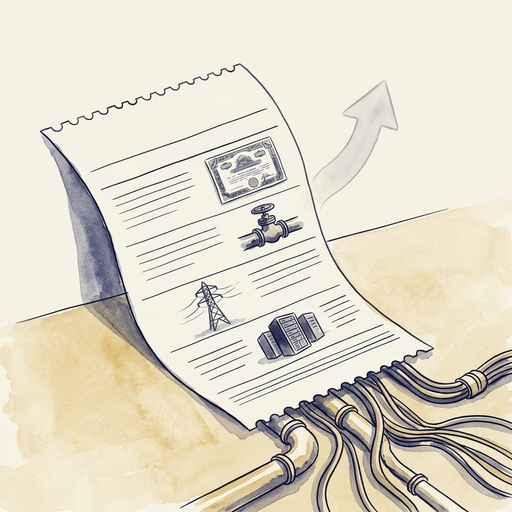
The third thing the lists say is that infrastructure has become the industry's comfort food — but only the boring kind. The mandates flowing into infrastructure are at records, and they are not chasing the glamorous end of the sector. The lists are heavy with regulated utilities, contracted power, water systems, transmission lines, and toll roads — assets whose revenues are set by governments or decades-long contracts and whose cash flows arrive like clockwork regardless of what the stock market does. And woven through them, unmistakably, is the buildout's own supply chain: the data centers, the power purchase agreements, the grid connections — the physical picks and shovels of the AI era, bought at infrastructure prices rather than technology prices. The shopping lists say the smart money wants the AI boom's electricity and its buildings, not its valuations. It wants to sell the picks and shovels to the miners, not to be the miner. The pattern is so consistent across the lists that it reads like a single sentence written by fifty different boards: we believe in the boom; we do not believe in the boom's prices.
The fourth thing the lists say is what is not on them, and the absences are as loud as the purchases. Venture capital, the asset class that defined institutional portfolios for a generation, has nearly vanished from the new shopping lists — the venture-capital index in the industry's own allocation data has shrunk to a fraction of its peak share, and the boards' public minutes explain why in language of unusual bluntness: the returns did not justify the fees, the exits did not arrive, and the benchmark for the asset class was set by a handful of companies the pension funds could not buy into anyway. Hedge funds, the other great fee machine, face the same quiet exit — the mandates for them have been shrinking for years, and the current lists continue the trend, with the boards noting that the supposed diversification benefit arrived precisely when it was not needed and vanished when it was. And the most interesting absence of all: the mega-funds, the giant buyout vehicles that dominated the lists for a decade, now share the shopping lists with their own dismantling tools — the co-investment vehicles, the direct deals, the secondary stakes — as if the institutions had decided that if the industry will not sell them what they want at a fair price, they will simply build it themselves.
The strongest case against the prophecy — the case that the lists are simply prudent housekeeping, boring rebalancing by boring boards, containing no signal worth reading — deserves a full hearing, because most of the time that is exactly what the lists are. Public pension boards are conservative by design; their shifts are glacial — rebalancing, the periodic resetting of a portfolio back to its target mix, is the most dramatic move most of them ever make — their language is bureaucratic, and reading deep market prophecy into a utility mandate is usually a category error. The rotation into bonds is what every textbook says to do when yields normalize; the infrastructure appetite is what every consultant has recommended for a decade; and the pause on new private-equity commitments is the mechanical consequence of the distribution drought this channel covered in the secondaries story — the boards are not making a judgment, they are simply out of cash because their funds stopped returning money. On this reading, the lists say nothing about the future. They say the shoppers are doing arithmetic, and arithmetic is not news.
And the strongest case that the lists are the story of the year is written in the one thing the shoppers cannot do that everyone else can: they cannot lie. A hedge fund can talk its book; a bank can sell its research; a fund manager can believe its own pitch; but a public pension board must publish its votes and defend them to a room of actuaries, union representatives, and state treasurers, and the votes are money. When fifty such boards independently arrive at the same four moves — liquidity over growth, credit over equity, infrastructure over venture, self-reliance over fees — they are not coordinating; they are all reading the same cycle from the same seat. The shopping lists are the closest thing investing has to a census of what the honest money actually believes, and what the honest money believes right now is: the easy returns of the private-markets era are over, the bonds are back, the boom is real but its prices are not, and the next decade will be won by whoever owns the boring assets that the boom cannot live without. The industry is selling dreams. The lists are buying insulation.
Three developments would disprove or confirm the lists' quiet prophecy, and each is observable in the same public documents. First, the allocation reports: the great pension systems publish their actual positions annually, and if the private-asset share keeps drifting down while bonds and infrastructure keep rising, the rotation is real and structural rather than a liquidity-driven pause. Second, the fee wars: if the mega-funds begin cutting fees and offering customized, cheaper structures to win the shrinking mandates, the shoppers have won the pricing battle the lists have been quietly fighting — if the industry holds its fees while losing the mandates, it has chosen margins over market share, and the lists will only get more independent. Third, the venture correction's end: if the venture shopping lists return in force when the exit market reopens, the absence was cyclical; if they do not return even then, the honest money has concluded that the asset class itself, in its current form, no longer earns its place.
It is worth saying what this article has not claimed. It has not claimed the private markets are dead; the shopping lists still contain them, in more surgical form, and the industry's assets continue to grow. It has not claimed the pension funds are market timers; they are the least timing-driven investors in existence, and the article says so. It has not claimed the AI boom is a bubble; the lists buy its physical infrastructure enthusiastically, which is not how you bet against something. And it has not claimed any specific fund is in trouble; the strength of the great public systems is documented, and the article questions nothing but the industry's pitch. The claim here is narrower and more useful: the most honest documents in investing are the shopping lists of the people who cannot lie, and this year the lists are saying no — politely, quietly, and in public — to almost everything the industry is selling at the industry's prices.
Which returns to the shopping lists themselves, and the strange democracy of them. Every quarter, in meeting rooms in Sacramento and Albany and Austin, boards of teachers and firefighters and civil servants vote on where a few hundred million dollars should go, and the votes are published, and almost nobody reads them. The industry reads its own pitch decks and calls it research. The boards read the world and vote, and the world they have voted for this year is made of bonds, power lines, water systems, secondary funds, and the physical plant of the AI boom — everything except the story the industry is telling. The lists are not predictions. They are receipts. And receipts, in the end, are the only market research that has ever been audited.
At My Audio Books dot A I, you can create fiction, non-fiction, and turn your documents into audio, all stored in one place with a single subscription — plus get instant access to thousands of audiobooks and deep-dive investigations. Learn more today at My Audio Books dot A I.