The Rendering Was the Product: The SEC and the Space Hotel That Sold Fourteen Hundred People
The SEC's September 2026 complaint against the space-hotel startup that sold 1,400 retail investors a rotating station opening in 2027 — with $360,000 in assets against its own $4-6 billion estimate. We read the complaint and the company's own filings: the patents that never existed, the partners who never partnered, and the rendering that was the product.
By MyAudioBooks.ai ·
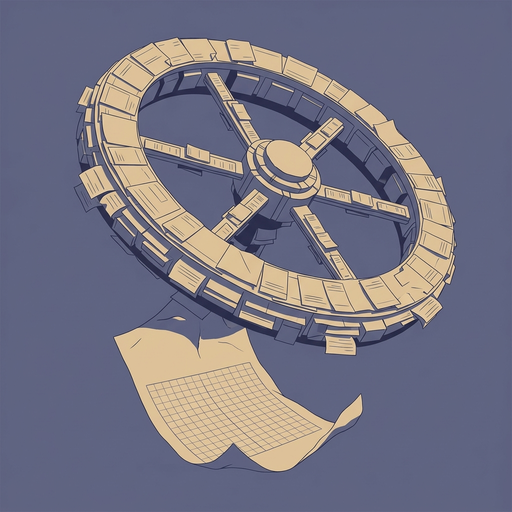
In the pitch deck, the space station is beautiful. A rotating wheel in orbit, one hundred and ninety-four meters across — about two football fields — with, in the deck's own words, "artificial gravity," room for three hundred guests and a crew of one hundred, and beneath the rendering a date: "Operation planned: 2027." We read the Securities and Exchange Commission's complaint against the company that sold that rendering, and our verdict is this: the rendering was the product. The company never got past what the complaint calls the basic architecture phase, its own internal estimate for the big station was four to six billion dollars, and its financial statements at the time showed total assets of approximately three hundred and sixty thousand dollars. Fourteen hundred retail investors put in about two point nine million anyway, roughly two thousand dollars at a time, and on September twenty-ninth, twenty twenty-six, the S E C filed settled charges against the company, its former chief operating officer, and its current chief executive.
At My Audio Books dot A I, you can create your own audiobooks from prompts, turn your documents into audio, all with one subscription, and store your items in your own personal library.
The defendants are Above: Space Development Corporation, formerly known as Orbital Assembly Corporation, a startup founded in twenty nineteen that ended up in Huntsville, Alabama; Timothy Alatorre, forty-six, its chief operating officer, acting chief financial officer, and chairman, who left the company in March of twenty twenty-six; and Rhonda Stevenson, fifty-six, its chief executive since April of twenty twenty-one. The charge is negligence — Section seventeen-a-two and seventeen-a-three of the Securities Act — not fraud. Everyone settled without admitting anything. We will be exact about what that means, and we will also show you why the document, a fifteen-page complaint filed in the Northern District of California, is one of the most quietly instructive things the S E C has published this year. It is not really a story about a space hotel. It is a story about what happens when a pitch deck meets Regulation Crowdfunding.
Section One. The Hotel on the Slide
Start with what investors were told, because the complaint reads the offering materials back to us. For the first offering, in early twenty twenty-one, Orbital's Form C offering statement and its website described plans to design, build, and operate a large rotating space station that would serve as a hotel for three hundred visitors and a hundred crew, and the website said this so-called Voyager-class station would be operational in twenty twenty-seven. For the second offering, which opened that November, the investor pitch deck added the rendering: the wheel, one hundred and ninety-four meters in diameter, with, quote, "artificial gravity," and the line "Operation planned: 2027."
The same deck introduced a smaller station — the Pioneer-class, about thirty-seven meters across, housing up to twenty-eight people — and claimed it would be operational in twenty twenty-five, "designed to generate revenue in the following areas: tourism, manufacturing, research, leasing and hosted payloads." The smaller ring, investors were told, would eventually grow into the bigger one. This was not a paragraph of aspirations buried in a risk section. This was the sales document, the thing the offering was built around.
Here is what the company looked like from the inside at the same moment, according to the complaint. At any given time during the entire period, Orbital employed about four other people besides the two executives — only two or three of them engineers. Its own internal estimate said it would need at least ten to twenty engineers just to design the stations, and considerably more technicians to build them. It never hired them — not before the third offering, not before the fourth. Its internal cost estimates said the Voyager-class station would take approximately four to six billion dollars to construct, and the smaller Pioneer-class more than two hundred and fifty million dollars. Its financial statements for the year ending December twenty twenty-one disclosed total assets of approximately three hundred and sixty thousand dollars. The stations never got past the basic architecture phase — never to initial engineering, never to preliminary design review, never to detailed engineering, for either project, ever. Total assets peaked at around eight hundred and forty thousand dollars during the third and fourth offerings, when the Pioneer-class was supposedly less than three years from opening.
Hold those two numbers next to each other, because they are the whole story in miniature. Four to six billion dollars needed. Eight hundred and forty thousand dollars held at the best moment the company ever had. The gap is a factor of about seven thousand. The complaint does not say the company's dreams were physically impossible, and we will not say it either — maybe some generation builds a wheel in orbit. The complaint says something narrower and much harder to argue with: that this company, at this staffing level, with this bank account, told investors it would be done by a date it had no reasonable basis to believe.
Section Two. Crowdfunding One-Oh-One
To understand what went wrong here, you need the machine it ran on. Regulation Crowdfunding came out of the twenty twelve JOBS Act, and it exists to let ordinary people — unaccredited investors, meaning anyone, no wealth test — buy equity in early-stage companies through online intermediaries. A company files a Form C with the S E C, posts its offering on a registered platform, and sells shares in amounts that can be as small as a hundred dollars. The current cap is five million dollars per company per year. The whole design assumes the documents are the diligence: no roadshow, no underwriter, no venture fund asking hard questions in a conference room. The Form C is the conference room.
Orbital used it five times. The complaint itemizes the ledger: the first offering, January through April of twenty twenty-one, raised nine hundred and ninety-five thousand dollars. The second, November twenty twenty-one through April twenty twenty-two, raised one million, three hundred and twenty-five thousand, seven hundred and fifty. The third, that winter, one hundred and forty-three thousand, four hundred and forty-seven. The fourth, spring and summer of twenty twenty-three, three hundred and eighty-six thousand, five hundred and fifty. The fifth, October twenty twenty-three through March twenty twenty-four, ninety-one thousand and ninety dollars. Add them: nine hundred ninety-five thousand, one million three hundred twenty-five thousand seven hundred and fifty, one hundred forty-three thousand four hundred and forty-seven, three hundred eighty-six thousand five hundred and fifty, ninety-one thousand and ninety — about two point nine four million dollars, from more than fourteen hundred retail investors, at least sixty of them in the Northern District of California, which is why the case landed in San Francisco.
Read that ledger again as a curve, because it is one. Nine hundred ninety-five thousand, then one point three million — the deck was new, the renderings were gorgeous, and the twenty twenty-seven date still sounded plausible. Then one hundred and forty-three thousand. Then three hundred and eighty-six. Then ninety-one. The claims never changed — the deck still showed the wheel turning in orbit — but the raises collapsed by more than ninety percent from the peak. The crowd repriced the dream in real time. Nobody at Orbital revised a single date in response; the twenty twenty-five Pioneer opening stayed in the materials through offerings that closed in twenty twenty-four.
And what did the buyers actually take home? Class B common stock — non-voting shares, per the company's own Form C — in a private company with no exchange and no liquid market. There is no sell button. Under the rules, those shares can barely be transferred for a year, and after that, only if someone wants them. The complaint describes the company as having, quote, "no products or revenues, and its financial liabilities far exceed its assets." A non-voting, illiquid share in that company is not an investment you can exit. It is a receipt for a story.
And one more line from the company's own Form C, filed with the S E C in late twenty twenty-four and sitting on EDGAR for anyone to read: the intermediary platform's fee structure was a twenty-five hundred dollar listing fee plus commission tiers, and total commissions earned from the company's lifetime raises on that platform stood at four hundred and fifty-seven thousand, seven hundred and five dollars as of October thirty-first, twenty twenty-four. Everybody at the table got paid something. The platform took its nearly half a million. The executives took salaries. The investors took the story.
Section Three. The Arithmetic of Impossible
Now the part where we do the math the deck never showed. Four to six billion dollars for the big wheel. The whole Apollo program cost about twenty-five billion in nineteen-seventies dollars; the International Space Station, the only rotating-adjacent habitat humanity has actually built — and it does not rotate — cost well over a hundred billion and took twelve years and fifteen nations to assemble. Orbital's internal estimate for its own station was four to six billion, and its plan was to go from two engineers and six total staff to a finished, operating, crewed station larger than anything ever built by a private company, in four to six years, on a few million dollars of crowdfunded equity with no other revenue. The complaint's dry formulation is that the company "lacked the staffing, technical capabilities, and funding, among other resources" to realistically achieve those timelines. Our read is shorter: the rendering was the product, and everyone who could read a balance sheet knew it.
At My Audio Books dot A I, you can listen to this story and thousands of others that explore the hidden science and mechanics behind the headlines.
Section Four. The Three Inventions
If the complaint stopped at optimistic timelines, it would be a shrug. It does not stop there. It charges three families of specific, checkable, past-tense claims that were false when written.
The first invention is the patents. The first offering's Form C told investors the company had, quote, "three design patents for in-space construction robots, with more on the way." The second offering repeated it. Later materials went further: "patented components" for robots, then, in the third offering, a claim the company would use "its own patented trade secrets to build hybrid space stations with the advantages of microgravity and partial artificial gravity," and by the fifth offering, "patents, either granted or applied for." Here is the truth, per the complaint: Orbital did not own any patents. The company's first chief executive owned two utility patents and one design patent in his own name; he never transferred them to the company, and he took them with him when he left during the first offering. The robots were not optional decoration — the offering materials themselves said construction robots were essential because there was, quote, no "permanent workforce in space." The essential technology did not exist as property of the company selling shares on it.
The second invention is the partners. In the pitch decks for the second, third, and fourth offerings, and in the fifth offering's Form C, Orbital put the logos of two well-known aerospace launch companies on slides titled, quote, "Our Partners," "Strategic Partners," or "Strategic Affiliates." The reality, per the complaint: the company had a few meetings with each. The first launch company did provide a letter saying that if Orbital won a particular government award, it would be interested in working with them. Orbital learned around December of twenty twenty-one that its application had not been selected — and left the logo in the deck for three more offerings, a year and a half of raises, without any agreement, collaboration, or purchased services from either company. Stevenson herself was the primary contact for both entities.
The third invention is the gravity ring. In the Form C statements for the second through fifth offerings, Orbital told investors that first-offering funds had been used for purposes including, quote, "Gravity Ring Fabrication" — a free-standing circular structure that would demonstrate artificial gravity and mark real progress. As of September twenty twenty-four, months after the last offering closed, the complaint says construction on the gravity ring had not even begun. Not that it failed. That it never started.
Section Five. The Reckoning That Isn't
So what happens to a company and two executives who do all of that and settle? The company is permanently enjoined from violating Section seventeen-a-two and seventeen-a-three of the Securities Act. Both executives accept, for three years, a bar on participating in the issuance, purchase, offer, or sale of any security, except for their own personal accounts. Alatorre pays a fifty thousand dollar civil penalty. Stevenson pays no penalty at all — contingent on the accuracy and completeness of her Statement of Financial Condition, which is the court's way of saying she swore she cannot afford it. No one admits anything. No one is criminally charged. The company, the complaint notes, still exists.
One more detail tells you how long the S E C had been circling. The defendants signed three separate tolling agreements — contracts that pause the statute of limitations — first suspending it from December thirtieth, twenty twenty-five, to March thirtieth, twenty twenty-six, then twice more, collectively running the clock out to September twenty-eighth, twenty twenty-six. The complaint was filed September twenty-ninth, the day after the last tolling agreement expired. The investigation that produced this document took the better part of two years, run out of the S E C's San Francisco Regional Office — the complaint names the investigators, Christine Hom with assistance from Jason Bussey, supervised by Chrissy Filipp, David Zhou, and Jason Lee. Two years of document requests and interviews, three tolling agreements signed by counsel who knew what was coming, and a filing dated the day the clock ran out. That is what assembling a case a defense lawyer cannot unwind looks like.
Now the strongest case for the defendants, at full strength. Startups are supposed to be aspirational. Regulation Crowdfunding exists precisely so ordinary people can take venture-scale risks with eyes open, and every space company that ever amounted to anything started as two people and a rendering. The charge here is negligence — knew or should have known — not intent, and the defendants admitted nothing, which means nothing in the complaint is a proven fact. Space is hard, and if you prosecuted every ambitious timeline in a pitch deck, you would not have a commercial space industry.
We think that objection earns the negligence-not-fraud concession, and it deserves it. But it loses on tense. The complaint is not about optimism about the future. It is about sentences written in the past and present tense in documents signed and filed with a regulator: funds that had been "used" for a fabrication that never began, patents the company "had" that it never owned, partners who were "strategic" after the one contingent letter died. Aspiration is allowed to be wrong about tomorrow. It is not allowed to invent yesterday. That line is the entire case, and it is the right line.
Our verdict stands. The Orbital story is not the tale of a space hotel that failed; it is the tale of how easy the current rules make it to sell a beautiful rendering to people who cannot possibly check it, for about two thousand dollars a ticket, with the platform paid, the officers paid, and the lesson paid only by the fourteen hundred. The next rendering is already in a deck somewhere, with "artificial gravity" and a date underneath it. Read the Form C. Look for the patents yourself. Ask what the company estimates its own dream costs, and what it has in the bank. The rendering was the product — until the documents say otherwise, it always is.
At My Audio Books dot A I, you can create fiction, non-fiction, and turn your documents into audio, all stored in one place with a single subscription — plus get instant access to thousands of audiobooks and deep-dive investigations. Learn more today at My Audio Books dot A I.