The Reactor on the Moon: The Power Race That Decides Who Stays
The lunar night lasts fourteen days — and it deletes every solar-powered plan for a Moon base. NASA and the DOE just signed the document committing to a fission reactor on the lunar surface by 2030. The real Moon race isn't the race to visit. It's the race to remain.
By MyAudioBooks.ai ·
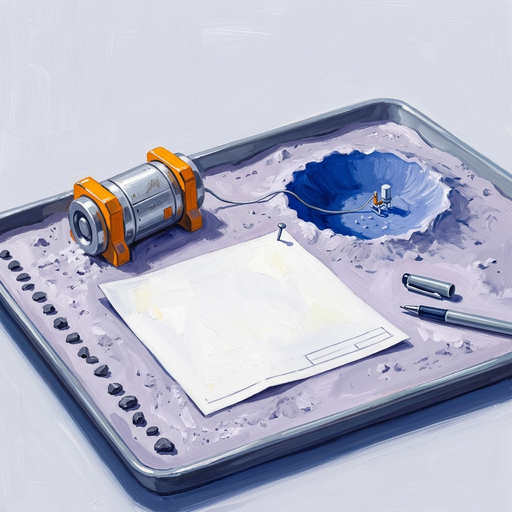
Listen free: The Reactor on the Moon: The Power Race That Decides Who Stays
On the Moon, night lasts fourteen days. That is not a poetic line; it is the single most important engineering fact in the entire project of living beyond Earth, and it explains a document signed this year that most people missed entirely. A lunar day is about twenty-nine Earth days long — two weeks of unbroken sunlight, then two weeks of darkness so cold that unprotected machinery cracks, batteries drain, and anything that needs power dies. Every plan humanity has ever made for a lasting presence on the Moon has run into that fortnight of night and stopped there, because the obvious power source — the Sun — abandons the surface for half of every month, and no battery humanity can launch bridges two weeks of darkness at the scale a base requires. The sunlight problem has been the quiet killer of every lunar-colony drawing since the nineteen fifties. This year, NASA and the Department of Energy signed a memorandum of understanding committing the United States to the only answer that has ever survived the arithmetic: a fission reactor, sitting on the lunar surface, running continuously for a decade or more, by twenty thirty. The grid humanity is building on the Moon will not be solar. It will be nuclear — and the document that makes it official is now signed.
At My Audio Books dot A I, you can create your own audiobooks from prompts, turn your documents into audio, all with one subscription, and store your items in your own personal library.
To see why a reactor is not an option but a prerequisite, you have to follow the power through a lunar day, because electricity on the Moon is not a utility — it is the difference between a campsite and a civilization. Everything a permanent lunar presence requires runs on it, and the list is longer than the romantic versions suggest. The habitats need it for air, water recycling, and heat through the night. The rovers need it to work. The science instruments need it to run for years rather than days. And above all, the entire economic logic of being on the Moon at all needs it: the plan that makes a lunar base more than a flags-and-footprints stunt is living off the land — harvesting the water ice trapped in the permanently shadowed craters at the south pole, and converting it into drinking water, breathable oxygen, and rocket fuel. That process — in-situ resource utilization, the unglamorous term for turning Moon dirt into the supplies of survival — is ferociously power-hungry: electrolyzing water into hydrogen and oxygen is one of the most energy-intensive industrial processes there is, and it must run continuously, night and day, to matter. A base that can only work in daylight is a base that produces half its needs and survives none of its nights. The fourteen-day night does not merely inconvenience the lunar economy. It deletes it — unless the power comes from somewhere the Sun cannot switch off.
The reactor NASA and the Energy Department have committed to is the answer engineered specifically for that deletion, and its specifications read like a checklist of everything the Moon throws at machinery. The Fission Surface Power system — the program's name — is designed to produce roughly forty kilowatts of electricity, about enough for a small neighborhood on Earth, and to produce it continuously for at least ten years with no refueling, no maintenance crew, and no human intervention at all. It must survive the launch, ride down to the surface, start itself up, and run through temperature swings of hundreds of degrees between lunar noon and midnight, forever untouched. It flies to space cold and safe — the reactor is not activated until it is sitting on the Moon, which is the design's answer to the launch-accident question that has haunted space nuclear power since the first radioactive payload: even a worst-case rocket failure scatters an inert core, not a live one. And its fuel is a form of low-enriched uranium that regulators can live with, enriched enough to run a small reactor for a decade but far below weapons grades. The design did not spring from the MOU; it descends from a lineage the agency has been proving quietly for years, including a full-scale ground test in twenty eighteen in which a working prototype reactor was run start-to-finish under space-relevant conditions and performed to specification. The memorandum is the moment the prototype's descendants got a destination and a date.
The geopolitics arrived on schedule, as they always do when power moves beyond a border. The United States is not the only country writing a nuclear Moon into its plans: the China-Russia lunar partnership — the International Lunar Research Station, the rival architecture to the American-led Artemis program — has its own nuclear power plans for the Moon's surface on a similar twenty-thirties timeline. Two competing programs, two reactor projects, one small ball of rock — and the reason power is the real race is that power decides presence: the south pole's useful ground, the crater rims with near-continuous sunlight and the shadowed floors with the ice, is finite, and the program that can power a continuous presence there owns the only real estate on the Moon that currently matters. The rockets get the headlines. The reactors decide who gets to stay. The MOU is, in the cleanest reading, the United States formally entering the part of the Moon race that is actually being run — not the race to visit, which Apollo won sixty years ago, but the race to remain.
At My Audio Books dot A I, you can listen to this story and thousands of others that explore the hidden science and mechanics behind the headlines.
The strongest case for the reactor — stated at full strength, because the engineering logic is genuinely beautiful — is that it is the only technology that closes the lunar power budget honestly, and closing that budget unlocks everything behind it. Solar works on the Moon only where the Sun never sets — a handful of crater-rim ridges at the poles, the most contested real estate in the solar system — and even there it fails the moment a mission ventures into the shadows where the ice is. Batteries cannot bridge a fourteen-day night at habitat scale; the mass required would consume the entire launch. Fuel cells need fuel shipped from Earth forever. The reactor is the one answer that runs everywhere, all the time, for a decade, with no supply line — and it scales with the ambition: the same design that powers the first outpost powers the ice harvesters, the fuel plant, the expanded base, and eventually the Mars version, where the sunlight problem is worse, the dust storms last for months, and the night is just as lethal. Buy the reactor once and the entire architecture of deep-space presence becomes purchasable with it. That is not an incremental improvement to the Moon program. It is the difference between a program and a place.
And the strongest case against — stated with the sobriety space nuclear power has earned over sixty years — begins with the date, because twenty thirty is closer than any space-nuclear schedule has ever survived. The program's own history is a trail of slipped milestones; space reactors are the category of technology where the gap between tested prototype and flight article has swallowed decades before, and the MOU's commitment is ambitious even by the standards of an agency that wrote the Artemis calendar and then watched it slide. The launch-safety politics are real even with a cold core: flying uranium at all activates a regulatory and public-acceptance gauntlet that has delayed or killed past nuclear missions, and the review process for a fission payload will not be waved through on the strength of a memorandum. The cost is its own question mark: a bespoke lunar reactor, launched and emplaced by the most expensive lift architecture in history, carries a price that competes directly with every other priority in a strained space budget. And there is a question the engineers cannot answer: what does a decade of continuous fission power on the Moon mean for the places it powers — the exhaust heat, the radiation environment, the pristine shadowed craters the scientists want to study — and whether the presence of a reactor forecloses some of the science the presence was meant to enable.
Three developments would disprove or confirm the lunar-reactor era in the years directly ahead, and each is observable. First, the flight hardware: the transition from ground-tested designs to a funded, fabricated flight article with a launch assignment is the gate every space reactor has historically died at — if a flight unit is under assembly and manifested — assigned a slot on an actual flight — on a lander, the era is real; if the program remains in study-and-prototype loops, the MOU is a letter of intent dressed as a schedule. Second, the launch-safety review: the regulatory pathway for a fission payload — the analyses, the public process, the sign-offs — will show whether the politics of space nuclear power have actually thawed since the last era's fights, or whether the gauntlet still rules the calendar. Third, the rival clock: the China-Russia station's own reactor milestones will either arrive on their timeline, forcing the issue, or slip in the same gravity every such program meets — and the relative pace of the two programs will tell us whether the power race is a race at all or a shared apprenticeship in the same hard physics.
It is worth saying what this article has not claimed. It has not claimed the reactor is built; the flight article does not exist yet, and the article says so. It has not claimed solar is useless on the Moon; it works where the Sun cooperates, and the article says that too. It has not claimed the geopolitics make conflict inevitable; the two programs' coexistence questions are open, and the article leaves them open. And it has not claimed twenty thirty is a promise; it is a signed target with a long tradition of such targets behind it, presented here as exactly that. The claim is narrower: the power question is the real Moon race, the United States has now formally committed to the nuclear answer, the answer descends from hardware that has already run on Earth, and the document is signed — which is further than any lunar-reactor plan has gone in the history of trying.
Which returns to the fourteen-day night, and the strange fact that the entire future of living beyond Earth may turn on a simple duration of darkness. Every civilization humanity has ever built began the same way: with a source of power that worked where nothing else would, and then everything else built around it. The Moon is about to get its first version of that — not a flag, not a footprint, not a photograph, but a machine that makes electricity through the night, in the cold, alone, for a decade, so that everything else can live. The MOU is a boring document about a reactor. It is also, in the longest view, the first building permit ever issued for a grid beyond the Earth. The night is fourteen days long. Someone just signed the paperwork to end it.
At My Audio Books dot A I, you can create fiction, non-fiction, and turn your documents into audio, all stored in one place with a single subscription — plus get instant access to thousands of audiobooks and deep-dive investigations. Learn more today at My Audio Books dot A I.