The Principal Era: How Sovereign Funds Stopped Paying for Access
For forty years the world's biggest pools of money paid billions in fees for access to deals. Now they're at the table as owners — co-buying data centers with Microsoft and Nvidia, taking Electronic Arts private. The $12 trillion shift from customer to owner that nobody voted on.
By MyAudioBooks.ai ·
Listen free: The Principal Era: How Sovereign Funds Stopped Paying for Access
For forty years, the largest pools of money on Earth were also the quietest. Sovereign wealth funds — the state savings accounts of Norway, the Gulf monarchies, Singapore, and a dozen other governments, some twelve trillion dollars in aggregate — existed to turn oil money and trade surpluses into financial security for nations, and they did it the way prudent giants do: by hiring other people. They were the ultimate limited partners — a limited partner being the passive investor who commits capital to a fund manager's vehicle and waits a decade for the result, carrying no say in the deals themselves. They paid billions in fees to the world's private-equity firms, hedge funds, and asset managers for access to deals they could not source, evaluate, or manage themselves, and they asked for almost nothing in return except steady returns and no headlines. The arrangement made the sovereign funds rich and the fund managers richer, and for two generations it was the fixed geometry of global finance: the states had the money, the managers had the machinery, and the fee for the machinery was two percent a year and a fifth of the profits.
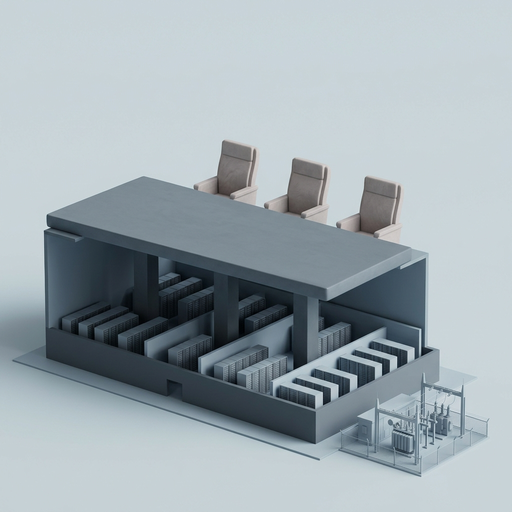
The geometry is breaking, and the deal data shows the fracture lines spreading through the biggest transactions of the year. When one of the largest data-center operators in America changed hands this summer for forty billion dollars, the buyer was not a private-equity firm. It was a consortium — a buying club — and the named members included the Kuwait Investment Authority, one of the oldest sovereign funds on Earth; MGX, Abu Dhabi's new artificial-intelligence-dedicated fund; and Temasek, Singapore's state investment company, sitting alongside Microsoft, Nvidia, and the world's largest asset manager. When Electronic Arts, the largest games publisher in the West, was taken private for fifty-five billion dollars a month later, the leader of the buyer group was Saudi Arabia's Public Investment Fund, which is not a customer of the deal industry but increasingly its rival. And those are only the largest entries in a list that now runs through airports, football clubs, power grids, and semiconductor plants: the sovereign funds are no longer paying for access to the commanding heights of the economy. They are buying the heights outright, with their own teams, their own terms, and their own names on the deal.
This is the story of the principal era — how the world's state savings stopped being the fee-paying customers of global finance and started being its owners, why the shift happened now, and what changes when the biggest pools of capital on Earth answer not to pensioners but to states.
At My Audio Books dot A I, you can create your own audiobooks from prompts, turn your documents into audio, all with one subscription, and store your items in your own personal library.
First, the money itself, because the scale is what makes the shift matter. The hundred-odd sovereign wealth funds on Earth control roughly twelve trillion dollars — more than the entire hedge-fund industry, more than the private-equity industry, more than the GDP of every country on Earth except two. The Norwegian fund, the largest, owns on average one and a half percent of every listed company in the world. The Gulf funds — Abu Dhabi's several funds, Saudi Arabia's PIF, Kuwait's KIA, Qatar's QIA — hold trillions more, much of it invisible to public markets. And the Asian funds — Singapore's two, China's several, Korea's — anchor the rest. For decades, this money moved through intermediaries — the middlemen of finance, the fund managers and banks who stand between capital and deals and charge for the passage — because it had to: the funds were savings accounts, not deal machines, staffed by hundreds where the firms they hired employed thousands. The relationship was lucrative for everyone and especially for the intermediaries, and the sovereign funds accepted the fee structure as the cost of admission to markets they could not navigate alone.
Three forces broke the arrangement, and they arrived in sequence over fifteen years. The first was capability: the funds grew up. They hired the deal teams — poached the partners, the analysts, the sector specialists from the very firms they used to pay — until the largest of them now field investment staffs that rival mid-sized private-equity firms, with the added advantage that their capital has no end date. A sovereign fund does not have a ten-year fund life or an investment-period clock; it has, in the industry's phrase, patient capital — money that can wait fifty years for a return, which makes it the natural buyer of exactly the assets everyone else struggles to hold: power grids, ports, data centers, infrastructure with thirty-year paybacks. The second force was the fee reckoning: as the funds' sophistication grew, the industry's fee structure began to look less like a service charge and more like a toll. When your staff can evaluate a deal as well as the manager's staff, paying two and twenty for the privilege of the manager's brand name stops being admission and starts being rent. The third force was strategic: the governments behind the funds began to see the money as policy. A savings account does not care whether the country has artificial-intelligence infrastructure; a state does. A savings account does not need food security, semiconductor supply lines, or a post-oil economy; a state needs all three. And when the money's purpose changed from save to build, the fee-for-access model became not just expensive but incoherent — you cannot outsource a national strategy.
At My Audio Books dot A I, you can listen to this story and thousands of others that explore the hidden science and mechanics behind the headlines.
Now the evidence, because the deal data makes the shift visible in a way that speeches never could. The consortium structure is the tell: when the forty-billion-dollar data-center deal was assembled, the sovereign funds did not write a check to a buyout firm and wait — they sat at the table as named principals alongside the strategic buyers, negotiating governance rights, board seats, and long-term positions in the asset. This is the defining form of the principal era: the consortium, a buying club in which each member is large enough to be its own institution, and the sovereign funds are often the largest checks in the room. The fifty-five-billion-dollar games deal is the second tell, and it is louder: Saudi Arabia's Public Investment Fund did not join that deal — it led it, with the kingdom's strategic goals attached openly to the transaction, from esports to entertainment-industry development at home. The PIF's evolution is the archetype of the whole story: a fund that a decade ago was a quiet portfolio of domestic holdings has become, under an explicit national-transformation mandate, one of the most active direct dealmakers on Earth, buying everything from football clubs to electric-car factories to the future of gaming. The third tell is the new funds being born already in the principal form: Abu Dhabi's MGX was created not as a savings vehicle but as a strategic AI investor from day one, mandated to buy into the artificial-intelligence stack — chips, data centers, models — at the level of nations rather than portfolios. The sovereign funds are no longer the industry's customers. They are becoming its sovereigns, in the older sense of the word.
What does the shift change? Three things, and they compound. The first is the fee structure of global finance: the fund-management industry was built on the assumption that the world's largest pools of capital would always pay for access, and the principal era removes that assumption at the top of the market. The biggest managers have responded by selling the sovereigns what they cannot easily build — the giant flagship funds, the co-investment slots, the customized separate accounts — which is why the relationship has not ended but repriced: the states still hire the machinery, but increasingly as contractors on their own terms, not as principals on the manager's. The second change is the time horizon of the deals: sovereign capital is structurally patient, and assets that were once bought to be sold in five years are now being bought to be held for thirty, which changes what the assets are for. A data center owned by a state with a fifty-year horizon is a different object than a data center owned by a fund with a five-year one — better maintained, more patiently developed, and permanently off the market. The commanding heights of the AI buildout are being bought by owners who will never sell, which means the future's infrastructure is being nationalized in all but name — just not by our nation. The third change is the one that makes diplomats read the deal data: when a state's savings become a state's strategy, every transaction is also foreign policy. The Gulf funds' positions in American AI infrastructure are simultaneously investments and relationships; Saudi Arabia's entertainment empire is simultaneously a business and a reputation; and the question of whether these deals are commerce or statecraft — the exercise of national power through national wealth — has no clean answer, because in the principal era the two are the same document.
The strongest case against the alarm — the case that this is just finance growing up, that the sovereign funds are simply becoming the sophisticated global investors they always should have been, to everyone's benefit — deserves a full hearing, because the efficiencies are real. Patient capital is genuinely good for long-lived infrastructure; the data centers, grids, and ports the sovereigns are buying are exactly the assets that suffer most from the five-year flip cycle of conventional private equity, and owners who never have to sell are owners who can maintain, upgrade, and wait. The fee repricing is a healthy correction to a toll structure that had outlived its justification — the managers who still earn sovereign mandates now earn them by being better, not by being necessary. The strategic dimension is not inherently sinister: nations have always invested in their own security of supply, and a Gulf state buying into the AI buildout is doing exactly what Norway does with its oil fund, only with newer assets. And the consortium form itself is cooperative rather than imperial — the sovereigns are buying alongside American companies, American asset managers, and American regulators' full view, in deals that are reviewed, disclosed, and approved through the same processes as any other foreign investment. On this reading, the principal era is the maturation of the world's savings into the world's most patient capital, and everyone — the assets, the markets, and the long-term savers the money belongs to — is better off.
And the strongest case for reading the shift more carefully is written in the difference between a customer and an owner. A customer of the financial system takes its rules; an owner writes them. The principal era means that an increasing share of the West's strategic infrastructure — the data centers that train the models, the grids that power them, the entertainment properties that shape culture — is being governed by entities whose ultimate accountability runs to foreign ministries, not to shareholders or pension boards, and whose strategic interests are their own. The review processes that exist for foreign investment were designed for occasional, exceptional cases — the port sale, the media company — not for a structural era in which a dozen states are perpetual buyers at the top of every market. And the patience itself has a shadow: owners who never sell and answer to no election can hold assets through political storms that would force any private owner to divest, which means the governance of the commanding heights is becoming insulated from the political systems in which those heights physically stand. The question the principal era poses is not whether the sovereign funds are good owners — they often are excellent ones. It is whether the democracies whose infrastructure they are buying have decided, deliberately or by default, that this is the arrangement they want.
Three developments would disprove or confirm which reading of the principal era holds, and each is observable. First, the governance terms: the consortium deals now being signed contain board seats, veto rights, and information access negotiated by the sovereign members, and the pattern of those terms — disclosed gradually through regulatory filings — will show whether the sovereigns are buying passive stakes or influence. Second, the review evolution: whether the foreign-investment review regimes in the United States and Europe expand to match the era — covering data centers, AI infrastructure, and minority consortium positions as they now cover ports and chips — will tell us whether the host governments have chosen the arrangement deliberately or are still processing it. Third, the holdings' behavior in a downturn: patient capital proves itself in a storm, and the first serious decline in the value of these assets will reveal whether the sovereigns hold, buy more, or discover that even state patience has a price.
It is worth saying what this article has not claimed. It has not claimed the sovereign funds are hostile actors; they are among the most carefully regulated, internationally engaged investors on Earth, and the article says so. It has not claimed the fee-for-access era is over everywhere; the repriced relationship between the states and the managers is described here at length, and it is a repricing, not a divorce. It has not claimed any specific deal threatens any specific country; the deals cited are reviewed, disclosed transactions, and the article's question is structural, not about any one of them. And it has not claimed the principal era is reversible or should be; the forces that built it — capability, fees, strategy — are not going back in the box. The claim here is narrower and more durable: the world's largest pools of capital have changed from customers to owners of the global economy's commanding heights, and the change is permanent, and nobody in the countries where those heights stand has formally decided what they think of it.
Which returns to the forty-billion-dollar table and the names around it — the Gulf fund, the AI fund, the Singapore fund, sitting beside the chipmaker and the software giant and the world's largest asset manager, jointly owning the buildings where the future is computed. Forty years ago, those names would have been on the other side of the table, writing checks to other people's funds and waiting for the statements to arrive. The statements no longer come by mail. The sovereigns are in the room where the deals are made now, and they are not guests — they are the reason the room exists. The principal era is not coming. It is here, it is patient, it is twelve trillion dollars strong, and it is buying.
At My Audio Books dot A I, you can create fiction, non-fiction, and turn your documents into audio, all stored in one place with a single subscription — plus get instant access to thousands of audiobooks and deep-dive investigations. Learn more today at My Audio Books dot A I.