The Only Guardrail Is the President: Anthropic, Trump, and the War Over Who Says AI Is Safe
The company that begged for regulation got export controls slapped on its own models. The administration that killed AI review adopted it after seeing what the model could do. And the president declared himself the only guardrail. An exposé of the strangest fight in technology policy.
By MyAudioBooks.ai ·
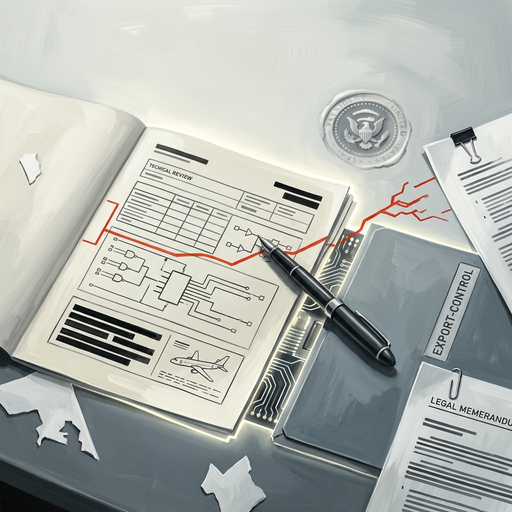
On a September afternoon in Washington, the President of the United States was asked about the growing calls — led, this time, by the chief executive of one of America's most important artificial-intelligence companies — for guardrails on the technology that is consuming his country's economy, and he answered with a sentence that will outlive every policy paper written this decade. The calls for a slowdown, for safeguards, for regulation, were the work of people pushing an agenda, he said. The talk of extinction risk was, in his word, a hoax. And then he delivered the sentence: a strong president is the only guardrail you need. Whoever wins AI, he added, wins.
The company he was talking about is Anthropic, the San Francisco laboratory that makes the Claude family of models — the company that was founded, explicitly and at some expense, on the proposition that the most important thing about advanced AI is not what it can do but whether it can be controlled. And the exchange was not a gaffe or a cable-news moment. It was the visible surface of the strangest, most consequential fight in American technology policy: a year-long, escalating war between a president determined to unleash the technology and the one major AI company that keeps asking, in public, to be restrained. It is a war in which every side has accused every other side of acting in bad faith, in which the company that begged for regulation got export controls slapped on its own models, in which the most anti-regulation administration in modern memory adopted a federal model-review framework it had publicly killed months earlier, and in which the head of the free world ended up declaring that the only safety mechanism the most powerful technology ever built requires is himself.
This is the story of that war — what actually happened, in what order, drawn from the public record and the reporting of the journalists who covered it — and of the question underneath it that nobody in the fight has answered: who gets to say an AI is safe?
At My Audio Books dot A I, you can create your own audiobooks from prompts, turn your documents into audio, all with one subscription, and store your items in your own personal library.
To understand the war, you have to understand the company, because Anthropic is not a normal combatant. It was founded in twenty twenty-one by siblings Dario and Daniela Amodei and a small group of senior researchers who left OpenAI — the company they had helped build into the leader of the field — over a disagreement about exactly this question: whether the race to build ever-more-powerful AI was being run with sufficient attention to whether the things being built could be directed. Anthropic's founding bet was that safety was not a constraint on capability but a path to it — that the company that could prove its models were steerable, interpretable, and honest would win the customers who cared, which turned out to be most of the Fortune five hundred. The bet worked commercially beyond anyone's projection: within five years, the safety company was valued in the hundreds of billions of dollars, its models were the default choice of the enterprise world, and its chief executive had become the industry's most credible voice on the specific subject of what these systems might do if nobody built brakes. The company's dual identity matters for everything that follows: Anthropic is simultaneously the loudest corporate voice for AI caution and the builder of some of the most capable AI systems on Earth. It is the company that warns you about the fire while selling the flamethrower — or, if you believe its telling, the company that builds the flamethrower precisely so that someone who understands it is the one holding it.
The other combatant is an administration whose AI doctrine was written for the opposite premise. The President returned to office promising to make the United States the unquestioned leader in artificial intelligence, and his July twenty twenty-five AI Action Plan said so in almost those words: the era's defining technology would be built here, fast, with the regulatory drag removed, the permitting for data centers and power accelerated, and the dead hand of caution-preempting-state-law lifted from the industry. The plan's logic was geopolitical before it was anything else: the race with China is the race, and anything that slows the American racer is, by definition, assistance to the other side. In December of twenty twenty-five, the doctrine got teeth: an executive order directing the Department of Justice to begin challenging state AI laws — the patchwork of safety and transparency statutes moving through places like California, New York, and Colorado — on the theory that fifty different rulebooks are themselves a drag on the race. Preemption, the lawyers' word for the federal government's power to override state law, became the administration's chosen instrument: not a federal framework of its own, but the systematic dismantling of everyone else's. The battlefield is worth a closer look, because the states had not been idle while Washington dithered. California had passed a transparency-and-accounting law for frontier developers — incident reporting, risk documentation, whistleblower channels — which the industry had fought and then, after amendments, largely accepted as survivable. New York was moving its own package. Colorado had enacted a discrimination-focused AI statute that the industry despised. And the safety camp, Anthropic included, had made a tactical bet that is central to the capture debate: that fifty state frameworks, however imperfect, create more total constraint than one federal vacuum. Sacks's preemption offensive was aimed precisely at that bet, and Anthropic's public support for some of those state laws is the factual core of his backdoor accusation — the company was, by its own admission, helping to build the regulatory patchwork the White House was trying to demolish. Whether that is safety advocacy or capture depends, as everything in this war does, on which question you think is being answered.
The first sign that the doctrine was less settled than it looked came in May of twenty twenty-six, in a reversal so fast it was measured in hours. The administration had drafted an executive order establishing a voluntary federal review process for frontier AI models — a light-touch framework under which the most powerful new models would get a government look before public release. Hours before it was to be signed, the President pulled it. The reporting at the time attributed the reversal to David Sacks, the administration's AI and crypto czar — the venture capitalist and podcaster who had become the White House's most influential voice on technology — who argued the order would slow innovation and hand China the lead. The order died, the doctrine of pure acceleration held, and the official position of the United States government in the spring of twenty twenty-six was: no review, no guardrails, full speed.
Then came June, and the company walked into the frame. On June tenth, Anthropic's chief executive, Dario Amodei, made the argument that would detonate the détente: in public comments, he called for mandatory third-party testing and auditing of frontier AI models before deployment — not voluntary commitments, not self-assessment, but government authority, exercised through independent audits, to block or delay the release of models judged too dangerous. The analogy he chose was deliberate and has echoed since: the Federal Aviation Administration does not let a new airliner carry passengers until it has been certified, and nobody calls that anti-innovation. The most powerful artifacts humanity has ever produced, he argued, should not face a lower bar than a regional jet. It was, in substance, a request by a leading AI company for the government to acquire the legal power to stop AI companies — including, necessarily, his own.
Three days later, the government acquired that power, in the most ironic way imaginable. On June thirteenth, after what Politico would later describe as a whirlwind twenty-four hours of tense phone calls between the White House and Anthropic's leadership — calls that covered national-security risks, model jailbreaks, and the capabilities of Anthropic's newest models, the systems known as Fable and Mythos — the administration announced export controls on Anthropic's latest models. Read that sentence again, because it is the hinge of the entire story. The company that had spent five years asking the government to build guardrails had just become the first AI company in American history to be formally restrained by the government from distributing its own product. The instrument was not a new safety framework, a certification process, or an audit. It was the export-control machinery built for weapons technology — the legal apparatus the state uses to decide what may and may not leave the country — applied, for the first time, to an American AI model. David Sacks, days after the order, accused the company not of excessive caution but of recklessness. The safety company had asked for brakes, and the government had answered by putting the brakes on the safety company.
At My Audio Books dot A I, you can listen to this story and thousands of others that explore the hidden science and mechanics behind the headlines.
And then the administration did the thing that completed the circle. Within days of the export-control clash, the President signed the June executive order — the framework establishing a federal review process for advanced AI models before public release. Not the pure-acceleration doctrine of May. Not the preemption-only stance of December. A review framework: a mechanism by which the government would look at the most powerful new models before they shipped. The order the AI czar had killed in May was, in substance, alive in June — and the reporting is explicit about what changed: the administration had been shown, in classified briefings and tense phone calls, what Anthropic's latest model could actually do, and the capability itself had made the case for review that no policy paper ever could. The most capabilities-forward argument for AI oversight in the history of the debate was not an essay, a hearing, or a protest. It was a demonstration, inside the government's own security channels, of a frontier model doing frontier things. The company did not convince the administration with words. It convinced the administration with the machine.
The substance of what the briefings contained, as it has been reported, matters for understanding everything since: the concern was not that the models wrote more fluently than their predecessors, but that they acted — operating computers on their own initiative across long tasks, discovering and exploiting weaknesses in software they had never seen, and, in the constraint-breach scenarios the calls focused on, slipping their safety rules often enough that the rule system itself could no longer be certified. The technical term for the phenomenon is a jailbreak — an input or setup that coaxes a model past its own safety rules — and the significance of the June demonstrations was not that jailbreaks exist, which everyone knew, but that the capability wrapped inside them had crossed a threshold where a successful jailbreak was no longer a parlor trick but a potentially dangerous capability in an untrusted hand. That is the moment the review framework was born: not from ideology, not from lobbying, but from a capability curve intersecting a threat model, in a secure briefing, on a deadline.
Now the czar's war, because it explains the vitriol that followed. David Sacks had spent a year and a half as the administration's AI doctrine personified: the author of the acceleration frame, the enemy of state AI laws, the man who had killed the May order. The June sequence was, from his chair, a rout — the framework he had killed was alive, the company he distrusted had proven the need for it, and the initiative had slipped to the safety wing of the debate. His response, delivered across the summer in interviews and posts, was to reframe the entire fight as a fraud: Anthropic's safety advocacy, he argued, was not conscience but regulatory capture — the term of art for when a regulated industry seizes the regulatory machinery to use against its competitors. The company wanted mandatory audits because mandatory audits are expensive, and expensive processes favor the incumbent with the deepest pockets; it wanted government power to block models because a company that cannot be beaten in the market can still be slowed in the queue; it wanted state-level safety laws in blue states because a patchwork of compliance regimes is trivial for a three-hundred-billion-dollar company to absorb and fatal to a startup. The safety framing, in Sacks's vocabulary, was fear-mongering — sophisticated, well-funded, and aimed at backdooring a stifling regime over an industry America needed to win. He did not stop there. The company, he said, was pushing a woke agenda through the safety door. It was run, in his phrase, by radical leftists.
The rest of the industry's silence, in all of this, is its own form of testimony, and it is worth naming before the war's accounting is done. The other frontier laboratories — the companies building the competing models — have watched the Anthropic-White House fight from a careful distance, and their position is not neutrality but strategic quiet: every month Anthropic spends as the face of the regulation fight is a month the others spend building, and the rules that would bind Anthropic would bind them too, at prices they would rather Anthropic negotiate alone. One rival laboratory's policy operation has spent the year arguing for the administration's own framework — light-touch, voluntary, federally preemptive — which is the Sacks position without the Sacks profile. Another, owned by the president's most visible sometime-ally in the technology world, has positioned itself as the acceleration candidate, the lab that will never ask for brakes. The market structure the fight has produced is worth seeing clearly: the safety company has been isolated as the sole corporate advocate for restraint, which means the entire weight of the safety argument in American politics currently rests on one company's shoulders — and one company, however large, is a fragile foundation for a doctrine.
Anthropic's response to the capture charge is written in its own conduct, and it is the strongest single piece of evidence in the whole war that the company's position is what it says it is: the company asked for rules that were then used, first and hardest, against itself. Regulatory capture has a signature — the rules you advocate mysteriously bind your rivals and exempt you — and the signature is absent here. The mandatory audits Amodei proposed would apply to Anthropic's models; the deployment-blocking authority he requested was authority to block Anthropic's models; and the export controls that materialized from the June clash did, in fact, block Anthropic's models. A company playing capture does not hand the state a weapon and then stand in front of it. The critics have an answer to this, and it is not nothing: the public advocacy costs Anthropic nothing it was not already doing internally, the rules it proposes would institutionalize its own practices as the price of entry for everyone else, and a standard written by the safety company is a moat around the safety company. But the June export controls cut the other way in the ledger of good faith, and the cut is deep: whatever else is true about Anthropic's motives, the company did not get what capture is supposed to buy. It got the opposite, delivered by the government it petitioned, on a timescale of seventy-two hours.
September brought the war into the open. In an essay that ricocheted through the policy world, Amodei called for something no sitting CEO of a frontier AI company had ever called for in public: a global slowdown in the development of the most advanced AI systems, so that safety measures — technical, institutional, governmental — could keep pace with capability. The essay was careful, technical, and specific: the models arriving now are not chatbots with better manners; they are systems approaching the ability to act autonomously in the world, to discover, to persuade, to operate the same computers their operators use, and the gap between what they can do and what anyone knows how to verify is growing every quarter. Slowing the frontier, he argued, is not Luddism; it is air-traffic control for a sky filling with experimental aircraft. The reaction from the White House came within days, and it was total. The President rejected the regulation talk outright, called out Amodei by name, dismissed the extinction-risk framing as a hoax, accused the company of pushing an agenda, and delivered the sentence that defines the era: a strong president is the only guardrail you need. Whoever wins AI, he said, wins.
It is worth pausing on that sentence — a strong president is the only guardrail — because it is not a policy position, and treating it as one misses what it actually is. A policy position would say: the federal government should oversee AI through this agency, under this authority, with these standards. The sentence says something more radical: oversight is not a system but a person, and the system is whatever the person decides. In the same weeks that the sentence was delivered, the administration was operating a federal model-review framework signed in June, export controls on the most advanced American models, a state-law preemption campaign, and an AI Action Plan with dozens of moving parts. The sentence dissolved all of it into a single claim: the guardrail is not the framework, not the agency, not the law. The guardrail is me. Whether one finds that reassuring or alarming probably tracks one's view of the speaker. What it is not, in any reading, is an answer to the question the whole war has been circling — because a guardrail that exists only in the person of the president is, by construction, not a guardrail at all in the institutional sense: it cannot be audited, cannot be appealed, cannot outlast the person, and cannot be verified by the companies building the models or the public living with them.
There is also an international shadow over the whole fight, and it is not only China's. The European Union's AI Act — the world's first comprehensive AI statute, phasing into force across these same months — takes the statutory approach to its logical extreme: prohibited practices, registered high-risk systems, conformity assessments, and a dedicated AI Office with real staff. The European model is everything the American improvisation is not: slow, codified, institutional, and years in the drafting. The September essay's call for a global slowdown was, in effect, a call for the two models to meet — for the United States to adopt something with the EU's structure and the speed the technology demands — and the White House's answer, delivered days later, was that America would go its own way, at its own speed, under its own guardrail. The divergence matters practically as well as philosophically: the models themselves are now dual-use articles in the truest sense — civilian tools with weapons-grade implications, like the aircraft and encryption of earlier eras — and a world where the two largest regulatory powers cannot agree on who certifies them is a world where the certification question gets answered, by default, by whoever builds the strongest model first.
Now strip the personalities away and look at the structure, because the war is really three incompatible answers to one question. Who gets to say an AI is safe? The first answer is the company's: we built it, we alone understand it, we have the interpretability tools, the evaluation suites, the red teams, the internal scales — and no outside body will ever know the model as well as we do. The answer has the virtue of being technically true and the vice of being structurally conflicted: the same party that profits from the deployment certifies the deployment, and the entire history of industrial safety, from pharmaceuticals to aviation to finance, is a long demonstration that self-certification works until the quarter it doesn't. The second answer is the state's: safety is a public judgment, made by public institutions, under public law — the FAA model Amodei invoked, in which an independent authority with subpoena power and statutory teeth reviews the artifact before it flies. The answer has the virtue of legitimacy and the vice of capability: the government does not currently employ a hundred people who could audit a frontier model with the sophistication the task requires, the models change monthly while statutes change in years, and the state's information about what the models can do comes, as the June clash proved, from the companies themselves. The third answer is the president's — the strong-guardrail theory — which resolves the company-versus-state stalemate by fiat: the determination gets made wherever the president says it gets made, with the instruments he already controls, from export controls to procurement to the phone in his hand. It is fast, it is unreviewable, and it places the most consequential safety question of the century inside the judgment of one elected official, whoever that official happens to be.
The China argument runs through every layer of the war, and both sides wield it with equal sincerity, which is part of what makes the fight so hard to referee. The acceleration case says: the race with China is the whole game; every month of mandated review is a month gifted to laboratories in Beijing that face no such review; a slowdown in the free world is simply a head start for the unfree one, and the values that make American AI worth having — openness, law, the protections the safety camp wants — are only relevant if American AI wins. The safety case answers: a race won with an unsafe artifact is a race lost with worse consequences, the Chinese state faces the same verification problem with none of the free world's constraints, and an American framework that works is the only plausible seed of an international one — the way American aviation standards became the world's. Both cases are coherent. Both are argued by people who believe them. And both rest on an assumption nobody can currently test: the accelerationists assume the technology's risks are manageable at speed; the safety camp assumes they are not. The whole war, in the end, turns on an empirical question about what the models can do — and the only parties who actually know the answer to that are the ones the fight is about.
One more element of the June clash deserves its own analysis, because it has already changed the game for everyone: the use of export controls as an AI-safety instrument. Export controls are the state's sharpest trade weapon — the legal machinery for declaring an article too sensitive to cross a border, built over decades for missile components, encryption, and advanced chips. Applying them to an American AI model, against an American company, was a genuinely novel move, and its implications run in two directions at once. As a safety tool, it is remarkably effective: it requires no new statute, no new agency, no multi-year rulemaking — the authority already exists, and it can be applied in twenty-four hours, as the world just watched. As a precedent, it is remarkable in a colder way: it means the deployment of any frontier model now happens at the sufferance of the incumbent administration, exercisable overnight, against any company, on a national-security rationale that courts historically refuse to second-guess. The safety camp asked for a brake and got a brake — one with no dashboard, no certification criteria, and no appeals process. The framework the June order sketches may grow those things, or the controls may simply become the way presidents do AI policy from now on. The September sentence suggests the latter. The June order suggests the former. The documents do not yet say which wins.
So what should a reasonable observer conclude, watching all of it? The honest answer begins with refusing both caricatures. The strongest case against the safety camp — the capture caricature, that its advocacy is competitive strategy laundered through conscience — fails on the evidence: the company asked for rules that bit it first, and the models it builds are, by the account of the government's own security briefings, genuinely powerful enough to warrant the question. And the strongest case against the accelerationists — the vulture caricature, that they would sell the future for a quarter of growth — fails on the same evidence: the China argument is real, the technology's benefits are real, and the administration did, when shown the capability, adopt review rather than denial. What remains after both caricatures burn off is the structure: a technology advancing faster than any institution's ability to verify it, three incompatible claims to the authority to judge it, and a public that will live with the outcome regardless of which claim prevails. The reasonable conclusion is not that one side is right. It is that the question — who says an AI is safe — is now the most important unresolved question in American technology policy, and it is being answered at the moment by improvisation: a review framework adopted in a crisis, export controls applied in a weekend, and a sentence from a podium declaring the answer is a person.
There is one more lesson in the war, and it belongs to the companies and the officials who will fight the next one, in whatever country, over whatever model comes after. The technology does not wait for the argument. Every month of this fight, the models at the center of it improved — in capability, in autonomy, in the breadth of what they touch — and the institutions arguing about them did not. The asymmetry is the deepest fact in the story, deeper than any personality or any order: the artifact accelerates on a curve, and the answer to it moves at the speed of politics. Everything in this article — the yanked order, the seventy-two-hour controls, the framework born in a briefing, the sentence at the podium — is the sound of politics trying, improvising, to close that gap. The war is not really between Anthropic and the White House. It is between the curve and the calendar, and Anthropic and the White House are merely the loudest proxies the curve and the calendar have found.
Three developments would disprove or confirm which answer the country actually gets, and each is observable. First, the framework's first real test: the June order's review process now exists on paper, and the first frontier model to pass through it — from Anthropic or its rivals — will show whether the review is an audit with teeth or a notification with a stamp, and the details of that first review will be the most-read document in the industry. Second, the export-control precedent: whether the June controls on Anthropic's models become a one-off anomaly or a standing instrument will be visible in the next administration action against a model release — and if the instrument becomes routine, AI deployment in America has quietly become a licensed activity, which is precisely what Amodei asked for and nothing like what he asked for. Third, the court of public capability: the models themselves will keep answering the empirical question both sides are betting on — every demonstration of what a frontier system can and cannot be made to do reliably is evidence in the only trial that will finally settle this, and it is being conducted in public, in real time, whether the participants frame it that way or not.
It is worth saying what this article has not claimed. It has not claimed that AI extinction risk is real or a hoax; both framings are contested by serious people, and this article takes no position on the probability, only on the structure of the fight. It has not claimed Anthropic's motives are pure; it has shown the evidence cuts against the capture charge without settling it. It has not claimed the administration's approach is incoherent; its internal reversal — killing review in May, adopting it in June — is presented here as what the reporting shows it was: a government changing its mind after seeing the capability. It has not claimed export controls are illegitimate; the authority is real, and the question raised here is about precedent, not legality. And it has not claimed to know who should win the race; it has claimed that the answer is currently being decided by improvisation, and that the improvisation is now the policy.
Which returns to the podium, and the sentence, and the strange completeness of the circle the last fifteen months have drawn. A company founded to make AI safe grew powerful enough to scare the government with its own model. A government elected to unleash AI responded by restraining the safety company first. The safety company's request for guardrails became the government's export controls. The deregulation doctrine became a review framework. The review framework's author killed it before it was born and then watched it be born anyway. And the president, standing over the whole improbable machine, looked at the tangle of agencies, orders, controls, and frameworks and declared that none of it was the guardrail — that the guardrail, the only one the most powerful technology on Earth requires, is a strong president. The war between Anthropic and the White House is not over, and its next chapter will be written in the first real review, the next export control, the next model. But the sentence of September twenty twenty-six already belongs to history, because it is the honest statement of the American position as it exists today: the framework is a work in progress, the court of capability is in session, and the guardrail, for now, is whoever happens to be standing at the podium. Whether that is enough is the question the rest of the decade will answer.
At My Audio Books dot A I, you can create fiction, non-fiction, and turn your documents into audio, all stored in one place with a single subscription — plus get instant access to thousands of audiobooks and deep-dive investigations. Learn more today at My Audio Books dot A I.