The Naked Mole Rat: Aging, Cancer Resistance, and Life Underground
The naked mole rat lives for decades, rarely develops cancer, and shares underground colonies ruled by a breeding queen—but it is neither immortal nor immune to disease. Its remarkable traits are adaptations to life beneath East Africa’s arid soil, revealing how flexible mammalian aging, cellular defenses, and social behavior can be without offering a ready-made cure for humans.
By MyAudioBooks.ai ·
Listen free: The Naked Mole Rat: Aging, Cancer Resistance, and Life Underground
A rodent the size of a teacup lives beyond thirty years. In captive colonies monitored across decades, spontaneous tumors appear so rarely that researchers once believed the animal could not develop them at all. Deep underground, hundreds of these creatures organize their lives around a single breeding queen, forming a society that resembles an insect hive far more than a typical mammalian community. Popular accounts often treat the naked mole rat as biological folklore. It is portrayed as an animal that refuses to age, an organism impervious to malignant disease, and a bizarre mammalian anomaly that breaks the ordinary rules of life. The reality is far more grounded and considerably more instructive. By examining long-term demographic records, tissue-level biochemistry, and social evolution in the arid scrublands of East Africa, we can separate genuine biological discovery from popular myth. What remains is not an impossible miracle animal, but a window into how mammals can adapt when survival demands completely different trade-offs.
At My Audio Books dot A I, you can create your own audiobooks from prompts, turn your documents into audio, all with one subscription, and store your items in your own personal library.
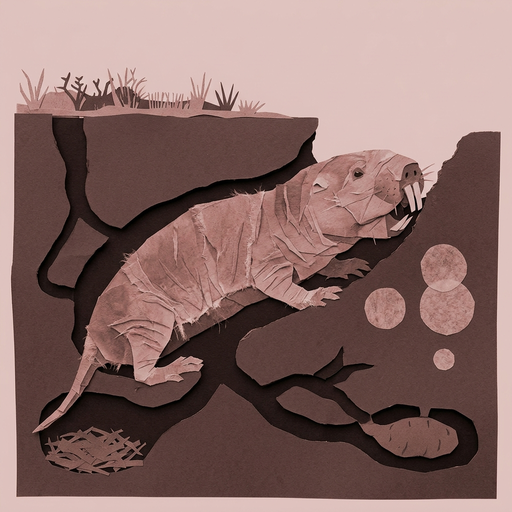
The naked mole rat, known scientifically as Heterocephalus glaber, inhabits the arid regions of East Africa, including parts of Kenya, Ethiopia, and Somalia. It spends almost its entire life inside vast, self-contained burrow systems excavated beneath hard-packed soil. These subterranean labyrinths can extend for multiple kilometers, connecting communal nesting chambers, food storage areas, and specialized latrines. The surface above is dry, hot, and exposed to predators, but life below ground offers insulation from extreme temperature swings and shields the colony from most carnivores. Water and nourishment come almost entirely from deep, fibrous roots and swollen underground tubers. Because a single large tuber can sustain a colony for months, the animals rarely have any reason to break through to the surface.
This subterranean commitment has shaped the naked mole rat from head to tail. The animal is nearly hairless, its pinkish skin wrinkled and loose to allow smooth movement through narrow earthen shafts. Its eyes are tiny and rudimentary, providing limited visual acuity that is largely unnecessary in complete darkness. To navigate, the animal relies on sensitive tactile hairs scattered across its body, an acute sense of smell, and specialized hearing tuned to low-frequency subterranean vibrations. Its skull is remarkably dense, dominated by large, protruding incisors that sit completely outside the mouth cavity. These teeth can move independently, functioning like paired picks to chip away compacted earth. Because the lips seal tightly behind the incisors, the animal can dig continuously through packed dirt without swallowing soil.
Living in sealed burrows also forces radical physiological departures from typical mammalian norms. Naked mole rats do not maintain a constant internal body temperature through metabolic heat generation alone. Their basal metabolic rate is exceptionally low, and their individual thermoregulation is limited. Instead, they rely on behavioral thermoregulation, moving between warm, shallow tunnels during the day and cooler, deeper chambers at night. To conserve heat when resting, dozens or even hundreds of individuals pile together in communal sleeping nests. In this species, maintaining body warmth is partly an individual physiological compromise and partly a collective social strategy.
The atmosphere within these tunnels presents another severe challenge. When hundreds of respiring rodents share an unventilated underground space, oxygen levels decline while carbon dioxide accumulates. Burrow conditions fluctuate with soil moisture, tunnel depth, and animal activity, occasionally plunging the colony into severe hypoxia. In laboratory settings, naked mole rats tolerate levels of oxygen deprivation that would cause rapid brain damage in mice or humans. Under extreme anoxia, their activity drops and their heart rates slow. Their vital tissues sustain basic energetic needs by switching to fructose-driven metabolism, a pathway that bypasses standard oxygen-dependent metabolic roadblocks. Furthermore, high concentrations of carbon dioxide dissolve into tissue fluids as carbonic acid, which normally activates intense burning pain in mammalian sensory nerves. Naked mole rats carry altered voltage-gated sodium channels in their peripheral pain receptors, rendering them selectively insensitive to acid-induced pain while preserving normal responses to mechanical pressure and thermal extremes. Every feature of this animal, from its teeth to its cellular pathways, reflects the physical realities of the subterranean fortress. But surviving this harsh underground world requires more than an unusual body. It demands an equally radical society.
The physical architecture of the burrow mirrors an equally unusual social architecture. In the nineteen-seventies, evolutionary biologists began confirming that naked mole rats meet the strict formal criteria for eusociality: cooperative brood care, overlapping adult generations within a single nest, and a reproductive division of labor. Until that point, eusociality was widely viewed as the exclusive domain of social insects such as ants, bees, wasps, and termites, with only rare, partial parallels among vertebrates.
Inside a naked mole rat colony, reproduction is concentrated in a single breeding female, known as the queen, alongside one to three breeding males. The rest of the colony, which can number from several dozen to nearly three hundred individuals, consists of non-breeding subordinates. These non-breeders maintain the burrow, dig new foraging tunnels, transport food, clean communal spaces, tend the queen's pups, and defend the colony against intruders such as burrowing snakes.
While popular descriptions often compare this arrangement to an insect hive, the analogy breaks down at the level of developmental biology. In social insects, workers and soldiers are frequently born into fixed, anatomically distinct castes that are permanently sterile. In naked mole rats, worker roles are behavioral and flexible rather than anatomically irreversible. Non-breeding individuals are not genetically or physically sterile at birth. Instead, their reproductive capacity is socially suppressed. The queen enforces this suppression through behavioral dominance, frequent physical contact, and stress-inducing policing, which downregulates the secretion of reproductive hormones in subordinate females.
If the queen dies or is experimentally removed, this suppression disappears. Subordinate females undergo rapid hormonal and behavioral shifts, competing vigorously for dominance. Over a matter of weeks, the victorious female undergoes a dramatic growth spurt, elongating her lumbar vertebrae to accommodate future litters, and becomes the colony's new breeding queen. Task specialization among non-breeders is likewise fluid. Larger individuals often spend more time stationed near burrow entrances to defend against predators. Smaller individuals focus on tunnel maintenance and pup care, with roles shifting as animals age and colony conditions change.
The evolutionary force driving this cooperative structure is ecological necessity. In the semi-arid scrub of East Africa, digging through sun-baked earth requires immense expenditure of energy, and rainfall events that soften the ground are rare and unpredictable. Tubers are distributed in widely scattered, hidden patches. An individual rodent leaving the natal burrow faces nearly insurmountable obstacles: the energetic cost of solitary digging is prohibitive, dehydration is rapid, and surface predators are constant. By remaining in an established burrow system, subordinates share the energetic cost of foraging and defense. High genetic relatedness within colonies reinforces this behavior, but relatedness alone did not create the system; severe ecological barriers to independent dispersal provided the decisive evolutionary pressure.
Long-term captive study of these colonies revealed that their members were not simply cooperating for a few seasons. They were surviving together year after year, forcing researchers to confront a second, even more surprising question: how long can a small mammal live when it spends its life underground?
In most mammals, the risk of dying increases sharply with age. This pattern is described mathematically by the Gompertz-Makeham law of mortality, which establishes that after reaching adult maturity, an organism's probability of death rises exponentially over time. In humans, that mortality hazard doubles roughly every eight years. In standard laboratory mice, which have a body mass similar to that of a naked mole rat, the mortality hazard climbs steeply within two years, and individuals rarely survive beyond three or four.
The naked mole rat defies this standard mammalian curve. In captive colonies, individuals routinely live past twenty and thirty years, with validated longevity records reaching approximately thirty-seven years. The sheer length of life is remarkable, but the demographic shape of that survival is what challenged longstanding assumptions in biogerontology.
In twenty eighteen, a comprehensive demographic study analyzed more than three thousand lifespan records collected over three decades from captive research colonies. The researchers tracked animals from reproductive maturity across multiple decades of life. They found no detectable Gompertzian acceleration in mortality hazard across the observed age range. Whether an animal was two years old, fifteen years old, or twenty-five years old, its calculated risk of dying within a given timeframe remained essentially flat. A subsequent independent study evaluating a dataset roughly twice as large confirmed this broad demographic observation.
In population biology, this phenomenon is termed negligible senescence. It describes a mortality trajectory that fails to show the conventional age-dependent rise in death risk. However, negligible senescence does not mean immortality. It does not mean the animals live forever, nor does it imply that their cells exist outside the laws of physical decay. Captive naked mole rats still die from infections, fight injuries, cardiovascular strain, and other systemic failures. Eventually, every cohort reaches its limit.
Furthermore, demographic studies carry inherent statistical constraints. Because fewer individuals survive to thirty-five or thirty-seven years than to age ten, the statistical power at the furthest tail of the lifespan curve is comparatively thin. Demography cannot reveal what might happen at ages beyond those observed in captive records. In addition, an absence of accelerated whole-body mortality does not guarantee an absence of internal tissue aging. Specific organs, joints, or vascular structures may experience gradual functional wear that simply does not cross the threshold required to produce an exponential mortality spike.
Captive female breeders provide further evidence of altered physiological timing. Rather than undergoing an early loss of fertility, queens can continue producing litters well past two decades of life, demonstrating delayed reproductive senescence. Yet these findings must also be placed in their proper environmental context. The records supporting thirty-seven-year lifespans come entirely from captive vivariums, where animals receive abundant food, continuous veterinary care, stable temperatures, and complete protection from predators and drought. In the wild, tunnel collapses, severe food shortages, and snake predation take a substantial toll. Wild longevity remains difficult to measure precisely, meaning maximum captive records represent an upper biological capacity rather than the average lifespan in an African burrow.
Nonetheless, surviving past three decades presents an unavoidable cellular dilemma. With every additional year of life, an organism's tissues undergo trillions of cumulative cell divisions, each carrying a baseline risk of genetic mutation. In most mammals, extended lifespans produce an escalating incidence of cancer. That reality brought researchers directly to the third major claim: whether the naked mole rat has discovered a way to prevent tumors entirely.
The popular reputation of the naked mole rat often centers on the claim that it is completely immune to cancer. Articles and documentaries have described the animal as tumor-proof, suggesting an organism that possesses a total biological barrier to malignant transformation. When researchers examined captive populations over long time horizons, the empirical record revealed a more disciplined reality. Spontaneous cancer in naked mole rats is exceptionally rare, but confirmed tumors do occur, disproving the notion of absolute immunity.
In early research, one widely cited study tracked more than eight hundred captive naked mole rats across many years of post-mortem examinations without discovering a single spontaneous neoplasm, whether benign or malignant. In a species living past thirty years, that clean baseline stood in sharp contrast to laboratory mice, where spontaneous tumors frequently claim a majority of older animals. However, as colonies expanded and veterinary tracking deepened, rare spontaneous cancers were officially identified. In a comprehensive survey covering more than two thousand necropsies across multiple international institutions, pathologists identified several confirmed malignancies, including a fatal lymphoma in a twenty-one-year-old female and an adenocarcinoma in another individual.
These documented cases established that naked mole rat cells can turn malignant under the right conditions. The critical scientific question therefore shifted from explaining an impossible immunity to uncovering the specific cellular barriers that make spontaneous cancer so extraordinarily uncommon.
A major breakthrough occurred in two thousand nine, when researchers studying cultured naked mole rat fibroblasts, the cells responsible for structural connective tissue, noticed an unusual behavior. In human and mouse cell cultures, cells multiply until they form a dense, confluent monolayer, at which point physical crowding triggers contact inhibition, arresting further division. Naked mole rat fibroblasts arrested their division at much lower densities, stopping proliferation while the cells were still loosely distributed across the culture plate. This phenomenon, termed early contact inhibition, provides an immediate cellular defense against uncontrolled hyperplastic growth.
Subsequent investigations identified the molecular signal behind this response: an extracellular sugar polymer known as hyaluronan. Naked mole rats produce a form of hyaluronan with an unusually high molecular mass, characterized by exceptionally long molecular chains. The animals express unique hyaluronan synthase enzymes that assemble these long chains. Paired with low levels of hyaluronidase enzymes that degrade them, this causes the high-molecular-mass polymer to accumulate heavily in the surrounding extracellular matrix. When researchers experimentally degraded this hyaluronan in cell culture, or disrupted the cell-surface receptors that detect it, the early contact inhibition response disappeared. The cells multiplied to standard mammalian densities and became vulnerable to malignant transformation when exposed to viral oncoproteins.
Yet high-molecular-mass hyaluronan is only one part of an interlocking defense network. Cancer resistance is not driven by a solitary miracle gene. Naked mole rats exhibit unusually faithful protein translation, reducing the rate of structural protein errors, alongside highly efficient proteasomal systems that clear damaged proteins before they accumulate. Their cells maintain sensitive DNA damage checkpoints, pausing replication to repair genomic insults or triggering programmed cell death when damage exceeds repair capacity.
When researchers test naked mole rat tissues against aggressive, artificially induced carcinogens in laboratory models, the degree of resistance varies significantly depending on the tissue type, the specific chemical agent, and the dosage. Cellular resistance demonstrated in a flat culture dish does not automatically translate to whole-animal resistance against every carcinogen.
Crucially, these discoveries cannot simply be lifted from a rodent and applied as an immediate human therapy. The biology of hyaluronan is highly dependent on tissue context, molecular weight, and cellular receptors. Flooding human tissues with ultra-high-molecular-mass hyaluronan, or artificially forcing early contact inhibition across human organs, could create severe physiological trade-offs, such as impaired wound healing, reduced tissue regeneration, or uncoordinated immune signaling. The value of this animal does not lie in providing a ready-made anti-cancer pill. Instead, it reveals how a mammalian genome can organize multiple cellular defenses to keep tissue growth in check across decades of life. Understanding those cellular barriers opens up a broader perspective on how life evolves, taking us beyond the single species and into the wider landscape of comparative biology.
For more than a century, biomedical science has relied primarily on a narrow set of short-lived mammalian models, predominantly laboratory mice and rats. These animals are easy to breed, mature within weeks, and reproduce rapidly, making them efficient subjects for controlled laboratory experiments. However, because they evolved under heavy predation pressures where survival beyond a single season was unlikely, their biology prioritizes rapid reproduction over long-term cellular maintenance. The naked mole rat demonstrates what happens when evolution pushes a mammal down the opposite path.
By uniting extreme longevity, negligible Gompertzian mortality acceleration, sparse spontaneous cancer, and eusocial organization inside a single small body, Heterocephalus glaber proves that mammalian physiology contains far more evolutionary flexibility than standard model organisms suggest. It demonstrates that aging is not an immutable, single-speed clock that ticks at the same rate across all warm-blooded creatures.
This species also highlights the deep evolutionary links between environment, social living, and longevity. Biologists continue to investigate whether extended lifespans evolved first, creating the overlapping generations required for a queen-led society to stabilize. Alternatively, the safety of a fortified subterranean colony may have reduced external mortality so thoroughly that natural selection had time to favor long-term cellular preservation. Comparative studies examining other bathyergid rodents, such as the Damaraland mole rat, which also exhibits cooperative breeding, help illuminate how these reproductive and physiological traits evolved alongside one another.
Distinguishing between levels of evidence remains vital. Cellular findings in a petri dish, demographic patterns in monitored captive vivariums, and clinical applications in human medicine represent entirely distinct tiers of scientific certainty. Demonstrating that high-molecular-mass hyaluronan halts fibroblast division in a culture vessel establishes a candidate mechanism, not a medical treatment. Recognizing flat mortality hazard in captive colonies confirms an extraordinary demographic phenomenon, but it leaves open questions regarding how specific wild stressors or internal organ systems deteriorate over time.
Several foundational questions remain unresolved. The precise survival rates of naked mole rats in their native East African scrub are still poorly documented compared to captive populations. Pathologists continue to study whether particular organs experience subtle, localized decline that escapes whole-animal mortality statistics. The relative physiological costs borne by continuously breeding queens versus non-breeding workers warrant further long-term tracking.
When we evaluate the claims that surround the naked mole rat, each headline becomes far more informative once stripped of its hyperbole. The claim that the animal does not age resolves into the measurable observation that adult mortality risk does not accelerate exponentially across observed lifespans. The claim that it never gets cancer becomes the documented finding that spontaneous tumors are exceptionally rare, kept in check by layered mechanisms such as early contact inhibition and specialized extracellular polymers. And the idea of a mammal hive becomes an ecologically driven cooperative society with flexible, socially regulated reproductive roles.
The naked mole rat matters not because it breaks the laws of biology, but because it reveals how much variation those laws permit. When encountering extraordinary claims about animal immortality or disease immunity, the most valuable questions to ask are what was measured, in what setting, and whether the findings can transfer beyond that specific evolutionary context. Reflect on how our understanding of disease, aging, and cooperation changes when we step outside familiar laboratory models and examine the full breadth of the living world.