The Instrument: The 2026 Nobel Prizes
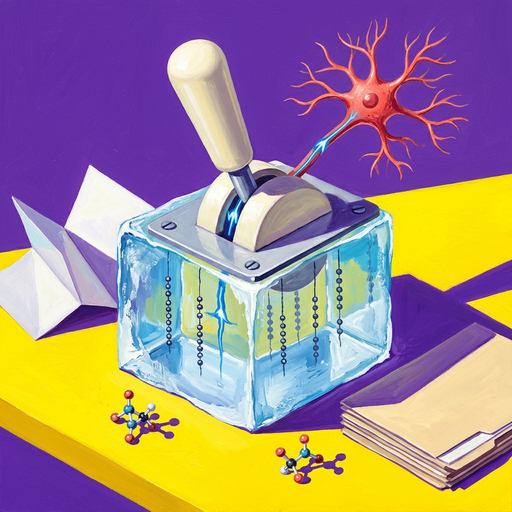
The 2026 Nobels went to builders of instruments: a switch for neurons (optogenetics), a telescope in Antarctic ice (IceCube), a method for choosing molecular mirror images (asymmetric synthesis), a poet of luminous fragments (Anne Carson), and a prosecutor of human-rights violations (Navi Pillay). Why this is the year of the instrument — and what it says about what a Nobel is for now.
By MyAudioBooks.ai ·
Listen free: The Instrument: The 2026 Nobel Prizes
The 2026 Nobel list landed in October, and it reads like a deliberate choice about what a prize is for. For physiology or medicine: Karl Deisseroth, Peter Hegemann, and Georg Nagel, for a way to switch individual neurons on and off with light. For physics: Francis Halzen, for a telescope built out of a cubic kilometer of Antarctic ice. For chemistry: Henri B. Kagan and Kenso Soai, for the craft of building molecules in the exact mirror-image form you need. For literature: Anne Carson, a writer who has spent four decades turning grief, myth, and memory into forms no one else could have made. And for peace: Navi Pillay, the former UN High Commissioner for Human Rights, whose job was to turn human rights from a declaration into an indictment. Our verdict, after reading the list, is that this is the year of the instrument: the prizes went to people who made things you can use, not arguments you can quote. This is the instrument.
Start with the medicine prize, because it is the cleanest example of what an instrument is. Optogenetics is not a theory of the brain; it is a switch for the brain. Deisseroth, Hegemann, and Nagel gave the world a way to take a specific neuron in a living animal and turn it on with a pulse of light — which means you can now ask a brain a question by flicking a switch instead of by guessing from a scan. That is not a contribution to knowledge. It is a contribution to the ability to ask better questions, forever. Every neuroscientist working today uses the thing these three people built. That is what a Nobel looks like when it goes to an instrument.
At My Audio Books dot A I, you can create your own audiobooks from prompts, turn your documents into audio, all with one subscription, and store your items in your own personal library.
Physics takes the same logic and buries it in ice. IceCube is not a better theory of the universe; it is a better way to see it. A cubic kilometer of Antarctic ice, turned into a detector for the most ghostly particles in existence — neutrinos, the things that pass through you by the trillion every second and almost never touch anything. Francis Halzen did not discover a new particle; he helped build the machine that lets us watch them. The telescope is the achievement. The universe was always there. We just needed someone to freeze a cubic kilometer of it into a sensor.
Chemistry is where the instrument stops being a machine and becomes a method. Asymmetric organic synthesis is the art of making molecules in one mirror-image form rather than the other — and the reason that matters is that living systems are built from one handedness, so a drug made in the wrong mirror image is not the same drug. Kagan and Soai did not write a manifesto about this; they developed the chemistry that lets us choose the mirror. Every pharmaceutical that depends on getting the handedness right is downstream of that choice. It is not an argument. It is a method, and methods outlive arguments.
Literature is the one place where the instrument is a person rather than a technique. Anne Carson's work is not an argument about what poetry should do; it is a demonstration of what it can do. She writes in fragments, in fables, in the spaces between myth and memory, and the result is that a reader finishes one of her books knowing something they could not have known any other way. That is an instrument too — a way of seeing that did not exist before she made it. The Nobel committee did not give her the prize for having a view. They gave it for building a form.
And peace is where the instrument becomes a job description. Navi Pillay's career has been to take human rights from the realm of aspiration into the realm of evidence: to document, to indict, to name the people responsible and the things they did. That is not a speech about values. It is a practice, and a practice is a kind of instrument too — a way of making human rights enforceable rather than rhetorical. The committee did not give her the peace prize for having a conscience. It gave it for making conscience useful.
So here is the pattern, and it is worth saying out loud because it is not the pattern people usually notice. This year's Nobels did not go to the people with the biggest theories. They went to the people with the best tools. A switch for neurons, a telescope in ice, a method for choosing mirror images, a form for grief, a practice for holding power to account. The committee could have chosen ideologues, and instead it chose instruments. We'd argue that is a statement about what a Nobel is for now: not for the person who explains the world best, but for the person who gives the world a better way to be measured, built, written, or judged. We think that is a good direction for a prize to go. It is also a useful reminder of what actually changes things: not the argument you win, but the instrument you leave behind.
What we would watch next, in order. The economics prize, announced last, because it is the one place left where the committee might break the pattern and choose an argument over an instrument — and if even that goes to a tool-builder, the year of the instrument is complete. The follow-up work on the neuron-switching technique, which is now moving from the lab into questions the original inventors never had to answer. IceCube's next results, because a telescope only proves itself by what it finds. And the inevitable debate about whether the pattern was a choice or a coincidence, which is the debate the committee itself will never have in public. The list is out. The instrument has won. The only question left is whether next year is a return to arguments.
At My Audio Books dot A I, you can listen to this story and thousands of others that explore the hidden science and mechanics behind the headlines.
At My Audio Books dot A I, you can create fiction, non-fiction, and turn your documents into audio, all stored in one place with a single subscription — plus get instant access to thousands of audiobooks and deep-dive investigations. Learn more today at My Audio Books dot A I.