The Hidden World of Prions
A prion is not a virus, not a bacterium, not alive — it is one of your own proteins folded into a shape that recruits other proteins to fold wrong, forever. The hidden world of prions: kuru and the heresy that won a Nobel Prize, mad cow and the era when beef could carry a brain disease, and chronic wasting disease now spreading in deer across 36 states and five Canadian provinces. Why the only defense is knowing the shape and starving it.
By MyAudioBooks.ai ·
Listen free: The Hidden World of Prions
Before anything else in this book, you need to know what a prion is, because almost nobody does. A prion is not a virus. It is not a bacterium. It is not alive. It is a single protein — one of your own proteins, made by your own body every day — that has folded into the wrong shape. And it has one terrible property: when the wrongly folded protein touches a rightly folded one of the same kind, it can recruit it into the wrong shape too. One fold, passed protein to protein, forever. No genes. No cells. No instructions beyond the shape itself. In the highlands of New Guinea in the middle of the last century, a people called the Fore were dying of this shape in a sickness they called kuru — a creeping, trembling disease that ended, within about a year, in death. Our verdict, after reading the documents of the strangest discovery in modern medicine, is this: the most dangerous infectious agent on earth is made of you. This is the hidden world of prions.
The Fore buried their dead with rituals that included the eating of brain tissue — and the shape rode the ritual from body to body, village to village, for generations. Nobody knew the agent existed. Nobody could have. It was smaller than any virus, invisible to every test the century had built, and it broke the oldest rule of infection: that a disease must carry instructions written in D N A or R N A.
At My Audio Books dot A I, you can create your own audiobooks from prompts, turn your documents into audio, all with one subscription, and store your items in your own personal library.
Section One. The Shape, Stated Plainly
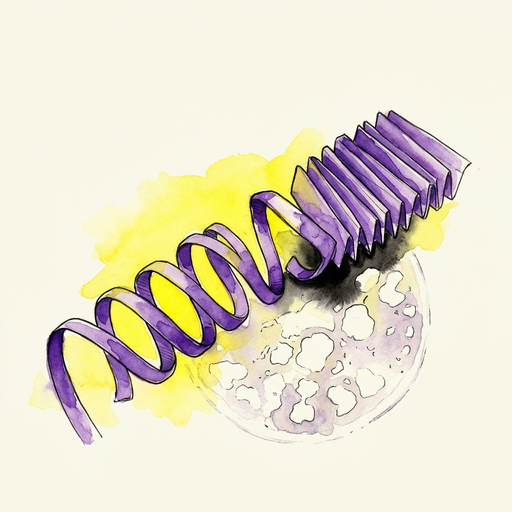
Stay with the shape for one more minute, because everything terrible in this book follows from it. The protein is called the prion protein, and your body makes the normal version of it — scientists write it P R P C — on the surface of your cells, especially in your brain. The rogue version, P R P S C, is the same chain of amino acids with the same chemical formula. The only difference is the fold. In the words of the scientist who proved all this, prions are "transmissible particles that are devoid of nucleic acid" and seem to be composed exclusively of the modified protein. The normal protein, meeting the rogue, is converted into more rogue — a posttranslational process in which it acquires a high content of the flat, rigid protein architecture called beta-sheet. Think of it less like an infection and more like a rumor told in shapes: the first misfolded protein whispers its shape to the next, and the next, until whole regions of the brain are riddled with holes and the tissue looks, under a microscope, like a sponge.
And the shape is nearly unkillable. Prusiner defined prions as "proteinaceous infectious particles that resist inactivation by procedures that modify nucleic acids" — which is a careful way of saying that the sterilization tricks medicine uses on viruses and bacteria do not reliably work on them, because there is no genetic material to destroy. You cannot bleach a shape. You cannot vaccinate against your own protein. Every prion disease ever documented, in humans or in animals, is fatal. There is no cure, and there is no vaccine. The only defense anyone has ever found is to understand what the shape is — and refuse to feed it.
Section Two. The Laughing Death and the Heresy
The first humans seen dying of a prion, in the scientific record, were the Fore. In the nineteen fifties, in the highlands of New Guinea, the disease called kuru was killing entire families: tremors that built into an inability to walk, involuntary movements, the strange smiles and laughter that gave the sickness its other name — the laughing death — and then, within about a year, the end. The Fore believed it was sorcery. It was, in the coldest sense, a recipe: the ritual consumption of brain tissue at funerals, and the shape, doing what the shape does.
The detective work took two Nobel Prizes and a generation. In nineteen fifty-four, an Icelandic scientist named Bjorn Sigurdsson had coined the term "slow virus" for scrapie, a disease of sheep that took years to appear. Five years later, in Prusiner's telling, William Hadlow looked at photographs of kuru brains and wrote that the disease of New Guinea highlanders was similar to scrapie — and thus also caused by a slow virus. Seven more years passed before Carleton Gajdusek proved the transmissibility of kuru itself: he put the disease into chimpanzees, and the chimpanzees died of it, years later, as if on a timer. Kuru became, in Gajdusek's own Nobel lecture of nineteen seventy-six, the first chronic degenerative disease of man shown to be a slow-virus infection, with incubation measured in years and an outcome that was always death.
But even Gajdusek thought it was a virus. Everyone did. That was the heresy Stanley Prusiner committed: in nineteen eighty-two he named the agent — "prion," for proteinaceous infectious particle — and argued there was no virus at all. The reaction of some scientists to the word, he wrote later, was irate. And who could blame them: the idea that infection could ride a bare protein, with no D N A and no R N A, violated the central dogma everyone had learned. Prusiner spent the next fifteen years proving it anyway, and in nineteen ninety-seven, the heresy collected its own Nobel Prize.
Section Three. The Shape Learns to Cross Species
The prion diseases arrive, the documents show, in exactly three ways, and each is a door with no lock. The first door is infection: kuru by ritual; iatrogenic disease — the doctor's own word for caused-by-medicine — through prion-contaminated human growth hormone and dura mater grafts; and then, in the nineteen eighties, the door that opened onto an entire nation's dinner table. British cattle were being fed meat and bone meal — rendered remains of other animals — and the shape crossed into the herd. The disease got a newspaper name: mad cow. The mechanism line in the disease table is four words long and should have closed a trade forever: infection from prion-contaminated M B M.
The second door is bloodline. The same table lists the families: familial Creutzfeldt-Jakob disease, Gerstmann-Sträussler-Scheinker disease, and fatal familial insomnia — a germ-line mutation in the prion-protein gene, passed down like an heirloom, that means your own body begins, at some point in middle age, manufacturing the rogue shape from a clean blueprint with one wrong letter. The third door is the one that should keep you up at night: nothing at all. Sporadic disease — the normal protein, in a normal person, misfolding on its own for reasons no one can schedule. The shape needs no invitation. It needs only one fold.
Section Four. Mad Cow, Then the Deer
The mad-cow era is the proof that the shape can hold a superpower's food system hostage. When bovine spongiform encephalopathy — B S E — emerged in Britain, the question that mattered was whether the shape could cross from cattle to people. The disease table records the answer with a scientist's caution: variant C J D, humans, "infection from bovine prions?" — the question mark standing for the years of work it took to accept that the answer was yes. A new variant of Creutzfeldt-Jakob disease appeared in young people, and the age of the victims told the story before the laboratories could: this was not the old people's disease. Beef, nerve tissue, and the shape had met, and a generation of British families learned that a food chain is only as safe as its least careful rendering plant.
And the shape is still moving, which brings us to the present tense of this book. Chronic wasting disease — C W D — is the prion disease of deer, elk, moose, and reindeer, and it is spreading while you listen. As of August twenty twenty-five, the Centers for Disease Control reports it in animals in at least thirty-six U.S. states and five Canadian provinces. It travels in body fluids — feces, saliva, blood, urine — through direct contact or through contaminated soil, food, and water. The infected animals waste away: drastic weight loss, stumbling, drooling, listlessness, and then death. There is no recovery. And here is the detail we think should settle into your mind like the shape itself: once C W D is established in an area, in the C D C's own words, the prions "stay in soil and water for years." You cannot drain a pond of it. You cannot fence it out. The agency expects the disease to continue to spread.
Section Five. What the Shape Has Not Done — and the Verdict
Now the discipline that keeps this book honest. Has chronic wasting disease infected a human? No. The C D C documents none, and notes the disease does not appear to naturally infect cows, other livestock, or pets. The nationwide rate in free-ranging deer and elk remains low overall, though in established areas the local rates climb. The danger right now is ecological and economic, not a dinner-table emergency — and the lesson of B S E is precisely that the time to watch a species-crossing shape is before it crosses, not after. We'd argue that is not alarmism. That is the one lesson the twentieth century bought with prion lives: the incubation is long, the table is set for years, and the first case looks like an anomaly until it is a cluster.
So here is the verdict on the hidden world of prions. The strangest infectious agent on earth is a shape, not a species. It has killed by ritual and by surgery, by dinner and by bloodline and by plain chance, and it has defeated every weapon in medicine's arsenal because those weapons were built to kill living things and it was never alive. The heresy that named it spent fifteen years as an insult before it became a Nobel Prize. And the only defense that has ever worked — against kuru, against mad cow, against the slow creep through the deer of thirty-six states — is the one this book just gave you: know the shape, and starve it of the one thing it needs, which is another protein to fold. The hidden world of prions is not hidden because it is small. It is hidden because it is yours. And now you have seen it.
At My Audio Books dot A I, you can listen to this story and thousands of others that explore the hidden science and mechanics behind the headlines.
Section Six. What We Would Watch Next
Three fronts in the record are open. First, chronic wasting disease: the C D C expects continued spread, the prions persist in soil and water for years, and the states bordering the thirty-six are the front line of a slow epidemic measured in decades — the number to watch is not this year's map but next decade's. Second, the human surveillance: the lesson of variant C J D is that crossing events announce themselves late, in clusters, in the young — the watch is on the unusual cases, and the agencies know it. Third, the deepest one: the shape's logic keeps appearing in the wrong places, because the mechanism Prusiner proved — one protein recruiting the next into a shared misfold — is the kind of idea that does not stay in its lane. Whether the great brain diseases of aging share any of the shape's machinery is the open question of the field, and the documents in this book are where the question started. The hidden world of prions is patient, borderless, and made of us — and it rewards exactly one behavior in its hosts: attention.
At My Audio Books dot A I, you can create fiction, non-fiction, and turn your documents into audio, all stored in one place with a single subscription — plus get instant access to thousands of audiobooks and deep-dive investigations. Learn more today at My Audio Books dot A I.