Project Sunshine's Bone Archive: Nuclear Fallout and the Ethics of Consent
During the Cold War, Project Sunshine tracked radioactive strontium-90 from nuclear fallout by secretly collecting bones and tissue from deceased infants and children, often without their families’ knowledge or consent. Its findings addressed a real public-health threat, but the contrast with the voluntary Baby Tooth Survey exposed how secrecy and institutional power eclipsed family autonomy—an ethical conflict that still shapes debates over biobanks, medical samples, and who controls human tissue.
By MyAudioBooks.ai ·
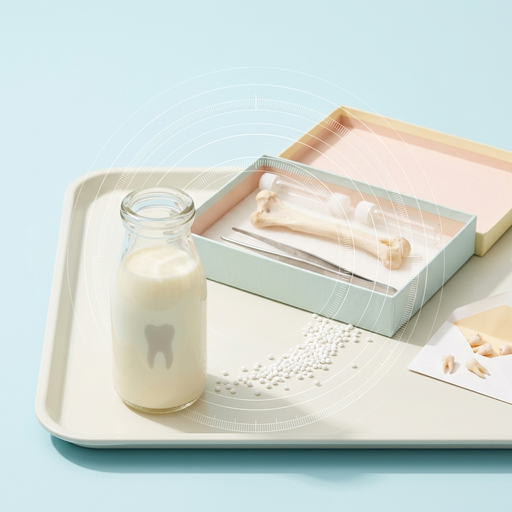
Listen free: Project Sunshine's Bone Archive: Nuclear Fallout and the Ethics of Consent
In the early years of the Cold War, a worldwide scientific effort set out to measure the hidden cost of nuclear testing. To map the global spread of radioactive fallout, researchers needed human bone, and they prioritized the remains of deceased infants and young children. Across several continents, hospitals, pathologists, and coroners supplied these specimens through an official network, while the families of those children were routinely left in the dark. The investigation was driven by an urgent public health question: how much radioactive material was accumulating in the human population? The institutional decision that followed, however, treated the bodies of the youngest dead as clinical evidence, separating scientific necessity from parental knowledge and consent.
At My Audio Books dot A I, you can create your own audiobooks from prompts, turn your documents into audio, all with one subscription, and store your items in your own personal library.
Between the late nineteen forties and the early nineteen sixties, atmospheric nuclear detonations by the United States, the Soviet Union, and the United Kingdom scattered radioactive debris high into the upper atmosphere. High-yield detonations lifted fission products past the lower weather layers and into the stratosphere. There, fine particulates circled the globe for months before settling back down to Earth in rain, snow, and dry dust, often thousands of miles from the proving grounds in Nevada, the Pacific, or Central Asia.
Among the hundreds of isotopes created in a nuclear explosion, strontium ninety posed a unique biological hazard. It is a radioactive fission product with a physical half-life of roughly twenty-eight years. That means after nearly three decades, half of the original radioactive atoms are still decaying, releasing beta particles into whatever environment holds them. Because strontium sits directly below calcium on the periodic table, the human body handles both elements using the same biological pathways. When living organisms absorb strontium, metabolic processes mistake it for calcium and deposit it directly into growing bone and teeth.
Fallout entered human bodies primarily through the global food chain. Radioactive dust fell onto agricultural soil and pastures. Dairy cattle grazed on contaminated grass, filtering the isotope into their milk, which then became a primary food source for infants and toddlers. Children were the most exposed segment of the population because their skeletons were forming at rapid rates, drawing in minerals to build bone density.
Once locked inside the mineral matrix of the skeleton, strontium ninety emits continuous beta radiation. That localized energy irradiates the surrounding bone architecture and penetrates the adjacent bone marrow, where the body produces blood cells. Over extended periods, this internal exposure increases the statistical risk of bone cancer and leukemia. Detecting traces of strontium ninety in tissue is not a medical diagnosis of active illness, but public health officials recognized that rising baseline levels across entire continents represented an uncalculated, population-wide risk.
By nineteen fifty-three, the United States Atomic Energy Commission and its advisory panels recognized that existing environmental models were insufficient. Researchers could measure fallout in topsoil, sample river water, and test the bones of domestic livestock, but those numbers could not establish the true biological uptake in human beings. Scientists needed to determine the exact relationship between the amount of debris released into the sky and the concentration of strontium ninety that ultimately lodged in human bone.
To answer that question, the commission organized Project Sunshine. The program enlisted physical scientists, medical researchers, and institutions, including Columbia University, the University of Chicago, and the Rand Corporation. Sunshine aimed to construct a worldwide balance sheet of fallout distribution, collecting soil, crops, animal bones, and human tissue across diverse latitudes.
Human skeletal remains formed the core of the project. Researchers specifically sought bone from stillborn infants, babies, and young children. An adult skeleton carries decades of calcium accumulated before the nuclear age, diluting any recent fallout exposure. An infant skeleton, by contrast, is built entirely from calcium absorbed during or shortly after the mother's pregnancy. Skeletons from the youngest age bracket served as clean, precise biological markers of current atmospheric contamination.
The planning records of Project Sunshine reflect a total focus on technical execution. Commission officials and university researchers calculated how many grams of bone ash were required to run sensitive radiometric assays. They designed transport logistics, standardized laboratory protocols, and established collection quotas. What those same administrative records left out was any structured plan to involve, inform, or seek the permission of the families whose children were entering the study.
To obtain skeletal material at scale, Project Sunshine established an informal, quiet procurement network. Cooperating pathologists, hospital directors, and municipal coroners across the United States, Canada, the United Kingdom, Australia, and other nations set aside bone and tissue during routine autopsies. The specimens were packaged, labeled with basic demographic details like age and geographic location, and shipped to centralized laboratories for chemical reduction and radiological counting.
Internal committee transcripts from the period demonstrate that secrecy extended beyond protecting national defense data. Planners actively discussed how to avoid public scrutiny and alarm. In closed meetings, participants suggested presenting the collection effort to local contacts as a general investigation into natural background radiation, deliberately omitting any connection to nuclear weapons testing or fallout. Restricting information allowed the procurement network to operate smoothly without facing public debate or institutional resistance.
This quiet administration depended on existing legal authorities that were never designed for broad radiological research. Coroners and hospital pathologists held statutory authority to investigate sudden deaths, conduct post-mortem examinations, and retain small tissue samples for diagnostic or legal verification. Sunshine leveraged that custodial authority, turning routine clinical access into a pipeline for weapons-effects research. Institutional authority over a deceased body took the place of informed consent from grieving parents.
Decades later, public retellings of the program generated rumors that the commission had covertly taken thousands of entire bodies. The historical and archival record tells a more specific, documented story. Sunshine accumulated bone specimens, rib sections, femurs, and, in certain cases, complete infant skeletons, rather than thousands of intact bodies. Some historical estimates conflate Sunshine with separate, parallel tissue-collection studies run by other military and civilian agencies during the same era.
The documented reality remains stark without exaggeration. Medical professionals acting on behalf of public health and defense agencies removed skeletal material from deceased infants and children, intentionally withholding the true purpose of the procedure from the parents who buried them. Researchers justified the exclusion as a practical necessity to prevent public anxiety and secure essential data, creating an institutional gulf between scientific objectives and family autonomy.
While Project Sunshine gathered post-mortem tissue behind closed doors, a completely different model for measuring strontium ninety emerged in the late nineteen fifties. In nineteen fifty-eight, scientists, physicians, and civic organizers in Missouri established the Saint Louis Baby Tooth Survey. Spearheaded by the Greater Saint Louis Citizens' Committee for Nuclear Information, with leadership from biologist Barry Commoner and physician Louise Reiss, the initiative turned directly to the public for help.
The survey asked parents to mail in the naturally shed baby teeth of their children, along with basic dietary and residential histories. The response was massive. Over its operational lifespan, the survey collected more than three hundred thousand teeth. Because deciduous teeth form during gestation and early infancy, their enamel and dentin record the child's calcium intake, preserving a permanent snapshot of the chemical environment at the time of growth.
The findings from the Saint Louis survey were clear and public. Children born in the mid-nineteen fifties showed significant, measurable increases in strontium ninety concentrations compared to children born before heavy atmospheric testing began. In nineteen sixty-three, the United States, the Soviet Union, and the United Kingdom signed the Limited Test Ban Treaty, prohibiting nuclear tests in the atmosphere, underwater, and in outer space. In subsequent years, the survey documented a steady decline in strontium levels. The transparent data provided tangible, unclassified evidence that helped mobilize public support and political will for testing restrictions.
The Baby Tooth Survey proved that fallout monitoring could proceed through open, voluntary collaboration rather than covert procurement. Naturally shed teeth could not answer every diagnostic question that bone ash answered, particularly regarding deep skeletal mineralization across different age groups, so the scientific techniques were not entirely interchangeable. Yet the contrast demonstrated that civilian cooperation was possible when an institution trusted the public with the facts.
Decades passed before the full operational details of Project Sunshine reached the families involved. Beginning in the early nineteen nineties, investigative journalism and targeted archival work unsealed Cold War radiation records. In nineteen ninety-four, the United States government established the Advisory Committee on Human Radiation Experiments to investigate civilian and military research conducted between nineteen forty-four and nineteen seventy-four.
The committee reviewed declassified memorandums, shipping logs, and meeting minutes from Project Sunshine. Their report detailed how the Atomic Energy Commission prioritized radiological data while bypassing consent, exposing a system where parents buried children without knowing parts of their bodies had been requisitioned for federal fallout research. For many families, the revelation arrived forty years after their loss, forcing a public reckoning over how institutions wield power in the name of national defense.
The ethical questions raised by Project Sunshine unfolded alongside the development of modern research protections. Following the atrocities exposed during the Second World War, the nineteen forty-seven Nuremberg Code established that the voluntary consent of the human subject is absolutely essential. By nineteen fifty-three, the Clinical Center at the National Institutes of Health introduced independent committee review for clinical studies, demonstrating that formal ethical oversight was technically possible during Sunshine's early years.
Over the next three decades, medical governance codified additional safeguards. The World Medical Association adopted the Declaration of Helsinki in nineteen sixty-four, emphasizing the welfare of individual subjects over the interests of science and society. In nineteen sixty-six, the United States Public Health Service mandated institutional committee review for all federally funded human research, laying the groundwork for institutional review boards.
Following public disclosure of the Tuskegee syphilis study, Congress passed the National Research Act of nineteen seventy-four. The commission it created produced the nineteen seventy-nine Belmont Report, identifying three fundamental ethical principles: respect for persons, beneficence, and justice. By nineteen ninety-one, federal departments adopted the Common Rule, establishing a shared regulatory framework to protect human research subjects across government programs.
These landmark policies, however, shared a fundamental boundary: they focused primarily on living patients and clinical trial participants. They did not automatically establish clear, universal rules for the retention and secondary use of human tissue after death. Post-mortem examinations remained largely governed by local autopsy statutes, coroners' codes, and property law. Sunshine operated inside this precise regulatory gap, treating human remains as biological resources once legal authority over an autopsy had been satisfied.
Project Sunshine did not directly generate modern research rules, which were shaped primarily by abuses involving living subjects. Instead, the project demonstrates how an important public health mission can lead researchers to disregard the individuals they study. The durable challenge is not whether the scientific data was useful, but whether institutional utility justifies administrative concealment.
That tension persists in contemporary medicine. Today, repositories, biobanks, newborn screening archives, and genetic databases store millions of biological samples collected for routine clinical care. Questions regarding who owns those samples, whether consent can be presumed, and how secondary research should be authorized remain active debates in medical law. Permission granted for a medical procedure is not the same as permission to analyze, store, or repurpose human material for unrelated research years down the line.
The physical path of fallout was clear: from a weapon detonated in the atmosphere, down into pasture soil, through milk, and into the growing skeleton of a child. The institutional path was just as direct, running from government agencies through pathology labs to families who were never informed. As science continues to collect, store, and analyze human biological data, the foundational question raised by Project Sunshine remains urgent: when human tissue becomes scientific evidence, who holds the authority to decide, and who deserves an explanation?