Penkovsky’s Missile Manuals: Intelligence and the Cuban Missile Crisis
Soviet colonel Oleg Penkovsky risked his life to pass missile secrets to British and American intelligence, giving analysts the technical knowledge to interpret photographs of Soviet launch sites in Cuba. Arrested as Kennedy announced the naval quarantine, he was later executed—but the evidence shows he neither discovered the Cuban deployment nor single-handedly averted nuclear war. His story is as much about the people and intelligence methods behind a crucial assessment as it is about the making of a Cold War legend.
By MyAudioBooks.ai ·
Listen free: Penkovsky’s Missile Manuals: Intelligence and the Cuban Missile Crisis
On October twenty-second, nineteen sixty-two, President John F. Kennedy addressed the United States to reveal that Soviet ballistic missiles were stationed in Cuba. That announcement initiated a naval quarantine that pushed the Cold War to the edge of nuclear catastrophe. That exact same day, halfway across the world in Moscow, Soviet counterintelligence officers from the KGB arrested a senior colonel in their own military intelligence agency, Oleg Penkovsky. The simultaneous timing has fascinated historians ever since, sparking an enduring question. Did this one intelligence officer inside the Kremlin supply the secrets that averted global war, or did the story of a solitary savior take shape long after the crisis ended? While the shared date remains a dramatic historical hinge, it does not prove that Soviet authorities made the arrest in response to the American announcement.
At My Audio Books dot A I, you can create your own audiobooks from prompts, turn your documents into audio, all with one subscription, and store your items in your own personal library.
To understand why Oleg Penkovsky became one of the most consequential intelligence assets of the twentieth century, we have to examine the strategic fog of the early nineteen sixties. Western policymakers faced a dangerous absence of reliable information regarding Soviet nuclear forces. The United States and its allies were locked in a volatile confrontation over divided Berlin, where American and Soviet tanks stood barrel-to-barrel at Checkpoint Charlie. Publicly, Soviet Premier Nikita Khrushchev claimed that his factories were turning out intercontinental ballistic missiles like sausages, boasting that the Soviet Union possessed weapons capable of striking Western cities with absolute precision. In reality, Western leaders could not verify the true size or readiness of the Soviet arsenal. Washington did not know how many intercontinental missiles were standing fueled on operational pads, how long those systems required to prepare for launch, or what procedures Soviet commanders followed to authorize a strike. High-altitude aerial surveillance had ground to an abrupt halt in May nineteen sixty, when Soviet air defense forces shot down Francis Gary Powers and his U-two reconnaissance plane over Sverdlovsk. Meanwhile, orbital satellite photography was still in its experimental infancy, returning grainy, low-resolution film that left vital strategic questions unanswered. The stakes of this ignorance were existential. If American military planners overestimated Soviet nuclear capabilities, they risked fueling an unnecessary arms race or misinterpreting a defensive Soviet posture as preparation for an imminent first strike. If they underestimated Soviet readiness during a flashpoint like Berlin, they could press a diplomatic confrontation past the point of no return. Western intelligence desperately needed an inside view of Soviet military doctrine. What they could not anticipate was that this view would come directly from the heart of the Soviet military establishment.
That inside access arrived unexpectedly from within the Soviet military intelligence directorate known as the GRU. The GRU served as the foreign military intelligence branch of the Soviet armed forces, reporting directly to the General Staff and the Ministry of Defense. Its operational mission differed sharply from that of the KGB, the Committee for State Security, which controlled internal counterintelligence, domestic surveillance, and border security. Because Penkovsky served within the GRU, he possessed authorized clearance to technical manuals, missile deployment schedules, weapons development records, and General Staff doctrine. By nineteen sixty, Penkovsky had reached the rank of senior colonel. A decorated artillery veteran of the Second World War with personal ties to senior marshals, he was assigned to the State Committee for the Coordination of Scientific Research. This civilian cover organization supervised foreign scientific and commercial delegations, granting him a legitimate reason to travel abroad, meet Western business representatives, and move through diplomatic circles. His access was exceptional, but it had clear boundaries. He was not a member of the ruling Politburo, nor was he an eyewitness to Nikita Khrushchev's private inner-circle deliberations. Public records and historical accounts describe a complicated mixture of personal and professional grievances behind his decision to spy. His career advancement within the military hierarchy had stalled, partly because counterintelligence background checks noted that his father had served as a White Army officer during the Russian Civil War. He harbored deep personal resentment toward his military superiors and viewed Khrushchev's aggressive foreign policy as reckless. In early nineteen sixty-one, Penkovsky approached Greville Wynne, a British sales representative whose commercial travel across Eastern Europe offered natural cover. Wynne acted as an intermediary, carrying Penkovsky's initial overtures directly to British intelligence. Recognizing the extraordinary potential of a serving GRU colonel, the British Secret Intelligence Service partnered with the American Central Intelligence Agency to mount a joint operation. The immediate challenge for Western case officers was distinguishing a genuine asset from a Soviet provocation. Soviet intelligence frequently deployed dangles, or false defectors, to compromise Western intelligence officers and feed deceptive material to allied planners. Western analysts tested Penkovsky's credibility by demanding specific, checkable technical data. Penkovsky answered by delivering authentic, classified military documents that could be cross-verified against established weapons physics and metallurgical data. Yet obtaining these documents was only half the battle. The far more dangerous task was establishing a clandestine pipeline inside the most heavily policed capital in the world.
Operating a human asset inside the Soviet capital required an intricate clandestine network. Under the joint Western operation, code-named Ironbark in Washington, Penkovsky received a miniature Minox camera. This precision-engineered device, small enough to conceal in the palm of a hand, allowed him to photograph classified military journals, technical blueprints, and operational manuals in the privacy of his Moscow apartment. The exposed film was wound into miniature lead canisters designed to shield the emulsion from radiation detection and physical discovery. Moving that film out of Moscow meant evading the Second Chief Directorate of the KGB, which maintained round-the-clock surveillance on foreign embassies and Western travelers. Every direct meeting carried the immediate risk of arrest. To minimize direct contact, the operational team relied on dead drops. A dead drop is a secure, prearranged hiding place where one operative conceals an item, such as a film canister, and a second operative retrieves it later. By separating delivery from collection, the dead drop prevents counterintelligence from observing the source and the handler together. Yet a dead drop still creates operational exposure. A hiding place behind a hallway radiator, a loose brick in a park wall, or under a public staircase requires two separate visits. If counterintelligence officers notice a Western diplomat pausing inside a residential vestibule, and later observe an active GRU colonel visiting that same building, the operational connection is established just as clearly as an in-person exchange. During authorized commercial trips to London and Paris in nineteen sixty-one, Penkovsky spent hours in secure safehouses undergoing debriefings with British and American officers. Inside Moscow, however, the lifeline remained fragile. It relied on Greville Wynne during his business trips, brief handoffs with the wives of British diplomats operating under diplomatic cover, and coded broadcasts transmitted across shortwave radio. Through this perilous conduit flowed a stream of documents that would fundamentally reshape how Western analysts viewed Soviet military power.
The material Oleg Penkovsky delivered through this clandestine pipeline altered the baseline of Western intelligence. Over roughly eighteen months, he passed more than one hundred rolls of film, amounting to over five thousand pages of classified Soviet military records. A United States military study later characterized his reporting as the first reliable human intelligence on Soviet strategic forces. What made this intelligence valuable was not strategic prophecy, but mechanical and operational specificity. An aerial photograph can identify the physical shape of a missile transport or a launch site. What a photograph cannot show is how that machinery functions in the field. Penkovsky supplied Western analysts with authentic operating instructions and technical manuals for Soviet ballistic systems, including the medium-range R-twelve and the intermediate-range R-fourteen. These manuals explained the exact launch sequence. Western analysts learned the chemical properties of Soviet rocket fuels, the logistical footprint required for each missile battery, and the timeline required for launch preparation. Liquid-fueled missiles like the R-twelve required volatile propellants that could not be stored inside the rocket casing indefinitely. The fueling process alone required specialized tanker trucks, protective equipment, and hours of hazardous work before a missile could be raised, fueled, aligned, and fired. Penkovsky also supplied construction blueprints for launch installations, showing how electrical generators, propellant storage, guidance bunkers, and perimeter security were organized. He delivered copies of classified Soviet General Staff journals, revealing internal military doctrine on nuclear readiness, mobilization timelines, and command authority. This technical detail corrected the assumption that the Soviet Union possessed an automated, push-button missile advantage. Analysts at the CIA and the Pentagon could now measure the real limitations of Soviet rocket forces: they were fewer in number, slower to deploy, and far more cumbersome to launch than Soviet public statements claimed. This technical foundation would face its ultimate trial when Soviet ships secretly sailed toward the Caribbean.
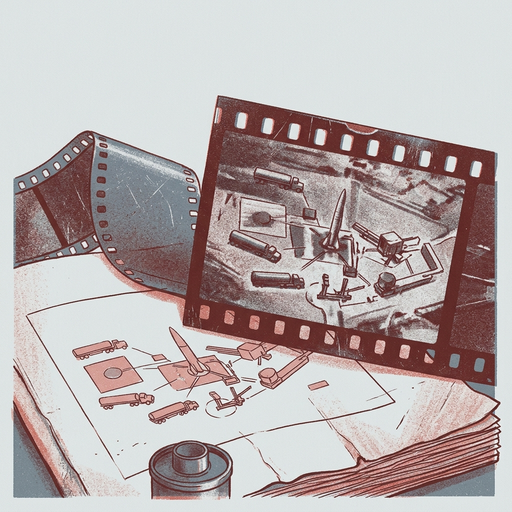
This technical baseline proved vital when the Cold War reached its crisis point in October nineteen sixty-two. On October fourteenth, an American U-two reconnaissance aircraft flew over western Cuba and photographed military construction in the San Cristobal region. When photo interpreters at the National Photographic Interpretation Center examined the developed film, they recognized the installations because they had already studied them in Penkovsky's documents. Because of the site plans and equipment manuals Penkovsky had provided months earlier, analysts identified the signature footprint of Soviet medium-range ballistic missile batteries. They matched the launch pads, the layout of the propellant vehicles, the guidance equipment, and the missile transport trailers directly to the R-twelve system. It is essential to separate discovering the deployment from interpreting it. A scholarly documentary review places Penkovsky's final reporting in August nineteen sixty-two and demonstrates that he did not report missiles being shipped to Cuba or operating there. The discovery of the missile sites was achieved by aerial reconnaissance. A United States military study noted that Penkovsky discussed the theoretical possibility of a Cuban deployment roughly eighteen months before the crisis. However, discussing a hypothetical contingency is entirely different from reporting an active deployment. Later summary accounts occasionally attributed warning of operational missiles in Cuba to Penkovsky, but those accounts compressed earlier technical reporting with later photographic discoveries. Penkovsky supplied the interpretive framework. His manuals gave President Kennedy and his advisers an operational timetable. When aerial photographs confirmed missiles on the ground, the White House needed to know when they would become operational. By analyzing the construction progress against Penkovsky's manuals, American analysts determined that the sites were incomplete and the missiles were not yet fueled. That operational window allowed Kennedy to pursue a naval quarantine rather than launching an immediate air strike that could have triggered a wider war. Yet while his intelligence helped preserve peace in the Caribbean, Penkovsky's time was rapidly running out.
While his intelligence informed deliberations in Washington, the network around Oleg Penkovsky was unraveling. The specific lead that exposed him to the KGB remains disputed among intelligence historians. Some sources point to sustained counterintelligence surveillance of Western diplomats in Moscow, which eventually documented suspicious contacts. Others suggest compromised radio transmissions, an operational error during a physical transfer, or a security breach in the West. Available evidence indicates that KGB counterintelligence had Penkovsky under active observation for weeks before his arrest. On October twenty-second, nineteen sixty-two, Soviet agents arrested him in Moscow. The timing coincided with Kennedy's television address, but the documentary record indicates this was an operational arrest rather than a political response to the speech. Shortly after Penkovsky's arrest, Soviet and Hungarian security officers in Budapest detained Greville Wynne and transferred him to Moscow. Later accounts of the operation described emergency telephone signals, chalk marks on public lampposts, and a final dead drop supposedly attempted while Penkovsky was already in custody. Historians like Allen Weinstein have rejected claims that Wynne tried to save Penkovsky or that Penkovsky deliberately betrayed his courier. They treat these dramatic episodes as disputed elements of Wynne's later memoirs rather than verified operational history. In May nineteen sixty-three, Soviet authorities conducted a public trial in Moscow. Penkovsky and Wynne were tried on charges of treason and espionage before the Military Collegium of the Soviet Supreme Court. The proceedings were widely publicized to emphasize internal vigilance against Western espionage. Penkovsky was convicted and sentenced to death. While later rumors claimed he was executed inside an industrial crematorium, historical records confirm he was executed by firing squad in May nineteen sixty-three. Greville Wynne received an eight-year sentence, but in nineteen sixty-four the Soviet government exchanged him for Soviet intelligence officer Konon Molody, who had operated in Britain under the name Gordon Lonsdale. The Ironbark network was broken, but its legacy was only beginning to take shape.
In the decades following his death, the account of Oleg Penkovsky shifted from a specific espionage case into a broader Cold War legend. Western intelligence agencies contributed to that transformation. In nineteen sixty-five, the Central Intelligence Agency supported the publication of The Penkovskiy Papers, a book framed as the colonel's smuggled personal journals. The publication became an international bestseller, presenting a portrait of an ideological defector who averted nuclear war through individual heroism. Subsequent memoirs, popular histories, and dramatizations reinforced the narrative, compressing the work of couriers, photo interpreters, diplomats, and political leaders into the story of a single spy. When measured against the declassified documentary record, the reality is more grounded. Declassified American intelligence estimates confirm that Ironbark reporting altered Western evaluations of Soviet missile readiness, strategic inventories, and operational limits. Yet proving that intelligence influenced technical assessments is not the same as proving that it dictated presidential decisions. President Kennedy's choice of a naval quarantine and his diplomatic exchanges with Moscow drew on extensive military advice, diplomatic channels, and naval movements. The eventual resolution also hinged on direct communications between Washington, Moscow, and Havana, including the agreement to withdraw American Jupiter missiles from Turkey. Historical questions also surround the broader reporting. Some intelligence analysts have debated whether Soviet authorities, suspecting Penkovsky near the end of his operation, may have used him to pass selected disinformation regarding broader strategic intentions. While the authenticity of his technical manuals remains established, historians recognize that technical accuracy does not guarantee that every analytical conclusion drawn from a source is correct. Penkovsky provided the technical information that allowed Western analysts to evaluate photographic evidence accurately. His contribution lay in replacing dangerous strategic assumptions with verified mechanical data, demonstrating how human intelligence and aerial reconnaissance must work together to pierce the fog of crisis.
Separating the secrets an asset delivers from the decisions political leaders ultimately make is the foundation of critical intelligence history. If this reassessment of Cold War tradecraft offered a clearer view of the past, join us for our next historical investigation as we uncover the documented facts behind twentieth-century covert operations.