Office Hours With Ettinger
When forensic psychologist Miriam Kessler-Vance’s testimony helps free a killer, his exact understanding of her argument against ultimate blame draws him into her ordinary life. Over eleven weeks, mounting unease strains her closest friendship and drives her to watch his home, yet she hesitates to use the working phone in her hand until he has murdered his wife. Her philosophy survives; her confidence that she understands her own conduct does not.
By MyAudioBooks.ai ·
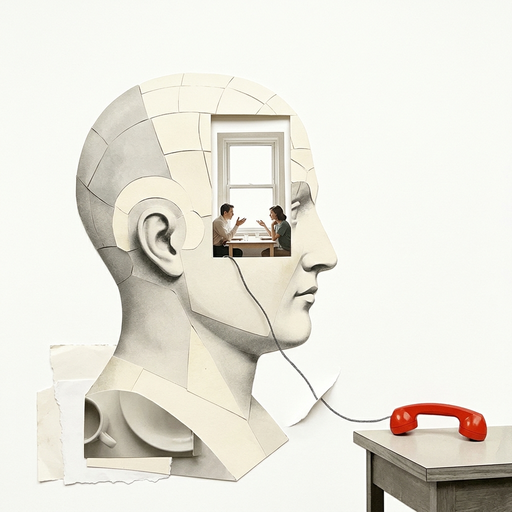
Listen free: Office Hours With Ettinger
I drew the witness microphone closer. "Preparation is not a completed decision." That September fourth morning in two thousand twenty-nine, I was explaining preparatory brain activity to a homicide jury at the Criminal Justice Center on Filbert Street, Philadelphia. I was the defense's expert on human agency. Paul Ettinger's liberty depended, in part, on whether I could explain what the evidence established without pretending it established more. The prosecutor, Nathan Okoro, waited beside the lectern. I enjoyed the small adjustment that made a proposition exact. At fifty-two, an established forensic psychologist with a successful book behind me, I still preferred that adjustment to applause. Samuel Reyes-Okonjo sat in the second row. My colleague and former partner had heard these arguments over worse microphones. I was divorced and childless, but I had retained several useful forms of company. Samuel's was the one I least expected to lose. At the defense table, although his lawyer had begun making notes, Paul kept his hands beside each other and his attention on me, even when Okoro crossed between us and briefly interrupted his view. Okoro rested a finger on the lectern. "Explain what you mean by preparation." "The brain can prepare movement before someone reports intending it. Preparation changes the likelihood of action. It does not settle whether that action will occur." "And your evidence?" "The Deferred Intention Study involved two hundred and forty adults. Each made repeated voluntary movements. Researchers recorded neural activity. Participants separately reported their awareness of intending each movement." I kept my hands off the microphone. Touching it made an unpleasant sound. "Preparatory activity often preceded those reports. The averaged electrical change is called a readiness potential. It measures preparation. It does not identify a completed decision." Okoro moved away from the lectern. "You cannot read a murder from that signal." "Correct. Simple movements are not homicide. Single-trial prediction remained fallible. Some preparation never produced movement." "And people may report their intentions inaccurately." "Correct. The Delayed Awareness Replication examined attention's effects on intention reports. Changing attention changed reported timing. Reported awareness is evidence. It is not an infallible clock." Judge Harriet Lund leaned toward her microphone. "The jury has that distinction. Move to its relevance." She had admitted research bearing on the inference from action to prior intention. She had not invited a visiting professor to replace the charges. I appreciated the distinction. I also knew how much could pass through it. "Conscious intention can participate in action without initiating every preparatory process. Awareness is part of the sequence. Its report need not identify the sequence's beginning." Okoro stopped level with the jury. "An intention can have causes and still be an intention." "Yes. Deliberation exists. People respond to reasons. They anticipate consequences. Those capacities support responsive social agency. They do not establish an ultimately self-created agent." "The law does not require self-creation. It requires a mental state." "Those are different requirements. I have not denied that distinction." "Yet your book says no defendant deserves blame." "It denies ultimate deserved blame. That is a stronger claim than identifying a caused intention." He let the difference remain audible. I respected that. A less capable prosecutor would have asked whether I believed in consequences. Instead, he returned to the lectern. "Your movement studies cannot prove that every human action is determined." "Correct. Neither can my other evidence. My conclusion includes a philosophical argument. It is not an experimentally proved universal theorem." "Give us that argument without extending the experiments." "The Antecedent Continuity Project examined repeated adult tasks. It studied learning, sleep disruption, injury history, and present circumstances. Those factors explained differences within the studied behavior. Statistical explanation does not prove universal determinism. It does not permit complete individual prediction." A juror in the front row stopped writing. I waited until her pen returned to the page. "Incomplete explanation supplies no uncaused self. Uncertainty identifies a limit in knowledge. It does not identify an independent author." Okoro folded his arms. "You put your conclusion inside what we cannot explain." "No. I deny that ignorance establishes the alternative. An event might include genuine randomness. Randomness supplies accident. It does not supply authorship. A person cannot earn authorship through an accident." "Then what would satisfy you?" "Find me the uncaused cause and I will find you the ghost." I had said it often enough to know where the pause belonged. That knowledge gave me pleasure too. Okoro allowed none of the pause. "We are trying a man, Doctor. Not a ghost." "Yes. A man with a body and a history. His intentions belong to that history. They are not exempt from it." "Including an intention to kill." "Yes. An explanation does not erase an intention. An intention does not establish ultimate authorship." He turned his open hand toward Paul. "And suffering imposed on him is never deserved?" "Not as ultimate repayment for self-created wickedness. Restraint may still be necessary. Treatment may still be necessary. Other people remain entitled to protection." The ventilation clicked above the witness box. I could hear the water shifting in the glass when I lifted it. Okoro waited for me to put it down. "You also suggest our wish to punish is unreliable." "The Matched Sanction Project compared responses to equivalent harms. Outrage tracked punitive preferences more closely than estimated preventive benefit. That association appeared within the project's defined comparisons." "People answering hypothetical questions." "Yes. Their answers were not sentences imposed by courts. The findings cannot simply be transferred to every criminal proceeding." "Outrage may recognize the importance of what someone destroyed." "Yes. Recognition of harm matters. It does not establish that additional suffering repairs that harm." Lund shifted a stack of papers without consulting it. "Keep the distinction between explanation and recommendation clear." "The Graduated Sanction Review addressed preventive outcomes. Its defined comparisons found little additional deterrence from greater severity. That does not establish that sanctions never deter. It does not cover every offense or population." Okoro came back to the witness box. "So your evidence does not abolish punishment." "It challenges particular justifications and particular increases in severity. My broader objection concerns deserved suffering itself." "And what replaces it?" "Protection without righteous hatred." He waited. I had no objection to being required to continue. "The Protective Separation Follow-Up examined structured containment, treatment, and review. Its supported programs used observable outcomes. Restriction served prevention. Treatment addressed changeable conditions. Review tested whether restriction remained justified." "You say supported programs. Not every program." "Correct. Outcomes varied. Assessment also makes mistakes. No assessment establishes certainty about a person's future." "Then who pays when you release the wrong man?" "The person he harms pays first. Their family also pays. No later correction can restore a murdered person." He remained close enough that I could see the worn edge of his cuff. "And you still propose release." "When continued restriction lacks sufficient grounds. Mistaken confinement also destroys years. A zero-risk threshold can justify indefinite confinement. A lower threshold exposes other people to danger." "That is the problem. It isn't an answer." "There is no error-free answer. The threshold requires public justification. Actual outcomes must remain open to review. Hatred cannot improve an assessment's accuracy." Lund sat back. "Your remedy requires continuing administration." "Yes. Protective separation requires a maintenance clause." One corner of her mouth moved. She seemed to understand perfectly well why a maintenance clause was less satisfying than a sentence pronounced once and completed. I liked her better for allowing herself the amusement. Okoro tapped the rail once. "You have not assessed this defendant's present danger." "No. That was not my assignment." "Your testimony gives this jury no assurance he is safe." "Correct. I offer no such assurance." I believed the concession strengthened everything I had said. It marked the boundary of my expertise. I had always found a clearly marked boundary reassuring. We finished the first court day with the distinction between caused intention and absent intention still disputed. I went home, ate standing at the kitchen counter, and slept. The following morning I returned in the same shoes, with their narrow pressure across my toes, for the remaining half-day. Okoro had the fire extinguisher brought where I could see it from the witness stand. Its red paint had chipped around the base. Dark material remained in the seam above the metal rim. It was smaller than the object I had carried in mind while reading the medical findings. He directed me to the photograph on the evidence display. The dead business partner lay on his side. Above his left ear, a torn flap of scalp exposed pale bone and a depressed, broken area beneath it. Blood had matted the hair against the floor. One ear had folded forward under the weight of his head. His striped shirt had absorbed blood until the stripes disappeared across the shoulder. Farther down, the pattern remained crisp. I moved my glasses higher on my nose. The change improved nothing. Okoro stood beside the display. "This is the person whose death we are discussing." "Yes." "He was struck repeatedly with that extinguisher." "That was the medical evidence." "A caused intention can direct repeated blows." "Yes." Although Paul had turned toward the photograph when it appeared, he remained facing it after his lawyer leaned close, and, while I could observe that persistence, I could infer neither remorse nor its absence. Okoro returned his attention to me. "Nothing in your studies determines his intention at that time." "Correct. The jury must evaluate the evidence of his mental state." Lund delivered her limiting instruction before I left the stand. "Causation does not itself negate intent. The expert's general position does not decide the defendant's mental state. You must apply the elements I give you." For this trial, the top count required a settled intention to cause death. The lesser homicide count required reckless conduct causing death. Lund made the distinction twice. She was particularly clear the second time. The jury returned before lunch. The foreman rose with both hands resting on the rail. "On the count of intentional homicide, not guilty. On the lesser count of reckless homicide, guilty." Paul's lawyer put a hand on his sleeve. Paul kept facing forward. The disposition followed under the terms already argued before Lund. The lesser conviction carried a sentence equal to the thirty months Paul had spent in custody. That time counted in full. He had no remaining custodial term. He would be released that day. Lund made certain everyone understood it. "My concern about this outcome gives me no power to add imprisonment. I regret that the distinction in my instruction proved insufficiently clear." In the hallway, the foreman approached while I was fastening my coat. Samuel stood beside me. The foreman held his jacket over one arm. "We kept coming back to what you said. Action beginning before the person understood it. We couldn't agree he'd formed that settled intention." I had explicitly denied that simple movement studies could settle a homicide. I had also supplied the account around which their uncertainty had organized itself. My testimony had changed the verdict. He had told me how. After the foreman left, Samuel took my bag while I freed a trapped button. "They heard you." "Not quite what I said." "Enough to let him out." Okoro approached before I could answer. He kept his voice below the traffic of the corridor. "If he contacts you, remember what you haven't assessed." "I made that limit explicit." "I know. If he talks about hurting someone, call me." "That would depend on what he actually—" Okoro stopped me with a raised hand. "I'm not asking for a fucking theorem. I'm asking you to call. I'll listen." He gave me his number. I put it in my phone while he waited. Paul emerged later without the officer who had accompanied him into court. He was a forty-four-year-old Havertown pharmacist carrying a clear bag containing his possessions. The change in his company mattered more than the bag. He approached me, though Samuel remained beside my shoulder. After thanking me once, he waited through another group's passage until there was room to offer a more exact version of his gratitude. "You said what you believed. Including the parts my lawyer would rather you hadn't." "That was my job." "You wrote that protection does not require hatred. I remembered the sentence." Samuel handed back my bag. Paul waited while I settled its strap. "May I write to you?" "At the university. The address is public." "Thank you, Doctor Kessler-Vance." He used the whole name without stumbling over it. I noticed. During the second week of September, his first letter reached my office in the converted hospital wing where our laboratory occupied rooms built for wards. The old corridor was wide enough for beds to pass. Visitors could reach the lecture room without passing a receptionist. Paul wrote about the distinction between agency and authorship. I answered briefly. Another letter followed. Between correspondence and teaching, I ran before breakfast and worked at a desk overlooked by three nineteenth-century phrenology heads. I collected them as a joke. Their confident labels made a useful accompaniment to academic administration. Samuel came through one afternoon and found Paul's second letter beside my keyboard. He left his laboratory key on the desk. "How much of the case did you read?" "The material relevant to my testimony." "All of it?" "No." I had read the prosecution's account, the medical findings, and the extracts supplied for the questions I had been retained to address. I had not read the complete case file. Nor had I interviewed Paul for a risk assessment. My courtroom answers had been true. Samuel picked up his key. "Does he understand that?" "I have told him." "Tell him again." On September eighteenth, Paul attended my public lecture in the former hospital's ground-floor teaching room. I had mentioned the event in my reply. The university bookstore had sent a clerk with copies of my book, and the clerk was trying to keep the sales table clear of coffee cups. I finished the lecture at the portable microphone. "Reasons can change conduct. Institutions supply reasons. Neither fact requires an uncaused self. Prevention remains a task, not a metaphysical prize." The bookstore clerk lifted a copy when Paul approached. "You can take that one over for signing." Paul took his own worn copy from his coat. "I brought mine." He waited until the paying customers had finished, although I had acknowledged him, and, when he finally reached the table, placed the book before me without opening it to a favored passage. "You distinguish knowing an argument from knowing a person." "I know my argument. I do not know you well." "I understand." That distinction prohibited diagnosis at a signing table. It did not require me to refuse a conversation. When he suggested coffee somewhere less crowded, I gave him the name of a diner on Lancaster Avenue. We met there on September twenty-third. I arrived after laboratory hours and brought his most recent letter. My coffee cup partly covered its lower corner. Paul ordered toast. When it came, he divided the butter between the slices before continuing. "I wanted to ask about your fourth step. The protection argument." "It is not an assessment of you." "I know. It establishes what restriction needs." He shifted his plate so the waitress could reach the sugar dispenser. "If the grounds for separation end, separation must end. That was your answer." "Yes. Subject to the costs of error." "Which cannot justify keeping everyone apart forever." The waitress stopped with the coffee pot tilted toward my cup. "Regular, or were you the decaf?" "Regular. Thank you." She filled both cups and moved on. Paul waited until she had passed the next booth. "Release has to permit ordinary life. Otherwise it is separation with different arrangements." "No one owes you friendship." "Of course. You can decline coffee. But accepting it doesn't require you to certify me harmless." I had been preparing to correct him. There was no useful correction to make. Although his voice remained soft and his request involved nothing more exceptional than sitting in a diner, I found myself attending to the space he allowed after each answer, even when I had finished speaking. "Ordinary standing does not guarantee trust." "Agreed. It permits trust to develop. Without proving that nobody will ever regret it." His inference was accurate. The objection available to me concerned this man, not the fourth step. I possessed no assessment of this man. When he asked whether he could continue writing, I said yes. Four days later, Samuel and I ate dinner at the same diner. Paul was elsewhere. I made that distinction explicit when Samuel noticed the letter in my bag. Samuel pushed his plate back. "You invited him into a relationship your testimony didn't evaluate." "That is an elegant formulation." "I wasn't trying to make one. Are you going to meet him again?" "He comes to public events." Samuel left his hands on either side of his plate. "And coffee. And your office?" "My office hours are open." "Will you keep them open to Paul?" I wanted our ordinary dinner back. Samuel used to bring me the bad sentences he found in grant applications. I had saved one for him that afternoon. "I have no grounds to exclude him." "You don't need a detention hearing to stop private correspondence." "It is professional correspondence." "Then tell him what you won't do. Before he needs you to do it." I straightened the spoon beside my cup. "Can we have dinner without discussing him?" Samuel reached for the bill. "That's what I came for." We paid for our meals separately. I kept the grant application's sentence to myself. On October first, I stayed late at the laboratory, finishing comments on a student's analysis. Paul's letters occupied the correspondence folder on my desk. His latest question concerned whether office hours were available to readers who were not enrolled. I composed a reply explaining that I was neither his clinician nor his personal adviser. I left the reply unsent while I gathered my things. At the corridor exit, a graduate student was trying to pull a bicycle key from a tight ring. They were twenty-six, old enough to have completed one career before beginning another, and their fingers had gone red around the nails. A pair of soaked knitted gloves hung from their bag. I stopped beside the bicycle helmet. "What happened to those?" The student lifted the gloves by their cuffs. "Dropped them in the sink. I thought they'd dry by now." I took my running gloves from my coat. "Use these." "I'll bring them back tomorrow." "Keep them until yours are dry." The student pulled one on, holding the other cuff between their teeth.
I waited until both hands were covered, then held the corridor door while they wheeled the bicycle through. Before leaving, I returned to my office. I completed the reply to Paul: he could attend ordinary office hours, under the same arrangements as other visitors. I sent it and put his letters back in the folder. The qualification about personal advice remained. So did the invitation. At home I ate, set out running clothes, and slept. The following morning I ran, showered, and returned to the converted hospital wing. At eight forty on October second, I had hung my bag beside the desk. A call about the morning's seminar had ended without difficulty, and I put my phone in my right coat pocket. The correspondence folder remained where I had left it. Someone knocked. I crossed the office and opened the door with my left hand.
The woman in the corridor held two lidded coffees, one balanced above the other while she freed a hand. She gave her name before I could offer mine. "Rosa Alvarado. I worked the Ettinger homicide. One of these is yours." I stepped aside. She carried the coffees into my office and waited while I cleared a place beside the correspondence folder. My phone remained in my right coat pocket. Alvarado set down the cups beneath the phrenology heads. "Those help?" "They discourage professional certainty. Intermittently." She took the chair facing my desk. "Ettinger's been writing to you." "Yes. We've also had coffee." "I know about the letters. He mentioned them when we spoke." I pulled the other chair closer. The coffee was hot; I held the cup by its cardboard sleeve. A visit without an appointment generally concerned something its visitor preferred not to put in an email. Alvarado left her cup closed. "How much did you read before you testified?" "The material relevant to my assignment." "Did that include the roommate?" I put my coffee down. "What roommate?" She allowed the question to remain between us before answering. "A man he lived with. Died in a fall down stairs. Ettinger was there. The partner was the second person to die around him." "Was the earlier death considered suspicious?" "It was examined. It's still ruled accidental. I'm telling you what happened, not giving you another homicide." The distinction mattered. Two deaths near one person did not establish two crimes. I understood that immediately. I also understood that I had permitted correspondence and private meetings without knowing there had been two deaths. Alvarado shifted her unopened coffee away from my folder. "Is this particular man dangerous?" "The killing is an important risk factor. I haven't conducted an individual assessment." "You've sat with him." "A civil conversation isn't a risk assessment. Neither is an uncivil one. A proper assessment would examine his behavior across circumstances." She kept her hands beside the cup. "Could it tell us something useful?" "Potentially. It could identify concerns and guide precautions. It couldn't certify his future." "Has he said anything about hurting someone?" "No." Alvarado waited for more. I could have described his pauses, his attention, the persistence with which he returned to an accurately understood argument. None supplied a threatened person, an intended act, or an occasion. I lifted the coffee again. "His understanding of my position is unusually exact." "I'm asking what he might do with his fucking hands." She said it without raising her voice. I set the cup down. "I have no specific warning to give you." Alvarado opened her coffee at last. "Then call when you do. Exact words. Something he does. Something someone tells you happened. The old accident doesn't let me confine him. Neither does a conviction he's served." I took my phone from my pocket and entered her number while she gave it. She watched until I had finished.
Two weeks later, on October sixteenth, I was putting away seminar notes when a woman came alone to office hours and introduced herself as Jenna Ettinger. She remained standing until I offered the chair Alvarado had occupied. From the corridor came the squeak of a trolley wheel, stopping at each office. Jenna settled her bag between her shoes. "Paul said readers could come. I haven't read the whole book." "There is no entrance examination." "Good. I've read some things twice and other things not at all." She had come during her lunch break. She explained that before asking anything, then corrected herself: she could stay longer if necessary. Someone else was covering for her. I closed my seminar folder. Jenna rested her forearms on her thighs. "We're living together again. In Ardmore now. There's a lot to fix in the house, and he wants to fix it all immediately." "Practical repairs?" "A cupboard that sticks. A loose rail. That sort of thing. I asked him to leave the kitchen alone until I decide where things go." "And has he?" "Yes. That's not really what I came about." She drew the bag closer with her heels. "People invite me to things without him. They make it sound accidental. One place at a table, one spare ticket. I don't expect them to forget. I just want them to say what they mean." "You can ask them." "I have. They say they need time. Then Paul asks how long, and I have to explain that it isn't something I can arrange." She described separate invitations, unfinished repairs, evenings in which she tried to discuss the next day and found herself discussing the trial. She wanted a workable household. She had already told Paul that other people's invitations were theirs to give. Jenna reached down and pressed a finger against the fastening of her bag. "What I keep asking him is why he didn't stop. I know what he says. I want another answer." "What answer?" "That he could have chosen differently. Could he?" I moved my chair so the desk no longer separated our faces. "He could understand alternatives. He could respond to reasons. Those capacities matter." "But at that moment." "My position denies an additional, independent author. His deliberation belonged to his history. It wasn't separate from his body or circumstances." She listened with her hands still. I took care over the distinction she had asked me to make. "Different reasons can produce different conduct. Those would be different conditions. Restoring every condition supplies no extra self to intervene. Randomness wouldn't give him authorship either." Jenna leaned forward. "So asking him to have been someone else doesn't get me anywhere." "You can still ask for different behavior now. Your reasons can affect what happens. Explanation doesn't make those reasons irrelevant." "I'm asking for that. I am." I kept my voice level. "This doesn't decide whether you should live with him. It isn't an assurance of safety." "I know. I wasn't asking for a promise." She released the fastening and lifted her bag onto her knees. Her shoulders had lowered. She said she might be able to stop repeating the same question each evening, and thanked me with an attention I found difficult to refuse. At the door, Jenna turned back. "You could come for supper sometime. Not to assess anything. Just supper." I said I would consider it. She gave me their address before I had accepted, describing the Victorian house and the public street beside its corner lot. After she left, I remained beside the open office door. We had reached a clear answer to her question. Her account of their evenings had received considerably less attention. I let the next visitor in.
By the eighth week after my testimony, I had begun taking Paul's letters out of their folder again. I read passages about responsibility and ordinary life, found the qualifications I remembered, and put the letters away. Their wording remained courteous. Rereading had produced no new act. Paul came near the end of office hours that week, although he had made no separate appointment, and waited outside while I finished with a student who needed to revise an analysis. He stayed in the doorway after the student left. "Jenna said she came to see you." "Yes." "She seemed better afterward." I left my hand on the back of the visitor's chair. "That conversation was hers." "Of course. I wasn't asking what she said." Although he remained outside the office until I moved the chair, and although his pause allowed me to decline the visit, I brought the chair forward rather than closing the door. Paul sat with his coat still on. "She mentioned supper. I wanted to say you needn't feel obliged." "I haven't agreed to come." "I know." I asked how they were managing. He said the house required work, Jenna wanted things settled slowly, and he was trying to respect that. He gave no account of an argument and asked for no intervention. When he rose, although I had asked nothing that required a promise, he said he understood that neither my correspondence nor my hospitality constituted an assessment, and waited until I acknowledged the distinction. I acknowledged it.
On October twenty-eighth, after an ordinary day in the laboratory, I drove to Ardmore instead of going directly home. I used the address Jenna had given me. I neither telephoned her nor approached the house. I parked legally on the public street opposite the side of the corner lot. No restrictions prohibited an evening stay. Through the windscreen, beyond a low fence and a narrow strip of garden, I could see the broad kitchen window. At first its glass reflected branches and the pale upper floor of the house behind me, although movement remained visible beyond those reflections whenever someone crossed close to the window. I took out my phone after switching off the engine. Alvarado answered while I was still deciding how to begin. "What happened?" "Nothing specific. I'm outside their house." "Outside where?" I gave her the address and explained where I had parked. A car passed between me and the window, briefly removing the kitchen from view. Alvarado let me finish. "Have you seen him threaten her?" "No." "Has she asked you for help?" "She came to my office. She asked about responsibility." Alvarado waited through my account of the visit. "Did she tell you he frightened her?" "She described difficulties. She reported no threat." "All right. What can you see now?" Jenna switched on the kitchen lights while I was answering, and although the glass retained a faint reflection of the branches, the room behind it became plainly visible across the street. The sill was low. I could see the table, the white cupboards across the far wall, the doorway into the rest of the house, and a strip of floor between them. Jenna put two plates on the table. I described that. Alvarado asked me to call if something happened, then ended the conversation. Paul came into the kitchen while I still held the phone, and although he passed close behind Jenna, even briefly touching her shoulder while she moved aside, I could identify nothing beyond an ordinary shared space. I watched them sit down. Then I drove home, ate, and slept.
During the next several days I taught, ran, answered students, and spent whole evenings elsewhere. The time outside the house occurred in separate visits. I arrived from work, or made a distinct drive after going home, and always left the engine off before placing a call. On October thirty-first, parked in the same place, I called Nathan Okoro. He answered on the fourth ring and asked whether I could wait while he moved somewhere quieter. I heard a door close. Okoro returned to the call. "Tell me." I told him about Jenna, the letters, the visit Alvarado had made to my office, and my own journeys to Ardmore. He interrupted only to establish which things I had witnessed. When I finished, Okoro spoke slowly. "I hear the concern. I don't hear a present threat." "That's the difficulty." "Have you told Alvarado everything you've told me?" "Yes." Across the street, although Paul remained standing while Jenna sat at the table, the difference in their positions supplied no reliable information about what either had said before I arrived. I told Okoro what I was seeing. He asked whether Jenna was trying to leave. "No. Not that I can establish." "You don't have to establish a case before calling about immediate danger." "People can misinterpret what they see." His voice sharpened. "Then say what you see. Leave the fucking interpretation open." I pressed the phone closer to my ear. Okoro continued in his earlier voice. "I'm listening now. I'll listen again. An emergency goes to emergency services first." "Thank you." "You don't need to thank me. You need to call if something happens." Jenna got up to fetch something from a cupboard. Paul moved out of her way.
On November sixth, Samuel met me for dinner at the diner on Lancaster Avenue. This was a separate evening, arranged before I left the laboratory. I arrived first and asked for the booth we generally used. Samuel took off his coat and put it beside him. "You said you were driving out there." "Sometimes." "What are you hoping to see?" I moved my water glass away from the edge. "Something that makes the concern concrete." "And then?" "I call." Samuel unfolded his napkin. "The call belongs in your account too. Hearing you could change what somebody does." "I've never denied that." "I'm not asking you to deny anything." Our food arrived. He moved a plate to make room for mine, a familiar accommodation whose familiarity I wanted more than I wanted to continue the conversation. I asked about his week. He answered, then asked whether Jenna knew I was watching the house. "I haven't told her." "Have you told Paul?" "No." Samuel cut his food. "What do you expect him to do where you can see it?" I had no useful answer. I wanted to see a decision become distinguishable from everything preceding it, although I knew a decision would itself consist of processes with antecedents, and no visible instant would supply an independent author. I told him I was watching for behavior, not a metaphysical event. Samuel set down his knife. "Then you can report behavior. You don't have to explain all of it." "Can we talk about something else?" "We can. I don't know how to make this feel ordinary." We discussed laboratory space. He answered my questions with care, but supplied none of the small complaints that had once carried us through dinner. When he said he was tired, I asked whether we could meet the following week. He said he would let me know.
On a later drive, during the tenth week, I parked before calling Alvarado again. The kitchen lights were already on. Jenna was alone at the table, folding something while a cup stood near her elbow. Alvarado asked whether there had been a change. I said there had not. She let several seconds pass. "I can drive past occasionally if duty puts me out that way. That's all I'm offering." "I wasn't asking for protection." "Good. There won't be anyone stationed here. Local officers handle an emergency. Call them first, then me." I rested the phone against the steering wheel. "You still need an act or a statement." "Something that happened. Yes." When Paul appeared, although Jenna continued folding and he remained near the doorway without touching her, I found myself attending to the space between his hand and her chair. I stayed until he left the kitchen. Then I drove away.
The following days contained work, meals, sleep, and an unanswered invitation from Jenna. I composed no safety advice for her. I had told her that her reasons could matter. When I saw her name on my phone, I considered what I could responsibly add, then put the phone away.
On November twentieth I returned to the established parking place at about four forty-five in the afternoon. I switched off the engine and took my phone into my hand before settling back in the seat. Jenna was preparing food in the kitchen. She carried a broad dark pan with both hands, set it on the stove, and returned to a board on the counter. The lights were on, although the window still held enough of the outside reflection to place a bare branch across the cupboard doors. I could see her from the waist up at the counter and nearly her whole body when she moved toward the table. Nothing obstructed the street between us. A person walking past my car would have had substantially the same view.
Paul entered through the interior doorway, and although Jenna turned toward him and moved her mouth, even holding one hand above the board while she spoke, I could hear nothing through the two panes of glass. He stayed in the doorway. She put down what she held. I shifted the phone in my palm, although the conversation might have concerned supper or an unfinished repair, and watched Jenna move from the counter toward the place where he stood. Paul stepped across her path. She stopped, said something, and moved to pass on his other side. When he caught her upper arm, although the grip lasted only briefly before she tried to pull away, I saw his hand retain her sleeve. She pulled again. Paul pushed her backward into the counter. The movement established violence, although it established neither what had preceded it nor what would follow, and I watched for him to release her while she braced herself against the worktop. He let go of her arm. I saw the separation and held it apart from the shove, although Jenna remained against the counter and the doorway stayed beyond him.
Then he took the pan from the stove. Jenna raised both hands in front of her and moved sideways along the counter. Paul moved with her, the pan lifted clear of the worktop. She had nowhere to pass him without coming within reach. My thumb remained above the call symbol. I watched her hands.
He struck her on the side of the head. Her scalp split above her ear. Blood struck the illuminated white cupboard doors behind her. She fell into the strip of floor below the counter, where the low sill left her head and shoulders visible. He struck her again. Her head moved under the blow, leaving blood across the pale floor. One hand dragged against the cupboard base. The fingers moved once and stopped.
I called emergency services. The connection opened normally. I began with Paul's name, then the dispatcher interrupted. "What is the address of the emergency?" I gave it, then identified my position across the street. The dispatcher continued. "Tell me what you saw?" "A man hit his wife with a kitchen pan. Twice. She's on the floor. She isn't moving." "Stay outside. Where is the man now?" Paul set the pan on the counter. His shoulders settled, although the movement could support an impression of relief only if I supplied an account of what he believed had ended. I answered the dispatcher, then gave Alvarado's name and number and asked that she be notified.
Several minutes passed while I remained on the line. Jenna remained where she had fallen. I could see the blood beneath her head. The first police car stopped nearer the house. Officers passed my car toward the path. Another car arrived later, and Alvarado came to my window while I still held the phone. I lowered the glass. She bent to hear me. Alvarado kept one hand on the window frame. "What did you see before you called?" "The observer belongs to the same causal history. That includes—" I stopped. The next clause remained available. Alvarado waited at the open window for an account of what I had seen. Why had I stopped?