My Brother’s Name in Dutch
Over four days of an asylum appeal in The Hague, interpreter Nasrin Haidari’s faith in exactness is shaken when the appellant names her late brother as the soldier responsible for a killing. Pressed to reveal what her brother privately confessed, she must choose between protecting his confidence and answering the man whose testimony she carries. Her eventual disclosure destroys the appeal’s stated basis and ends her neutrality, leaving her seated before one final request to translate.
By MyAudioBooks.ai ·
Listen free: My Brother’s Name in Dutch
This is a work of fiction. The tribunal, the officials, the interpreter and every person in it are invented, and no real case is described.
"I was in the courtyard."
I gave Jawad Rahimi's next sentences in the same first person, keeping the pause he left between entering the courtyard and seeing the man beside the wall. He spoke in Dari. I rendered his account into Dutch, facing the judge rather than the person whose words I carried. When he corrected the position of the gate, I made the correction. When he returned to his original description, I returned with him. The headset sat securely over my ears, and I heard the end of each sentence before beginning mine.
Across the hearing table, Jawad rested his hands together. He had answered the earlier questions about cleaning offices in Delft without asking for anything to be repeated. His former rank, captain, had required a distinction between the rank he held and the duties he performed. We had settled that distinction, too.
Annelies de Wit, the presiding judge, moved her pen away from the page.
"Before we go further, which courtyard are we discussing?"
I put the question to him. Jawad answered in Dari, and I gave his answer in Dutch.
"The courtyard in Herat. In two thousand and nine."
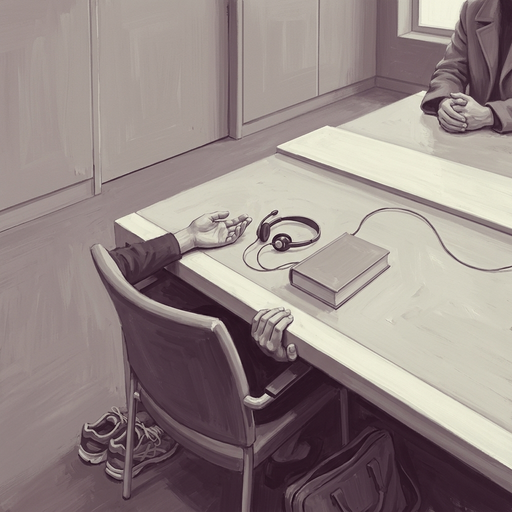
Daylight reached the edge of our table. It was the first morning of his appeal in The Hague, in October two thousand and twenty-six. Autumn coats hung from the backs of several chairs. My running shoes lay beneath mine, beside the bag I had brought for an appointment the following afternoon.
I liked working with de Wit. She allowed an answer to finish, including the part after a speaker seemed to have finished. In sixteen years as a sworn interpreter of Dari and Pashto, I had learned which judges would let a pause remain a pause. With her, I seldom had to lift a hand.
The lawyer for the state, Bram Oosterhuis, drew his chair closer to the table.
"You have described yourself as responsible for what happened there. Are you saying that you ordered the man to be shot?"
I interpreted the question. Jawad separated his hands.
"I was the captain. The soldier belonged to my unit."
I gave those two statements separately.
Oosterhuis continued in Dutch.
"So he was acting under your command."
I raised my hand before interpreting that proposition.
"He has said that the soldier belonged to his unit. He has not yet said under whose command the soldier was acting on that occasion."
Oosterhuis moved his finger back along the line he had been following.
"Yes. Thank you. I will ask that separately."
He gave me the new question and waited while I put it into Dari. There was no defence of his earlier phrasing, no suggestion that my refinement had interrupted the proper business. I moved my hand back beside the interpreter's card bearing my name, Nasrin Haidari. My dictionary lay with the rest of my work materials.
For you, who would take that chair after me, this was the ordinary part worth knowing. An interpreter's intervention could be brief and still change the question. It need not become an argument about who had been listening more carefully.
Jawad drew his chair a little nearer.
"May I explain why I cannot go back?"
I rendered his request. De Wit gave permission, and he continued.
"The people who hold me responsible for that man's death will kill me. They hold me responsible for the courtyard. That is what I have been trying to explain."
Sanne Visser, his legal-aid lawyer, leaned forward before Oosterhuis began again.
"His personal part in that killing is the basis on which I am putting this appeal. We need to let him explain what he means by responsible."
Oosterhuis kept his place with one finger.
"That is what I am asking. So far, he has described where he stood and what the soldier did. Those answers place him there as a witness."
"Then ask him what he did. Please don't make the description of the soldier stand as his complete answer."
De Wit waited until I had given Jawad the exchange.
"We will distinguish them. What you saw, and what you yourself did."
That was the particular difficulty before us. Sanne was advancing his danger on return through his own part in the killing, while the account reaching the table increasingly described another man's actions. My task was to preserve the difference, not decide which account would keep him safe. Jawad said that return would get him killed. I could interpret that prediction exactly; I could not certify it.
De Wit asked what he had done after entering the courtyard. I gave the question to Jawad and waited.
He adjusted his cuff before answering.
"I remained there. I did not leave the man alone with the soldiers."
I rendered it without turning remaining into guarding, or into protecting. Those possibilities were available to the people asking questions. They were not available to me as improvements.
Dutch had been the language of my working life for many years. I had come to the Netherlands at nineteen, from Herat, and by forty-four I usually noticed a badly placed Dutch word before I noticed that I had heard it. Familiarity had its uses. It also required checking. A sentence could sound perfectly ordinary and contain a distinction the speaker had never made.
Jawad answered the questions about his position in the courtyard, then returned to the man beside the wall. I kept my attention on de Wit while he spoke. Facing the judge helped keep a speaker's expression from becoming part of my rendering. I heard a request as a request, even when the person making it had already begun to look disappointed.
The shoes under my chair touched my heel when I moved my feet. The woman I ran with had asked me to bring them rather than go home for them. We had agreed to meet after the next day's hearing. I had accepted without qualifying the promise, a habit I generally reserved for interpreting.
Oosterhuis asked whether Jawad had spoken to the man in the courtyard.
Jawad's answer came more quickly.
"Yes. He spoke to me, and I answered him."
"What did he ask you for?"
I put that question in Dari. Jawad gave a short answer containing a word I had rendered many times. I supplied my usual Dutch choice.
"He asked me for an apology."
Jawad lifted his hand.
"Excuse me. Not an apology."
I gave his interruption in Dutch. De Wit put down her pen and left the interval open.
Jawad continued in Dari.
"That is the word you chose. It is not what I said he asked for."
He spoke quietly. Sanne had turned towards him, but he kept his attention on me. I had heard the original word clearly. The difficulty was in the ordinary Dutch sentence I had made from it.
I kept my hand beside my notes.
"The appellant is correcting the interpretation. He says that my choice of 'apology' does not convey what he said the man asked of him."
Oosterhuis took his finger from the page.
"Would you like the question repeated?"
I interpreted the offer. Jawad answered before I had quite returned to my judge-facing position.
"The question was clear. Please give my answer again."
I asked permission to hear the complete sentence once more. De Wit gave it. Jawad repeated the sentence without increasing his volume or slowing it for my benefit. I listened through the final word.
The dictionary remained beside my papers. A dictionary could offer other choices; it could not tell the hearing which part of his objection he intended. I asked him to explain that part, and gave his explanation without replacing it with a more convenient noun.
He waited until I finished.
"Yes. Please keep it that way."
I turned to de Wit.
"Please strike 'apology' from my earlier rendering. The appellant has asked that his explanation stand in its place."
The next hearing day, I set my card and dictionary beside my notes again. My running shoes went beneath the same chair. Jawad greeted me in Dari, and I returned the greeting before checking the headset. His voice reached me clearly.
De Wit asked whether he could hear. I gave the question, then his answer. We resumed with the same arrangement of chairs and the same distinction between what he had seen and what he had done.
I wanted the work to proceed without another intervention from me.
Oosterhuis used the earlier transcript only long enough to locate his question, then turned it face down.
"When you first gave this account, you named a different soldier. Are you now speaking about the same man?"
I interpreted the question. Jawad moved his hands apart on the table.
"I want to give his full name."
Oosterhuis began to ask whether the earlier name had been mistaken. De Wit stopped him with a small movement of her pen.
"Let us hear the name first."
She turned towards me before I could interpret.
"I need the exact words."
I put her instruction into Dari.
Jawad answered with the same deliberate courtesy he had used when correcting me.
"Farid Haidari. He was the soldier who fired at the man in the courtyard."
I gave the answer in Dutch.
"Farid Haidari. He was the soldier who fired at the man in the courtyard."
My younger brother's name passed through my voice at the proper pace. I had said it in Dutch before, to people in Rotterdam, where he had died seven years earlier. Here I kept the separation between his name and Jawad's next statement. Neither required me to change my volume.
Oosterhuis asked whether Jawad had known Farid personally.
I gave him the question.
"He served in my unit. I knew him."
I interpreted that answer, too. My right hand had closed around the edge of the table below the level of my notes. I moved the next sheet with my left.
De Wit asked whether Jawad was certain of the full name. He said that he was. I gave both the question and the answer without adding anything to either.
Sanne wrote something, then crossed it out. Oosterhuis waited for her to finish before asking his next question.
"You have told us who fired. What part did you yourself take?"
Jawad began with his rank again. Oosterhuis let him finish, then distinguished belonging to a unit from receiving an order on that occasion. I rendered the distinction I had asked him to preserve the previous day.
I said nothing about my brother.
You would have known the professional reasons for allowing a speaker to continue. A new interpreter needed time to hear a person's sentence structure, to distinguish a return to an earlier answer from a new answer. Repetition could alter emphasis even when the words remained the same. Continuity had a real value here. I had heard Jawad's correction. I knew where he had paused.
I kept the page before me open at the next question.
Jawad asked whether he could complete an answer without interruption. I gave the request. De Wit agreed and asked Oosterhuis to wait. Oosterhuis answered de Wit directly.
"Of course. I will keep my question until he has finished."
Jawad spoke for several sentences. I followed his account in manageable lengths, raising a finger when I needed him to pause. He stopped each time. My Dutch remained level, and I preserved his repeated distinction between being present and being able to leave.
Sanne put down her pen.
"Could we have a recess?"
De Wit kept her place in her notes.
"Is there something you need to discuss with your client?"
Sanne turned towards my side of the table.
"A short break for everyone. We have been going on for some time."
I loosened my left hand from the page. My right remained where it was.
"I can continue."
Sanne's answer came quickly.
"I know. You haven't missed anything. Your hand has been gripping the table."
I opened it and laid it beside my notes. The pressure had left a narrow line across the palm, already fading.
De Wit closed her folder.
"We will take the recess now."
I gave Jawad her announcement. He thanked her, and I rendered the thanks before removing my headset. Sanne was already speaking to him about continuing afterwards. Oosterhuis moved his chair back to let them pass.
I left the dictionary and interpreter's card with my work materials. When I stood, the side of my shoe touched the bag beneath the chair. I pushed it back with my foot and took only my phone.
I went directly to the tribunal toilets during that afternoon recess. At the door, I pulled while a woman from the waiting area was trying to come through. She stepped aside and held it open.
The woman kept her hand on the heavy door.
"Go ahead. I've got it."
I thanked her and passed. She released the door after I had cleared it. The latch clicked behind me.
At the basin I put my phone on the dry ledge and turned on the tap. Water struck the porcelain with enough force to splash the cuff I had pulled back. I reduced the flow. The door opened once more, then closed, and footsteps crossed to a cubicle.
My phone rang beside the basin. I dried my left hand before answering.
The woman I ran with spoke over the small sound of traffic at her end.
"Are you still inside? Shall I wait?"
"Yes, I'm still here. We're having a break."
"That's all right. I haven't started. I can wait a bit."
I lifted my right hand from the water and held it over the basin. Drops reached the sleeve despite my rolled cuff.
She had never treated my being divorced and having no children as a reason to be available. When we made an arrangement, she expected me at the place we had chosen. When I cancelled, she ran without me. We had maintained this uncomplicated practice for some time.
I brought the phone closer to my ear.
"I don't know when we will finish."
"Would you like me to wait until you know? You could call when you come out."
"Please go without me."
Someone pulled paper from the dispenser behind me. I moved nearer the basin to leave space. In the mirror, my mouth remained slightly open after the sentence.
My running partner waited before answering.
"All right. You don't have to run. We could just walk, if that's better."
"I won't come today."
"All right. I'll go, then."
I said goodbye. She returned it without asking for an explanation, and the call ended.
I put the phone in my pocket. My running shoes remained beneath the hearing-room chair. I lowered my right hand beneath the still-running tap.
I returned to the tribunal the next morning, the third morning of the hearing, with my interpreter’s card resting on top of my work materials. I had arrived before the hearing room opened. Jawad stood a few paces from its door.
I intended to continue. A replacement would have to learn where he returned to an earlier answer, where he corrected himself, how long to wait. Those were things I already knew. You would have recognised the practical value of keeping the interpreter who had heard the account from its beginning.
Jawad greeted me in Dari. I answered and shifted the materials against my arm, leaving my right hand free for the door.
He indicated the card.
"Haidari. Is that your family name?"
"Yes."
"Are you related to Farid Haidari?"
At the far end of the corridor, the guard moved a chair back against the wall. His keys struck its metal frame. I could have answered from where I stood, but I moved nearer Jawad so that my voice would carry less.
"Farid was my younger brother."
Jawad lowered his hand from the card. He had kept his coat on, although the corridor was warm.
"Is your family all right?"
I had prepared to explain that the work could continue. The question left that explanation without a place to begin. I pressed my materials more securely against my side.
"Farid died seven years ago. In Rotterdam."
Jawad put his hands into his coat pockets, then took them out again.
"I did not know he had died. I am sorry to hear it."
I accepted the condolence with a small movement of my head. The guard remained at the corridor’s end. Beyond him, a door opened and someone passed without coming towards us.
Jawad continued in the same low voice.
"Did you see him here? Before he died?"
"Yes. We lived in the same country."
"I meant whether you were in touch. Whether you spoke to each other."
"We spoke."
He allowed that answer to remain between us. I could hear a chair being moved inside the hearing room. I adjusted the edge of my card against the dictionary and turned towards the sound.
Jawad spoke before I reached for the door.
"Did he tell you about the courtyard?"
"We should keep questions about your account for the hearing."
"I am asking about his account."
I held my materials against my chest. The corner of the dictionary pressed through my jacket. I moved the stack down, taking care that the loose sheets stayed together.
"You will have time to complete your answers. If you need something corrected, I will make the correction. As I did before."
"Yes. You did."
"That will continue."
He glanced towards the closed hearing-room door. When he returned his attention to me, he kept both hands at his sides.
"Will you tell them who you are?"
"I have interpreted what you said. Including his name."
"I heard you."
"I have made no change to your answers."
Jawad moved away from the door, leaving the way clear.
"I was asking whether you will tell them."
I put my hand against the door’s push plate. It remained closed; the room had yet to be opened to us. I took my hand away.
"I intend to continue the work. Another interpreter would need time with your way of speaking. There have already been difficulties with words that might appear straightforward to someone hearing them for the first time."
"You mean the word I corrected."
"Among other things."
He drew one cuff out from beneath his coat sleeve.
"I would like you to hear me correctly. I would also like an answer to what I asked."
I could have gone to the other end of the corridor. There was enough space to pass him without brushing his coat. Instead, I rearranged the materials under my arm again, putting the card between two sheets.
"My brother is dead. He cannot answer questions about what you have said here."
"I understand that. I did not know it until you told me."
"Then you understand why this is difficult."
Jawad brought his hands together, loosely, below the fastening of his coat.
"May I ask what he told you?"
A sound came from inside the hearing room, followed by voices too low to distinguish. I took a half-step towards the door. Jawad stayed where he was. There was no need to ask him to move.
"You can speak to your lawyer before we begin."
"I will speak to her. I am speaking to you now."
"I cannot advise you about the hearing."
"I have not asked you to advise me."
I shifted the materials into the crook of my left arm. Their weight had begun to pull at my wrist. He waited while I settled them, and his waiting made the small adjustment take longer.
You would have heard how little there was to correct in that exchange. He asked a question. I answered a different one with considerable care. Each of my explanations was accurate within the limits I gave it.
Jawad spoke again.
"Did he speak about me?"
"You have given his full name in the hearing. You have said what he did. I will continue to render those statements as you give them."
"I know you will. You have told me."
The guard’s keys sounded again. He had remained beside his chair, far enough away that our words would have needed to be louder to reach him. I lowered my voice nevertheless.
"My conversations with my brother were private."
"Yes."
"They were not conversations I had in my professional capacity."
He opened one hand, then let it rest against his coat.
"I am asking his sister."
I held the loose sheets more tightly. Their lower edges had slipped apart, and I tapped them against the dictionary without getting them straight.
"You know my relationship to him now. That does not give you his conversations."
"No. I am asking you to give me something of them."
I turned enough to put the hearing-room door beside me rather than behind him. From that position I could see the whole length of the corridor. Nobody was approaching us.
"What would you like me to say?"
Jawad answered without raising his voice.
"What he told you."
"You have already asked."
"You asked what I would like you to say."
I pressed my thumb against the uneven paper edges. I had made room for his answers over two days, sometimes asking others to leave him room as well. Here I could hear each breath he took before speaking. I could also leave.
"Do you want me to stop interpreting for you?"
He took his hands away from his coat.
"I want you to hear what I say. I want to know what he said to you. I do not want to be sent back."
"I cannot decide what happens to your appeal."
"I did not ask you to decide it."
I put the materials against the wall for a moment, supporting them with my forearm while I straightened the sheets. The card emerged between them. I left it where it was.
Jawad waited until I had finished.
"You may say that you will not answer. I will understand that sentence."
"I have said the conversations were private."
"I know. Will you tell me anything he said?"
I lifted the materials away from the wall. A faint dust mark remained on the back sheet. I rubbed it with the side of my thumb, spreading it.
"I need to prepare for the hearing."
"I will leave you to prepare."
He stepped farther from the door. I could have ended the exchange by moving to the guard, by asking when the room would open, by taking out the papers I needed. Jawad had offered no obstacle to any of those actions.
I remained beside the push plate.
"If you believe I have rendered something incorrectly, you should say so."
"I will."
"Even with the relationship you now know."
He kept his place against the opposite wall.
"I will say so. Will you tell me what Farid said?"
I could hear the guard speaking to someone beyond the far door. The words were indistinct. My own sentence was ready in Dari, with no uncertainty about its subject.
I spoke it to Jawad.
"I will not tell you what my brother said to me."
He stayed against the wall. I turned towards the hearing-room door, then gave my sentence in Dutch.
"I will not tell you what my brother said to me."
When the hearing resumed that afternoon, I put on the headset and checked that Jawad could hear. His answer reached me clearly. I gave it to de Wit, and she returned to the distinction between the soldier’s actions and his own.
Oosterhuis waited until I had finished rendering her question.
"The changed name is one difficulty. The other is still what you yourself did. Can you answer that without beginning with your rank?"
I put the question into Dari. Jawad drew his hands together on the table.
"He was young. I knew how young he was. You are asking me to speak about him as though he stood there with all the choices you have here."
I gave the answer in Dutch, then returned Oosterhuis’s next question to him.
"I am asking about your choices. Did you give an order?"
Jawad began before I had quite finished turning back towards the judge.
"A soldier receives orders. Afterwards people ask why he obeyed. They ask whether he should be forgiven."
I preserved the separation between those sentences. Sanne had put her pen down and was leaning forward, waiting for him to go on.
Jawad continued.
"If you ask me about forgiveness, then you must also ask what he is owed. He is owed—"
I began my Dutch before he supplied the end.
"He is owed forgiveness."
Sanne raised her hand.
"He hadn’t finished."
I stopped. Jawad’s mouth remained slightly open. The sentence I had supplied sounded complete through the headset.
De Wit moved her pen aside.
"I need the exact words?"
"He had reached 'he is owed'. I supplied the following word before he said it."
"Then we will withdraw that word."
I gave Jawad the withdrawal in Dari. He waited, with his hands still together, while Oosterhuis moved his chair back a little.
Oosterhuis kept his attention on de Wit.
"My question about the order remains unanswered. I can put it again afterwards."
Sanne spoke very quietly.
"Oh, fuck. Can we let him finish this answer first?"
De Wit left an interval before replying.
"We will. First I need to know whether the interpretation can continue."
The headset was working. I could hear Jawad breathe and the small movement of Sanne’s sleeve against the table. I rested both hands beside my materials.
"May I consult my dictionary?"
It was the first time in sixteen years that I had made that request aloud in a hearing. I kept my hands where they were until de Wit answered.
"Yes. Take the time you need."
Sanne pulled her chair closer to Jawad.
"We can have the whole sentence again. From the beginning, if that helps."
I rendered the offer. Jawad agreed to repeat it when I was ready. Nobody asked me to explain the dictionary, and I gave no explanation.
I took it into my hands and opened it. The type was clear. My thumb held a page near the beginning, well away from anything I might have searched for. I could hear Oosterhuis set his pen down.
I lowered my gaze to the open book. The page remained beneath my hand, unturned.
When I left the tribunal, I took the running shoes from beneath my chair. That night, on the dark beach at Scheveningen, I ran with sand entering above the soles.
I wanted a pace I could keep. On the firmer strip near the water, I shortened my stride until my feet stopped slipping. The pier lights were ahead of me. I used them to hold a direction while I settled into the familiar work of breathing and placing my feet.
The first sentence came back without any setting around it. I remembered Farid’s voice, and the words he had used.
"My commander told me to shoot the man in the courtyard."
I ran past a shallow channel cut into the sand. Water entered my left shoe. Before I had taken another dozen steps, I was preparing the sentence in Dutch, choosing the verb for the order and keeping it separate from what followed.
I lengthened my stride, then shortened it again. The wet shoe made a sound the other shoe did not make. I tried counting my steps between breaths, lost the count, and began it again.
There had been no Dutch listener when Farid spoke to me. He had spoken to his sister. On the beach I kept arriving at a sentence I could deliver to someone else, accurately, with the limits of my knowledge intact.
His other statement came later in my running, as briefly as I remembered it.
"I did it."
I stopped with one foot ahead of the other. My legs continued to make small adjustments for a pace I had ceased to keep.
I knew that he had said those things. I could report the order, then the act, without making one prove the other. I could report his words without deciding whether he had told me the truth. I had long had that exact distinction available, though nobody had asked me to render him.
A thin wash of water reached the toe of my shoe. I moved back onto firmer sand. My breathing slowed, leaving more space between each intake, and I stood with my arms hanging at my sides.
You would have known how to begin such a report. You would have known where certainty ended. I had used that knowledge every working day, including the days on which I had heard my brother’s name.
I turned towards the pier lights.
The next morning, I placed my card beside the dictionary and sat facing de Wit. It was the fourth day. Sanne had arranged her materials for the closing submission, and the clerk asked us to check that we could hear.
I gave the question to Jawad and returned his answer. The small movement of the headset against my ear was familiar. My hands lay open beside the dictionary.
Sanne began in Dutch.
"I want to return to the basis on which I brought this appeal. My client has not given an easy account of his own part. That does not mean his statements about the soldier can be taken separately from what he accepts for himself."
I gave her sentences to Jawad in manageable lengths. He listened with his hands on the table, turning towards Sanne when she began again.
"There has been uncertainty about the name. There has also been uncertainty about what he means by responsibility. But his account of personal participation—"
I raised my hand.
Sanne stopped before completing the sentence. I had time to ask for a recess. I could have named the relationship and asked to leave the chair. My headset remained in place, and de Wit was waiting for the ordinary interpreter’s intervention.
I spoke in Dutch.
"I am the sister of Farid Haidari."
The clerk’s typing stopped. Sanne turned towards me, leaving one hand on the place where her submission had ended.
De Wit moved her materials away from the edge of the table.
"Your brother is the man the appellant has named?"
"Yes."
"When did you know that was whom he meant?"
I took my hands away from the dictionary.
"When he gave the full name."
De Wit allowed a little time before the next question.
"Does Mister Rahimi know your relationship to him?"
"I told him yesterday morning. In the corridor."
Sanne drew her hand back from her submission.
"You spoke about Farid yesterday?"
"He saw my surname. I told him Farid was my brother and that he had died. He asked what my brother had told me about the courtyard. I refused to answer."
Jawad remained beside her. I had spoken in Dutch, and the words had gone to the people who ordinarily received his words through me.
De Wit addressed me again.
"What did your brother tell you?"
I put my fingers beneath the headset and lifted it clear of my ears. There was a little pressure where it had rested. I laid it on the table rather than beside the materials I would take away.
"I can tell you what he said to me. I cannot tell you what happened in the courtyard."
"Yes. What he told you."
I turned from her towards Jawad. He was close enough for me to speak at the volume we had used in the corridor. I wanted him to hear the report from me before I repeated it to the room.
I spoke in Dari.
"My brother told me that his commander had ordered him to shoot the man in the courtyard. He told me that he had done it."
Jawad kept his hands on the table. I left room after the end of my sentence, then continued in my own voice.
"He told me this himself. You asked me yesterday, and I would not answer you. This is my answer."
I turned far enough to address de Wit, without returning to the position I had used for interpreting.
"I have told Mister Rahimi that Farid said his commander ordered him to shoot the man in the courtyard, and that Farid said he did it. I heard that from my brother. I have also told Mister Rahimi that this answers the question I refused yesterday."
The clerk began typing again. I waited while the keys sounded. Nobody asked me to put the headset back on.
Oosterhuis kept his hands away from his materials.
"Are you telling us you know who fired?"
"No. I was not there."
"You know that your brother gave you that account."
"Yes."
De Wit leaned forward a little.
"And when you say his commander ordered him, that is also part of what your brother told you?"
"Yes. I am reporting both parts. I have no separate knowledge of either."
Sanne pulled her chair away from the table, then brought it back. The movement left her nearer Jawad.
"My client cannot follow this. Before we stop, I need to be clear about what use is being made of her report. Her brother’s statement is not something my client said in this hearing."
De Wit kept her attention on her.
"Agreed. We are discussing your submission, not asking him for an answer."
"And it does not establish what happened."
"Agreed."
Oosterhuis waited until both had finished.
"But her report makes the distinction unavoidable. She has reported an allegation of an order; he has described the soldier’s act. Neither is his admission about what he did. We still do not have the personal act on which you began your submission."
Sanne brought her materials closer, then left the pages as they were.
"He has spoken throughout about responsibility. I have asked that we hear that in full."
"We have heard it. You have asked us to treat responsibility as an account of personal participation. Those are still different things."
Jawad turned towards Sanne while they spoke. His headset remained on. Mine lay on the table with its cable running back towards my chair.
De Wit addressed Sanne slowly.
"Which personal act are you asking me to accept?"
Sanne put both palms on her materials.
"His conduct in the courtyard, taken together. His presence, his command, what he says he accepted afterwards."
"His rank, or an order he says he gave?"
Sanne’s fingers moved to the edge of the top sheet.
"I cannot say he has given you an account of giving that order."
Oosterhuis spoke without moving his chair.
"And Nasrin Haidari cannot give it for him. Her brother’s account does not complete his."
I moved the headset farther from my wrist. De Wit saw the movement and turned towards me.
"Please leave it there. You cannot continue as the interpreter in this hearing."
"I understand."
Sanne pressed the edge of the sheet flat.
"Then we need to stop. My client is entitled to understand what is being said."
"We will stop. Before that, I need to know whether you are maintaining the submission you began."
Sanne drew a line beneath the unfinished passage with her finger. She did not take up her pen.
"I can ask for another interpreter. I can ask for time to speak with him. Neither gives me the account of his own act that I said I would put before you. And I cannot now let his word 'responsible' stand in place of it."
De Wit waited. Sanne went on.
"I cannot use what she has said as his admission. I cannot use it as corroboration of an act he has not described. Not without putting her brother’s account in his mouth."
Oosterhuis turned towards her.
"Then the factual basis you advanced is no longer one you can ask us to accept."
Sanne turned towards him.
"I am not agreeing that she has proved him untruthful."
"I have not asked you to."
De Wit brought the exchange back to herself.
"Can you maintain this appeal on the particular account you have argued?"
Sanne took her hand from the submission.
"No. I cannot maintain it on that basis."
The clerk’s keys sounded for several more strokes. Jawad turned from Sanne towards me. I kept my hands on my side of the table.
De Wit spoke to the room.
"We will stop here. What has just been said is not a finding about who fired in the courtyard."
Sanne closed the materials she had opened for her submission. The sentence I had interrupted remained unfinished inside them. She kept one hand on the cover and the other near Jawad, without touching him.
I was still turned partly towards him. He had received my report in Dari, before the exchanges that followed. His eyes moved from the headset on the table to my face.
Jawad thanked me in Dari. He used the word he had asked me to reconsider on the first morning.
I heard the whole utterance. My tongue moved against the back of my teeth, ready for the Dutch beginning. I let my hands remain where they were.
The clerk turned towards me, pen lifted from the page.
"What did he say?"
I turned towards the clerk. The headset lay between us, within reach of my right hand. I remained seated, with both hands open on the table, while the clerk waited.