London’s Great Smog: Death Records, Toxic Air, and the Clean Air Act of 1956
In December 1952, a lethal mix of coal smoke, sulfur dioxide, freezing air, and a temperature inversion turned London’s familiar fog into corrosive smog, causing an immediate estimated 4,000 excess deaths and a broader winter toll near 12,000. The catastrophe exposed the deadly cost of Britain’s coal dependence, and the evidence preserved in hospital and mortality records helped drive the Clean Air Act of 1956, transforming the nation’s air and energy use.
By MyAudioBooks.ai ·
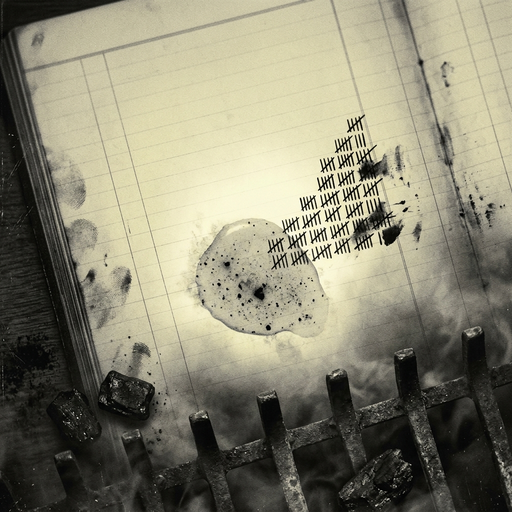
Listen free: London’s Great Smog: Death Records, Toxic Air, and the Clean Air Act of 1956
In the week ending December thirteenth, nineteen fifty-two, the Registrar General recorded four thousand seven hundred and three deaths across Greater London. That was more than double the number of deaths registered in either of the two preceding weeks, and roughly triple the toll from the same week one year earlier.
Those administrative returns recorded total deaths registered from all causes, not individual certificates stamped with the word smog. Yet across five freezing days, the capital of the United Kingdom inhaled an airborne chemical cocktail trapped over the Thames basin.
How did ordinary domestic air turn into a mass-fatality event, and why did the difficult work of counting the dead ultimately force a government to rewrite British law?
At My Audio Books dot A I, you can create your own audiobooks from prompts, turn your documents into audio, all with one subscription, and store your items in your own personal library.
In the early nineteen fifties, London ran almost entirely on coal. Millions of domestic fireplaces warmed cold brick parlors across the city. Massive power stations at Battersea, Bankside, and Fulham burned thousands of tons of coal daily to keep the electric grid running. Industrial furnaces, foundries, and steam locomotives poured constant combustion exhaust directly into the lower atmosphere.
Domestic hearths created the dirtiest emissions. Open grates burned cheap bituminous coal inefficiently, at relatively low temperatures. This incomplete combustion released dense plumes of unburnt carbon particles, soot, and tar directly out of neighborhood chimneys at roof level. At the same time, the sulfur naturally bound within the coal oxidized during combustion into sulfur dioxide, an invisible, pungent gas.
Londoners had lived with dirty air for generations. The capital was famous for its pea-soupers, the thick fogs celebrated in Victorian novels and accepted as an unavoidable price of urban life. People bought fog masks, complained about soot-stained curtains, and went about their routines.
Familiarity concealed a dangerous physiological mechanism. Smoke contains fine and ultrafine particles. While coarse dust gets caught in the upper airways, the finest soot particles penetrate deep into the alveoli of the lungs. Sulfur dioxide acts as a severe chemical irritant, constricting the smooth muscle of the airways, triggering inflammation, and provoking fluid accumulation.
For a healthy young adult, breathing this air caused stinging eyes, a raw throat, and a persistent cough. For an elderly resident with chronic bronchitis, emphysema, or congestive heart failure, the same chemical exposure placed unbearable strain on the cardiovascular and respiratory systems.
In early December nineteen fifty-two, an intense cold snap descended across southern England. Temperatures plunged toward freezing. In response, millions of families stoked their grates hotter and longer to keep the damp chill at bay. Just as coal emissions reached a winter peak, the atmosphere stopped moving.
The disaster required a meteorological trap. On Thursday, December fourth, a large anticyclone settled over the Thames basin. This high-pressure system brought clear skies, freezing temperatures, and near-zero wind velocity.
Under normal weather conditions, air near the ground is warmer than the cooler air above it. Because warm air is less dense, it rises naturally, carrying smoke, dust, and industrial exhaust upward where high-altitude winds disperse them. On the night of December fourth, however, the damp ground radiated its heat into the clear night sky, rapidly chilling the layer of air directly above the cobblestones and rooftops.
A layer of warmer air drifted over this cold pocket, creating a classic temperature inversion. The warm air acted like a lid over the London basin. Cold air could not rise, warm air could not descend, and lateral winds dropped below two miles per hour.
By Friday morning, December fifth, moisture in the cold air condensed into liquid water droplets, forming a dense ground fog. Ordinary fog is simply suspended liquid water. In London, those droplets collided with thousands of tons of freshly emitted soot and sulfur dioxide.
Inside each microscopic water droplet, a chemical reaction took place. Catalyzed by trace metals present in coal ash, such as iron and manganese, dissolved sulfur dioxide oxidized into sulfur trioxide, which combined with water to create dilute sulfuric acid. The fog became an airborne aerosol of sulfuric acid droplets and carbon particles.
Visibility collapsed. From Friday, December fifth, through Tuesday, December ninth, an acrid cloud enveloped Greater London. In many districts, visibility dropped to less than a foot. Conductors walked ahead of double-decker buses holding handheld lanterns to find the curbs. Cinema screenings halted because the chemical haze inside auditoriums was thick enough to obscure the projection beam.
Decades later, examinations of preserved autopsy lung tissue from individuals who died during the episode confirmed this toxic mechanism. Microscopic analysis revealed fine carbonaceous soot and structural signs of acute airway injury consistent with acid sulfate exposure. The air had become actively corrosive.
While the streets stood paralyzed, London's healthcare system faced a mounting crisis. The first operational alarm came from the Emergency Bed Service, the agency coordinating urgent hospital admissions across the capital.
During a typical winter, the service handled a steady volume of routine admissions. As the fog thickened, switchboards were overwhelmed. A contemporary Ministry of Health memorandum recorded five hundred and one emergency applications for acute respiratory patients within days, predominantly for patients aged forty-five and older. Demand outstripped available beds, ambulances struggled through blind streets, and hospital wards quickly exhausted their oxygen supplies.
The human toll became measurable when the Registrar General compiled the weekly mortality returns. For the week ending December thirteenth, nineteen fifty-two, Greater London registered four thousand seven hundred and three deaths.
That total demands context. In the week ending November twenty-ninth, London had registered one thousand nine hundred and two deaths. In the week ending December sixth, it registered two thousand sixty-two. The sudden leap to four thousand seven hundred and three represented more than double either of the preceding weeks and roughly triple the corresponding week from the previous year.
The causes entered on death certificates told a clear clinical story. Returns showed a sharp rise in deaths attributed to influenza and pneumonia, jumping from eighty-nine in the week ending December sixth to three hundred eighty in the following weekly return. Deaths attributed to bronchitis surged nearly tenfold.
Physicians rarely cited smog as the cause of death. Instead, they recorded the immediate clinical diagnosis: acute bronchitis, broncho-pneumonia, pulmonary edema, and myocardial infarction. The toxic air provoked fatal respiratory failure or heart strain in people whose health was already compromised.
The mortality spike fell unevenly across the population. Roughly ninety percent of the excess deaths occurred among people aged forty-five and older, with the heaviest impact on those over fifty-five. Age-specific tabulations also revealed a roughly threefold increase in deaths among infants aged four to fifty-two weeks.
When the Ministry of Health investigated the event, its scientific committee estimated between three thousand five hundred and four thousand excess deaths directly attributable to the December fog, favoring an official working figure near four thousand.
Modern accounts of the disaster frequently present two conflicting totals: the contemporary estimate of roughly four thousand deaths, and later reassessments citing twelve thousand.
These numbers do not represent an arithmetic dispute, nor are they figures you add together. They are distinct estimates of excess mortality that answer two different questions based on different time frames and baseline comparisons.
Excess mortality is the number of deaths observed above an expected baseline. That baseline represents what mortality would have been under normal conditions. Because that counterfactual scenario cannot be observed directly, epidemiologists calculate it using historical averages, seasonal patterns, and comparable non-fog periods.
The early estimate of roughly four thousand deaths measured the immediate disaster. It focused on the five days of dense fog and the week immediately following, comparing that surge against late November rates and prior winter averages. It answered a specific, short-term question: how many extra people died during the acute atmospheric event?
Later researchers noticed that when they examined mortality returns into early nineteen fifty-three, the death rate did not return to normal once the fog cleared on December ninth.
Compared to the previous winter, deaths across Greater London remained roughly eighty percent higher through the rest of December. In January nineteen fifty-three, mortality ran fifty percent above normal levels. In February, it remained forty percent higher.
When epidemiologists evaluated the entire period from December nineteen fifty-two through February nineteen fifty-three, their statistical models calculated approximately twelve thousand excess deaths. One retrospective analysis that extended the comparison window through March estimated more than thirteen thousand five hundred deaths above baseline.
Two main factors explain this prolonged excess. First, patients who suffered severe respiratory damage during the December fog did not all die immediately. Many survived the acute episode only to succumb weeks later to secondary bacterial infections or cardiac exhaustion.
Second, an influenza outbreak moved through Britain that same winter. Because influenza and air pollution produce overlapping respiratory symptoms and fatal complications, distinguishing their exact individual contributions is difficult, particularly given the limited viral surveillance of nineteen fifty-two. Later analyses concluded that influenza alone could not explain the sustained mortality peak, but viral infection almost certainly accounted for a portion of the extended toll.
Both figures remain valid within their own analytical parameters. The figure near four thousand captures the immediate acute catastrophe, while the estimate near twelve thousand captures the broader winter mortality wave.
Government officials initially treated the disaster as an unavoidable natural phenomenon, emphasizing the freak meteorological conditions rather than the man-made smoke.
Public outrage and mounting parliamentary pressure forced an inquiry. In nineteen fifty-three, the government established the Committee on Air Pollution, chaired by civil engineer Sir Hugh Beaver.
The Beaver Committee gathered extensive evidence on urban emissions, examining industrial furnaces, commercial boilers, power stations, and residential fireplaces. Their findings revealed that while power stations and industrial boilers consumed huge quantities of coal, domestic hearths produced roughly half of the total visible smoke. Because residential chimneys sat at roof level, they discharged pollutants directly into the air people breathed every day.
The committee published its final recommendations in nineteen fifty-four, urging national legislation to curb smoke emissions, promote cleaner fuels, and grant local authorities the power to establish smoke control areas.
When Parliament debated the Clean Air Bill on April twenty-fourth, nineteen fifty-six, the four thousand deaths of the Great Smog formed the core evidence for reform. Lawmakers also cited an estimated one thousand excess deaths linked to a shorter, two-day fog in January nineteen fifty-six. The mortality returns demonstrated that urban smoke was a public health catastrophe that demanded legal regulation.
Parliament passed the Clean Air Act in nineteen fifty-six. The statute gave local councils the legal authority to designate smoke control areas where burning smoky bituminous coal was prohibited. It provided financial grants to help householders replace old open grates with appliances capable of burning smokeless solid fuels, gas, or electricity. The law also required taller industrial chimneys to disperse factory smoke and placed strict limits on dark smoke emissions from industrial furnaces.
The Clean Air Act accelerated an energy transition that was already gaining momentum. Over the subsequent two decades, British homes and industries steadily moved away from raw coal toward town gas, oil, electricity, and eventually North Sea natural gas. Black smoke and sulfur dioxide levels in London dropped dramatically, and lethal winter coal smogs disappeared from British cities.
The disaster also left a generational health footprint. Later cohort studies examining individuals who were in the womb or in early infancy during December nineteen fifty-two found measurable long-term health consequences, including higher rates of childhood asthma, reduced adult lung capacity, and increased lifetime mortality risks. A brief, severe chemical exposure in early life cast a shadow that lasted for decades.
Several historical questions remain open. Scientists continue to evaluate the exact share of the extended mortality wave attributable to influenza versus chemical lung injury. Researchers also weigh the distinct health impacts of domestic smoke against sulfur dioxide emissions from industrial boilers and power generation.
Understanding the Great Smog means looking past the familiar imagery of street fog to examine the underlying mechanisms of exposure, chemistry, and administrative records. It requires distinguishing ordinary weather from toxic chemical smog, total registered deaths from calculated statistical excess, and a dramatic crisis from the systemic energy choices that made it possible. Whenever you encounter a historical or modern death toll, consider the analytical window behind it, how the baseline was constructed, and what questions that number was designed to answer.