Lisbon in Autumn: Walks and Culture for October and November Twenty Twenty-Six
Explore Lisbon in October and November 2026 through its riverfront, hillside neighborhoods, historic landmarks, local flavors, and autumn calendar of cinema, music, and major gatherings. Blending vivid street-level encounters with practical guidance on transport, changing services, seasonal conditions, and nearby excursions, this guide helps you connect each day’s experiences without rushing between them—leaving room for the cafés, gardens, and unexpected views that make the city memorable.
By MyAudioBooks.ai ·
Listen free: Lisbon in Autumn: Walks and Culture for October and November Twenty Twenty-Six
Introduction
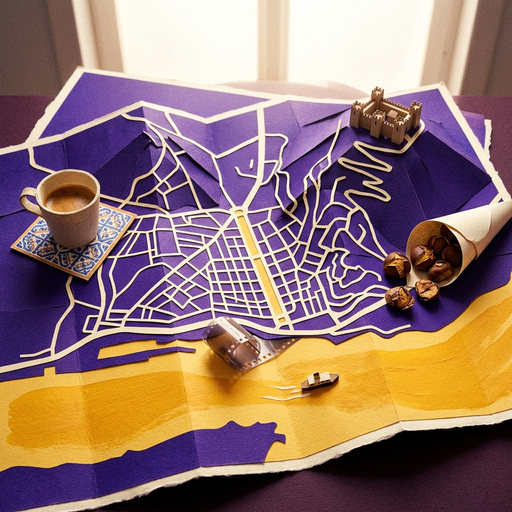
A few steps from the river, your footsteps change their sound. Beneath the arcades of Praça do Comércio, they echo against stone; out in the open square, they disappear into the wind and the low thrum of a ferry. Behind you, a street draws a straight line between tall façades. Ahead, the Tagus spreads so wide that the opposite bank seems to belong to another journey. Somewhere nearby, chestnuts are roasting. You have arrived in Lisbon, and already the city offers two invitations: look farther, and come closer.
It is autumn, twenty twenty-six, and this journey follows Lisbon through October and November. The evenings bring reasons to gather in cinemas, theaters, and concert halls, while daylight leaves room for gardens, tiled streets, and unhurried café stops. Yet the challenge is not finding enough to do. It is choosing how to connect it all without spending your visit crossing the city, climbing the same hill twice, or hurrying past the very details you came to notice.
Begin with the water. The Tagus gives you a steady reference in a place where streets can turn into stairways and a nearby roof can sit well above your head. Baixa, the lower downtown district, occupies the central valley. Alfama climbs to the east, beneath the castle; Chiado rises to the west, toward bookshops and theaters. Farther along the waterfront, Belém opens into monumental spaces, while Parque das Nações introduces the broad promenades of a district shaped by the world exposition of nineteen ninety-eight. These are places you can learn to relate to one another, until unfamiliar names begin to suggest a direction, a mood, and a manageable day.
Two Portuguese words help you hear the city on its own terms. A bairro is a neighborhood, but here that simple word carries the sense of a place with its own habits and daily rhythm. A miradouro is a viewpoint, often a terrace where looking across Lisbon shares space with sitting, talking, and doing very little. Together, they suggest a useful balance: enter the small world of a neighborhood, then step back and see where it belongs.
The differences under your feet have a history. After the earthquake of seventeen fifty-five, reconstruction directed by the minister later known as the Marquis of Pombal gave Baixa its ordered streets. On the older hillsides, routes remain less direct. You feel that contrast in the way you walk: a long view along one street, a succession of close turns along another. In Chiado, the bronze figure of poet Fernando Pessoa outside Café A Brasileira offers a different connection with the past, set among the movement of a working café district. History here has company: shopping bags, coffee cups, and people on their way somewhere else.
This autumn's cultural calendar gives that everyday movement another purpose. Doclisboa brings documentary cinema into venues across the city, and Misty Fest connects evenings of music with settings from Chiado to Belém. In November, Web Summit is scheduled to draw a large international gathering to Parque das Nações. Meanwhile, metro expansion work is changing some approaches around the western districts. Knowing where an event takes place, and how you reach it, can turn a crowded calendar into a thoughtful choice rather than a race.
Along the way, you gain more than a collection of addresses. You learn when to stay on a ridge, when to cross the river, and when a modest restaurant or a quiet garden deserves the time you had reserved for something grander. There is room for curiosity without a rigid itinerary, and for practical confidence without trying to predict every turn. For now, stand between the arcades and the water. Listen as another ferry pulls away. The hills are waiting behind you, but there is no need to take them all at once.
End of Introduction
Welcome to Lisbon. From the banks of the Tagus River in the golden wash of mid-autumn, the city reveals itself in vertical layers. The water spreads into a broad, tidal estuary, with the basin known as the Mar de Palha, the Sea of Straw. Late-afternoon sunlight can turn its surface into a shimmering sheet of amber and brass. Atlantic breezes sweep off the water into the central valleys, carrying the faint tang of salt, the sound of passenger ferries, and, in these October and November weeks, the earthy smoke of street vendors roasting chestnuts.
In the autumn of twenty twenty-six, Lisbon is a city in full motion. Documentary filmmakers, musicians, international conference delegates, and travelers gather in its theaters, converted industrial buildings, and riverside venues. Beneath the seasonal bustle lies the enduring structure of the place: steep hills, mosaic limestone paving, and centuries of maritime history. To explore it, you need an intuitive sense of direction. Together we will build that compass through the shape of the hills, the relationships between neighborhoods, and the transport corridors and cultural highlights that define this visit.
To grasp Lisbon's layout, picture a natural amphitheater facing south toward the river. The Tagus is your main baseline, with the central hills descending toward its northern bank. At the center of the riverfront sits Praça do Comércio, a vast arcaded plaza open to the water and also known as Terreiro do Paço, the Palace Yard. The square marks the southern end of Baixa, the flat, low-lying valley that forms the downtown heart.
Baixa was rebuilt on an orderly grid after the catastrophic earthquake of seventeen fifty-five. Its straight streets run north from the riverfront toward Rossio, the city's lively central square, and the adjacent Praça da Figueira. Standing in Baixa, you are at the bottom of a bowl, framed by ridges that rise sharply to the east and west.
To the east lie some of the city's oldest quarters. Crowning the hill is Castelo de São Jorge, whose stone ramparts overlook the river. Spilling down the slopes below the castle is Alfama, a dense network of winding alleys, blind corners, and stairways that retains much of its older street pattern. Mouraria lies along the castle hill, while Graça rises farther uphill, with residential streets opening onto broad panoramas.
The western ridge answers with a different character. Rising above Baixa is Chiado, a district of theaters, heritage bookshops, and historic cafés. Just uphill sits Bairro Alto, residential by day and a lively nightlife district after dark. Continuing north along the ridge brings you toward the gardens of Príncipe Real, surrounded by grand townhouses and leafy squares. Farther west lies Estrela, with its basilica and gardens.
Trace the central valley north past Rossio and the city opens into Avenida da Liberdade, Lisbon's broad, tree-lined boulevard, with luxury shops and patterned stone sidewalks. The gentle climb brings you to Praça Marquês de Pombal and the sloping green expanse of Parque Eduardo the Seventh. Beyond this central avenue corridor lie office districts and cultural institutions, including Culturgest and the gardens of the Calouste Gulbenkian Foundation.
Now extend your sense of the city along the riverbank. Several kilometers to the west lies Belém, associated with Portugal's maritime voyages, where the Jerónimos Monastery stands near contemporary institutions such as the Centro Cultural de Belém. Several kilometers to the northeast lies Parque das Nações, the Park of Nations, developed for the world exposition of nineteen ninety-eight. Its steel-and-glass architecture, wide riverside promenades, and vast indoor MEO Arena present a striking contrast to the old center. The arena and neighboring exhibition pavilions also accommodate major international gatherings.
First-time visitors sometimes underestimate Lisbon's gradients. Two places only a short distance apart may be separated by stone steps, a steep climb, and lanes that twist away from the direction you want to travel. Lisbon is a three-dimensional city, and walking effort depends as much on elevation as on distance.
The reliable approach is to organize your days around ridges and transit corridors. Explore the western hill by moving along its upper streets, from Chiado through Bairro Alto to Príncipe Real, rather than repeatedly dropping into the valley. When changing hills, use public transport where it serves your route. A useful tram, bus, metro connection, or operating hillside lift can leave more energy for wandering once you arrive.
Two Portuguese words help explain the city's urban character. The first is bairro, meaning neighborhood. Lisbon's traditional neighborhoods have distinct rhythms, social ties, and architectural character. Crossing from one to the next can feel like passing an invisible frontier. The garden squares and townhouses of Príncipe Real differ markedly from the close-set, laundry-draped alleyways of Alfama. Knowing these differences helps you choose a base and match the day's surroundings to your interests.
The second word is miradouro, a viewpoint or scenic terrace. Lisbon's hills provide many of these elevated gathering places, sometimes with shade, benches, and a kiosk serving refreshments. They work as communal living rooms, where residents and visitors read, talk, and watch the changing light over terracotta rooftops and the Tagus. The Miradouro da Senhora do Monte in Graça takes in the castle, the river, and the distant twenty-fifth of April suspension bridge. The Miradouro de São Pedro de Alcântara looks across the central valley toward the castle on the eastern hill.
Underfoot, your journey is shaped by calçada portuguesa, the traditional patterned pavement made from small stone blocks. Pale limestone and dark basalt form geometric and decorative mosaics across sidewalks and squares. In dry conditions, the pale stones reflect daylight upward, contributing to Lisbon's luminous appearance. When wet, their polished surfaces can become slippery, especially on downhill stretches and steps.
The city's atmosphere is acoustic as much as visual. Listen for tram wheels rounding tight curves, the hiss of bus brakes, and footsteps echoing through narrow stone passageways. At the ferry terminals of Cais do Sodré and Terreiro do Paço, the wash of water against the embankments mixes with departing engines and the cries of gulls. In the evening, you may hear a Portuguese guitar through a doorway in Mouraria, a first encounter with fado, Lisbon's traditional urban song.
This physical setting is inseparable from the city's history, and two periods remain especially visible in its streets. The first began on the morning of November first, seventeen fifty-five, All Saints' Day, when a powerful earthquake struck off the coast. Buildings collapsed, fires spread, and a tsunami swept into the low-lying waterfront. Tens of thousands died, and much of medieval downtown Lisbon was destroyed.
From the wreckage, the king's minister, Sebastião José de Carvalho e Melo, later the Marquis of Pombal, directed the reconstruction. Rather than restore the tangled medieval lanes, the rebuilding established Baixa's orderly grid, broad streets, and coordinated façades. Its engineering included internal wooden frameworks intended to improve buildings' response to earthquakes. Walk Baixa today and you are moving through an eighteenth-century experiment in urban planning, born out of catastrophe.
The second defining period arrived in the twentieth century. After decades of dictatorship, soldiers and citizens filled the streets on April twenty-fifth, nineteen seventy-four, during the Carnation Revolution. Its name recalls the red carnations placed in soldiers' rifle barrels. The overthrow of the dictatorship began Portugal's transition to democracy. Lisbon's subsequent cultural life developed within that wider transformation, with growing space for creative expression, public debate, and new institutions.
One visual thread connects the city's different eras: the azulejo, a glazed ceramic tile used to decorate buildings and public spaces. Across Lisbon, tilework appears on façades, churches, garden features, and transit stations. Blue-and-white panels depict religious subjects, historical scenes, and everyday life, while repeating patterns bring color to residential streets.
In Alfama, Madragoa, and Santos, tiled exteriors are part of the ordinary streetscape rather than objects set apart for display. Notice how patterns change from one building to the next, and how individual panels sit beside plaster, iron balconies, and weathered stone. The result is a city whose decorative traditions remain woven into daily use.
That tradition also appears underground. Lisbon's metro includes contemporary tile installations and other public art. Stations such as Alto dos Moinhos and Oriente turn an ordinary wait for a train into an encounter with large-scale ceramic work. Transit can therefore become part of the cultural experience, not simply the interval between destinations.
For October and November twenty twenty-six, the cultural calendar adds another layer to the city. Earlier in October, the listed seasonal program of Festas na Rua concluded on October fourth, after free concerts and open-air cinema. MIL was scheduled in Marvila from October seventh through tenth, while the twenty-second OUT.FEST was scheduled across five venues in Barreiro from October first through fourth. For visitors arriving in mid-October, attention now turns to the later autumn events.
Leading the cinema calendar is Doclisboa, the International Film Festival. Its twenty-fourth edition brings non-fiction cinema from fifty-one countries to Lisbon in twenty twenty-six. Rather than concentrating the experience in one complex, the festival uses several venues with different urban settings.
Culturgest connects the program to the northern office districts. Cinema São Jorge places screenings on Avenida da Liberdade, while the Cinemateca Portuguesa brings audiences to the national film archive. Cinema Ideal provides a smaller neighborhood setting near Chiado. Moving between screenings offers a reason to explore these different parts of the capital, provided you leave enough time for the journey.
Music listeners can turn to Misty Fest, an autumn concert series covering contemporary, acoustic, and world music. Its Lisbon venues include the Centro Cultural de Belém on the western waterfront and Teatro Municipal São Luiz in Chiado. Coliseu de Lisboa near Rossio and Museu do Oriente along the western docks extend the circuit. These are not interchangeable settings: choosing a concert also gives you a neighborhood around which to shape the afternoon.
At the Centro Cultural de Belém, the smaller Pequeno Auditório adds more intimate performances to the season. The program includes the Há Fado no Cais series and Trio SUL on October thirtieth, twenty twenty-six. An exhibition visit and an evening performance can make a coherent Belém outing without requiring another cross-city journey.
For larger concerts, the autumn listings include Alphaville at Sagres Campo Pequeno on October sixteenth, twenty twenty-six. At Parque das Nações, MEO Arena lists Laura Pausini on October twenty-second and Jungle on October twenty-fourth. These scheduled performances place major evening crowds in different parts of the city, so the venue's district matters as much as its name when arranging dinner and the journey home.
From November ninth through twelfth, Web Summit twenty twenty-six is scheduled at Parque das Nações, using the arena and adjoining exhibition pavilions. The event brings tens of thousands of participants, including founders, investors, and policymakers. Its scale can increase demand for transport, restaurants, and accommodation, particularly around the northeastern waterfront.
The autumn calendar also extends beyond Lisbon's municipal boundary. Amadora, northwest of the center and reached by commuter train from Rossio, hosts the Amadora International Comic Festival in late October. Across the Tagus, SeixalJazz brings international jazz performers to Seixal during the second half of October. Both offer a reason to explore the wider metropolitan area, with evening return transport forming an important part of the decision.
Moving between these events and neighborhoods takes a working understanding of Lisbon's transport network. Its main components are the underground metro, Carris buses and trams, commuter rail, and river ferries. Each serves a different purpose, and the most convenient journey may combine them rather than remain with a single operator.
The Metropolitano de Lisboa has four color-coded lines: Blue, Yellow, Green, and Red. The Red Line serves Humberto Delgado Airport and connects with the other lines through transfer stations. For visitors, the metro is especially useful for longer journeys between the central districts, the northern avenues, and the modern northeast.
In twenty twenty-six, expansion work is changing parts of that network. The Linha Circular, or Circular Line, project is intended to connect Rato with Cais do Sodré through new stations at Estrela and Santos. The planned connection would link the western residential districts more directly with the riverfront and existing central routes. Work is also advancing on the Red Line extension from São Sebastião toward Alcântara-Terra.
Construction affects the streets as well as the future railway. Around Santos, Estrela, and Cais do Sodré, travelers may encounter barriers, pedestrian diversions, and altered access. Treat a familiar station name as an anchor, but allow for changes in the final approach rather than assuming every entrance or nearby street remains unchanged.
On October fourteenth, twenty twenty-six, the metro announced a twenty-four-hour strike, with transport suspended and stations closed. Service was scheduled to resume at six thirty AM on October fifteenth. The announcement did not confirm an alternative metro operation or minimum service. It is a specific example of why a backup journey matters, especially when reaching a concert, a train departure, or the airport.
Carris provides much of the surface alternative. Historic single-car trams serve steep central streets, modern articulated trams operate along the western riverfront corridor, and buses reach many residential hills. These services have their own routes and limitations, so a metro interruption is a reason to establish an actual alternative, not simply assume a bus will follow the same path.
For shorter journeys on suitable terrain, Lisbon's shared bicycle system, GIRA, offers another option. In twenty twenty-six, its digital platform received an upgrade affecting access, payments, and bicycle availability information. The network includes pedal-assist electric bicycles, but the terrain still determines whether a ride is practical.
The riverside is the natural place to consider cycling. Routes toward Belém and the broad corridors of Parque das Nações offer a different experience from the stairways and tight corners of the historic hills. Electric assistance does not remove the difficulties of uneven paving, blind bends, or lanes shared with pedestrians and vehicles.
To appreciate the river's role in Lisbon, step onto the water itself. Transtejo Soflusa passenger services link the northern waterfront with southern Tagus communities, including Cacilhas, Seixal, Montijo, and Barreiro. Cais do Sodré and Terreiro do Paço are central departure hubs, with the appropriate terminal depending on your destination.
A ferry crossing combines practical transport with a broad view of the city. As the boat pulls away, the northern hillside opens out: the dome of the National Pantheon, the castle above the roofs, Alfama descending toward the water, and the triumphal arch at Praça do Comércio. Features that feel separated by steep streets become parts of one continuous river-facing landscape.
With that orientation established, we can move closer to the neighborhoods themselves. The hills and transit corridors provide the framework. Now the individual streets, cultural spaces, and places to eat begin to give it texture.
Walking through Lisbon means passing between distinct historical settings. A tiled residential lane, a broad reconstructed avenue, and an open riverfront plaza can belong to very different chapters of the same city. The most rewarding approach is to give each district time, rather than treat it merely as the ground between attractions.
Begin on the eastern hill, where the older quarters cluster below and around Castelo de São Jorge. Starting high and working downhill often makes sense here. Take suitable transport toward Graça, then approach the Miradouro da Senhora do Monte for an overview before entering the smaller streets.
From the terrace, the red roofs spread across the slopes, the castle rises on the neighboring hill, and the suspension bridge spans the Tagus in the distance. Church bells and the lower city's traffic form a distant accompaniment. This is an opportunity to connect the names you have heard with the larger shape of Lisbon before those broad views give way to close-set buildings.
From Graça, work downhill toward Alfama. The older street pattern here contrasts with Baixa's planned grid. Lanes divide, narrow, and turn beneath archways, sometimes becoming stairways rather than continuing as roads. Wrought-iron balconies hold plants and laundry, while doorways open directly onto small passages and shared neighborhood space.
The interest lies partly in this changing scale. A narrow turn can lead to a small square; a flight of steps can reveal a strip of river between rooftops. Avoid making every lane part of a tightly timed route. In this terrain, a general downhill direction and a clear destination at the waterfront are more useful than an expectation of straight progress.
During October and November, roasted chestnuts add a seasonal flavor to the streets. Vendors serve castanhas assadas warm in paper cones, their cracked shells carrying the smell of charcoal. Peeling them while standing near a small square offers a simple connection with the city's autumn street life, without turning the experience into another formal stop.
Alfama is also closely associated with fado. This urban song developed in Lisbon's working-class quarters during the nineteenth century. Its lyrics often explore absence, love, hardship, and saudade, the Portuguese idea of longing for someone or something absent. That emotional range is broader than sorrow alone, but the intimacy of a small room can make its quieter passages especially powerful.
Neighborhood fado houses range from modest taverns to more formal dining venues. During a performance, attentive silence matters. Finish conversations before the singing begins, and avoid treating the music as background entertainment for dinner. The atmosphere depends on the audience allowing voices and instruments to carry through the room.
A traditional accompaniment pairs a classical guitar with the twelve-string Portuguese guitar, whose bright, ringing sound is central to the style. Performers and settings vary, so there is no single costume or ritual that defines every evening. What remains important for the listener is the close relationship between words, voice, and accompaniment.
Mouraria lies alongside the castle hill and is another important setting in fado's history. It developed as the historic Moorish quarter after the Christian conquest of eleven forty-seven. The neighborhood is associated with Maria Severa Onofriana, the nineteenth-century singer remembered as a foundational figure in the development of fado.
Today, Mouraria combines older local businesses with immigrant-run groceries, cafés, and restaurants. Its streets reflect connections with countries including Mozambique, Angola, India, and China. Along Rua do Capelão and nearby lanes, portraits and other neighborhood tributes bring local lives and musical memory into the public streetscape.
Descending toward Baixa produces a striking architectural contrast. The close turns of the eastern neighborhoods give way to long perspectives, repeated windows, and broad civic spaces. The post-earthquake plan is legible not only in individual buildings but in the relationship between whole streets.
Look at the coordinated heights and proportions of the façades. They help explain why Baixa feels different from the older hillside quarters even before you know its history. Behind some of those façades, the rebuilding incorporated the flexible wooden frameworks associated with Pombaline construction.
Rua Augusta provides a clear route through this ordered center. The pedestrian street runs between shops and cafés toward the monumental Arco da Rua Augusta. As you approach, the arch frames the transition from an enclosed street to the broad opening of Praça do Comércio.
Pass beneath it and the city suddenly releases you into a wide plaza facing the Tagus. The arcades establish a strong edge on land, while the river opens the southern side. At the Cais das Colunas, stone steps bring the square down toward the water, with ferries and other vessels moving across the estuary.
Moving north through Rossio brings you toward Avenida da Liberdade. Its broad planted spaces, patterned sidewalks, and imposing buildings create another change of scale. Shops, hotels, and cultural venues make it a useful central corridor, particularly when an evening event is part of your day.
Cinema São Jorge is one of those anchors. Its mid-twentieth-century architecture and position on the avenue make it a distinctive setting for a Doclisboa screening. Arriving from the busy boulevard and entering a darkened auditorium is a very different festival experience from visiting a smaller neighborhood cinema.
The Cinemateca Portuguesa lies nearby in the streets off the avenue. As Portugal's national film archive, it adds another dimension to the area's cinema culture. Its courtyard café offers a quieter setting for a pause between films or before returning to the busier avenue.
West of Baixa rises the hill of Chiado, Bairro Alto, and Príncipe Real. The Baixa-Chiado metro station provides an escalator connection between the lower center and the upper district, when access is operating normally. This can spare a steep climb and bring you out near Chiado's bookshops, cafés, and theaters.
Chiado has long been associated with Lisbon's literary and cultural life. At Livraria Bertrand, founded in seventeen thirty-two, that history remains part of a working bookshop. Guinness World Records recognizes it as the world's oldest operating bookstore. Its rooms invite browsing rather than a quick glance from the doorway.
Outside Café A Brasileira, a bronze statue of Fernando Pessoa sits at a table. The poet's association with Lisbon gives the figure its resonance, but the surrounding café terraces and passing street life remain part of the experience. Chiado is not a preserved literary stage; it is a busy district where those cultural associations coexist with ordinary shopping and conversation.
Nearby, Teatro Municipal São Luiz supplies a performing-arts counterpart to the bookshops and cafés. For autumn twenty twenty-six, it is among the Lisbon venues listed for Misty Fest. A concert here can fit naturally after an afternoon in the western hill districts, without requiring a journey out to the waterfront.
Cinema Ideal offers a smaller-scale cultural stop in the same general area. The historic cinema is part of the Doclisboa venue cluster in twenty twenty-six. Its neighborhood setting makes it possible to leave a screening and return directly to the street life around Chiado and the lower edge of Bairro Alto.
Beyond Praça Luís de Camões, Bairro Alto's compact grid has a more residential feel during the day. Tiled façades, small shops, and narrow streets create a close urban setting. On the lower slopes, the Bica funicular corridor forms part of the hillside's familiar transport landscape, though any ride depends on current operation.
After dark, many of Bairro Alto's small bars open and the mood changes. People gather outside as well as inside, and conversation carries along the narrow streets. The same closeness that gives the area daytime intimacy can amplify evening noise, an important distinction when choosing accommodation.
Continuing north along the western ridge brings you toward Príncipe Real. Grand townhouses and garden squares give it a more spacious feeling than the tight lanes behind you. Its central garden provides an obvious neighborhood anchor, with benches and shade amid the surrounding streets.
One of its most distinctive features is the spreading tree commonly called the Buçaco cedar. Its broad canopy is supported by a metal framework, creating a living shelter over part of the garden. Rather than hurry past, notice how the space is used: people reading, meeting friends, or sitting within a garden that remains part of daily neighborhood life.
The surrounding mansions have found a variety of contemporary uses. Embaixada, a nineteenth-century palace with neo-Moorish decoration, brings shops and Portuguese design into an elaborate architectural setting. Arches, stucco ornament, and staircases frame displays of textiles, ceramics, and other goods.
This is a useful contrast with the city's major monuments. Here the architecture is experienced through browsing and circulation rather than a formal sequence of galleries. It also makes a natural stopping point during a western-hill walk, before continuing toward another neighborhood or returning downhill.
To explore Lisbon's maritime history, travel west along the river to Belém. The open waterfront and monumental scale feel markedly different from the central hills. This district is associated with the fifteenth- and sixteenth-century voyages that connected Portugal with distant regions and reshaped its place in the world.
The Jerónimos Monastery is the principal architectural landmark. Built in the early sixteenth century, it is closely associated with the voyages to India. Its Manueline style is especially visible in the elaborate stone carving around portals and cloisters.
Look for ropes, armillary spheres, plant forms, and other decorative motifs worked into the pale limestone. They turn architectural surfaces into dense patterns, rewarding attention to individual details rather than only the building's overall scale. The craftsmanship also reflects the resources available to maritime Lisbon during this period.
Along the waterfront stands Torre de Belém, a fortified tower associated with the defense of the river approach. Nearby, the twentieth-century Padrão dos Descobrimentos takes the shape of a ship's prow, with sculpted figures representing navigators, monarchs, cartographers, and other historical participants in Portugal's maritime expansion.
These monuments are not all from the same period, despite their shared subject. Visiting them together is an opportunity to distinguish architecture from the maritime era from later memorials that interpret it. Their positions beside the water help explain why Belém remains so central to Lisbon's historical image.
Across from the monastery's gardens, the Centro Cultural de Belém offers a modern architectural counterpoint. Its large stone volumes contain exhibition and performance spaces, including the Museum of Contemporary Art and Architecture Centre. It is both a daytime cultural destination and part of the autumn concert circuit.
You might combine an exhibition with a performance in the Pequeno Auditório, or simply use the complex's terraces as a pause between visits. The elevated spaces open toward the gardens and river, giving Belém's monumental landscape a different frame. The cultural center need not be treated as a separate excursion from the surrounding district.
Belém also has a celebrated pastry tradition. The historic Pastéis de Belém bakery has operated since eighteen thirty-seven and is closely associated with the neighboring monastery's confectionery heritage. Its custard pastries are part of a wider Portuguese tradition that visitors encounter in cafés across the country.
A warm tart offers a contrast of textures: thin, crisp pastry surrounding soft egg custard, with a browned and blistered top. Cinnamon and powdered sugar are customary additions, not requirements. Try the pastry first as it comes if you want to judge that balance for yourself.
The bakery has interior dining rooms as well as takeaway service. The visible queue outside does not necessarily tell you the waiting situation for seating, so distinguish the two before joining a line. Sitting down with a pastry and an espresso can make the visit part of your Belém afternoon rather than another hurried purchase.
Between central Lisbon and Belém lies Alcântara, with former industrial and dockside areas adapted to new uses. Beneath the twenty-fifth of April bridge, LxFactory occupies a former textile complex. Brick buildings and exposed industrial structures now frame shops, studios, places to eat, and cultural businesses.
A bookstore within the complex uses the scale of a former printing space to striking effect, with books rising around preserved industrial equipment. Elsewhere, the site's appeal comes from the contrast between older working buildings and contemporary design. Traffic on the bridge adds a persistent urban rumble overhead.
Alcântara can fit into a westward outing, but it has a different purpose from Belém's monumental sites. Choose it for browsing, food, and adapted industrial architecture rather than expecting another cluster of historic riverfront monuments. That distinction helps keep the day coherent.
For a different view of modern Lisbon, head northeast to Parque das Nações. Built on former industrial land for the exposition of nineteen ninety-eight, the district opens into broad promenades, contemporary buildings, planted spaces, and water features.
Its gateway is Gare do Oriente, the major transport interchange. Above the railway platforms, white steel supports branch into a canopy of glass. The repeated forms suggest a forest or a vaulted hall, making the station an architectural experience as well as an arrival point.
Near the waterfront stands Oceanário de Lisboa, housed in a building set within an artificial lagoon. MEO Arena occupies another prominent position in the district. Together with the exhibition pavilions and surrounding restaurants, these institutions give Parque das Nações a visitor rhythm unlike that of the historic center.
The autumn twenty twenty-six concert listings and Web Summit bring that difference into focus. On an event evening, broad esplanades that feel spacious during the day may fill with people arriving for the same destination. The useful contrast is not simply old Lisbon against new Lisbon, but small streets and dispersed activity against large venues and concentrated arrivals.
Exploring these neighborhoods also introduces Lisbon's food culture. A traditional tasca, or modest neighborhood restaurant, is a good place to begin. Some have paper tablecloths, a handwritten menu, and a daily special displayed near the entrance, though appearances vary.
At lunchtime, look for the prato do dia, the dish of the day. It often provides a relatively economical route into home-style cooking. A set lunch may combine soup, a main course, a drink, or coffee, but the contents are not universal. Establish what is included rather than assuming the whole meal comes under one price.
Bacalhau, salted cod, is one of the best-known ingredients in Portuguese cooking. Its preservation by salting helped make it a durable staple. The familiar saying that Portugal has a preparation for every day of the year expresses the breadth of the tradition rather than a fixed culinary inventory.
One widely enjoyed preparation is bacalhau à brás. Shredded, desalted cod combines with onions and fine strips of potato, bound with egg. Black olives and parsley commonly finish the dish. Its appeal lies in the balance between the fish, softened onion, and potato, with the egg bringing the mixture together.
Caldo verde offers another familiar introduction. Originating in northern Portugal, this soup combines a potato-based broth with finely shredded greens, often served with chouriço. Its apparent simplicity is part of its character: a bowl can be substantial without needing a long list of elaborate ingredients.
For a quick lunch, consider a bifana. The sandwich places thin slices of seasoned pork in a bread roll, with preparation varying between establishments. Mustard or chili sauce may be offered alongside. It is a practical counter-service option when you want something more substantial than a pastry without settling into a full restaurant meal.
At a sit-down restaurant, you may encounter couvert: bread, olives, butter, cheese, or other small items brought to the table before you order. These are not necessarily complimentary. The important distinction is between their being placed on the table and your choosing to consume them.
Ask about anything unclear before eating. Untouched items can be declined or left aside, while those you accept may appear on the bill. This avoids the common misconception that everything presented before the main order is a gift from the restaurant.
Coffee gives the day a different kind of structure. In Lisbon, a small espresso is commonly called a bica. At a neighborhood pastelaria, ordering uma bica is a straightforward way to take part in the counter culture of short conversations and brief coffee stops.
There is no need to imitate an exact local ritual. Drink standing at the counter if that suits the setting, or sit when you want more time. What matters for ordering is that a bica means a small espresso, not a larger cup of coffee.
Ginjinha, the city's familiar sour-cherry liqueur, offers another small-scale tasting experience. Near Rossio, A Ginjinha has served the drink since eighteen forty. Its compact premises encourage customers to gather near the doorway rather than settle into a long seated visit.
The liqueur combines sour cherries with alcohol and sugar. When ordering, you may be asked com elas or sem elas, meaning with the cherries or without them. The question concerns whether alcohol-soaked fruit is included in the glass, not a different base drink.
A small serving is enough to understand its sweet, warming character. Like an espresso or a pastry, it works best as part of the surrounding neighborhood experience rather than a destination that requires a large portion of the day.
Beyond the major monuments, Lisbon has gardens and collections that offer a quieter pace. Jardim do Torel lies on the Santana hill east of Avenida da Liberdade. Its position above the valley makes it a useful alternative viewpoint when your day is already centered on the avenue.
The historic Ascensor do Lavra provides one possible approach when operating. Inaugurated in eighteen eighty-four, it is Lisbon's oldest funicular. From its upper area, the streets lead toward the garden, whose terraces and balustrades look across the valley toward the western hills.
The attraction is not secrecy or an assurance of solitude. It is the change from the traffic of the avenue to an elevated garden within a residential setting. The view also helps you recognize the relationship between the central valley and the neighborhoods opposite.
East of the center, the National Tile Museum occupies the former Convent of Madre de Deus, founded in fifteen zero nine. The setting brings ceramic collections into historic religious architecture, connecting the tiles seen on ordinary streets with the longer development of the craft.
Among its best-known works is a blue-and-white panorama of Lisbon's riverfront before the earthquake. The long composition records buildings, waterfront activity, and the relationship between the city and the Tagus. After walking through reconstructed Baixa, studying this earlier cityscape gives the collection particular relevance.
The museum also broadens the picture beyond the blue-and-white panels most visitors immediately recognize. Different periods and patterns show that Portuguese tilework is not a single decorative style. That understanding can change how you notice façades and metro installations later in the trip.
For another perspective, cross from Cais do Sodré to Cacilhas on the southern bank. The short commuter crossing reverses your position in relation to the city: instead of looking outward from Lisbon, you watch its hills assemble across the water.
Around Cacilhas, the waterfront offers views of the northern bank and places to eat. The Cais do Ginjal runs beside former warehouses, with weathered walls and stretches of river-facing space. Use only accessible portions of the waterfront rather than assuming the whole path is continuously open.
Where access allows, a meal beside the river can become the outing's main purpose. Seafood, a view toward Lisbon, and the changing light over the bridge make a different experience from dining within the central streets. The river remains an estuary here; the pleasure is the broad western sky and the city's hillside profile across the water.
Having explored the neighborhoods, music, food, and viewpoints, you have the city at street level. The final part brings those experiences together with the practical systems that make them easier to arrange: tickets, transport choices, regional excursions, payments, safety, and health information.
A confident Lisbon visit does not depend on memorizing every route or buying the most comprehensive pass. It depends on matching a few transport tools to the journeys you actually intend to make. Walking will connect much of an individual neighborhood, while rail, metro, buses, trams, and ferries handle the larger changes of district.
The rechargeable Navegante occasional card is useful across participating public transport services. It is a paper travel card sold through transport ticketing facilities, including metro stations. When purchasing one, distinguish between loading individual tickets, an eligible pass, and stored travel credit.
That stored-credit option is known as zapping. You add value to the card, then use it for eligible journeys with participating operators. Its usefulness comes from flexibility across different forms of transport, including the metro, Carris, commuter rail, and ferry services.
The card does not make every fare or transfer rule identical. Its practical benefit is that one travel medium can serve several types of journey. Keep the card available for validation, and choose the appropriate product rather than assuming any balance or pass covers every route.
An unlimited twenty-four-hour pass can be worthwhile on a day with many journeys. Zapping may be more suitable when your day combines walking with a few separate rides. Compare the pass's coverage with the operators you intend to use, especially if suburban rail or ferries are involved.
The cheapest choice therefore depends on both frequency and geography. A day confined to the metro and Carris is different from a train trip to Cascais followed by a ferry crossing. Do not judge a pass solely by the word unlimited without establishing where that unlimited travel applies.
Contactless bank-card payment provides another way to enter the metro. Its convenience should not be confused with a combined ticket across Lisbon's different operators. For a mixed day of buses, trams, trains, and ferries, the rechargeable travel card remains worth considering.
The four metro lines provide a simple starting framework. For an airport arrival, the Red Line connects Humberto Delgado Airport with interchange stations for the wider network. Choose the connection according to your accommodation district, not simply the name of the nearest major square.
Once you reach the center, the final approach may be the most demanding part of the journey. A station near Alfama or Bairro Alto does not remove the possibility of stairs, steep paving, or a pedestrian-only street. This is where knowing whether your accommodation lies above or below the arrival point becomes useful.
During the twenty twenty-six expansion work, Santos, Estrela, and Cais do Sodré require particular attention to local diversions. Keep those construction areas in mind when allowing time for a departure. A short walk can take longer if a direct street or entrance is unavailable.
The October fourteenth metro strike also illustrates a broader planning principle. For a journey that cannot be missed, identify a workable second mode rather than relying on a single rail connection. Buses, trams, commuter trains, and taxis may help, but each alternative has to fit the actual origin and destination.
Lisbon's vintage electric trams reward the same practical approach. Tram twenty-eight is famous for its route through central neighborhoods and steep streets. The yellow wooden carriage is an appealing part of Lisbon's image, but queues and crowded interiors can make it less comfortable than that image suggests.
Use it as public transport, not as a guaranteed seated sightseeing circuit. If a long queue would consume the time you intended for a neighborhood, consider reaching that neighborhood another way. The value of the ride depends on the experience available at the time, not the route's fame alone.
Tram twelve provides a shorter historic-tram journey through the eastern central districts. It may be a useful alternative, but it should not be treated as an assurance of empty seats. Choose it because its route fits your day, with shorter travel potentially offering a more manageable introduction.
Tram twenty-five serves western residential areas, while Tram fifteen is the main modern tram corridor toward Belém. For a waterfront destination, the larger articulated tram is a different proposition from the small historic carriages. Concentrate on the destination and boarding direction rather than assuming all yellow trams serve the same purpose.
Buses can be less conspicuous to visitors but highly useful on the hills. They also provide connections where a famous tram route is an awkward fit. A straightforward bus journey may preserve more time for the place you want to explore than a crowded ride chosen mainly for its appearance.
GIRA bicycles work best when the route suits them. The twenty twenty-six platform upgrade is a recent development, but the durable decision remains geographical: use the system for suitable corridors, not as a universal answer to Lisbon's terrain.
The flatter riverside stretches toward Belém and the planned cycling spaces of Parque das Nações are natural places to consider a ride. Historic hill districts involve a different set of conditions, including uneven stones, stairways, and narrow corners. Pedal assistance helps with effort, not with every obstacle.
For the southern bank, start by choosing the correct ferry destination and terminal. Cacilhas is useful for an outing across from the central waterfront; Seixal and Barreiro serve different communities and different plans. A ferry name alone is not enough to establish where you will land.
If the outing includes dinner or an evening festival, the return journey deserves attention before departure. Ferry services are commuter links with operating schedules, not an on-demand sightseeing circuit. Their value lies in combining an affordable crossing with a genuine connection between communities.
Licensed taxis provide a useful door-to-door option, particularly with luggage or after rail services end. Familiar Lisbon liveries include cream vehicles and black cars with green roofs. Designated taxi ranks at major stations and squares offer straightforward boarding points.
Use the meter and request a receipt. These are more useful safeguards than relying on an informal estimate of what every journey ought to cost. Traffic, distance, and the final approach to a hill district can all affect the practicality of the ride.
Taxis are especially helpful when accommodation lies near a steep pedestrian area. Ask for the nearest suitable vehicle access point, preferably one that avoids carrying luggage uphill if the street layout allows. A car cannot remove the final steps where the address itself is inaccessible by road.
Beyond the city, Lisbon is a strong base for regional day trips. Sintra and Cascais offer contrasting landscapes: wooded hills and palace estates in one direction, a coastal railway and seaside town in the other. Public transport makes both practical, though reaching the region and moving within it are separate stages.
Sintra is a UNESCO World Heritage cultural landscape in the Serra de Sintra, about thirty kilometers northwest of Lisbon. Its hills contain palaces, gardens, and estates associated with royalty and nineteenth-century Romanticism. The attraction is spread across town and mountain slopes rather than gathered beside a single arrival point.
Leaving the rental car behind is usually the simpler choice. Road restrictions, limited parking, and congestion complicate access to the main hilltop sites. The CP commuter train from Rossio provides a direct public-transport approach to Sintra, after which local connections are needed for many attractions.
The train station is not the gate to every palace, nor does arriving in Sintra mean the uphill travel is finished. Treat the transfer from the railway to your first booked attraction as part of the excursion. That distinction prevents a common mistake: allowing only the train journey when calculating an arrival time.
Pena Palace is the most recognizable hilltop landmark. Built in the nineteenth century under King Ferdinand the Second, it combines brightly colored towers, battlements, and a range of revival styles. Its visual exuberance contrasts with the forest around it.
Timed admission makes the palace visit an anchor rather than a casual addition. Establish the applicable entry conditions and allow for the journey from Sintra station to the palace, including the approach within the grounds. Do not assume the time you enter the park is the same as the time required at the palace itself.
An early visit can leave more of the day for the surrounding Pena Park. Its wooded paths, large trees, planted collections, and water features create an experience distinct from the palace rooms. Choose how much of that landscape to include according to the rest of your day, rather than expecting every path to fit between major sights.
The local bus route numbered four three four provides a connection associated with the hilltop attractions. Its usefulness depends on the operating route and conditions for your visit. The central principle is to arrange the uphill connection around your admission, not to leave that stage until after arriving at the station.
Quinta da Regaleira offers a different kind of estate. Developed in the early twentieth century, it combines elaborate architecture with gardens, grottoes, and underground passages. Symbolic imagery and theatrical design are central to its appeal.
Its best-known feature is the Initiation Well, a deep shaft encircled by a spiral stair. Looking downward through the repeated arches reveals the structure's dramatic geometry. The experience is architectural and atmospheric, with enclosed passages contrasting with the planted grounds above.
Follow the permitted visitor route rather than expecting unrestricted access to every tunnel or garden feature. Combining Regaleira and Pena can make a full day, but the enjoyment comes from allowing each setting enough time. They are not adjacent stops on a simple level walk.
Cascais offers a more linear journey. From Cais do Sodré, the suburban railway follows the northern shore toward the coast. On the outward trip, the left side of the carriage provides the water-facing view as the Tagus broadens toward the Atlantic.
The train ride is part of the outing rather than merely an approach. Riverfront structures, beaches, and seaside settlements pass in sequence, replacing Lisbon's hills with a lower coastal landscape. Once in Cascais, the historic center is close enough to become the natural starting point.
Cascais developed from a fishing village into a resort associated with Portuguese royalty and later international residents and visitors. Its center combines pedestrian streets, small squares, and substantial houses with decorative ironwork. The waterfront retains the maritime setting beneath the resort character.
A walk toward Boca do Inferno brings you to a rocky coastal formation where waves enter an open chasm. Conditions shape the spectacle, so do not expect the same display on every visit. Remain within the established viewing areas rather than moving closer to the edge for a better look.
Lunch can be the other anchor of the day. A seafood restaurant and simply prepared grilled fish fit the setting, but there is no need to make a particular serving ritual part of the expectation. The reward is a coastal meal and time in the town, not the completion of another long list.
Regional excursions can also follow the autumn twenty twenty-six events. SeixalJazz makes Seixal an evening destination, with the waterfront providing a reason to arrive earlier. The festival outing works best when the concert and transport home are treated as one plan.
Amadora's International Comic Festival offers a different focus, bringing exhibitions and activities related to comics and illustration to the municipality northwest of Lisbon. The commuter rail connection from Rossio makes it a practical extension of a city stay, particularly for listeners whose interests lie beyond the main monuments.
Back in Lisbon, festivals can serve as modest anchors rather than dominate every hour. For Doclisboa, choose a screening whose venue fits the area you want to explore. An afternoon around Avenida da Liberdade pairs naturally with Cinema São Jorge, while Chiado offers the setting for Cinema Ideal.
Use the published program or venue box office to establish the film, admission, and screening time. Then leave room around it for the neighborhood. The point is to combine cinema and city life, not spend the day racing between widely separated halls.
The same approach works for Misty Fest and arena concerts. Know whether the performance is in Belém, Chiado, the northern districts, or Parque das Nações before choosing dinner nearby. Arrange the return around the actual end of the evening and the transport available, rather than a general expectation of late service.
Web Summit requires a slightly different response because of its scale. During the scheduled November ninth through twelfth event, expect additional demand on routes serving Oriente and the surrounding district, especially around the beginning and end of conference sessions.
If you are not attending, there is little reason to make those arrival peaks part of an unrelated journey. A different departure time or a day focused elsewhere can be more pleasant. If a specific restaurant matters to you that week, reserving it is more dependable than assuming you can walk in.
The conference does not make every other neighborhood empty, however. Residential districts such as Estrela, Campo de Ourique, and Príncipe Real remain options for a different atmosphere, not guaranteed refuges from crowds. A day trip can also provide variety if the city center feels busy.
Autumn weather deserves its own place in these practical arrangements. October is generally mild, while November is cooler, and rainfall increases noticeably from late summer. The climate figures describe a seasonal pattern, not a promise for an individual day.
A useful autumn plan balances exposed viewpoints and riverfront walks with indoor visits, screenings, and concerts. Wet calçada is a particular local concern: rubber tread and deliberate downhill steps are more relevant here than generic walking advice. Polished stone stairs deserve the same care.
Sintra can feel quite different from downtown Lisbon because of its hill setting and exposure to damp Atlantic air. Mist and showers can change both visibility and the feel of a palace-and-garden visit. A warm layer and rain protection are especially useful for that excursion, where paths and steps may also be wet.
For Cascais and Lisbon's waterfront, exposure to wind can affect how long you want to linger outside. Let the day's conditions determine the balance between promenades, cafés, and indoor visits. The aim is flexibility within the outing, not abandoning a whole destination because the weather differs from the opening image of autumn sunshine.
Money matters are usually straightforward. Portugal uses the euro, and debit and credit cards are widely accepted in larger shops, hotels, museums, and many restaurants. Small neighborhood businesses may have more limited payment arrangements.
Multibanco is Portugal's domestic payment and cash-machine network. A business displaying its name is not necessarily accepting every foreign card. Keeping some cash for small cafés, kiosks, markets, and chestnut vendors avoids relying on a single payment method.
For withdrawals, cash machines operated by established banks, including Caixa Geral de Depósitos, Millennium BCP, and Santander, are reasonable places to start. Look for the Multibanco identification, but do not treat a logo as a guarantee that your own bank will charge no fee.
Read the withdrawal charges and currency-conversion choices before accepting them. Independent machines in visitor-heavy streets can involve additional costs, while charges may also depend on your card issuer. The durable habit is to examine the terms rather than assume every machine offers the same exchange.
Tipping is generally a matter of appreciation rather than a fixed requirement. In cafés, leaving small change is common. At a sit-down restaurant, a modest tip can acknowledge attentive service, but it need not become a rigid calculation attached to every meal.
Cash is convenient when you want a gratuity to go directly to the person serving you. Some card terminals may not provide a simple tipping option. Pay the bill clearly, then make any additional gesture according to the service and your own preference.
On safety, keep the tone proportionate. Lisbon is a major capital where many visitors travel without serious difficulty, but a pleasant atmosphere does not eliminate ordinary urban risks. Familiarity with your surroundings is more useful than either anxiety or blanket reassurance.
Crowded transport and busy visitor corridors deserve particular attention. Historic trams, Baixa's shopping streets, station escalators, and major riverfront squares can bring people into close contact while they are distracted. The concern is opportunistic theft, especially from accessible pockets and open bags.
Keep essential documents, money, and your phone in secured places that you can monitor. On a packed tram, bring a bag in front rather than leaving it exposed behind you. At a café, keep valuables away from the table's edge and avoid hanging a bag where someone can pass behind it unnoticed.
If you use a rental car for travel beyond Lisbon, leave luggage and other belongings out of view. Arrange that before reaching a busy viewpoint or beach parking area rather than visibly transferring valuables after arrival. Within the city, reducing what you carry can also simplify a day of crowded transport and steep streets.
For minor health concerns, a pharmacy is a useful first stop. Portuguese pharmacies are identified by a green cross and can advise on common symptoms and non-prescription remedies. They can also help you judge when further medical attention is needed.
Outside ordinary opening periods, pharmacies use a rotating duty system. Notices can direct you to a pharmacy providing service, rather than leaving you to search at random. Ask clearly about the problem and any medicines you already take so that advice is relevant to your situation.
For non-emergency medical concerns, Portugal's health service provides the SNS twenty-four information and triage line. Dial eight zero eight, two four, two four, two four. The service offers guidance on the appropriate next step, including whether further care is needed.
For an acute police, fire, or medical emergency, dial one one two, the pan-European emergency number. Verify emergency information with local authorities or official sources, as numbers and procedures can change.
By now, Lisbon's practical structure should feel less separate from its pleasures. The choice of a ferry can become a view of the whole city. A cinema ticket can shape an afternoon in a neighborhood. A decision to stay along one ridge can leave time for the garden or bookshop you might otherwise have passed in a hurry.
The city's reward lies in those connections rather than in the length of a completed list. You may remember the broad opening of Praça do Comércio after the enclosed streets of Baixa, the ring of a Portuguese guitar in a quiet room, or a paper cone of chestnuts carried through Chiado.
Leave space for the intervals. An espresso at a garden kiosk, the wake of a departing ferry, or the changing light on a tiled façade can give the larger monuments their setting. Lisbon's character emerges through the relationship between these ordinary moments and the history around them.
With the river as your baseline, the hills understood, and a practical choice of transport for the day, you can explore with confidence without trying to control every turn. Let the neighborhoods reveal their differences, let an evening performance give the day a focus, and return to the water when you want to see the city come together again.
Lisbon offers both the broad horizon and the close detail: an estuary filled with light, and a narrow lane that asks you to slow down. Enjoy the movement between them, and make the journey your own.
Sources
Visit Lisboa, Lisbon’s official tourism portal: Its visitor information and event listings supplied the guide’s broad orientation, arrival advice and overview of autumn cultural events, including Misty Fest.
Metropolitano de Lisboa, the Lisbon Metro operator: Its official expansion pages provided context for changes to the network. The research also cited an October twenty twenty-six strike announcement for time-sensitive service information.
Carris and Transtejo Soflusa: The bus operator’s route information and the ferry operators’ timetables supported guidance on moving around Lisbon and crossing the Tagus. These sources are particularly important when planning connections or checking alternatives to the metro.
Portugal’s Institute for Sea and Atmosphere: Its Lisbon climate normals for nineteen ninety-one through twenty twenty supplied the seasonal weather baseline. These long-term averages informed the discussion of autumn temperatures and rainfall, rather than predicting conditions on particular travel dates.
Centro Cultural de Belém: Its official museum and architecture centre pages supplied context for contemporary art, architecture and cultural visits in Belém.
Doclisboa and Web Summit: Their official websites and organiser materials were cited for the guide’s twenty twenty-six festival and conference coverage. Visit Lisboa’s listings supplied additional context for the wider autumn events calendar.
The dated twenty twenty-six event and disruption notices were not independently verified for this appendix. Confirm current dates, programmes and transport arrangements directly with organisers and operators before travelling.
Sources listed are for reference only and were compiled through automated research. Inclusion does not imply endorsement by, affiliation with, or sponsorship from any source listed.