Japan By Rail: Tokyo, Kyoto, Osaka for First-Time Visitors
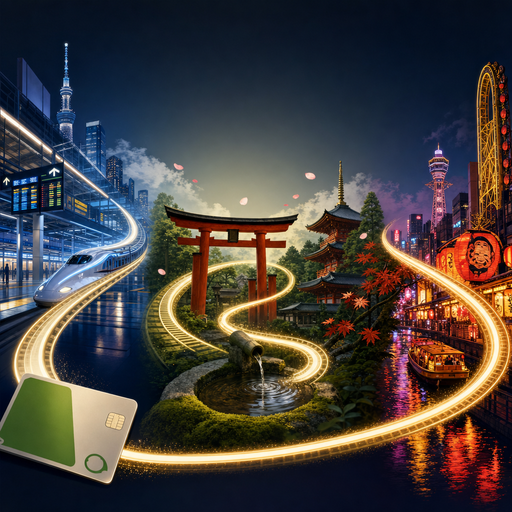
This warm, practical travel guide follows a first-time visitor through Japan on an extended trip from Tokyo to Kyoto to Osaka, using each city to build confidence with transit, payment, etiquette, and neighborhood-based planning. Along the way, it blends iconic sights with quieter shrines, museums, tea culture, elevated dining, and seasonally aware October pacing, including day trips to Nikko and Nara. By the end, Japan feels less overwhelming and more deeply personal, revealed one calm, vivid step at a time.
By MyAudioBooks.ai ·
This free listen has rotated out. The story remains available to read.
The following audiobook contains A I generated content, and may contain errors. My Audio Books dot A I presents: Japan By Rail: Tokyo, Kyoto, Osaka for First-Time Visitors
Introduction
The train doors slide open, and a wash of warm station light spills across the platform as October air slips in behind it. Suitcase wheels hum over polished tile, announcements ripple overhead in Japanese and English, and somewhere beyond the barriers Tokyo is already moving, fast and orderly, as if the city has been waiting to introduce itself. For a first-time visitor, that first breath can feel thrilling and slightly overwhelming at once.
This journey is designed to turn that feeling into confidence. Over the course of an extended stay of one to three weeks, the path begins in Tokyo, continues south to Kyoto, and ends in Osaka, with a graceful day trip or two folded in along the way. The route is not just a line on a map. It is a change in rhythm, from neon and transit logic to temple quiet and then to a city that laughs over dinner as naturally as it hurries through the day.
In Tokyo, a station attendant in a crisp uniform, a ramen counter cook under a silver ticket machine, and a traveler tapping a Suica or Pasmo card all become part of the same lesson. An IC card, used by many visitors, is a rechargeable tap card that lets trains, subways, buses, and even small purchases feel almost effortless. Here, you learn to read the city as a cluster of connected neighborhoods rather than one impossible sprawl. Shinjuku, Shibuya, Asakusa, and the Tsukiji area each offer a different face of the capital, while places like Nikko wait just beyond the city with cedar trees, shrine gates, and a slower mountain hush.
Tokyo also introduces the practical habits that make Japan feel welcoming rather than mysterious. Queues move neatly. Cash trays sit beside registers. Phones stay quiet on trains. A few simple phrases open doors, and a polite sumimasen can bridge many small gaps. By the time the rail codes, color lines, and platform signs start to make sense, the city stops feeling like a puzzle and starts feeling like a system you can trust.
Then Kyoto changes the temperature of the whole trip. The pace softens. The streets narrow. A tea master lowers whisked matcha into a bowl, and a temple path suddenly feels like a place where time is invited to sit down. Kyoto is Japan’s old imperial heart, founded in seven hundred ninety-four as Heian-kyo, and that long history still shapes the city’s wooden lanes, garden courtyards, and careful manners. In this part of the journey, you learn two cultural touchstones that recur again and again: kaiseki, the multi-course seasonal dinner that feels like edible poetry, and the temizuya, the purification basin at a shrine where visitors rinse their hands before approaching sacred spaces.
Kyoto rewards stillness, but it also asks for good pacing. You will move from Fushimi Inari’s thousand vermilion gates to Arashiyama’s bamboo groves, from Gion’s lantern glow to the deep quiet of Zen temples and tea houses. A geiko passing on a side street, a gardener sweeping gravel, or a visitor pausing at a mossy courtyard all help reveal why the city remains so carefully preserved. This is where the trip becomes more reflective, less about checking sights and more about noticing atmosphere.
Osaka brings the final shift, and with it a warmer, more playful energy. A market vendor calls out the day’s seafood, the scent of grilled batter rises from a hot plate, and the canal lights of Dotonbori shimmer across the water after sunset. Osaka grew rich as a merchant city and still feels practical, generous, and unapologetically food-centered. Here, an izakaya is an easy, social place to unwind, and the city’s famous dishes invite lingering instead of rushing. Kuromon Market, Osaka Castle, Umeda, Namba, and a quiet shrine tucked between them all show different sides of a city that knows how to welcome people with flavor.
What carries this whole journey together is not speed, but confidence. You will learn when to move, when to pause, where to eat, how to pay, and how to let each place reveal itself without forcing the day. The result is a trip that feels both practical and deeply lived, where the most ordinary moments, a train tap, a bowl of tea, a quiet queue, become part of the wonder. And just beyond that first arriving platform, Japan is ready to unfold, one calm, vivid step at a time.
End of Introduction
Welcome to Japan. I am so glad we are taking this journey together. Take a deep, slow breath, and let it land. If you are preparing for your very first visit, you might feel a mix of huge excitement and a little hesitation. That is completely normal. Japan can feel like a beautifully intricate puzzle, but once you learn a few simple rules, the pieces start to click into place with surprising ease.
Over this trip, designed as an extended exploration of anywhere from one to three weeks, you will experience three distinct cities, each offering its own window into Japanese life. You will begin in Tokyo, our energetic orientation base and your practical classroom for how the country works in everyday moments. Then you will travel south to Kyoto, where the pace softens and the day naturally bends toward quiet temple gardens and traditional tea. Finally, you will conclude in Osaka, warm and down-to-earth, with a truly convivial energy and street food that feels made for lingering.
To make your arrival in Tokyo feel effortless, start with one simple idea: don’t treat Tokyo as a single overwhelming downtown. Think of it as connected villages, tied together by rail. Instead of trying to memorize everything or locking yourself into brittle hour-by-hour plans, anchor yourself with a few key areas, and let the rest fall into place calmly.
In the west, you have Shinjuku, a massive hub of towering energy, leafy pockets, and late-night alleys. In the southwest is Shibuya, the pulsing center of youth culture and modern style. To the northeast lies Asakusa, where the traditional spirit of old Tokyo still shows through around Senso-ji. Near the waterfront is the Tsukiji area, a seafood lover’s paradise with lively lanes.
Tokyo is where Japan’s everyday systems become easy, fast. In your first day or two, you will notice how designed the city feels for moving people smoothly, turning potential stress points into small moments of satisfaction. You will learn how train and platform flow works, how contactless IC cards simplify transit, how queueing keeps things orderly, and how payments move smoothly at neighborhood shops. As you move through the station-centered rhythm, you will stop feeling like a tourist scanning for answers and start feeling like you belong to the flow of the city.
Tokyo’s shape makes more sense when you know its layers. For centuries, this was a place organized around power and defense, with waterways and roads shaping neighborhoods into tighter, more winding patterns. Later, the Meiji period accelerated modernization, and after major destruction in the twentieth century, the city rebuilt with strong momentum around railway stations. That history helps explain why daily life still revolves around stations as practical gathering points, even when ultra-modern towers rise beside older lanes.
Now let’s make the transit system feel straightforward before you ever step onto a platform. Think of Tokyo’s rail network as a few connected layers. First are JR lines, which connect key areas and include the Yamanote Line, the big loop circling central Tokyo and linking hubs such as Shinjuku, Shibuya, Tokyo Station, and Ueno. Second are the Tokyo Metro and Toei subway lines, which weave beneath the city streets and help you reach quieter neighborhoods between major hubs. Third are private railways, branching outward from main hubs to reach outer suburbs and some regional destinations.
Your strategy stays simple: find the closest station to your accommodation, identify the main corridor that points you toward your destination, and let station signage guide you without trying to memorize every possible route.
An IC card is your shortcut to calm movement. Cards such as Suica or Pasmo let you load money and tap through trains, subways, buses, and many everyday purchases. When you reach the gate, tap the card on the reader, listen for confirmation, and walk through. When you exit at your destination, tap out, and the fare is calculated automatically. Keep this effortless by storing your card in the same pocket or wallet slot every time. Also, before you commit to a gate, look for the ones that clearly accept IC entry, so you do not get funneled into a paper-ticket-only path.
At larger stations, line changes can feel like you are inside a small underground world, but the design exists to reduce stress. Each station has an alphanumeric code, and each line uses its own color. When you look for your stop, match the line color and the station code rather than relying only on place names. Transfers often involve corridors, stairways, and intermediate gates, and that is normal in Tokyo. While you move, listen for announcements that repeat in both Japanese and English. Near platform areas, you can confirm the direction and destination by checking the station information boards just before you commit to a train.
With currency and payment, your first anchor is simple: use yen. Digital payments and credit cards are common in many modern settings, including department stores, hotels, and many restaurants, but physical cash is still woven into daily life. Keep a modest pocket of coins and bills for moments that work best with cash, like small noodle shops, traditional market stalls, and certain transport top-up machines. Tipping is not customary in Japan, and leaving extra money can create confusion.
When you pay, use the small plastic tray near the register. Place your money there, let the staff count and return change to the tray, and then take it back with a polite bow. And if you visit a quiet temple or Shinto shrine, treat the donation box as a separate moment of offering and respect, not a transaction you are expected to complete like a purchase.
Everyday etiquette in Tokyo is built around quiet public consideration. On trains and subways, the atmosphere is notably calm. Set your phone to silent mode, avoid phone calls, and keep conversation low. On platforms, you join orderly queues and wait for people to fully exit before stepping on. In crowded cars, manage your space carefully. Carry a backpack in front of you if it is tight, or place it on the overhead luggage rack when that is the normal flow. If you need assistance, approach station staff or shop staff. Start with sumimasen, and then point, ask, or simply ask for help.
Verify emergency information with local authorities or official sources, since procedures and contact details can change.
Timing matters in Tokyo, not by being strict, but by giving each area the mood it does best. If you are visiting during autumn, mornings and early starts often feel especially smooth for temples and older streets, while areas known for neon energy naturally shine later in the day. That way, you are not constantly chasing the clock, and your route feels like a sequence of comfortable contrasts.
Let’s begin your day-flow circuits with Asakusa and the magnificent Senso-ji Temple. As you walk toward this ancient complex along the historic approach called Nakamise-dori, your senses wake up immediately. You smell toasted sweet rice crackers and sweet bean paste, hear a gentle murmur of visitors, and catch the occasional deep ring of a distant bell. As you reach the purification pavilion, you can see visitors rinse hands and mouth using wooden ladles before entering the main temple area. Early in the day, the spiritual mood lands with more contrast against the modern city around it.
From the calmer temple grounds, head toward the Tsukiji area near the Tokyo waterfront. The inner wholesale market has relocated, but the outer market remains a vibrant maze of narrow lanes and small counters with real culinary energy. The air can carry savory aromas of grilled seafood, sweet rolled egg omelets cooked right on hot griddles, and comforting dashi broth. You will hear the clatter of kitchen tools and warm voices calling to passersby. When you choose where to eat, use a simple rule: pause where the queue is moving steadily, and where food looks freshly prepared in front of you. That blend of working kitchens and old lane layouts is exactly what keeps Tsukiji feeling like a living tradition.
Next, head southwest along the Yamanote Line to Shibuya, one of Tokyo’s most iconic modern encounters. When you step out of the station, the scramble crossing feels like rhythmic shared movement, where pedestrians flow in coordinated directions at once. It can be exhilarating, and it can also be easy to feel momentarily turned around. To keep orientation simple, choose one fixed meeting point and one major landmark you recognize. The bronze statue of Hachiko is a classic anchor, and the station area itself gives you a clear visual center of gravity. Let Shibuya be your bright, energetic contrast after Asakusa and Tsukiji.
Continuing onward by rail brings you to Shinjuku, a district that shows Tokyo’s dramatic scale alongside nearby pockets of real calm. Shinjuku’s main station can feel like a bustling canyon of commuter energy, but you can turn the volume down without leaving the area. To the west, you find wider streets lined with impressive modern architecture, and to one side you reach Shinjuku Gyoen, an expansive imperial garden. Walking there feels like stepping into a pause button. Paths invite slower wandering, ponds give you a place to sit, and the whole garden functions like a recovery station inside the city’s rhythm.
Once you feel comfortable in Tokyo’s station logic, Nikko makes a natural day trip that deepens the contrast between city life and mountain shrine landscapes. Many travelers go by intercity train from Tokyo’s central areas, and then connect with a short bus or walk into the temple district. In turn, plan to review current timetables and any rail options before you go, because access and schedules can vary. Once you arrive, you walk beneath towering centuries-old cedar trees and explore Toshogu Shrine, known for its ornate, brightly detailed architecture and its historical connection to the Tokugawa shogunate. The sound of rushing water and rustling leaves make the whole day feel like a refreshing escape you can return from with energy still intact.
Choosing where to base yourself shapes your evenings as much as your sightseeing. If you stay in Shinjuku or Shibuya, you step into lively, neon-lit streets with plenty of dining options and a nightlife pulse that stays awake. If you want a calmer, more classic atmosphere, Ueno or the area around Tokyo Station can offer strong transit access with a quieter return-at-night vibe. If you stay in Asakusa, you gain the charm of a historic neighborhood after daytime crowds fade, with a slower, more residential feel that helps Tokyo breathe.
For a structured cultural afternoon, Ueno is a natural hub. You can visit the Tokyo National Museum, known for its wide range of art and historical collections, including samurai-related artifacts, kimonos, and Buddhist sculptures. If you want a single focused museum day, you can slow down and move through the galleries at an unhurried pace. If you prefer flexibility, fold shorter museum time into neighborhood loops so the museum supports your day rather than taking it over.
When you want quieter corners that feel like another Tokyo, add-on neighborhoods work wonderfully. Yanaka offers an older residential texture with traditional low-rise streets and local temples that still give you a sense of everyday Tokyo history. Kiyosumi-Shirakawa offers a calm landscape and canal scenery that can reset your pace with minimal effort. Kagurazaka is a quieter, elegant maze of winding lanes and backstreet dining that feels intimate even while the city continues around it. These are great when the big crowd magnets get too loud and you want your ears, not just your feet, to feel rested.
For communication, it helps to have a small set of spoken-friendly phrases ready, especially for everyday politeness and simple help. For a morning greeting, say ohayou gozaimasu, which sounds like “oh-hah-yoh go-zy-mas.” In the afternoon, use konnichiwa, “kon-nee-chee-wah.” For sincere thanks, arigatou gozaimasu, “ah-ree-gah-toh go-zy-mas.” To gently get attention, use sumimasen, “soo-mee-mah-sen.” If you need help urgently, tasukete kudasai, “tah-soo-keh-teh koo-dah-sy.” For directions, michi o oshiete kudasai, “mee-chee oh oh-shee-eh-teh koo-dah-sy.” When ordering at a market, point and say kore o kudasai, meaning “please give me this,” “koh-reh oh koo-dah-sy.” And if you need quick confirmation, hai means yes, and iie, “ee-eh,” means no.
Dining in Tokyo becomes much more enjoyable when you understand the main formats. You can enjoy quick-service ramen where you select your meal and purchase a ticket from a vending machine near the door, then eat at the counter. You can try sushi in settings where the pace is quick and focused, designed for efficient ordering and smooth turnover. For a fun evening, an izakaya is a classic choice for shared plates and drinks, with staff guiding the flow when it is time to settle. Department-store food halls are also a practical option when you want something comfortable and slightly elevated without spending too much time hunting. And when you need a mental reset between neighborhoods, a cafe break keeps you moving on your own schedule rather than sprinting from one landmark to the next. Treat one sit-down meal, a bit more elevated, as a restful anchor so the day feels enjoyable while it is happening.
If you want a practical rhythm for a one-to-two week Tokyo stay, think in terms of active days and easier neighborhood resets. Alternate major landmark clusters with lighter loops, and include at least one indoor cultural anchor so your energy stays steady. This keeps Tokyo as your orientation hub, building confidence as you learn the city’s station logic and etiquette, and setting you up for a deeper, slower emotional journey in your next stop.
In Part Two, you will move to Kyoto. The logistics will feel more familiar, but the mood shifts completely. Kyoto asks you to slow down earlier, choose fewer places per day, and let quiet temple courtyards shape your rhythm. You will learn how the city unfolds from busy lanes into still gardens, so you arrive with confidence and leave feeling that you truly noticed Kyoto, not just visited it.
Let us transition from the high-speed energy and glittering skyscrapers of Tokyo to a place that runs on a totally different frequency. As you travel south, watching urban sprawl soften into rolling greenery, you are not just changing scenery. You are moving into Japan’s historical and spiritual heart. When you arrive in Kyoto, reset your day rhythm on purpose. In the morning, lean into quiet shrines and temples while the air feels cool and the light is gentle. In the afternoon, shift toward markets and carefully curated indoor culture. Then in the evening, let older quarters bring atmosphere through lantern glow, side streets, and unhurried walking, without feeling like you have to sprint to your next stop.
Kyoto’s reward comes from letting a few places breathe instead of trying to collect every temple name. Treat Kyoto as the emotional and logistical centerpiece of your whole trip. Build your days around slower neighborhood flow and repeatable routes, and trust that you do not need to rush to feel like you truly experienced Kyoto. When you do that, the move from busy lanes into still temple courtyards starts to feel natural, not forced.
Kyoto’s preservation and cultural depth are no accident. The city’s story stretches back over a thousand years. In the year seven hundred ninety-four, the imperial capital was established as Heian-kyo. During the long Heian era, a refined court culture flourished around poetry, classic literature, and intricate social etiquette that still echoes in modern values. As political power shifted toward the samurai, Kyoto remained a strategic centerpiece shaped by conflict and rebuilding, yet its spiritual foundations stayed anchored. Even after the capital officially relocated to Tokyo during the Meiji period in eighteen sixty-eight, Kyoto kept its cultural soul through fierce everyday devotion. That long care is one reason the city’s historic layout still feels remarkably intact, so when you walk through traditional wooden merchant streets, you are not only seeing old buildings. You are stepping into living cultural memory.
That memory shows up in Kyoto’s geography, too. Kyoto sits in a mountain basin, cradled by rolling peaks to the north, east, and west. The Kamo River runs like a central guide along the eastern side, and many neighborhoods gather toward the valley edges where the flat basin begins to rise into forested slopes. This setting shapes daily light and atmosphere, from long late-day shadows over dark tiled roofs to gentle mountain mist early in the morning. Even while you are just walking around, you often feel green ridgelines calmly framing your horizon.
Before you dive into specific streets, lock in simple logistics so everything feels effortless. In Kyoto, your primary currency is the yen, and you will notice a realistic mix of cash and cards. Credit cards work well in modern department stores, hotels, and larger establishments, but cash still matters for small traditional noodle shops, craft boutiques, and some temple or ticket counters. You can usually withdraw cash from automated teller machines inside convenience stores using international cards. You can also rely on an IC card for convenient tap-on and tap-off travel on regional trains and many buses.
When you pay, follow the same polite customs you already practiced in Tokyo. Look for the small tray at the cash register, and place your money on it rather than handing it directly to the cashier. Tipping is not part of everyday life here, and it can confuse people, so pay the exact amount requested and move on smoothly. For shrine and temple visits, donations usually follow a traditional rhythm. You will often see an offering box made of wood, with a slatted top. Instead of handing money to anyone, gently toss a coin into the slats, then offer your quiet respect.
To move through Kyoto with grace, adopt a simple philosophy: watch what locals do, then follow their lead. This matters most at entrances to sacred halls and traditional spaces. If you see a raised wooden floor near an entrance, look for neatly arranged footwear. That is your cue to remove your shoes, place them where indicated, and step onto smooth tatami mats in clean socks. Inside historic buildings, keep your speaking voice soft, matching the quiet mood created by paper screens and careful airflow. And when you walk through temple gardens or older districts, stay on designated pathways and pause for photos only in wider areas where you will not block the flow of other visitors.
Kyoto also gives you rituals of purification and prayer. You do not need to “perform” them perfectly. At a Shinto shrine, you can use the stone purification fountain, often called a temizuya. With a wooden ladle, rinse your left hand, then your right, and finally pour a small amount into your hand to rinse your mouth before letting the water drain quietly beside the basin. At Buddhist temples, you may see an incense burner outside where visitors gently waft smoke toward themselves with their hands, a practice believed to bring good health and clarity. When it is time for prayer, remember that Shinto and Buddhist customs differ. At a Shinto shrine, visitors typically toss a coin, bow deeply twice, clap twice to alert the spirits, hold their hands together in silent prayer, and finish with one final bow. At a Buddhist temple, you generally do not clap and focus more on quiet contemplation. If you are ever unsure, observe a few respectful steps around you and mirror the pace.
One delicate cultural experience in Kyoto is encountering the city’s legendary geiko and maiko. They are professional artists trained in traditional dance, music, and conversation, and they are not street performers. They are respected professionals heading to or from appointments in historic districts. If you spot a maiko in an elegant kimono and intricate hair ornaments walking down a lane, keep a polite distance. Do not block their path, do not touch their garments, and avoid trying to take selfies with them. Everyday streets in Kyoto are not a theatrical stage, and respecting their personal space is part of how you help Kyoto’s living heritage stay calm and graceful.
Getting around Kyoto is straightforward when you think in terms of a base plus connections. Kyoto Station is your practical return point, a modern anchor connecting major train lines running north, east, and west. For longer hops, use regional rail to bypass street congestion and keep your day moving. For buses, look for routes that genuinely save you effort, because they can become crowded. For a calmer day, let short, strategic walks connect nearby areas. In Kyoto, that walking logic often works beautifully between places like Higashiyama, Gion, Arashiyama, and Fushimi, so you are not constantly in transit mode.
Now think of Kyoto’s neighborhoods as clear chapters. Higashiyama is your atmospheric walking zone and a natural place to sequence temple visits. Fushimi pulls you forward with shrine energy. Arashiyama blends temples with nature. Gion gives you evening mood, especially once lantern light softens the streets. And Kyoto Station is your reset button when you want to re-center and head out again.
If you want Kyoto that feels restorative, use a repeatable quiet-first pacing pattern. Step off the busiest street, pause for a moment, and lower your speaking voice until it feels almost like a whisper. Listen for gravel underfoot, the faint crackle of incense, and the soft movement of leaves overhead. Notice how the bright daylight changes as it filters through ancient trees, then decide whether to linger on a bench or continue to your next stop. This turns sightseeing into a series of small resets rather than a nonstop checklist.
To find Kyoto with fewer crowds, choose moments that naturally feel quieter. In the early hours, you can walk older lanes before shop traffic thickens, when slopes feel hushed and streets feel more like local routes than tourist corridors. You can also trade some busier temple halls for quieter garden temples such as Shoren-in or Kennin-ji, where you can more easily sit with your thoughts. For a gentle change of pace, try a Kamo River walking stretch later in the day, watching everyday routines unfold. If you want a slower, craft-focused mood, head toward the historic artisan district near Gojo for family-run pottery shops. And when you want open space without leaving the city, pause near the Kyoto Imperial Palace grounds, where expansive gravel pathways and groves create a real sense of room right at the center of everything.
Now you can explore Kyoto’s most iconic landmarks, approaching each one with a quiet-first mindset so the experience feels deeper than the headline. Your first anchor is Fushimi Inari Shrine, the famous sanctuary dedicated to the Shinto god associated with rice and agriculture. Timing matters here. If you want breathing room, aim for early morning when the sun begins to rise over the eastern hills. As you enter through the massive gate area, the path begins in framed repetition, with thousands of vermilion torii gates climbing upward toward the sacred mountain.
Fushimi Inari rewards you as you move higher. In the lower sections, you may encounter crowds, but as you climb, the experience often becomes more physical and noticeably calmer. Light falls across the stone path in striped shadows, the air turns cooler and sharper, and the scent shifts toward damp earth and pine. As your pace slows, footsteps soften and voices thin out. Keep an eye out for stone fox statues, often connected with the shrine’s messenger theme. Deeper on the route, you can reach viewpoints over the Kyoto basin, and morning light makes it especially memorable.
Next, head toward Arashiyama, the western edge of the city where temples nest into the landscape. It is iconic, but it can feel overwhelming if you stay only on the busiest central flow. For your own calm, enter through a side route near the Tenryu-ji area and its temple gardens. Then let the grove unfold at your pace. Thin bamboo stalks rise toward the sky and filter sunlight into an emerald glow. Hear the breeze move the bamboo with gentle creaks, notice leaves whispering overhead, and you may catch the distant soothing rush of the Oi River. As the grove transitions into nearby temple gardens with carefully shaped sand and pond landscapes, the contrast becomes part of the magic, with stillness landing after living motion.
From nature to lantern mood, shift into Gion. Walking through Gion in the late afternoon feels like stepping back into earlier Japan, with preserved machiya townhouses lining the streets. As twilight arrives, paper lanterns start to glow, softening the look of old wooden facades and wet stone. Gion is often associated with geiko and maiko culture, but remember this is a living neighborhood. Respect privacy, watch for signs that indicate where photography may be restricted, and keep your attention on the atmosphere along canal-side paths near the Shirakawa area. If you do see geiko or maiko out and about, treat the moment with the same respectful spacing as everywhere else in Kyoto, with no blocking and no crowding.
Then change gears into flavor and motion at Nishiki Market, a narrow shopping street affectionately known as Kyoto’s kitchen. The feel of the market changes across the day. In the mid-morning, lanes can be relatively quiet as shopkeepers arrange colorful displays, which makes it a friendly time for a slow, sensory stroll. By midday, it becomes livelier as people arrive for lunch, so treat it like a paced tasting walk rather than an exhausting sprint. Stop politely at small stalls, sample along the way, then step aside between tastings so you can keep moving with the flow. Grilled skewers, tamagoyaki sweet omelet bites, seasonal pickles, and delicate fish cakes are part of what makes this area feel distinctly Kyoto.
If you are ready for reflective temple anchors in eastern Kyoto, begin with Kiyomizu-dera. Perched high on the slopes of Mount Otowa, this ancient temple is known for its grand wooden stage that was historically built without using nails. Today, the setting still feels dramatic, with sweeping views of Kyoto stretching below. Beneath the main stage, visitors line up near the Otowa Waterfall area to drink water believed to support different kinds of blessings, from health to longevity and even study success.
Further north along the mountain edge sits Nanzen-ji, a large Zen complex that feels rustic and spacious. As you walk through the towering Sanmon gate, you can feel the scale of ancient wooden structures. One standout feature is the red-brick Roman-style aqueduct that runs through the grounds, built to carry water from Lake Biwa. It is a vivid reminder that Kyoto’s “traditional” landscape sometimes includes visible layers of outside influence.
Then head to Kennin-ji, the oldest Zen temple in Kyoto, located right near Gion. Here, the sensory experience centers on stillness. You may notice dry gravel patterns that suggest the flow of water around mossy stone islands. Step inside the main hall and look up at the ceiling, where painted dragons swirl across the wood, creating a sense of living movement above and quiet gardens below.
To deepen your cultural understanding further, consider a traditional tea ceremony, ideally chosen to match your comfort level. For a gentle introduction, look for a shorter experience with English support where a tea master guides you through basic preparation and tasting of whisked matcha in a calm setting with comfortable seating. For something more immersive and formal, look for a ceremony in a traditional wooden teahouse, where you step onto woven tatami mats and learn how to handle the ceramic bowl before taking a sip. Either way, remember the heart of the ceremony is ichigo ichie, meaning one time, one meeting. It is a reminder that this exact moment, with these exact people, will not repeat, so you savor each sip rather than rushing through the experience.
For a calm break from the outdoors, Kyoto’s museums offer genuine breathing space. The Kyoto National Museum, housed in a striking red-brick Meiji-era building, brings together pre-modern Japanese art, archaeological artifacts, and treasures linked to local temples. If you want a closer connection to living artisan culture, the Kyoto Museum of Crafts and Design is a strong choice, especially if you enjoy watching skilled craftspeople demonstrate traditional techniques passed down through generations, from fine textile work to careful woodworking.
Because museum exhibits and schedules can change, it is wise to review the current program through official listings or with your accommodation before you go. This keeps your planning accurate without turning it into a stressful scavenger hunt.
If you want a few spoken phrases that fit Kyoto’s quiet, traditional settings, keep them short and use them only when needed. For asking directions, michi o oshiete kudasai can help, said like “mee-chee oh oh-shee-eh-teh koo-dah-sy.” If you need help with a reservation, yoyaku o onegai shimasu works well, said like “yoh-yah-koo oh oh-neh-guy shee-mahs.” If you want to confirm before taking a photo, shashin wa daijoubu desu ka is useful, said like “shah-sheen wah dy-jo-boo-dess-kah.” And after a meal or tea experience, gochisousama deshita expresses gratitude, said like “go-chee-so-sah-mah desh-tah.”
Kyoto’s food culture reflects its spiritual traditions through purity, seasonal ingredients, and delicate presentation. One signature experience is kaiseki, a multi-course dinner where each small dish feels carefully composed for the current micro-season. You move through a rhythmic sequence of dishes that can include steamed, grilled, simmered, and sometimes raw elements, often served on ceramics that match the colors and mood of the season. For a comforting specialty, try yudofu, fresh tofu simmered in light dashi broth, served in a way that highlights the quality of the ingredients and the calm rhythm of the meal. Matcha culture is everywhere, from rich green tea lattes to wagashi, delicate sweets often shaped with seasonal motifs and made using ingredients like sweet bean paste and rice flour.
In smaller traditional eateries, English menus may be less common. Instead of overthinking, you can point to a picture or to a set meal option and confirm with kore o kudasai, meaning “this one, please,” with a pronunciation like “koh-reh oh koo-dah-sy.”
Now let’s focus specifically on Kyoto in autumn, including October. This is a beautiful time of year, and many visitors find the daytime weather comfortable for walking. Light can feel golden and soft over temples and wooden streets, creating a calmer, more reflective atmosphere. You may not always catch full peak autumn color, but late in the season gardens and mountain slopes often show early stages of change, which still feels special. Rain is always possible, so if conditions shift, adjust your pacing, watch your footing on wet stone, and let indoor spaces become your gentle backup plan without guilt or rushing.
As your time in Kyoto comes to a peaceful close, you carry a new kind of travel confidence. You have learned to slow your steps in historic streets, navigate with respect, and find quiet joy inside still Zen spaces. Next, you head onward to Osaka, where the atmosphere shifts from contemplative and spiritual to playful, lively, and wonderfully food-centered. In the next part, we will make that transition smooth by exploring Osaka’s dynamic neighborhoods, and then preparing for a delightful day trip to Nara.
Now, take another deep breath, because the magic changes again. If Tokyo was our classroom for Japan’s high-tech systems, and Kyoto was our sanctuary for quiet contemplation, Osaka is where we let our hair down. I want to welcome you to the third leg of our journey, a place that promises a different kind of energy from Kyoto’s elegant restraint.
Osaka is louder, more playful, and more openly food-centered, with warm, down-to-earth street life that invites you to join in. Even as neon glows brighter and sidewalks hum with excitement, our philosophy stays the same. We will pace our days mindfully, so you can enjoy those lively, unforgettable evenings without burning out before you head to sleep.
Let’s begin with the practical transition of moving from Kyoto to Osaka. The ride is short and straightforward, and the change in atmosphere happens fast. The soft-spoken reserve of Kyoto pathways is replaced by a warm, boisterous wave of human energy. Laughter is louder, conversation feels more familiar, and the city moves with a convivial, unpretentious stride.
When deciding where to base yourself, think in terms of the flavor you want your mornings and evenings to have. A base in the northern hub of Umeda keeps your transit simple and efficient, especially if you prefer a clean, modern rhythm for getting around. A base in the southern district of Namba puts you closer to the heart of street food lanes and canal-side strolls, so it is easier to wander out for an evening and come home smoothly when you are ready to slow down.
To understand Osaka’s independent character, it helps to know how geography and history shaped its people. Osaka grew up as a practical merchant city, built on trade and opportunity. With river systems meeting the sea, it became a vital port and gateway, earning a lasting reputation as Japan’s kitchen. Over time, the city also developed a culture of clever negotiation and everyday comfort, where pleasure and hard work share the same stage.
Even Osaka Castle fits into that story as a historical anchor tied to eras of wealth and influence moving through these thriving trade routes. That merchant spirit still shows up today in the friendly banter of market stallholders and in civic pride that favors authentic character over polished showmanship.
As we settle in, let’s review currency and payment basics for Osaka so your daily transactions stay smooth. The yen remains the primary tool. Credit and debit cards are widely accepted in many modern settings, including department stores and hotels. Still, Osaka’s best culinary adventures often live in small, family-run establishments, standing bars, and historic market stalls where cash is a reliable backup.
Your IC card is especially useful here. It makes transit convenient and helps for quick purchases at many convenience stores and kiosks. As always across Japan, tipping is not customary, and it can cause confusion. When you pay, use the small tray at the register. Place your money there, let the cashier return change the same way, and if you step into a quiet local shrine or temple courtyard, treat donation boxes as moments of respectful offering.
Now for practical tips on navigating Osaka’s lively, high-energy streets. The city is known for crowded nightlife areas, especially around the neon-drenched canal of Dotonbori. When you enter those zones in the evening, sensory input can be intense: animated signs, excited voices, and dense streams of pedestrians. Keep your bearings by moving with the crowd rather than trying to push through it.
Even in street-food frenzy, queueing stays orderly in its own way. When you eat at a counter-service spot, keep transactions quick and make room for others behind you. Also, keep your bags tucked close to your body so they do not intrude on narrow walkways. If the central canal strips start to feel too compressed, slip into calmer side streets just one or two blocks away. The volume drops instantly, and you often find local eateries that feel more relaxed, with less rush.
For any day trip planning, and especially around evening schedules, keep this calm reminder in mind: verify emergency information with local authorities or official sources, since numbers and procedures can change.
To make Osaka’s transit feel straightforward, adopt a stay-oriented-to-your-station approach rather than getting tangled in brittle transfer details. The backbone line for north-to-south movement is the Midosuji subway line. It runs through the major hubs you will naturally build your days around. In the north sits Umeda, with networked tracks, shopping complexes, and office buildings. In the south sits Namba, pulling you toward street food, theater, and nightlife.
When your plans revolve around those station complexes, clustering becomes easier. For example, you can spend a morning in Osaka Castle Park, then head back toward the food-focused lanes around Kuromon Market for your afternoon. This station-centered thinking helps you avoid getting turned around in multi-line transfers and keeps your day flow coherent.
Let’s design your Osaka experience around three iconic neighborhood anchors: Dotonbori, Osaka Castle, and Kuromon Market.
First, step into the heart of Dotonbori. Walking along the canal feels like stepping into a living theater of light and sound, with the gentle sloshing of canal boats, the sizzling of griddles, and the hum of excited voices. Neon signs reflect off the dark water, and the atmosphere is pure Osaka—bright, playful, and busy in a way that feels welcoming rather than intimidating.
If the main bridge and central walkways feel tightly packed, try a simple tactic. Walk along the lower wooden areas closer to the water. You will often find a calmer pocket where crowds thin out, and you can enjoy the reflections with more breathing room.
Next is Osaka Castle. Standing before its towering white walls, copper-accented roofs, and wide stone moats, you feel the sheer scale of medieval power. The park and grounds feel breezy and open, with walking paths and green space that invite an unhurried rhythm. The main tower experience functions as a museum-like journey through history, translating the castle’s turbulent past into an indoor narrative. A smart decision rule for energy is to explore the park and exterior in the morning, then pair it with a lighter, relaxing food or shopping afternoon nearby. That way, you do not try to do everything at once, and you avoid museum fatigue after Kyoto.
Your third anchor is Kuromon Market, a bustling covered arcade that has fed the city for well over a century. Once you enter, your senses fill quickly. You smell fresh seafood, notice the sweet aroma of grilled scallops, and hear friendly vendor calls about the day’s specials. Kuromon has a rhythm you can work with. Early in the morning, it often feels calm and focused, with local chefs sourcing ingredients. As the day moves forward, it becomes a lively street-food paradise. To keep it enjoyable, choose a few specific bites instead of trying to sample everything at once. Eat directly at designated standing areas, or look for stalls with small indoor seating nooks. This simple strategy helps you avoid the “grazing marathon” feeling where you are dodging people while balancing hot food.
To truly understand Osaka’s identity, lean into its legendary relationship with food and everyday comfort. Dishes like takoyaki—savory batter-fried octopus balls topped with sweet sauce, mayonnaise, and bonito flakes—and okonomiyaki—cabbage pancake-style comfort cooked on a hot griddle—are not just snacks. They are civic symbols. Locals take pride in them, and they reflect the city’s informal, generous, social spirit.
But if standing on a crowded street corner under a neon sign is not your ideal ending to a long walking day, you do not have to skip the flavors. There is an elevated alternative. Look for sit-down restaurants, sometimes in department store settings, where you can enjoy high-quality okonomiyaki and takoyaki at a table without the stress of constant sidewalk navigation. It still feels like Osaka, just with a calmer pace.
Now let’s organize your neighborhood explorations so each district has a clear, functional role in your itinerary. Start with Namba as your ultimate hub for vibrant energy and evening play. This is where you go to immerse yourself in glowing lanes, find cozy alley vibes, and wander without feeling like you need a strict plan.
If you want kitchen culture and practical browsing, head toward Nipponbashi and the adjacent Doguyasuji shopping street. This area is known for kitchenware and culinary tools, including realistic wax food displays, beautiful knives, and ceramics. It is a fun place to observe the practical objects behind everyday Japanese cooking.
For wide-open space and open-air history, spend time in Osaka Castle Park. Let your feet wander along gravel paths and shaded lanes while you reset your pace in a greener pocket inside the city.
For modern architecture, upscale dinner options, and a transport-friendly hub, go north to Umeda. It is a great base for regrouping and for changing gears when the city’s energy starts to feel like a nonstop soundtrack.
And when you want a quiet, shrine-side pause, choose a local sanctuary in your neighborhood. It is a simple reset button when you need calm between meals and street wandering.
For afternoons when you want to step indoors and engage with Osaka’s cultural history, include a curated museum stop. Your strongest historical anchor is the Osaka Museum of History near Osaka Castle. Inside, the museum uses reconstructions, models, and preserved artifacts to show how the city evolved, from older eras into the merchant-city world that shaped Osaka’s identity. It is a convenient way to understand the streets you are actually walking on.
If you prefer modern and contemporary visual arts, look for the National Museum of Art, Osaka, on Nakanoshima. This museum is known for distinctive architecture and a layout that offers a very different kind of atmosphere from the outdoor experience. Because exhibit schedules and maintenance periods can change, review the current program through reliable sources before you commit.
If you want a few lower-crowd add-ons that feel accessible and calm, Hozen-ji Temple sits tucked away in a narrow alley near Namba’s brighter lanes. Inside that quiet pocket, you can see the Mizukake Fudo statue, famous for being covered in vivid green moss as visitors gently splash water over it in a wishing ritual. The effect is oddly calming, especially when lantern light softens the surrounding stone.
For another gentle reset, try an early morning walk along the Nakanoshima riverside. Before business districts wake up fully, the island park often feels unusually peaceful, with historic-style buildings reflected in calm water. It is a great way to balance neon energy at night with a calmer rhythm in the morning.
You can also explore older covered shopping arcades, or shotengai, before the midday rush. Watch how local residents buy daily groceries, chat with merchants, and move through the neighborhood like they are simply living their normal day. That feeling is the point.
And if you want a shrine that feels deeply rooted in long history, consider Sumiyoshi Taisha. It is known for an ancient architectural style, with a spacious, tranquil atmosphere and a beautiful vermilion bridge reflected in a peaceful pond. It can feel far away from the city’s buzz in a way that still feels effortless.
To help you interact smoothly in Osaka, keep a small set of high-utility, spoken-friendly phrases ready. When you are ready to order, point and say kore o kudasai, meaning “please give me this.” If you want to ask whether English menus are available, you can ask eigo no menyu wa arimasu ka. If you want to check whether something is spicy or includes a specific ingredient, you can ask daijoubu desu ka, to confirm it is okay.
When it is time to pay politely, you can catch the host’s eye and say okaikei o onegai shimasu, meaning “the bill, please.” If you want to take food to go, ask mochikaeri de. And if you need a simple, polite direction to the nearest station, ask eki wa doko desu ka.
Now let’s talk about food dining culture in a way that actually helps you feel comfortable. Osaka is full of different formats, and understanding how they work makes your evenings calmer. First are takoyaki and okonomiyaki, the city’s comfort classics. Next, do not miss kushikatsu, skewered meats, seafood, or vegetables dipped in a light batter and panko crumbs, then deep-fried until crisp. Kushikatsu is usually enjoyed at lively counter-service places. A key local rule matters here: after you take a bite, do not double-dip. It is a simple way to match the etiquette of the place.
For a warm noodle option, try kitsune udon, with thick, chewy noodles in a delicate dashi broth, topped with sweet and savory simmered tofu. For grilled meat lovers, seek out yakiniku, where you cook high-quality cuts over an integrated table grill with charcoal or gas.
An evening at a neighborhood izakaya, sharing small plates like sashimi, grilled fish, and seasonal vegetables, is one of the easiest ways to feel how Osaka’s hardworking residents unwind after the day. Between explorations, take a classic coffee-shop break at a kissaten, where you might find a quiet, retro-style booth and a slow, satisfying pause with a rich cup of coffee.
When you are choosing between counter food and sit-down dining, keep comfort in mind. Standing stalls can be perfect for a quick, hot bite on a busy afternoon. A sit-down meal can be the better choice when you want to stretch out the evening and genuinely relax after a full day of walking.
To keep dining smooth, remember a few etiquette guidelines. In many Japanese restaurants, payment happens at the front register rather than at your table. When you are finished, you go to the register for your bill. For hot street food like freshly made takoyaki or kushikatsu, give it a moment or two to cool. The interior can be surprisingly hot, and letting it rest helps you avoid an unpleasant first bite. Most importantly, when you buy street food from a stall, do not walk while eating. Step aside near where you bought it, enjoy your bite standing quietly, dispose of trash where appropriate, then continue your walk with clean hands and a relaxed pace.
Now, let’s focus specifically on Osaka in autumn, including October. This is often a comfortable window for longer outdoor walking, especially once summer heat eases. Even so, evenings can feel cooler, so stay flexible and be ready to adjust your comfort if night air drops. Rain is always possible, and when it happens, Osaka changes in a fun way. Wet pavement can make Dotonbori’s neon look especially dramatic, with reflections shimmering across the street. If the weather shifts, treat it as permission to move some open-air time earlier or swap a canal stroll for a covered arcade or a cozy indoor meal.
From your base in Osaka, a day trip to Nara is an absolute must. It offers an unhurried, deeply memorable encounter with ancient Japan. The journey is easy with rail options from Osaka’s central stations, and it often feels shorter than people expect. Once you arrive, plan a calm arrival strategy instead of rushing.
Step out of the station and head toward Nara Park, where hundreds of protected deer wander among visitors. You may see vendors selling special deer crackers. If you choose to feed them, keep your movements gentle and calm. They are used to people, but they are still wild animals, and a relaxed approach keeps interactions respectful for everyone.
Instead of treating Nara like a quick photo stop, set aside time for deep temple contemplation. Visit Todai-ji Temple, and walk beneath its massive wooden pillars to stand in awe in front of the giant bronze Great Buddha. Then continue toward Kasuga Taisha Shrine, where lantern-lined forest paths and cedar-covered stillness create a quiet, spiritual atmosphere that feels far removed from Osaka’s bustle.
In autumn, Nara often feels comfortable for walking, though forest paths can be damp after rainfall. If the ground is slick, slow down and watch your footing. If crowds feel heavier during peak hours, shifting the main visits slightly earlier or later can make the whole day calmer and more rewarding.
As our journey draws to a close, take a moment to reflect on what you have learned. In Tokyo, you built confidence by understanding modern transit systems, practicing everyday etiquette, and learning how to move through a huge city with calm logic. In Kyoto, you shifted your pace and discovered the emotional rhythm of quiet shrines and reflective temples, where a mossy garden or a calm cup of matcha can reset your inner clock. And now, in Osaka, you have embraced a down-to-earth ease and a rich culinary appetite, learning that travel is not only ticking sights off a list. It is sharing hot street food, laughing in neon-lit lanes, and feeling comfortable in your own skin as a traveler.
As you prepare to return home, carry these durable habits with you. Cluster your days around neighborhood hubs. Choose quieter side streets when the main corridors feel crowded. Use transit logic to keep movement simple, and let cultural cues guide you toward respectful, enjoyable experiences.
Japan welcomed you with an extraordinary blend of ancient tradition and futuristic design. Now you return with a mind full of confidence, a heart full of stories, and an appetite for your next great adventure. Safe travels, my friend, and until we meet again on the road.
Sources
Japan’s national tourism board and regional visitor resources for Tokyo, Kyoto, Osaka, and Nikko: these were the backbone for the big-picture orientation, neighborhood grouping, seasonal framing, and the calm reminders to verify current conditions locally.
JR East, Tokyo Metro, Toei Subway, and the official Suica and PASMO pages: these informed the transit explanations, station logic, and the tap-in, tap-out advice that helps Tokyo feel manageable.
UNESCO World Heritage Centre, plus official shrine, temple, and museum sites: these supplied the historical context for places like Senso-ji, Fushimi Inari, and Toshogu, along with respectful visitor guidance for sacred spaces.
Japan Meteorological Agency and local seasonal outlook pages: these supported the October weather notes, typhoon caution, and autumn foliage timing.
Bank of Japan and official visitor payment guidance: these backed the sections on yen, cash, card use, and the fact that tipping is not part of everyday service culture.
Major museums and cultural institutions in Tokyo, Kyoto, and Osaka: these helped ground the art and history commentary without relying on fragile exhibit details or guidebook prose.