How Dante’s Exile Shaped the Inferno and Its Artistic Legacy
Condemned by Florence in 1302 and threatened with death if he returned, Dante endured lifelong exile, transforming political betrayal and personal loss into the sweeping moral vision of the Divine Comedy. His journey through Hell judged corruption, factional violence, and human frailty while reaching beyond vengeance toward justice and redemption. He died in Ravenna without returning home, but his poetry inspired centuries of artists—from Botticelli to Rodin—and carried his voice far beyond the authority of the city that expelled him.
By MyAudioBooks.ai ·
Listen free: How Dante’s Exile Shaped the Inferno and Its Artistic Legacy
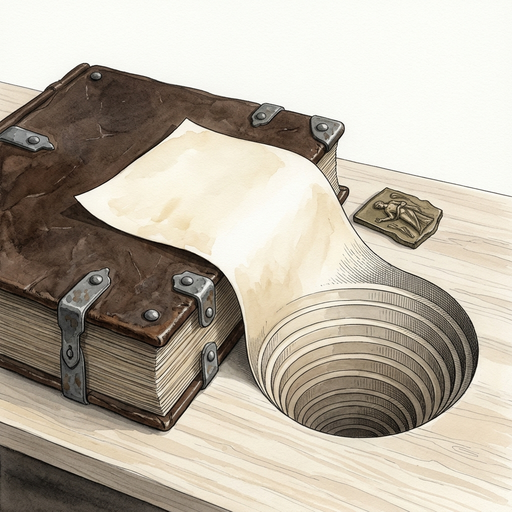
In the quiet reading rooms of the Florence State Archive, researchers can consult a heavy register known as the Libro del Chiodo, or the Book of the Nail. The volume does not contain original parchment documents drawn up on the spot, nor did Dante Alighieri stand beside a magistrate watching a clerk apply the ink. It preserves official civic transcriptions of political condemnations, copied so the commune would maintain an enduring legal memory of those it cast out. Bound in dark leather and studded with iron, the register holds two separate judgments that severed Dante from his native city.
The first entry is dated the twenty-seventh of January, one thousand three hundred two. It was issued in Dante’s absence by Cante de’ Gabrielli da Gubbio, an outside nobleman appointed to the office of podestà, the city’s chief magistrate. Italian communes regularly hired a magistrate from another region to serve a temporary term, hoping an outsider might govern above local family rivalries. On that late January day, the court condemned Dante on charges of extortion, illicit financial gain, and subversive resistance to the papal alliance. The sentence imposed a crushing fine, ordered him to leave the territory for two years, and permanently stripped him of the right to hold public office in Florence.
When Dante failed to present himself to pay the penalty or answer the accusations, the foreign magistrate delivered a second decree on the tenth of March, one thousand three hundred two. This entry removed any ambiguity. If Dante ever returned and fell into the hands of the Florentine authorities, the commune would burn him until he was dead. It was not a literary metaphor or an empty warning. It was a binding, lethal reality that closed the gates of his city behind him. The legal record established an enduring tension: Florence had issued a judgment on Dante, and in the wilderness of exile, Dante would construct an imaginative poem that passed judgment on Florence and the wider medieval world.
To understand how an accomplished citizen found himself under a death sentence, one must look back eighteen months. From the fifteenth of June to the fifteenth of August in the year one thousand three hundred, Dante had served as one of the six governing priors of Florence. These magistrates held the highest executive power in the republic. During that brief summer term, the city was tearing itself apart through factional hatred. The ruling class had split into two hostile camps known as the White and Black Guelphs. These labels did not designate distinct religious creeds. Both factions were devoutly Christian, but they harbored competing commercial interests and held irreconcilable views on political autonomy.
The Black Guelphs sought close financial and military ties with Pope Boniface the Eighth, welcoming papal oversight as a guarantee of their own political dominance. The White Guelphs, a coalition that included Dante, fought fiercely to defend Florence’s civic independence against papal interference. A contemporary chronicle written by Dino Compagni reveals the suspicion that choked Florentine public life during these months. Compagni was an active merchant and political insider who shared Dante’s broad sympathies. His account describes how political compromise disintegrated into street brawls, covert conspiracies, and mutual banishments.
In November one thousand three hundred one, Pope Boniface sent Prince Charles of Valois to Florence under the pretext of brokering peace. Instead of mediating, the prince backed the armed Black faction. Street fighting erupted, the White priors were ousted, and a wave of retaliatory prosecutions swept through the civic administration. The legal accusations leveled against Dante were shaped by this political purge. The historical record does not prove his guilt, nor can modern scholars simply dismiss every formal charge as an outright fabrication. They belong to a partisan court operating during a violent regime change. Biographical tradition holds that Dante was in Rome on an embassy to the pope when the coup occurred. But his exact physical location during those chaotic weeks cannot be proved with certainty. The documented result is absolute: from the moment those sentences were entered into the record, Dante never saw Florence again.
His life became an unsettled succession of northern Italian courts. Without family property, which the commune had confiscated, he depended on the generosity of aristocratic protectors. Documents preserved in local archives provide occasional, sharp glimpses of his movements. On the sixth of October, one thousand three hundred six, notarial instruments place Dante in the Lunigiana region near Sarzana. There he acted as an accredited diplomatic representative for the noble Malaspina family, successfully negotiating a treaty of peace between them and the local bishop.
Other noble houses offered refuge. In Verona, Dante found protection with the powerful Scaliger family. Customary accounts identify Bartolomeo della Scala as his early host, though scholars still debate the exact chronology of that first stay. Years later, Dante established a celebrated relationship with Bartolomeo’s younger brother, Cangrande della Scala. The alliance is commemorated with immense admiration in the seventeenth canto of the Paradiso. Courtly patronage was a practical transaction. A host family offered food, lodging, and armed protection. In return, an exiled intellectual offered diplomatic skill, Latin correspondence, and the cultural prestige of harboring a renowned writer.
Yet dependence carried a deep personal toll. In his unfinished philosophical treatise, the Convivio, or The Banquet, written in the early years of his banishment, Dante described the psychological injury of life on the road. Without a home, he explained, an exile becomes a displaced wanderer, losing the public respect he once commanded. Strangers judge such a man with casual contempt, looking down on him because he lacks civic standing and material wealth.
A critical turning point in his exile arrived around one thousand three hundred fifteen. A document known as Letter Twelve, preserved in Dante’s correspondence and addressed to an unnamed Florentine friend, captures his defiance. Florence offered an amnesty that would allow certain exiles to return, provided they paid an administrative fine and marched through the streets wearing the garb of penitents. In his letter, Dante rejected these terms as degrading. He asked whether this was the glorious homecoming offered to a poet who had suffered years of unmerited disgrace. The letter rejected that specific, humiliating procedure rather than the principle of returning, but it confirmed his permanent separation. Dante gave poetic shape to this lived grief through the prophecy of his ancestor Cacciaguida in the seventeenth canto of the Paradiso. Cacciaguida warns the traveler of how salty another man’s bread tastes and how steep it is to climb another man’s stairs.
Dante transformed this lived tragedy into an imaginative architecture. In the Commedia, particularly the Inferno, he created an alternate tribunal where the tables of justice were turned. The poem is not a direct autobiographical journal, nor can its creation be reduced solely to political bitterness. Its philosophical foundations predated his banishment, and its composition extended across years of labor. Yet exile provided its urgency and moral spine.
To enter the poem, one must grasp Dante’s deliberate temporal setting. He composed the work while wandering in exile, but he set the narrative journey in the spring of the year one thousand three hundred, during the Jubilee proclaimed by Pope Boniface. This displacement created two distinct versions of the author. There is the historical writer, who knows every heartbreak that post-dates one thousand three hundred. And there is the pilgrim character, who walks through the afterlife knowing nothing of his coming ruin. When damned souls peer into the future to foretell Dante’s banishment, they are not delivering supernatural prophecies. They are speaking with the painful historical knowledge already carried by the exiled writer.
To guide the traveler through the abyss, Dante introduces Virgil, the Roman poet of the Aeneid. In the sixth book of his ancient epic, Virgil had sent his hero Aeneas into the underworld, providing a classical blueprint for a living traveler walking among the dead. Yet Virgil cannot guide the traveler on human wisdom alone. In the second canto of the Inferno, we learn that Virgil was dispatched from heaven by Beatrice, the historical woman Dante had celebrated in his youthful lyric poetry and transformed here into a heavenly patron.
At the entrance to Hell, an inscription above a towering portal warns all who pass through to surrender any hope of return. Beyond that threshold lies an inverted, subterranean pit. Unlike a flat plain or open terraces, Dante’s underworld is a colossal funnel, narrowing through nine descending circles toward the center of the earth. The spatial arrangement reflects medieval Christian morality. Sins of uncontrolled desire sit near the top, followed downward by deliberate violence, intellectual deception, and finally the absolute coldness of betrayal.
The punishments operate by a system known as the contrapasso, where an earthly desire or crime becomes an eternal, inescapable physical reality. In the second circle, lovers who surrendered reason to lust, such as Paolo and Francesca, are driven endlessly through the dark by violent winds. The punishment mirrors the emotional tempest that carried them away in life. Their story evokes profound pity from the pilgrim, yet their placement in the pit confirms that human sympathy does not cancel divine judgment. Even Virgil must reside forever in Limbo, excluded from heaven because he lived before the Christian era.
As the traveler descends, the political realities of Florence rise to meet him. In the third circle, among the gluttons wallowing in mud, Dante encounters a Florentine citizen named Ciacco. This figure delivers the poem’s first political prophecy, forecasting the factional violence of one thousand three hundred one, the expulsion of the White Guelphs, and the ascendance of their rivals. In the fifth circle, crossing the filthy swamp of the Styx, the pilgrim encounters Filippo Argenti, a Black Guelph remembered for arrogance and wealth. When Argenti attempts to capsize the boat, the pilgrim curses him and rejoices as other damned souls tear him apart. The episode shows that the pilgrim’s voice is not detached or angelic; it is capable of raw, vindictive rage.
In the sixth circle, the landscape changes to an open cemetery where heretics are trapped inside burning stone sepulchers. From one of these flaming tombs rises Farinata degli Uberti, a towering military leader of the Ghibelline faction from the previous generation. Farinata’s family had fought bloody wars against Dante’s Guelph ancestors decades earlier. Although Farinata played no role in Dante’s banishment, he fixes his gaze on the pilgrim and issues a grim warning: Dante will soon learn how difficult it is to master the art of returning home from exile.
Further down, across the burning sands of the seventh circle, Dante encounters Brunetto Latini, an admired Florentine scholar whose encyclopedic writings had shaped Dante’s intellectual youth. The poem places Brunetto among those who committed violence against nature, a medieval category applied here to sexual relations between men. Dante treats Brunetto with immense personal reverence, remembering the guidance he received from his elder contemporary. Yet this emotional warmth makes the scene all the more striking. Dante places an admired teacher figure under eternal torment, demonstrating that personal affection cannot shield anyone from the poem’s rigorous moral framework.
The eighth circle, composed of ten concentric stone ditches called the Malebolge, exposes the machinery of social and religious corruption. In the third ditch, Dante confronts the simonists, individuals who bought or sold church offices and spiritual benefits for monetary gain. Dante presents simony as a monstrous perversion, comparable to turning a sacred public trust into private profit. The damned are shoved head-first into circular holes in the rock, their exposed feet licked by flames.
Deep in one of these openings, Pope Nicholas the Third mistakes the pilgrim’s voice for that of Pope Boniface the Eighth. Nicholas believes Boniface has died ahead of time and arrived to take his place beneath the earth. Because the poem is set in one thousand three hundred, the real Boniface was still alive in Rome. Dante could not show him suffering in the pit, so he placed him there by anticipation, using an incarcerated pope to announce Boniface’s future arrival. It is a moment of devastating satire, exposing the exiled poet’s fury against the pontiff he held responsible for Florence’s ruin.
At the very bottom of the universe, in the frozen ninth circle, the atmosphere changes entirely. The deepest evil in Dante’s moral world is not heat, passion, or violence, but cold betrayal. While violence damages bodies, betrayal destroys the foundational trust that holds families, cities, and human communities together. The ice of Lake Cocytus encases those who betrayed their kin, their political parties, their guests, and their sovereign lords.
In the ice of Antenora, reserved for political traitors, the pilgrim accidentally kicks the head of Bocca degli Abati, a Florentine accused of betraying his own faction at the battle of Montaperti in one thousand two hundred sixty. When Bocca refuses to name himself, the pilgrim seizes his hair and threatens to tear it out. Dante’s fictional journey does not present an enlightened observer above the fray; it presents an exile wrestling aggressively with the partisan betrayals that shattered his world.
A few cantos later, Dante hears the agonizing voice of Count Ugolino della Gherardesca. Imprisoned in a Pisan tower with his sons and grandsons by a political rival, Ugolino was starved to death behind locked doors. Dante constructs Ugolino’s speech with chilling ambiguity. When Ugolino concludes that grief could not kill him where hunger succeeded, the poem leaves open the terrifying implication of desperate starvation. It does not resolve that implication into a verified historical fact of cannibalism. The scene is Dante’s supreme indictment of political factionalism: a civic conflict that consumed the innocent youth of a city.
At the absolute center of the earth stands Lucifer, trapped waist-deep in the frozen lake. He is not a monarch ruling an active underworld empire; he is a helpless, grotesque prisoner. He has three faces upon a single head, whose contrasting colors may symbolize the corruption of the Trinity. Six colossal bat wings churn continuously beneath his chins, generating the freezing winds that maintain the very ice that binds him. Lucifer weeps from six eyes. His three mouths chew Judas Iscariot, who betrayed Christ, and Brutus and Cassius, who betrayed Julius Caesar and the unified political order of the Roman empire.
The escape from this frozen trap is a physical struggle. Virgil takes Dante on his back and climbs down Lucifer’s matted fur. At the monster’s hip, the travelers reach the center of universal gravity. Virgil turns himself around with immense effort and begins climbing upward along a hidden underground passage. They follow the sound of a subterranean stream cut into the rock, ascending through the dark until they emerge through a round opening to see the night sky. The Inferno concludes with Dante looking up at the stars, a motif that closes each of the Commedia’s three major canticles. Emerging from the pit does not complete the pilgrimage; it merely concludes the first third of a journey that leads through the cleansing terraces of Purgatory to the light of Paradise.
In the historical world, Dante found his final home not in Florence, but in the Adriatic city of Ravenna. There, under the protection of Guido Novello da Polenta, he lived with modest stability, surrounded by his children and local admirers. The near-contemporary chronicle of Giovanni Villani and the later biography by Giovanni Boccaccio, written in the middle of the fourteenth century, record that Dante completed the Paradiso in Ravenna before undertaking a diplomatic mission to Venice on behalf of his patron.
On his return from that Venetian embassy, Dante fell ill with a violent fever, traditionally attributed to malaria contracted while crossing the marshy coastland. He died in Ravenna in September one thousand three hundred twenty-one, around the age of fifty-six. His remains were buried with honor outside the Franciscan church now known as San Francesco.
The civic tragedy of his banishment echoed for centuries through his burial place. In subsequent generations, recognizing the monumental stature of the poet it had condemned, Florence made repeated diplomatic attempts to retrieve his bones. Each time, the Franciscan friars of Ravenna resisted. When a papal delegation arrived in the early sixteenth century with authority to transport the remains to Florence, the friars secretly chiseled a hole through a cloister wall, removed the bones from their stone sarcophagus, and hid them inside the monastery. The secret was kept so securely that the bones were believed lost until one thousand eight hundred sixty-five. Then, during restoration work on an adjoining chapel, a workman discovered a wooden box marked with Dante’s name. The modern neoclassical tomb that stands in Ravenna today remains an enduring monument to Florence’s lasting loss.
Long after his death, Dante’s imagined underworld captured the visual imagination of European artists, each translating his geography of exile into distinct media. In the late fifteenth century, Sandro Botticelli undertook an ambitious cycle of drawings, traditionally associated with the patronage of Lorenzo di Pierfrancesco de’ Medici. Botticelli’s famous Map of Hell creates a precise cutaway view of the entire subterranean funnel. Rendered on vellum, the drawing illustrates Dante’s concentric circles descending systematically toward the frozen lake, mapping the moral terrain of the poem into a clear, architectural reality.
In Rome, between one thousand five hundred thirty-six and one thousand five hundred forty-one, Michelangelo painted his immense fresco of The Last Judgment on the altar wall of the Sistine Chapel. Michelangelo was a devoted reader of Dante, and he imported specific figures from the Inferno into his biblical resurrection scene. At the bottom of the wall, the classical ferryman Charon beats lingering souls with his oar, driving them into the darkness, while the infernal judge Minos stands with a serpent wrapped about his waist. These figures belong directly to Dante’s synthesis of classical mythology and Christian judgment, woven into the heart of the Vatican.
Three centuries later, in one thousand eight hundred sixty-one, the French artist Gustave Doré produced a celebrated series of wood engravings illustrating the Inferno. Cut into wooden blocks from Doré’s dramatic wash drawings, the prints emphasize atmospheric scale. In his depiction of the thirty-fourth canto, the figures of Virgil and Dante appear as vulnerable specks on the ice, dwarfed by the mountainous, wing-beating figure of Lucifer trapped in the mist. Doré’s stark contrasts of light and shadow shaped the popular visual memory of Dante’s underworld throughout the modern world.
In France, during the late nineteenth century, the sculptor Auguste Rodin turned to Dante for his greatest lifelong project. In one thousand eight hundred eighty, the French government commissioned Rodin to design a monumental bronze doorway for a planned museum of decorative arts. Although the museum was never built, Rodin spent the rest of his life developing The Gates of Hell. He broke away from Botticelli’s orderly compartments, transforming the door into a surging bas-relief of writhing, falling bodies.
Rodin isolated individual figures from the doors to create independent masterpieces. The central figure seated on the tympanum, originally conceived as Dante leaning forward to contemplate the damned below, became The Thinker. Nearby, Rodin sculpted the agonizing group of Ugolino and His Children, capturing the horror of the starved Pisan count. Although Rodin never saw the doors cast in bronze during his lifetime, posthumous bronze casts carried the exiled Florentine’s dark vision across the Atlantic. One prominent example stands at the Rodin Museum in Philadelphia.
These artistic afterlives return us to the legal record held in the Florence State Archive. The Libro del Chiodo reminds us of the stark reality that governed Dante’s adult life. The Florentine commune exercised genuine, unforgiving authority over his physical body. The legal decrees were never overturned in his lifetime; they denied him his home, ruined his public career, and forced him to live as an impoverished dependent in other men’s palaces.
Yet the poem created under these conditions achieved an enduring authority that dwarfed the city that cast him out. In the Inferno, Dante did not simply compose a private grievance. He constructed an imaginative tribunal that summoned his enemies, examined his own anger, and measured the politics of his generation against an unbending vision of justice. The city’s power over his footsteps was absolute, but the voice forged in that exclusion reached far beyond its walls.