Golden Lanceheads of Snake Island: Evolution, Myths, and Conservation off Brazil
Brazil’s Snake Island is not the deadly carpet of vipers described in popular lore, but the only wild home of the critically endangered golden lancehead. Isolated by rising seas, the snakes evolved to rely heavily on migratory birds; today, restricted access protects both visitors from real hazards and the species from threats that could wipe it out.
By MyAudioBooks.ai ·
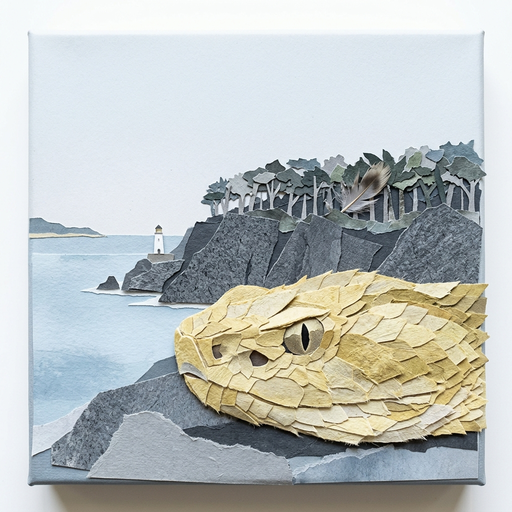
Listen free: Golden Lanceheads of Snake Island: Evolution, Myths, and Conservation off Brazil
Popular lore describes an island thirty-three kilometers off the coast of southeastern Brazil where a venomous snake lurks under every square meter, guaranteeing swift death to anyone who steps ashore. Sensational retellings call it the deadliest place on Earth. Yet the animal at the heart of this reputation, the golden lancehead, is classified by international conservation authorities as critically endangered. A small patch of rock and canopy holds a concentrated predator population that is simultaneously feared as an inescapable hazard and vulnerable to total extinction. Understanding how this island came to hold so many snakes, why public access is forbidden, and how the actual biology compares to the legend begins with separating ecological reality from dramatic folklore.
At My Audio Books dot A I, you can create your own audiobooks from prompts, turn your documents into audio, all with one subscription, and store your items in your own personal library.
Ilha da Queimada Grande rises steeply from the waters of the Atlantic Ocean off the coast of São Paulo state. The island spans roughly zero point four three square kilometers, an isolated expanse of jagged granite cliffs and dense subtropical vegetation. Located at approximately twenty-four degrees thirty minutes south latitude and forty-three degrees forty-two minutes west longitude, this rugged outcrop features steep slopes covered in humid Atlantic forest, transitional brush, and bare, wave-swept rock platforms. Its best-known resident is the golden lancehead, known scientifically as Bothrops insularis, a pit viper distinguished by its yellowish-tan coloration, triangular head, and heat-sensing facial pits.
This snake is strictly endemic to the island. It lives nowhere else in the wild. Its entire global distribution is confined to this single elevated landform, where the forested canopy covers only a portion of the total land area.
That geographic restriction explains the paradox of its conservation status. While the snakes are locally concentrated, the species remains critically endangered. In conservation biology, vulnerability is defined by range size and resilience to sudden disturbances as much as raw local abundance. A single localized wildfire, the accidental introduction of an invasive mammalian predator, or an outbreak of disease could eradicate the entire wild population in a matter of weeks.
Because of this vulnerability and the genuine physical danger of venomous snakebites, landing on the island is tightly restricted. In nineteen eighty-five, the Brazilian federal government formally designated the site and its surrounding waters as the Area of Relevant Ecological Interest of the Queimada Pequena and Queimada Grande islands.
Access is managed through coordinated federal oversight. The Brazilian Navy oversees maritime navigation and safety in the surrounding waters, while federal environmental authorities regulate biological conservation and evaluate research permits.
The island features an automated lighthouse that has operated without a resident keeper since the nineteen twenties. Controlled visits still take place, but they are limited to naval personnel performing scheduled lighthouse maintenance and authorized biologists conducting field research under strict institutional protocols. The presence of these working expeditions highlights an important distinction: the island is not a mythical forbidden fortress, but a strictly managed ecological reserve. The real puzzle lies in how a mainland pit viper ended up stranded on this isolated rock in the first place, and how its anatomy and behavior shifted to survive there.
The golden lancehead is not an ancient, unrelated oddity that appeared out of nowhere. Comparative anatomical studies and genetic analyses place it directly among the relatives of the common lancehead, Bothrops jararaca, a widespread venomous snake found across the Atlantic coastal forests of mainland Brazil.
The most supported scientific reconstruction of the island's origin centers on postglacial sea-level rise. During the height of the last ice age, ocean levels were substantially lower than they are today because vast volumes of water were locked in continental ice sheets. A broad coastal plain connected what is now Ilha da Queimada Grande directly to the South American continent. Ancestral lanceheads moved freely across continuous forest habitat covering this continental shelf.
As the global climate warmed roughly ten thousand to eleven thousand years ago, melting ice caused ocean levels to rise, submerging the low-lying plains. What had been a coastal ridge became an isolated oceanic island, permanently severing the terrestrial corridor between the snakes on the summit and their relatives on the mainland.
In evolutionary biology, geographic separation sets two fundamental mechanisms in motion: the cessation of gene flow, and the divergent pressures of natural selection and genetic drift. Gene flow represents the exchange of genetic material between populations through interbreeding. Once rising ocean waters cut off the island, gene flow with mainland populations dropped to zero.
Natural selection began favoring traits that increased reproductive success under the island's unique conditions. On the mainland, lanceheads feed heavily on small ground mammals such as rodents. On Queimada Grande, terrestrial mammals were completely absent. The surviving snakes faced an environment where their ancestral prey base had vanished.
At the same time, genetic drift altered the genetic makeup of the population through chance alone. In small, closed populations, random survival and reproduction can shift the frequency of physical and biochemical traits independently of their survival value. Over thousands of generations, these combined forces shaped a distinct species with altered body proportions, hunting behaviors, and reproductive schedules.
While the general sequence of sea-level rise and evolutionary divergence is well supported by geological and genetic evidence, specific details remain subjects of active study. Biologists continue to investigate the exact timeline of separation, and whether the ancestral stock was isolated during a single sea-level transgression or multiple fluctuations. They also examine the degree to which particular traits arose from specific environmental adaptations rather than random genetic drift. What is clear is that physical isolation transformed a mainland generalist into an island specialist.
An isolated island measuring less than half a square kilometer cannot sustain an army of predators without an incoming supply of energy. The ecological engine of Ilha da Queimada Grande is powered by migratory birds.
In dietary research examining a sample composed predominantly of adult golden lanceheads, two species accounted for roughly ninety-five percent of all identified prey items: the white-crested elaenia and the yellow-legged thrush. These birds do not breed continuously on the island, nor do they visit because the snakes are present. They are seasonal travelers utilizing the island as a temporary resting station while moving along coastal migration corridors in southeastern Brazil.
This seasonal influx represents an external energy subsidy. The birds forage across vast mainland ecosystems and import calories directly into the island's food web. Because Queimada Grande lacks competing terrestrial mammalian carnivores, golden lanceheads dominate this resource.
The snakes adapt their hunting strategies to exploit this food source. While they possess prehensile capabilities and climb agilely through low branches, vines, and bromeliads, they are not exclusively canopy-dwelling animals. They hunt flexibly across multiple vertical zones. Migrating songbirds frequently land on low shrubs, exposed rocks, and the forest floor to rest and forage for insects, making them accessible to snakes waiting at various heights.
This bird-heavy diet does not apply uniformly across the snake's entire lifespan. Newborn and juvenile golden lanceheads are far too small to swallow a thrush or an elaenia. Instead, younger snakes undergo an ontogenetic dietary shift, consuming cold-blooded prey such as small lizards, frogs, and invertebrates until they grow large enough to tackle avian prey. This developmental dietary separation reduces competition between adults and juveniles, allowing different age classes to utilize different resources within the same small habitat.
Reproduction is tightly bound to this seasonal energetic landscape. Field studies indicate a structured annual cycle. Courtship occurs primarily from March through July, with vitellogenesis, the production of yolk in the eggs, reported from approximately March through December. Ovulation and fertilization take place around September. Gestation spans roughly from October through April, culminating in the birth of living young primarily in February and March.
The timing of this cycle aligns the intense energetic demands of pregnancy and birth with the seasonal abundance of food and favorable temperatures, though exact dates shift between individual snakes and across different years.
The species' venom has also attracted intense scientific scrutiny. Golden lancehead venom is biologically distinct and medically severe, containing fast-acting toxins that rapidly immobilize prey. In arboreal hunting, rapid immobilization is advantageous; a bitten bird that flies away before succumbing to venom falls into the ocean or onto terrain where the snake cannot retrieve it.
However, scientific rigor requires separating functional utility from absolute evolutionary proof. While bird predation explains why fast-acting toxins are advantageous, researchers emphasize that a bird-heavy diet does not establish that every single venom peptide evolved exclusively for this purpose.
Furthermore, popular claims that the golden lancehead possesses the most potent venom on Earth confuse laboratory assays with clinical outcomes. Venom potency is measured in controlled laboratory experiments using specific test animals, most commonly laboratory mice. A chemical measurement of potency varies dramatically depending on the test organism, the injection route, and the specific species chosen for comparison. A lethal dose measured in a lab mouse or an isolated bird tissue preparation does not directly predict human clinical severity.
The public image of Snake Island is built on extreme numbers. The most frequent claim states that there is between one and five snakes for every square meter of land. Testing this claim against basic arithmetic and published field surveys reveals the gap between folklore and field biology.
Ilha da Queimada Grande covers approximately zero point four three square kilometers, which equals four hundred thirty thousand square meters. If the island truly held one snake per square meter, the total population would exceed four hundred thousand pit vipers.
Actual scientific estimates tell a completely different story. Comprehensive population assessments published by herpetologists estimate the entire island population at roughly two thousand four hundred to two thousand nine hundred snakes. When researchers conduct detailed surveys inside defined study plots, they report local counts ranging between eighty and two hundred eighteen snakes across different sampling periods.
The disconnect stems from conflating local density with whole-island averages. Snakes do not arrange themselves in a uniform grid across bare rock faces, wave-swept cliffs, and open ground. They concentrate in areas of dense forest canopy where humidity is stable, leaf litter provides shelter, and perches allow ambush hunting. Multiplying a high count from a prime forest patch across the entire geographical footprint of the island creates an impossible figure.
To put the snake population into global perspective, biologists frequently point to Shedao Island in northeastern China. Shedao Island supports an endemic pit viper, Gloydius shedaoensis, with an estimated population of roughly fifteen thousand individuals on a landmass of similar size. By pure numbers and physical density, Shedao Island substantially surpasses Queimada Grande.
The common designation of Snake Island as the deadliest place on Earth is similarly ungrounded in standardized comparative hazard data. There is no international scientific index that ranks geographic locations by absolute lethality.
A bite from a golden lancehead is a critical medical emergency capable of causing severe pain, local tissue swelling, blistering, systemic hemorrhaging, and acute kidney impairment. But popular claims that a single bite brings instantaneous, guaranteed death are incorrect. Medical severity depends on several interacting factors: the volume of venom injected, whether the bite is an envenomation or a dry strike, and the physical health and size of the patient. Most importantly, it depends on the speed of medical evacuation and the administration of appropriate antivenom.
Finally, persistent folk stories claim that pirates deliberately released snakes onto the island to guard buried treasure. Comparative morphology and modern genomic sequencing thoroughly refute this myth. The golden lancehead's unique evolutionary lineage and deep genetic divergence from mainland relatives confirm that it is the product of thousands of years of natural geographic isolation, not human transport.
Stripping away the myths leaves an important question: if the island is not an impassable carpet of snakes, why is unrestricted human access still prohibited?
The decision to restrict human access to Ilha da Queimada Grande is rooted in mutual protection. Protecting visitors from the island's genuine hazards is only half of the equation; protecting a fragile, irreplaceable species from human impact is the other.
The physical hazards on the island are real, even without exaggerating the snake population. The island features near-vertical rock faces, slick mud slopes, dense thorny vegetation, and an absence of natural harbors. A landing party must leap onto slick rocks from small boats battling ocean swells. In the event of a severe envenomation, the victim is hours away from an intensive care unit, and adverse sea conditions can delay air or sea extraction for days.
At the same time, unrestricted public access would pose severe risks to the golden lancehead. Wildlife traffickers target rare, high-profile reptiles for the illegal pet and collector trade, where a single smuggled specimen commands substantial sums. Unmanaged visitors carry the threat of accidental wildfires. In fact, the name Queimada Grande refers to historical slash-and-burn clearing attempts that damaged native vegetation in past centuries. A major fire today could incinerate the canopy that shelters both the snakes and their prey.
Humans also introduce foreign pathogens, parasites, or invasive pests such as black rats, which could prey directly on juvenile snakes or disrupt resting birds.
A deeper biological vulnerability lies in the snake's population genetics. Biologists distinguish between a raw census headcount and the genetic effective population size. The census count is the total number of living snakes, estimated in the low thousands. The effective population size is a mathematical measure reflecting the number of individuals successfully passing their genes to the next generation.
Because breeding success is unequal, mating systems vary, and sex ratios fluctuate, the effective population size is often a fraction of the census count. In a small effective population, genetic variation erodes rapidly through inbreeding and genetic drift. Beneficial mutations can be lost, and harmful genetic variants can become fixed purely by chance, reducing the population's evolutionary adaptability.
Mainland lanceheads cannot serve as ecological substitutes for the island population. Thousands of years of independent divergence have created a unique genetic lineage. If this single island population collapses, the species is extinct in the wild forever. There is no secondary population on another island, and no mainland reservoir to replenish it.
Several fundamental scientific questions remain open. Herpetologists continue to monitor whether current population numbers are stable or declining under shifting environmental conditions. Researchers are studying how broader shifts in bird migration corridors, driven by continental habitat loss and climate variations, might alter the island's annual food supply. Biologists are also continuing to analyze golden lancehead venom to understand precisely which components were shaped by selection for avian prey and how these complex molecules might yield new therapeutic leads for human medicine.
The true story of Snake Island is an evolutionary case study rather than a horror movie. Physical isolation helped forge a unique predator, migratory birds provide the energy that sustains it, and that same isolation leaves the entire species vulnerable to sudden change. The next time you encounter dramatic claims about places deemed too dangerous for humanity, consider what the real data reveals about the balance between genuine environmental hazard and ecological fragility.