Exploring Tokyo’s Neighborhoods, Food, and History by Train and on Foot
Tokyo becomes approachable one neighborhood at a time in this immersive guide, which uses the Yamanote Line to connect the city’s Edo roots, modern railway hubs, sacred spaces, museums, and quieter backstreets. From Tsukiji’s working market to Yanaka’s intimate lanes and Yurakucho’s sizzling grills, cultural context and sensory detail bring the capital to life, while practical advice on transport, dining, money, language, etiquette, and seasons helps you explore confidently and respectfully.
By MyAudioBooks.ai ·
Listen free: Exploring Tokyo’s Neighborhoods, Food, and History by Train and on Foot
Introduction
A breeze lifts the surface of the moat, breaking the reflection of an office tower into silver fragments. Behind you, a bicycle rolls past on the pavement. Ahead, enormous stones rise from the water, their fitted edges holding the line of an older city. You are a short walk west of Tokyo Station, beside the Imperial Palace grounds, on a clear autumn morning. The working day gathers around you, but here, between water and wall, there is room to pause.
Tokyo begins to make sense in moments like this. Not because the whole metropolis suddenly becomes visible, but because two of its scales come into focus: the capital measured in railway journeys and high-rise districts, and the smaller city discovered at walking pace. Over a week or two, you have time to explore both. The question is how to move through somewhere so vast without letting the effort of getting around crowd out the pleasure of being here.
You do not need to memorize every station or pursue every famous sight. You need a few reliable bearings, some cultural context, and permission to give an ordinary street your full attention. This journey offers those bearings while leaving space for curiosity. A museum visit can deepen an afternoon walk. A meal beneath the tracks can make the railway feel like part of the neighborhood rather than simply a way to reach it.
Start with the ground beside the moat. These palace grounds occupy the site of Edo Castle, the seat of the Tokugawa shoguns. When Edo became Tokyo, the Eastern Capital, in eighteen sixty-eight, the city gained a new name without shedding the geography of its earlier life. Waterways, ridges, commercial streets, and former estates still influence how its neighborhoods fit together. History here is not confined to monuments. Sometimes you feel it in the slope of a road.
One useful word is Shitamachi, literally the lower town. It evokes the low-lying districts associated with Edo’s merchants and craftspeople, though its cultural meaning reaches beyond any neat boundary. Keep it as a gentle clue, not a rigid label. Tokyo’s neighborhoods have changed too often, and contain too much, to be explained by a single contrast between old and new.
For a practical compass, there is the Yamanote Line, the railway loop linking Tokyo Station with Ueno, Shinjuku, Harajuku, and Shibuya. It gives the sprawling map a shape you can remember. Beyond it lie equally compelling streets: Asakusa near the Sumida River, quieter eastern neighborhoods, and the independent shops and small venues of Shimokitazawa to the southwest. The loop helps you find your bearings; it need not set the limits of your curiosity.
Along the way, you learn to notice changes in scale and rhythm. Broad approaches give way to narrow shopping lanes. Museum rooms invite sustained attention; a busy counter asks you to choose, settle in, and enjoy what the kitchen does well. Even going downstairs can reveal another side of the city. A depachika, a department-store basement food hall, turns an everyday shopping errand into an absorbing encounter with seasonal food and careful presentation.
The practical details matter because they free your attention. Knowing which station exit to take, how to order a bowl of noodles, or when to step aside lets you participate with greater ease. Courtesy becomes less a set of rules to remember than a way of noticing the people sharing the space.
For now, the moat carries the moving light, and the street waits behind you. There is no need to hold all of Tokyo in your mind. Begin with where you are, notice what draws your attention, and let the next turn make the city a little more familiar.
End of Introduction
Welcome to Tokyo. If you are standing in the middle of one of its great railway terminals for the first time, the sheer scale of the city can feel almost overwhelming. Millions of travelers move through these vast corridors every day with a quiet, astonishing choreography. They are guided by melodic platform chimes, glowing electronic signs, and the clean thrum of electric trains pulling in and out with metronomic precision. You step out into the open air and find glass towers soaring above ancient temple roofs, and quiet residential alleys tucked directly behind neon-lit avenues. Somewhere nearby, the gentle scent of simmering dashi broth mingles with the crisp air of spring or autumn. It is easy to look at this endless urban landscape and wonder how anyone ever holds it in their head.
The secret to feeling at home here lies in how you picture the city. Tokyo works as a constellation of distinct urban villages gathered around powerful railway stations, not as one monolithic mass spreading outward from a single grand square. It has been shaped and reshaped by centuries of constant reinvention. Once you grasp its underlying geography and the historical currents that formed its neighborhoods, the city stops feeling like an impenetrable maze. It opens up instead like a book you can read with your feet, where every slope in the road, every change in street width, and every curve of a railway track tells a story.
To build your internal compass, you only need to master one essential circle of steel: the Yamanote Line. Operated by East Japan Railway, this loop circles central Tokyo, tying many of its celebrated districts together into an understandable ring. The full circuit is roughly thirty-five kilometers and takes about an hour. Railway signs describe trains as clockwise or counterclockwise, though you will rarely need to memorize the geometry. Platform signs announce the next major stations, which does most of the thinking for you.
Now imagine that green circular line as a clock face, and set the historical anchor of the city at its eastern center: Tokyo Station and the Imperial Palace. Tokyo Station, with its lovingly restored red-brick facade from the early twentieth century, stands as a grand gateway to the capital. Just a short walk to the west lie the vast moats, stone ramparts, and tranquil pine lawns of the Imperial Palace. This ground is the very footprint where Edo Castle once commanded the nation.
Travel north from Tokyo Station along the eastern arc of the loop, and you quickly reach Ueno, Tokyo's cultural parkland and northern transit gate. Ueno holds major museums, shaded lotus ponds, and a bustling market atmosphere. Continue past Ueno toward the northern edge of the loop, and you brush against Yanaka, a historic neighborhood where low-rise wooden houses and peaceful temple cemeteries preserve a rare, intimate glimpse of early twentieth-century life.
Swing around the top of the loop and head down the western arc, and the energy shifts dramatically into Tokyo's modern commercial powerhouse. First comes Ikebukuro, a towering junction of shopping and entertainment. Then comes Shinjuku, a colossal district unto itself and home to one of the world's busiest railway stations. To the west of the station, corporate skyscrapers rise in ranks. Across the tracks to the east, dense entertainment quarters and department stores pulse late into the night.
Continuing south along the western side, you come to Harajuku, a striking junction where two very different worlds sit side by side. To the west of the tracks, the towering evergreen canopy of Meiji Jingu creates a pocket of deep woodland silence. Directly to the east, youth fashion, vivid street culture, and avant-garde retail pulse along narrow, colorful pedestrian lanes. One more stop south brings you to Shibuya, a commercial basin famed for its scramble crossing, steep shopping hills, and creative energy. Complete the loop by sweeping through Shinagawa in the south, then back up through Shimbashi and Yurakucho, where tiny yakitori grills sit beneath rumbling railway arches. Soon you arrive back where you began, at Tokyo Station.
Once you hold this loop in your mind, you can place Tokyo's other celebrated quarters in relation to it. Just southeast of the palace, and one stop south of Tokyo Station, lies Ginza, the city's historic showcase of luxury, architectural elegance, and department stores. Beyond Ginza toward the waterfront rests Tsukiji. The great wholesale market moved down the bay to Toyosu, but the historic outer market still draws visitors to fishmongers, knife makers, and morning street-food stalls.
Look eastward across the Sumida River into the low-lying districts, and you find Kiyosumi-Shirakawa. Here, traditional Edo-period waterways and residential lanes sit alongside contemporary art galleries and coffee roasters. Venture outside the loop to the southwest, and private rail lines take you from Shibuya or Shinjuku to Shimokitazawa. It is a bohemian pocket of vintage clothing shops, intimate live-music venues, independent theaters, and relaxed cafe culture, centered on a pedestrian corridor created after the former train tracks were moved underground.
Here is a vital truth for your whole journey: the Yamanote Line is an extraordinary compass, but it is only part of the city. A common first-time mistake is assuming that anything outside the circle is secondary or suburban. In reality, some of Tokyo's most rewarding cultural treasures sit beyond the loop. Among them are the Buddhist temple of Senso-ji in Asakusa, the historic lanes of the eastern flats, the waterside market of Tsukiji, the creative vitality of Kiyosumi-Shirakawa, and the indie spirit of Shimokitazawa. Reaching them means walking, riding the subway network, or hopping on private railways. Use the circle to keep your bearings, and feel free to wander beyond its perimeter.
To understand why Tokyo feels so varied as you walk its streets, look at the ground beneath your feet. The city's physical topography carries a historic social division that still whispers through the neighborhoods today: the distinction between Shitamachi and Yamanote. Shitamachi translates literally as the lower town.
Historically, that lower town spread across the flat, low-lying river plains east of the castle, reaching toward the Sumida River and Tokyo Bay. When the warlord Tokugawa Ieyasu established his military government here in sixteen hundred three, he made Edo the political center of Japan. He reserved these low, water-laced flats largely for merchants, artisans, boatmen, and commoners. The result was a dense, lively world of timber townhouses, shared wells, neighborhood bathhouses, flourishing theater districts, and busy market docks. Life was lived out in the open lanes. That openness fostered a local identity still celebrated today: the Edokko, literally a child of Edo, prized for warmth, quick wit, neighborly loyalty, and a distinct lack of pretension.
Yamanote referred broadly to the higher ground west and north of the castle. In the Edo period, the shogun reserved these terraces for the warrior elite. Samurai estates, military barracks, and temple compounds spread across the ridges, buffered by stone walls and gardens.
Centuries of urban growth, modern transportation, and redevelopment have blurred these old social boundaries, yet their spatial legacy remains legible. Modern usage is looser still: neighborhoods claim a Shitamachi identity for their human scale, trades, and street culture, even where the historical geography is complicated. Treat the pair as a lens for reading the city rather than as a hard boundary. When you explore eastern districts like Asakusa, Yanaka, or the canal-crossed avenues of Kiyosumi-Shirakawa, the walking is predominantly flat. The street grids feel tighter and more intimate, front doors open almost directly onto the pavement, and residents cultivate miniature jungles of potted hydrangeas, leafy ferns, and flowering shrubs along the narrow alleyways.
Head west into areas like Roppongi, Aoyama, or the residential ridges above Shibuya, and you meet winding slopes, pedestrian staircases, and broad, curving avenues that trace the contours of former estates. Recognizing this topographical split transforms a simple afternoon stroll into a journey through social history. You begin to understand why an alley in the east can feel neighborly and communal, while a neighborhood in the west feels residential, leafy, and spacious.
At the very center of this geographic dance sits the historical pivot of the capital: Edo Castle. To appreciate the scale of modern Tokyo, picture what Tokugawa Ieyasu accomplished when he arrived here in fifteen ninety. He found a modest medieval fortress surrounded by marshland, and he answered it with an engineering campaign that reshaped the region. Work crews carved through hills and reclaimed land from the bay with the excavated earth. They laid out an extensive system of moats arranged in a broad spiral, carrying water, barges, and building materials toward the castle gates.
By the middle of the seventeenth century, Edo Castle had grown into one of the largest fortified castle complexes in the world. It was designed as the administrative headquarters of the shogunate, not merely a military fortress. The shogun's private court and bureaucratic offices sat within a series of fortified rings known as the Honmaru, Ninomaru, and Sannomaru, the main, second, and third compounds. Monumental dry-stone ramparts surrounded these enclosures, constructed without mortar from blocks of volcanic stone and granite. Much of the stone was shipped by sea from the Izu Peninsula. Feudal lords from across Japan were required to contribute stones and labor as proof of loyalty. You can still spot the crests of samurai families carved into the stone surfaces around the palace gates today.
Visit the Imperial Palace East Gardens, and one intriguing puzzle will present itself: where is the central castle tower? Tokyo has no soaring white wooden keep standing guard over its center, unlike the surviving hilltop towers of cities like Himeji or Matsumoto. The answer lies in one of the defining catastrophes in the city's history: the Great Fire of Meireki in sixteen fifty-seven.
Fanned by fierce winds, the firestorm tore through the timber city over three days. It incinerated vast residential quarters and swept into the castle grounds, where it consumed the central keep. Historical estimates put the death toll at around one hundred thousand. In the aftermath, the shogunate faced a choice. Rather than pour enormous resources into an ornamental tower with little practical administrative function, the shogun's advisors directed funds toward urban relief, wider firebreaks, and the rebuilding of the commoners' city. The keep itself never rose again, though the idea surfaced more than once in later decades. Its massive stone base was rebuilt, however, and it still stands in the East Gardens today. From that flat, grassy platform, you can look out across the former castle grounds to the glass towers of the Marunouchi financial district.
The shogunate endured for more than two and a half centuries, until eighteen sixty-seven, when social changes, economic pressures, and the arrival of Western naval forces culminated in the collapse of military rule. In eighteen sixty-eight, the young Emperor Meiji relocated his court from the historic capital of Kyoto to Edo, which was promptly renamed Tokyo, meaning the Eastern Capital. Edo Castle became the Imperial Palace, grounding the modern nation's imperial institution in the heart of the shogunate's former power base.
Tokyo tells its history through resilience and rebirth rather than through ancient wooden buildings left untouched for centuries. Few cities have been so thoroughly tested by natural and human disasters, and fewer still have turned those trials into such remarkable leaps of urban imagination.
The first great modern test arrived just before noon on September first, nineteen twenty-three: the Great Kanto Earthquake. With an estimated magnitude of seven point nine, the tremor violently shook the Kanto Plain, overturning kitchen charcoal braziers just as families across the city were preparing their midday meals. Wind-whipped fires merged into catastrophic firestorms that swept across the timber neighborhoods of eastern and central Tokyo. Metropolitan records document that more than one hundred forty thousand people were killed or left missing, and hundreds of thousands of homes were reduced to ash.
The rebuilding of Tokyo in the nineteen twenties laid important groundwork for the modern metropolis you navigate today. Urban planners used the disaster as an opportunity to modernize the city's defenses and transport infrastructure, though the grandest schemes were trimmed back by cost. They widened critical road corridors into firebreaks and built modern steel and reinforced-concrete bridges across the Sumida River. They also designed public parks, such as Sumida Park and Hamacho Park, to serve as evacuation havens in future disasters. Look closely at eastern Tokyo today, and you can read this era in concrete public schools, classical stone banks, and substantial Art Deco bridges that date from the interwar reconstruction.
Only two decades later, Tokyo suffered even more comprehensive devastation during the air raids of nineteen forty-five. Massive incendiary bombings swept across the city, obliterating large swathes of the built environment, including the wooden halls of Meiji Jingu. The planted forest around them survived, and the shrine itself was rebuilt by nineteen fifty-eight. Yet once again, from the ashes of war, Tokyo mounted an astonishing recovery.
In the postwar decades, fueled by rapid industrialization and economic growth, Tokyo's urban planners and private enterprises made a decision that shaped the city. They tied urban growth closely to the railway network, a choice that still defines daily life for residents and travelers. Rather than let the metropolis sprawl outward into car-dependent suburbs, major railway corporations built integrated transport, retail, and commercial centers.
This policy gave birth to Tokyo's iconic station-cities. In western hubs like Shinjuku, Shibuya, and Ikebukuro, rail terminals became vertical mini-cities rather than mere places to board trains. Private rail companies built department stores above and alongside their ticket gates, creating a seamless lifestyle loop. A commuter could step off a suburban train, pick up groceries in subterranean food halls known as depachika, dine in a top-floor restaurant corridor, and reach subway lines or office towers without ever setting foot on a rainy street.
This vertical integration explains why navigating Shinjuku or Shibuya feels so delightfully layered. You are moving through a multi-level organism designed to serve daily urban life, not simply passing through a transit lobby. At the same time, beneath the elevated tracks connecting these modern hubs, older and more intimate textures survived. In places like Yurakucho and Shimbashi, where heavy brick viaducts carry regional trains and Shinkansen bullet trains overhead, rows of small, independent counter eateries took root in the postwar era and remain popular today.
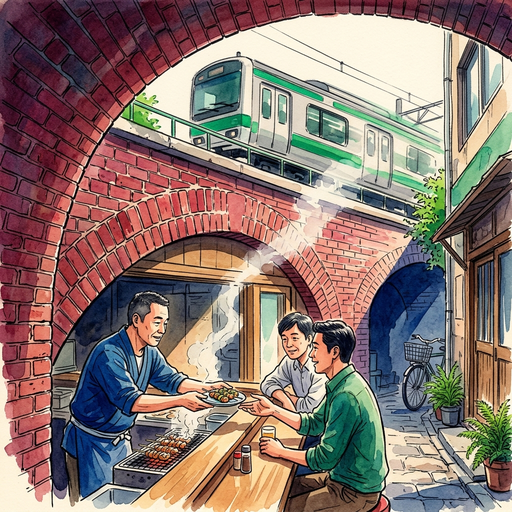
Walk these under-track lanes, and you feel the deep, rhythmic rumble of commuter trains vibrating through the brick vaults overhead while charcoal grills sizzle and conversations overlap beneath them. It is Tokyo's living history in miniature: cutting-edge infrastructure and traditional street food, stacked one above the other in warm harmony.
Understanding this balance of geography, history, and transport brings you to the most practical framework for planning your journey: how to choose your daily adventures without wearing yourself out.
Because Tokyo is so vast, and its neighborhoods so rich in character, the single most effective rule of thumb is to organize your days by river side versus plateau side, rather than jumping erratically from one famous landmark to another across the city.
Dedicate a day to the river side, the low-lying eastern and northeastern districts like Asakusa, Ueno, Yanaka, and Kiyosumi-Shirakawa, and you immerse yourself in the world of Edo craftsmanship, Buddhist heritage, traditional markets, and quiet canal strolls. The terrain is flat, the walking is generally gentle, and the cultural narrative ties back to commoner life, temple devotion, and waterborne commerce.
Allocate a day to the plateau side, the elevated western hubs like Shinjuku, Harajuku, and Shibuya, and you step into the energetic world of modern fashion, contemporary architecture, urban parks, and station-centered vertical life. Here the landscape rolls across bluffs and valleys, the pace quickens, and the story focuses on Japan's dynamic reinventions across the twentieth and twenty-first centuries.
Between these two worlds sits the grand central hinge of Tokyo Station, the Imperial Palace, and Ginza, which bridges feudal authority with modern institutional polish. Group your days along these geographic lines, and you can avoid spending too much of your travel time sitting on cross-town trains. More importantly, your mind can settle into a coherent, deeply satisfying narrative that connects every street you explore.
The same logic applies when choosing your home base in the capital. Tokyo has no single right neighborhood to stay in, but each district offers a different rhythm and practical advantage.
If your travel style leans toward classic comfort, regional connections, and quiet evenings, base yourself near Tokyo Station, Marunouchi, or Ginza. You sit near the national rail network, making day trips on the Shinkansen bullet train convenient. You have direct walking access to the grounds of the Imperial Palace, and you can stroll to dining, department stores, and the historic market lanes of Tsukiji. The corporate avenues quiet down after dark, but the refined convenience is hard to beat.
If you are drawn to traditional street life, morning walks through leafy cultural parks, and easy access to national museums, Ueno is an outstanding choice. Ueno Station serves as a major hub for northern transit lines, placing you close to the Tokyo National Museum, the market stalls of Ameyoko, and the historic lanes of Yanaka. It provides a grounded, neighborhood feel with plenty of local dining, while keeping you connected to the Yamanote loop.
For travelers who thrive on high-energy urban buzz, evening dining, and easy trips to the west, Shinjuku is a powerhouse base. Staying here places you within reach of skyscraper viewpoints, late-night alleyways, and departure platforms for regional getaways toward Mount Fuji and the mountains of Hakone. Shinjuku Station demands a little patience to master. Identify your rail gate and direction before leaving the platform, and the station becomes an exhilarating launchpad for independent adventure.
If your heart is set on cutting-edge design, youth culture, street fashion, and contemporary nightlife, Shibuya and Harajuku offer an intoxicating base. Wake up in Shibuya, and the city's creative retail corridors, independent cafes, and music venues sit right outside your door, with the forest sanctuary of Meiji Jingu a walk away. It is lively, crowded, and endlessly stimulating.
Finally, for travelers seeking a slower, more residential rhythm, exploring outside the central loop can be immensely rewarding. Settle near the canals of Kiyosumi-Shirakawa, and you experience the artisan pulse of the eastern lowlands, where traditional gardens, workshops, and neighborhood espresso bars set the daily pace. Choose an indie corner like Shimokitazawa instead, and vintage vinyl shops, cozy bohemian cafes, and small community theaters wrap you in a warm neighborhood embrace. It feels worlds away from the corporate high-rises, yet it is only a short train ride from the center.
Now that you hold the railway compass and the historical map of Tokyo in your head, you can begin to explore the city through its streets, stones, and sacred grounds. Walking through Tokyo with this background in mind is like reading a chronicle with many layers. Glass towers and quiet timber eaves sit within footsteps of one another, and each quarter offers a different answer to how a great world capital lives, worships, works, and gathers.
A natural place to begin this journey is the forested sanctuary of Meiji Jingu, tucked against the western side of the loop. Step off the train at Harajuku Station and the change in atmosphere is almost instantaneous. To your east lie the bustling shopping streets of modern youth culture, while a turn to the west takes you toward the towering timber pillars of the shrine entrance. Crossing the wooden bridge over the railway tracks, you pass beneath an enormous wooden torii gate, the traditional gateway that marks the boundary between everyday life and sacred ground.
As your feet leave the paved station plaza and meet the wide gravel avenue, your pace naturally slows. The shrine's long approaches are covered with deep beds of river gravel, and the stones crunch rhythmically beneath your shoes, a sound that can help focus the mind and leave behind the restless momentum of the city. Towering Japanese cypresses, camphor trees, and soaring oaks filter the sunlight into a cool, emerald glow. Crows call back and forth high in the canopy, and the roar of central Tokyo fades into a deep woodland murmur.
This forest feels centuries old, yet it represents an extraordinary feat of twentieth-century ecological planning. When Emperor Meiji and Empress Shoken passed away in the early twentieth century, the nation chose this former imperial estate to honor their memory, and the shrine precinct was completed on November first, nineteen twenty. The surrounding landscape at the time was mostly bare fields and military parade grounds. Forestry experts and landscape architects designed a woodland intended to become self-sustaining over the course of a century.
Volunteers from across the country donated about one hundred thousand trees, representing many native species, and planted them according to a careful succession plan. Conifers gave shelter to broadleaf evergreens, which eventually grew to dominate the upper canopy and create a self-regenerating forest floor. That thoughtful design helped the woods survive when wartime firebombing destroyed the wooden shrine halls in nineteen forty-five. The planted forest survived the flames, and by nineteen fifty-eight the shrine buildings had been rebuilt in traditional, unadorned cypress.
Walking along the grand approach, you will pass two long walls of wooden barrels standing face to face. On one side rest decorative straw-wrapped barrels of sake, known as kazaridaru, donated by brewers from across Japan. Facing them stands a collection of oak wine casks shipped from the vineyards of Burgundy in France. Emperor Meiji was known for embracing Western knowledge, food, and culture while preserving core Japanese traditions. This quiet display captures that balance, honoring his spirit through the shared craft of two different worlds.
Before entering the central courtyard, pause at the water pavilion, or temizuya, for a brief ritual cleansing. Take the wooden ladle in your right hand and pour cool water over your left hand. Switch hands to rinse the right, then cup a little water in your palm to rinse your mouth before resting the ladle back in place. Passing through the inner gate brings you into a vast, sun-drenched courtyard surfaced in pale gravel, where sacred camphor trees stand bound with braided straw ropes.
The etiquette at a Shinto offering hall is simple. Toss a coin into the wooden slatted box, then bow twice toward the sanctuary. Clap your hands twice, a clear, crisp sound meant to alert the spirits of your presence. Offer a silent prayer, and finish with one more deep bow. There is no rigid doctrine to memorize; the gesture is one of gratitude and mindful presence. Meiji Jingu follows the changing hours of daylight, so check its current closing time before you go. An early morning visit lets you experience sunlight slanting through the quiet forest before the wider city awakens.
For the contrasting sacred tradition of the capital, ride east across the city to the low-lying river flats of Asakusa. Here stands Senso-ji, a temple that describes itself as Tokyo's oldest. While Meiji Jingu embodies Shinto simplicity, quiet forest paths, and natural unpainted wood, Senso-ji pulses with vermilion halls, billowing incense smoke, resonant bronze bells, and community devotion stretching back nearly fourteen centuries.
The temple traces its origin to a vivid legend from the year six hundred twenty-eight. Two local fishermen, the brothers Hinokuma Hamanari and Takenari, were casting their nets into the nearby Sumida River when they hauled up a small golden statue of Kannon, the Buddhist bodhisattva of infinite compassion. Recognizing its sacred nature, the village headman converted his own home into a temple so the community could venerate the image. In fifteen ninety, the year Tokugawa Ieyasu arrived to make Edo his base, he designated Senso-ji a temple for shogunate prayers, helping establish its importance in the eastern commoner city.
Your entrance to this sacred quarter begins at Kaminarimon, the monumental Thunder Gate. Suspended beneath its central beam hangs a massive red paper lantern painted with the characters for thunder and gate. Passing beneath this crimson beacon, you enter Nakamise-dori, a straight avenue lined with small shops that have served temple visitors for generations. The air here smells delicious: sweet ningyo-yaki cakes filled with smooth red bean paste baking in cast-iron molds, roasted rice crackers seasoned with savory soy sauce, and warm, sweet toasted sesame candies.
At the far end of the market street, a second grand gateway, the Hozomon, opens onto the wide stone precinct fronting the main hall. At its center stands the jokoro, a large bronze incense burner crowned with dragon motifs. Visitors gather around this great cauldron, waving sweet-scented gray smoke toward their faces, heads, and shoulders with open palms. In Japanese tradition, this purifying smoke is associated with blessings for physical health, mental clarity, and wisdom.
Climbing the wide stairs into the main hall, you enter a soaring sanctuary where gilded altars gleam behind protective wooden lattice, and rhythmic Buddhist chanting mingles with the chime of bronze singing bowls. Buddhist etiquette follows a quieter pattern than the Shinto sequence you practiced at Meiji Jingu. Drop your coin into the wooden grate, bow your head slightly, press your palms together in front of your chest in the gassho posture, offer your prayer, and bow once more. Save the clapping for Shinto shrines.
Visiting Senso-ji around twilight reveals another dimension entirely. As the daytime stalls slide their timber shutters closed, warm lantern light washes over the five-story pagoda and the vermilion eaves, leaving the quiet stone courtyards open for contemplative evening walking.
From the temple precincts of the eastern lowlands, return to the geographical center of the capital to explore the stone foundations of feudal power at the Imperial Palace East Gardens. Occupying the former inner compounds of Edo Castle, these expansive grounds cover roughly two hundred ten thousand square meters of historic terrain. They opened to the public in nineteen sixty-eight, transforming the once restricted seat of samurai government into a civic sanctuary.
Entering through the massive Otemon Gate, you cross deep water moats where willows trail their branches over still green water. The gate itself was engineered as a defensive trap called a masugata, or square box gate. An attacking force that broke through the outer wooden portal would find itself pinned in an enclosed stone courtyard. Archery slits and matchlock ports covered that courtyard from three sides, and the inner gatehouse still lay ahead of any attacker.
The stone walls surrounding the grounds are a masterclass in dry-stone masonry. Known as uchikomi-hagi, this technique fitted enormous blocks of volcanic stone together without mortar, relying on gravity, friction, and precise geometry to hold through the earthquakes of the Kanto Plain. Look closely along the lower wall courses and you can still spot circular, square, and diamond crests carved into the rock faces. They identify the feudal lords who quarried and transported each block as proof of loyalty to the shogun.
Climbing the gentle slope toward the upper plateau brings you to the broad, open lawns of the Honmaru, the former primary compound where the shogun once conducted affairs of state and lived with his inner court. Toward the northern edge of this expanse rises a rectangular stone platform. This is the tenshudai, the surviving stone foundation of the great five-story castle keep. When the keep burned in the catastrophic Great Fire of Meireki in sixteen fifty-seven, the shogunate weighed rebuilding it. In an era of lasting peace, an ornamental military tower seemed unnecessary, so officials rebuilt the stone base and left the wooden tower unbuilt. Walking to the top of this grassy platform gives you a view across the manicured lawns toward the gleaming corporate towers of the Marunouchi district.
Just below the plateau rests the Ninomaru Garden, a peaceful strolling landscape of iris ponds, stepping-stone bridges, and groves of trees representing prefectures across the country. The East Gardens regularly close on certain days, including Mondays and Fridays, though holiday exceptions and other closures can apply. Check the current visiting schedule before you go. A morning visit usually offers cooler walking and more flexibility if access to a section changes.
Heading north along the railway loop brings you to Ueno, Tokyo's premier cultural parkland. Ueno Park was established in the late nineteenth century on the hillside grounds of Kanei-ji, a vast temple complex that once protected Edo Castle from unlucky northeastern spiritual influences. Today the park serves as a cluster of national museums, concert halls, and lotus-filled ponds.
At the center of this cultural gathering stands the Tokyo National Museum. Founded in eighteen seventy-two, it is Japan's oldest museum, housing a collection of roughly one hundred twenty thousand cultural properties, including designated National Treasures. Trying to take in the entire campus in a single afternoon will quickly exhaust your senses. The most rewarding approach is to choose a clear thematic thread and focus on one or two main galleries.
Begin inside the Honkan, the Japanese Gallery, with its handsome tiled roof blending traditional temple aesthetics with Western Art Deco touches. Moving through these quiet, climate-controlled rooms provides a chronological journey through Japanese artistic expression. You can study ancient earthenware vessels with sculpted rims, delicate Heian-period Buddhist sculptures carved from fragrant cypress, and mirror-polished samurai swords displayed alongside intricately lacquered suits of armor. The gallery lighting is deliberately soft and indirect, designed to protect delicate natural pigments and textiles from fading. Many exhibits rotate for the same reason, so even returning visitors may discover fresh treasures on each visit.
If time allows, cross the plaza to the Gallery of Horyuji Treasures, an elegant glass-and-steel pavilion housing precious seventh- and eighth-century bronzes, gilded masks, and ceremonial banners preserved for centuries at the ancient temple of Horyuji in Nara. The main museum continues welcoming visitors throughout the year, though some gallery refurbishments and display rotations are scheduled from late twenty twenty-six into twenty twenty-seven. Confirm which rooms are open before you go.
When you step out of the quiet museum galleries and back into Ueno Park, the transition from contemplative antiquity to modern city life is striking. Descending the southern slopes of the hill brings you to Ameyoko, a bustling market street beneath the elevated railway tracks between Ueno and Okachimachi stations. Born as a black market in the lean years immediately following World War Two, Ameyoko still retains a lively street-market flavor. Fishmongers call out daily specials over beds of crushed ice, vendor stalls pile colorful dried fruit and spices high into open baskets, and independent denim shops sell rugged vintage clothing beneath the rhythmic rumble of overhead trains.
To connect this world of everyday commerce with the deeper social history of the capital, take a short journey across the Sumida River to the Ryogoku district. Here stands the Edo-Tokyo Museum, which reopened on March thirty-first, twenty twenty-six, following a comprehensive four-year renovation of its exhibition galleries and facilities.
The museum's great elevated structure resembles a traditional raised-floor storehouse, sheltering a sweeping journey through four hundred years of urban life. As you step onto the exhibition floor, you come face to face with a full-scale wooden reproduction of the northern half of Nihonbashi. This is the historic bridge that served as the starting point for five major highways radiating across feudal Japan, and walking across its polished cedar planks transports you into the bustling life of Edo.
Down on the floor below, the museum brings the Shitamachi and Yamanote divide into tangible, three-dimensional life. You can peer into cross-sections of commoner rowhouses, known as nagaya, where artisan families lived in compact rooms partitioned by sliding paper screens, sharing communal wells and kitchen hearths. Nearby stand intricate scale models populated by thousands of hand-carved figurines, showing the bustling fish markets of the river wharves, grand kabuki theaters with their revolving stages, and the lavish mansions of the feudal nobility. Moving further through the hall traces the city's modern rebirth, detailing the reconstruction following the nineteen twenty-three earthquake and the postwar industrial growth that created modern Tokyo. For visualizing how the streets you walk today took their shape, this museum has no equal in the city.
After absorbing this urban history, your appetite will naturally draw you toward Tokyo's culinary quarters, beginning with the waterside alleys of Tsukiji Outer Market. The wholesale fish auctions moved down the bay to modern facilities in Toyosu, but Tsukiji's historic outer market remains vibrant. For generations, this maze of tight, humid lanes served wholesale market workers. It continues to thrive as an open-air marketplace of fishmongers, specialty grocers, professional knife makers, and street-food stalls.
Navigating Tsukiji means keeping its working rhythm in mind. Early morning is generally the busiest time for professional buyers and commercial chefs. Check the current market guidance before you go, and plan to visit later if you want to browse as a visitor. Vendors may welcome curious eaters, though the market remains a place of work.
The sensory experience is unforgettable. Heavy steel blades clatter through gleaming fillets of bluefin tuna. Clouds of aromatic steam billow from giant pots of simmering dashi broth. And the sweet caramel aroma of tamagoyaki drifts from square copper pans, where vendors cook the layered rolled omelet with long wooden chopsticks.
A few simple rules help you remain welcome here. Narrow lanes must stay clear for delivery carts, motorized pallet trucks, and working merchants. When you buy a freshly shucked oyster, a skewer of seared wagyu beef, or a bowl of fresh seafood over rice, eat it in front of the vendor stall or carry it to a designated covered seating area nearby. Walking while eating through the working aisles is discouraged. Keep your hands off fresh seafood and seasonal produce unless the merchant invites you to touch them. Leave large rolling suitcases at your hotel or in station coin lockers, because they are difficult to maneuver through these compact corridors. Many market stalls close on Sundays, national holidays, or selected Wednesdays, so check before you visit.
When you crave a quieter, more intimate neighborhood atmosphere, head to Yanaka, just northwest of Ueno Park. Grouped with neighboring Nezu and Sendagi under the local name Yanesen, this quarter offers a glimpse into Tokyo’s prewar and mid-twentieth-century texture. Because Yanaka escaped much of the destruction caused by the nineteen twenty-three earthquake and wartime air raids, its winding lanes, low wooden eaves, and residential character survived largely intact.
A gentle circuit begins at Nippori Station on the Yamanote Line, then leads toward the peaceful pathways of Yanaka Cemetery. Broad gravel avenues shaded by cherry trees wind past weather-worn stone lanterns, moss-covered family graves, and quiet temple gates. Crows glide between the branches, and stray cats nap atop stone boundary walls. As you wander downhill toward Yanaka Ginza, the main shopping street, the scale drops to an inviting village level. Modest two-story timber homes line the alleys, their front entryways decorated with miniature container gardens of potted ferns, hydrangeas, and bonsai trees. Small neighborhood shops sell traditional handmade paper, woven bamboo kitchen utensils, seasonal bean sweets, and freshly brewed green tea.
Yanaka is a living residential neighborhood, not an open-air museum. The etiquette here is simple: keep your voice low along quiet residential lanes, avoid photographing through the windows of private homes, and show respect around temple gates and cemetery grounds. Walking these sloping alleyways reveals the enduring, neighborly warmth that has defined commoner Tokyo for generations.
To see how Tokyo balances intimate heritage with refined contemporary luxury, turn south toward the polished boulevards of Ginza. Ginza became a showcase of modern civilization in the late nineteenth century, rebuilt in handsome brick after a devastating fire. Today it features wide avenues, stone façades, and flagship boutiques housed in striking retail architecture.
Reading Ginza rewards you when you look beyond the street-level displays. Step inside its long-established department stores and you may find several floors devoted to crafts, including handmade washi paper, calligraphy brushes, and custom pens.
Descend into the basements of grand department stores such as Mitsukoshi or Matsuya, and you enter a different world: the celebrated food halls known as depachika. These vast underground spaces display seasonal fruit, delicate French-style pastries, beautifully arranged bento boxes, and traditional confectionery wrapped like precious jewelry.
As afternoon turns to evening, walk a few minutes west of Ginza’s polished avenues to the brick viaducts of Yurakucho. The shift is immediate. Beneath the elevated Yamanote and regional railway lines is a world known as gado-shita, meaning “under the girder.” Tucked into the arches beneath the rumbling trains, tiny eateries and standing bars form a dense network of dining spots. Red paper lanterns sway in the breeze, meat skewers sizzle over charcoal braziers, and conversation fills the air. Every few minutes, the clatter of a commuter train crossing the iron bridges rolls through it all. Yurakucho captures the pulse of Tokyo, where corporate refinement and back-alley dining share the same street.
If you have an extra afternoon to wander, crossing beyond the Yamanote loop rewards you with slower discoveries. East across the river lies Kiyosumi-Shirakawa. Historically an Edo-period district of timber yards and water canals, it has evolved into a hub where traditional landscape art meets contemporary creativity. Spend an hour strolling through Kiyosumi Teien, a classical Meiji-era pond garden threaded with massive stepping-stones gathered from around the country. Then wander the calm lowland canals to find former industrial warehouses converted into contemporary art galleries and artisanal coffee-roasting workshops.
To the southwest, easily reached by private train from Shibuya or Shinjuku, lies Shimokitazawa. The neighborhood developed its distinct character as the Odakyu railway tracks were moved underground, creating a pedestrian corridor about one point seven kilometers long. Today, Shimokitazawa’s lanes brim with independent vintage clothing boutiques, vinyl record shops, small theaters, and relaxed counter cafés. It offers an easygoing, youthful energy that feels different from the high-rise avenues of Shinjuku.
You can now see how Tokyo’s distinct neighborhoods, sacred precincts, and culinary quarters fit together into a rich, living mosaic. Pause in the deep forest hush of Meiji Jingu, drift through the colorful market street of Senso-ji, trace the great ramparts of Edo Castle, or savor skewers beneath the railway arches of Yurakucho. In each place, you meet the layered personality of a single city, one that honors its past while constantly shaping its future.
With these places etched into your memory, you are ready to master the everyday arts of Tokyo travel. That means moving easily through its rail network, ordering delicious meals with confidence, handling currency and payment, and speaking key phrases that open warm doors wherever you go.
With the geography of the capital in your mind and its historic precincts vivid in your imagination, you can turn to the daily rhythms that make traveling through Tokyo so rewarding. A few practical systems carry you across the metropolis, and they ask less of you than you might expect: a working sense of how the trains fit together, a curious appetite, and a light touch with the shared courtesy that keeps millions of people moving. Once you can navigate a railway station, order at a neighborhood counter, pay with confidence, and offer a few well-placed words of thanks, Tokyo opens itself to you.
Your primary tool for moving across the capital is a rechargeable contactless transit card. Across Japan, these are known as integrated circuit cards, or IC cards. The two varieties you will encounter most often in Tokyo are Suica and PASMO. Suica is issued by East Japan Railway, while PASMO is managed by private transit and subway operators. For you as a traveler, they are generally interchangeable. A Suica card works on PASMO turnstiles, and a PASMO card works on Japan Rail lines. You can also load a digital version of either card into the wallet of many modern smartphones, then top up your balance with a linked bank card and pass through the fare gates with a tap of your phone. If you prefer a physical card, tourist editions such as Welcome Suica may offer an alternative without a deposit. Check the current terms and validity before buying one.
The physical mechanics of the system are delightfully smooth. When you approach a ticket gate, look for a turnstile showing a green arrow. Rest your card or phone flat against the angled reader pad until you hear an electronic chime. The reader checks your balance, the gate flaps open, and a small screen shows your remaining funds as you walk through. Repeat the same motion when you exit at your destination. The system calculates your fare from the distance you traveled and deducts it automatically.
Understanding how the different transit networks interact will save you time and confusion. Tokyo’s subterranean railways are split between two major public operators: Tokyo Metro and Toei Subway. At major junctions, their tracks intersect with the surface lines of East Japan Railway and private regional carriers such as Keio or Odakyu. When you transfer between different railway companies, you may pass through an orange transfer gate rather than walking all the way up to street level. Touching your IC card to that reader closes your journey with the first operator and opens it with the second. The fare is calculated automatically, and a transfer discount may apply.
Mastering Tokyo’s colossal stations comes down to one useful rule: choose your exit before leaving the platform. In labyrinthine hubs like Shinjuku, Shibuya, or Tokyo Station, subterranean passages stretch in every direction and connect to many stairwells. Tap through the first fare gate you see, and you might emerge on the opposite side of a vast rail yard, facing a long walk around elevated viaducts to reach your destination. Instead, step off your train and pause on the platform to look for the overhead wayfinding signs. These boards list neighborhood landmarks, bus terminals, and major avenues served by each staircase. Follow the signs toward your named exit, such as the West Exit of Shinjuku or the Hachiko Exit of Shibuya. If your destination sits at a subway portal, note its alphanumeric code, such as exit A-one or B-three. Follow the signs underground, and you are more likely to surface where you want to be.
If you arrive in a neighborhood before your hotel check-in time, or want to explore hands-free before catching an evening train, consider the coin lockers inside many rail stations. Automated storage banks come in sizes ranging from small compartments designed for daypacks to tall lockers built for full-sized rolling suitcases. Modern lockers may feature multilingual touchscreens and accept payment directly from your transit card. If you pay with your card, the system registers its digital chip as your locker key. Return to the locker bank later, tap the same card against the terminal, and the door opens. If you pay with cash, the machine may print a receipt carrying a numeric code or barcode to use when retrieving your belongings. Keep that receipt somewhere safe.
Riding the trains introduces you to Tokyo’s shared social contract. Rail cars are often peaceful spaces where passengers read, listen to audio through headphones, or rest their eyes after a long workday. To travel comfortably alongside local commuters, switch your phone to silent mode, which railway announcements call manner mode, and avoid taking calls on board. Keep spoken conversations at a considerate volume, and take off bulky backpacks before boarding crowded cars. You can place them on the racks above the seats or hold them in front of your feet. On the platform, look for the painted lines showing where the train doors will align. Passengers queue behind these markings, stepping aside to let arriving passengers exit before boarding.
Escalator etiquette follows the same rhythm of unforced order. In Tokyo and the surrounding Kanto region, many commuters stand on the left, leaving the right side open for people passing. Travel west to the Kansai region around Osaka, and you may notice the pattern differs. In the capital, standing to the left is a familiar convention, though local practices can vary.
When you step off the train and onto the streets, Tokyo opens onto an exciting culinary landscape. Eating here spans every budget, from neighborhood noodle counters tucked under elevated tracks to high-end dining rooms perched above the city. Dining well in Tokyo starts with one insight: Japanese restaurants often specialize in a particular culinary craft rather than serving every dish under the sun. You visit a ramen shop for noodles, a yakitori specialist for charcoal-grilled skewers, a tempura bar for crisp fried delicacies, and a sushi counter for fresh fish. That focus lets even a small kitchen develop its flavor and technique.
For an iconic, comforting meal, seek out a neighborhood ramen shop. Many compact eateries use a ticket vending machine, known as a shokkenki, near the front entrance. To order, feed your paper currency or coins into the machine, or tap your transit card if it has an electronic reader. The buttons correspond to different noodle dishes, side plates, and extra toppings such as seasoned soft-boiled eggs, tender slices of braised pork belly, and roasted seaweed sheets. Some machines display color photographs or English labels beside the buttons. Make your selection, collect any change from the tray, and take the printed paper tickets that drop below.
Step inside, wait for the counter staff to point you toward an open stool, and lay your paper tickets on the raised counter. The cook behind the counter will take them and, in some specialized shops, may ask your preference on broth richness, garlic levels, or noodle firmness. While you wait, pour yourself a glass of cold water or roasted tea from the communal pitchers set along the counter.
When your steaming bowl arrives, the etiquette is wonderfully liberating: slurping your noodles is acceptable and often welcomed. Drawing air into your mouth alongside the hot broth cools the noodles as you eat, while aerating the soup to release its aromas. It can also serve as an informal signal to the chef that you are enjoying your meal. When you finish, place your empty bowl on the elevated shelf above the counter if one is provided. Use the small cloth to wipe down your spot, and offer a quiet word of thanks as you head for the door.
If you crave fresh seafood with speed and informality, look for a standing sushi bar, known locally as tachigui sushi. Born in the nineteenth century as roadside food stalls for busy Edo workers, standing counters retain a brisk, energetic charm. You stand shoulder to shoulder with office workers and neighborhood regulars along a wooden bar. Behind it, an itamae, or sushi chef, shapes each piece of nigiri to order with quick, rhythmic hand movements. The chef moistens their fingertips in a bowl of vinegared water, pinches a small mound of seasoned rice, touches it with a speck of fresh wasabi, and tops it with a slice of tuna, sea bream, or sweet scallop.
At a standing counter, you can order piece by piece directly from the chef, pointing to the handwritten menu or the refrigerated glass case holding the day’s catch. Lift each piece with your fingers or with chopsticks, whichever feels natural. If you dip your sushi into soy sauce, turn the piece slightly sideways so the fish, rather than the rice, touches the sauce. Soaking the seasoned rice can make the delicate mound crumble and mask the natural sweetness of the seafood. Between different types of fish, take a bite of the thinly sliced pickled ginger, called gari, resting on your counter tray to cleanse your palate.
As twilight settles over the capital, head toward the brick railway viaducts of Yurakucho or Shimbashi to experience the after-work culture of yakitori. Tucked beneath the tracks, in spaces known as gado-shita, literally “under the girder,” cozy open-air stalls grill skewered chicken over glowing bins of charcoal. The air carries the aroma of toasted sesame, charred chicken, and sweet soy glaze, while commuter trains rumble overhead.
Yakitori menus break the chicken down into a variety of cuts and textures. You can order tender breast meat threaded with sweet scallions, known as negima; seasoned minced chicken meatballs called tsukune; or crisp grilled chicken skin known as kawa. When you place your order, the cook may ask whether you prefer your skewers seasoned with tare or shio. Tare is a rich, savory glaze made from simmered soy sauce, mirin, and sake, while shio is sea salt, which lets the smoky flavor of the charcoal-grilled chicken shine. Order a cold draft beer, known as nama biiru, and enjoy the lively banter that drifts between the tables.
For a different culinary adventure, venture beneath the city’s grand department stores into the food halls known as depachika. The name blends depato, the Japanese shorthand for department store, with chika, the word for basement. These subterranean marketplaces occupy the lower levels of retail landmarks such as Isetan in Shinjuku, Mitsukoshi in Ginza, and Daimaru beside Tokyo Station.
Stepping into a depachika is a visual feast. Glass showcases display bento boxes filled with simmered seasonal vegetables, grilled salmon, and fluffy white rice. Nearby counters present crisp, golden cutlets of panko-breaded tonkatsu pork, skewers of grilled wagyu beef, and colorful rows of traditional wagashi sweets wrapped in handmade washi paper. You will also find artisanal French bakeries, gourmet cheese counters, and fruit boutiques where muskmelons rest in presentation boxes. A depachika is an ideal place to assemble an upscale picnic for a park or to pick up a beautifully packaged dinner to savor in your hotel room after a long day of sightseeing.
At the other end of the dining spectrum sits a beloved institution of modern Japan: the convenience store, affectionately known as the konbini. Major chains like Seven-Eleven, Lawson, and FamilyMart stand on street corners across the city. Many stay open around the clock, offering brightly lit shops stocked with fresh, convenient food.
The crown jewel of konbini cuisine is the onigiri, a handheld triangle of seasoned rice wrapped in crisp nori seaweed and stuffed with savory fillings such as flaked salted salmon, spicy cod roe, or tuna seasoned with Japanese mayonnaise. Packaging engineers designed these rice balls with a three-step plastic wrapping that keeps the dried seaweed separate from the moist rice until you open it. Look for the small numbers printed on the wrapper. Pull tab number one straight down the center to split the packaging, then gently pull corner number two and corner number three to slide away the plastic film. The crisp seaweed wraps snugly around the rice, giving you a crunch with every bite.
Other konbini staples include pillowy egg salad sandwiches made with soft, crustless milk bread, cold bottled green teas, and hot fried chicken resting in heated glass cases beside the register. If you buy a chilled bento box, noodle bowl, or gratin, the cashier may gesture toward the microwave behind the counter and ask, “Atatamemasu ka?” It means, “Would you like this heated up?” Answer with a nod and a polite hai, and they may warm your meal and provide chopsticks, a spoon, and a moist towelette.
When you want to settle in for an evening of shared plates and drinks, look for an izakaya. Often described as a Japanese pub or tavern, an izakaya is an informal gathering spot where people unwind over drinks accompanied by savory small dishes meant for sharing. You may spot one by the red paper lanterns outside its doorway or the woven cedar balls hung beside traditional timber sliding doors.
Upon entering, the staff may greet you with a chorus of irasshaimase, a warm welcome you will hear in shops across the country. Once you sit down, the server may hand you a rolled, warm towel called an oshibori to clean your hands, along with a small side dish. This starter, known as otoshi, functions as a cover charge, and it changes with what the kitchen is preparing, from seasoned seaweed salad to simmered seasonal vegetables. It is a traditional part of many izakaya experiences and signals that your table is ready.
Izakaya dining flows at an easy, relaxed pace. You typically begin by ordering your first round of drinks, often a draft beer, a crisp highball made with Japanese whisky and soda water, or a sour cocktail mixed with fresh citrus juice. Next, order a few dishes to start, sharing everything in the middle of the table from small individual plates called torizara. Edamame, seasonal sashimi, crispy Japanese fried chicken known as karaage, and delicate rolled omelets seasoned with dashi broth are dependable choices. When you want to summon your server for another round, look for a small wireless call button on the table. If there is no button, catch a passing server’s eye and say sumimasen, meaning “excuse me.” At the end of the evening, raise both index fingers in an X shape toward the staff, or ask for your bill. You can usually settle it at the front register on your way out.
Handling money and settling payments in Tokyo has become convenient, though keeping a balance between cash and electronic payment remains a useful strategy. Credit cards, transit cards, and smartphone payment apps are widely accepted in department stores, hotels, chain restaurants, and convenience stores. Yet some small family-run noodle bars, neighborhood produce stands, temple amulet booths, coin lockers, and izakaya may operate on a cash-only basis.
Carrying physical Japanese currency is simple. Banknotes circulate in denominations of one thousand, five thousand, and ten thousand yen, each featuring portraits of notable figures from Japanese history and culture. The coins come in six values: five hundred, one hundred, fifty, ten, five, and one yen. The five-hundred-yen coin is a substantial, gold-toned piece worth keeping handy for quick purchases. The one-hundred-yen and fifty-yen coins are silver-toned and useful for vending machines and station lockers. Notice that the fifty-yen coin has a circular hole through its center. The ten-yen piece is struck in warm bronze, while the lightweight one-yen coin is made of aluminum. The brass five-yen coin also features a central hole. In Japanese, the word for five yen, go-en, sounds identical to the word for a fateful connection or good fortune. This makes it a popular coin to offer at shrine boxes when asking for positive relationships.
When you need to withdraw cash from a foreign bank account, a convenience store is often a useful place to start. Automated teller machines operated by Seven Bank inside Seven-Eleven stores, along with machines inside FamilyMart and Lawson outlets, accept many international bank cards and credit networks. Menus may be available in English, and fees can depend on your own bank. The nationwide branches of Japan Post Bank, found inside neighborhood post offices, may also provide international cash machines. Their availability and hours vary.
Few aspects of dining and shopping in Japan come as more of a relief than the absence of tipping. Attentive service is often viewed as a matter of professional pride, rooted in the spirit of shokunin, or dedicated craftsmanship. Service charges may already be built into the bill, and leaving extra coins on a restaurant table or pressing a cash gratuity into a taxi driver’s hand can cause confusion. If you leave loose change on a counter, a server may assume you forgot it and try to return it. A warm smile and a sincere word of thanks are generally welcome.
If you enjoy shopping for ceramics, clothing, cosmetics, or electronics, be aware that tax-free purchase procedures for international visitors can change. Japan has historically exempted foreign travelers staying on short-term temporary visitor visas from consumption tax on qualifying retail goods. Under procedures updated in twenty twenty-six, travelers present an official passport bearing an entry stamp at the register, and stores record purchase data digitally with the national tax agency. Qualifying tax-free goods must be carried when departing through international airports, where digital verification may confirm that they are leaving the country unused. Keep your passport handy when shopping, preserve your digital receipts, and check current rules for packaged consumable items such as sweets or skincare products before opening them.
Connecting with local residents can begin with a handful of well-chosen words. Even a few useful phrases can enrich your interactions. People in Japan often appreciate a polite effort to speak their language, and offering a friendly greeting sets a tone of warmth and mutual respect.
The most essential phrase in your travel toolkit is arigatou gozaimasu, which means “thank you very much.” You can pronounce it phonetically as ah-ree-GAH-toh go-ZYE-mahs. Use it whenever someone hands you a ticket, serves a dish, clears a table, or helps you find your way on a station platform. A slight bow of the head as you say it adds an extra layer of politeness.
Your second indispensable word is sumimasen, pronounced soo-mee-mah-SEN. This versatile term acts as a linguistic Swiss Army knife. It means “excuse me” when you need to slide past someone on a crowded train, and “pardon me” if you accidentally bump someone’s shoulder on the sidewalk. It is also a common way to summon a server’s attention in a restaurant.
When you want to request something politely, pair the item with onegaishimasu, pronounced oh-neh-guy-shee-MAHS, which means “please.” Pointing to an enticing dish on a printed menu or a pastry in a bakery display case, you can simply say kore o kudasai, pronounced KOH-reh oh koo-dah-SYE, meaning “this one, please.” When you are ready to conclude your meal and ask for the check, catch your server’s eye and say o-kaikei o onegaishimasu, pronounced oh-KYE-kay oh oh-neh-guy-shee-MAHS, which means “the bill, please.”
After finishing a wonderful meal, offer the kitchen staff a compliment by saying gochisousama deshita, pronounced go-CHEE-soh-sah-mah desh-tah. This warm phrase means “thank you for the meal,” acknowledging the care and effort that went into preparing your food. Say it as you step away from a ramen counter or pay your bill at an izakaya register, and you may receive a smile from behind the counter.
For general navigation and basic questions, a few short expressions will serve you well. Hai, pronounced like the English word “hi,” means “yes,” while iie, pronounced EE-eh, means “no.” If you find yourself in a complex conversation and need to ask whether English is an option, say eigo ga hanasemasu ka, pronounced AY-goh gah hah-nah-seh-mahs kah, meaning “Can you speak English?” When searching for a specific landmark, bathroom, or station platform, state the place you are seeking, followed by doko desu ka, pronounced DOH-koh des kah, meaning “Where is it?”
Beyond spoken language, moving through Tokyo smoothly means respecting a few civic habits. One thing travelers may notice on the street is the scarcity of public trash cans. Following the nineteen ninety-five sarin gas attack on the Tokyo subway system, municipal authorities removed street waste bins as a security measure. Over the decades, carrying personal rubbish until you find an appropriate bin has become a familiar practice. Keep a small, lightweight plastic bag in your daypack for snack wrappers and fruit peels. Receptacles beside outdoor vending machines are generally intended for beverage cans and plastic drink bottles, so keep paper napkins and coffee cups out of their specialized openings.
Public street culture also values keeping paths clear and tidy. Walking while eating or drinking, a practice known as aruki-kui, is often discouraged because of the risk of spilling sauce or brushing food against other pedestrians on crowded sidewalks. When you buy an ice cream cone, a pastry, or a canned coffee from a street stall or vending machine, step to the side, finish your treat near the storefront, and dispose of the wrapper in an appropriate bin before resuming your walk.
Smoking on public streets and sidewalks is restricted in many parts of central Tokyo. Smokers may gather inside designated enclosures near major railway stations and department stores. Look for labeled smoking-zone signs if you need one, and avoid smoking while walking down the street.
Another custom you will encounter is removing your shoes before entering certain indoor spaces. You may be asked to take off your outdoor footwear when entering traditional Japanese inns, temple and shrine prayer halls, historic tea pavilions, and restaurants with low tables set on woven tatami mats. You may also encounter the practice in clothing boutique fitting rooms or specialized clinics.
The physical threshold where this transition occurs is called a genkan. You will recognize it by a change in floor materials: a lower stone, tile, or polished concrete entryway gives way to a raised wooden platform or tatami floor. Step out of your shoes on the lower ground, then step directly up onto the elevated wooden floor in your stocking feet. Turn your shoes around so their toes point toward the door, ready for your departure. Keep your stocking feet off the lower concrete ground, since tracking grit upstairs defeats the purpose of keeping interior spaces clean. Wearing neat socks and choosing shoes that slip on and off easily will make these transitions simpler throughout your journey.
Tokyo is exceptionally accessible, clean, and well maintained for travelers with a range of mobility needs. Sidewalks and station platforms across the metropolitan area often have yellow raised tiles known as tenji burokku, or tactile paving blocks. They are designed to guide visually impaired pedestrians along crosswalks and train boarding zones. Major train and subway stations feature elevator networks connecting platforms to street level. Because some subway lines run deep underground, finding the designated elevator path may require a walk along the concourse. If you are traveling with a wheelchair, stroller, or heavy mobility equipment, station attendants near the ticket gates can offer assistance. Staff may provide portable ramps to help you board and leave the train.
Tokyo is regarded as one of the safest major cities in the world, though ordinary precautions still matter. Street crime and theft are relatively uncommon, and it is not unusual to see young schoolchildren navigating the trains independently or solo travelers walking through residential lanes late at night. Keep your ordinary wits about you. If you misplace an item, whether a transit card, a camera lens cap, or an umbrella, head to the nearest koban, the neighborhood police box often found near major train terminals and commercial intersections. Found items are routinely handed in to local police, and your lost possession may be waiting there in an official lost-and-found register.
In the rare event that you require urgent assistance, Japan has emergency contact numbers. Dial one one zero to reach the police, or one one nine for fire and ambulance dispatch. Multilingual support may be available to assist foreign visitors in emergencies. Numbers and procedures can change, so confirm current guidance with official sources before you travel.
Planning your wardrobe and daily rhythm around the seasons will help you experience Tokyo at its best. The capital moves through four distinct seasons, each bringing its own atmosphere, colors, and culinary specialties.
Spring, extending from late March through May, is celebrated for the arrival of the cherry blossoms, or sakura. The pale pink blossoms often bloom in late March or early April, transforming parklands along the Sumida River, the Imperial Palace moats, and Ueno Park into festive gathering places. Days are pleasantly mild, though crisp morning and evening breezes make versatile layers, such as a lightweight jacket or cardigan, useful for all-day walking.
Summer arrives with a rainy season, usually followed by hot, humid weather through July and August. Temperatures can climb above thirty degrees Celsius, accompanied by high humidity and the resonant hum of cicadas in temple groves. Traveling in summer calls for lightweight, breathable fabrics, a wide-brimmed hat, sunglasses, and frequent pauses to enjoy iced matcha or cold barley tea from neighborhood vending machines. Summer also brings traditional festivals and fireworks displays over the Sumida River and Tokyo Bay.
Autumn, spanning late September through November, often offers comfortable weather. The intense heat subsides into clearer skies and mild sunshine. By November, the city’s foliage may transform into vivid autumnal hues: Japanese maples glow deep crimson inside traditional strolling gardens, while the ginkgo trees lining Meiji Jingu Gaien turn a brilliant gold. A medium jacket or light coat paired with comfortable walking shoes makes exploring the city’s sloping neighborhoods easier.
Winter settles over Tokyo from December through February, bringing crisp, dry days and sunny skies. Temperatures can drop near freezing at night, but daytime walking can be invigorating. The dry winter air may offer clear views of snow-capped Mount Fuji from high observation decks. A warm overcoat, a scarf, and gloves will help keep you comfortable. A steaming bowl of ramen or an evening in a bustling izakaya can feel especially rewarding after a chilly afternoon.
You now hold the tools you need to navigate Tokyo with ease, poise, and genuine delight. You can read the city’s layered geography, move through its train stations, savor its cuisine, and connect warmly with the people who call this great capital home. Step out onto the platform, listen for the chime of the arriving train, and let Tokyo reveal its wonders to you, one unforgettable street at a time.
Sources
Go Tokyo, Tokyo’s official tourism website: Its neighborhood overviews and cultural guidance inform the guide’s orientation, district descriptions, and advice on respectful travel. These pages help connect major sights with the surrounding streets and communities.
East Japan Railway Company, Tokyo Metro, and Toei transportation information: Their passenger guidance supports the explanations of railway connections, transfers, Suica and Pasmo fare cards, and station navigation.
Tokyo Metropolitan Government: Tokyo City Profile and Government, the fiscal year two thousand twenty-five edition, and public urban-planning records provide background on earthquake reconstruction, postwar development, and the growth of station-centered districts.
Tokyo Metropolitan Library and Japan’s Ministry of the Environment: Their public historical resources support the account of Edo Castle, Tokugawa rule, and the surviving castle landscape. Official East Gardens visitor information supplies the practical context for visiting the former castle grounds.
Meiji Jingu and Senso-ji: The shrine’s and temple’s own historical accounts inform the discussion of their origins, religious significance, and rebuilding. Meiji Jingu’s visitor information also supports the guidance on seasonal opening hours.
Tokyo National Museum: Institutional histories, collection descriptions, and visitor information support the introduction to Japanese art and the suggested approach to exploring its galleries. They also inform the reminders that displays rotate and access can change.
Edo-Tokyo Museum: Its permanent-exhibition information and exhibition material for two thousand twenty-six contribute context on Edo’s urban life and Tokyo’s transformation. These sources connect the historical overview with the neighborhoods explored in the guide.
Tsukiji Outer Market’s official visitor guidance: Its market calendar and shopping advice inform the distinction between wholesale activity and public visits, along with guidance on timing, photography, eating, and keeping working aisles clear.
Sources listed are for reference only and were compiled through automated research. Inclusion does not imply endorsement by, affiliation with, or sponsorship from any source listed.