Classical Music by Ear: A Beginner’s Path Through Musical Elements and Historical Styles
Beginning with the startling chord in Haydn’s Surprise Symphony, this accessible journey shows how pulse, melody, harmony, texture, and instrumental color help listeners follow classical music without reading a score or mastering technical jargon. Across centuries, cultures, and forms—from medieval chant and Bach’s fugues to Takemitsu, Reich, and Caroline Shaw—it reveals how composers shape sound through contrast, transformation, and return. Its central invitation is simple: notice what is happening, what changes, and what sounds familiar, and even complex music becomes a journey anyone can navigate.
By MyAudioBooks.ai ·
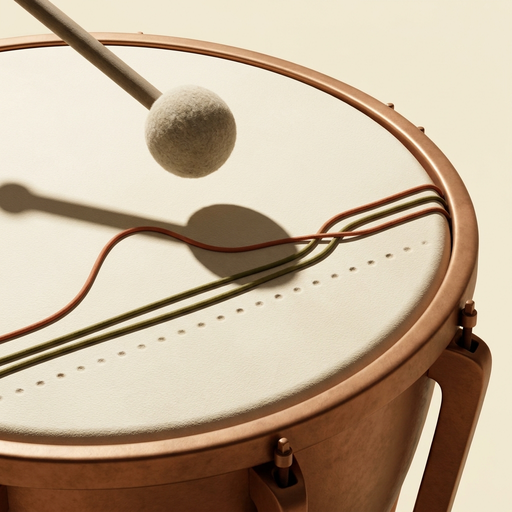
In the slow second movement of Joseph Haydn’s Symphony Number Ninety-Four in G major, the music opens in an atmosphere of utter discretion. A small group of string instruments tiptoes through a simple, nursery-rhyme-like tune. The melody steps along softly, pauses, and then repeats its opening phrase even more quietly, whispering at the threshold of silence. Just as the ear settles into that gentle, predictable lilt, the full orchestra erupts with a sudden, crashing chord, punctuated by the sharp crack of a kettledrum. There is no preparatory swelling of volume, no harmonic warning, and no change in speed. The music simply leaps from near silence to full force in a single beat, before resuming its quiet stroll as if nothing untoward had occurred.
That sudden outburst, which earned the symphony its familiar nickname, the Surprise, reveals how musical understanding actually begins. Long before a listener learns the formal architecture of an eighteenth-century theme and variations, the ear grasps the joke: a quiet pattern sets an expectation, and a sudden crash shatters it. The governing question of this inquiry is whether a listener can move from noticing such isolated moments to following a complete musical journey and describing that experience in ordinary language. Orientation comes from tracking what is happening now, what has changed, and what sounds familiar. That journey begins with four foundational landmarks explored in sequence: the underlying pulse beneath the musical surface, the expressive curve of melody, the supporting depth of harmony, and the shifting density of texture.
Consider first the bedrock of all musical motion: the relationship among pulse, rhythm, and tempo. A pulse is the steady, recurring beat that underpins a passage of music, much like a heartbeat or regular footsteps on pavement. Rhythm, by contrast, is the particular arrangement of short and long durations and accents that unfolds across that grid of time. Tempo is the speed of that underlying pulse, determining whether the musical heart beats slowly, at a moderate walk, or in an exhilarated rush.
In Haydn’s slow movement, the pulse moves at an unhurried walking pace. The violins articulate short, crisp notes above that beat, skipping and stepping in rhythmic patterns that vary from measure to measure. Even when the surface activity sparkles with brisk decorative figures, the pulse itself remains calm and steady. Faster notes simply subdivide the existing beat, just as speaking more rapidly within a single sentence leaves the passing seconds unchanged. Similarly, the explosive loudness of Haydn’s famous chord alters the dynamics, yet the underlying tempo continues without a stumble.
Testing this relationship during any piece with a steady drive requires only following the stride: count four beats silently until the tempo is established, and then release the count entirely. Letting the conscious count go allows the ear to float upward toward the melodies, accents, and contrasting instrumental colors riding on that current. Classical music occasionally suspends an obvious pulse altogether, drifting in a meditative haze or stretching phrases with expressive freedom. When a regular pulse is present, treating it as an automatic anchor frees the mind to explore everything built upon it.
Rising from that rhythmic foundation is melody, an identifiable succession of musical pitches organized into an expressive shape. A memorable melody possesses contour, rising toward peaks of intensity, dipping into valleys of repose, and pausing at resting places known as cadences. Cadences function much like commas and periods in spoken language, offering brief pauses or decisive endings that punctuate musical thoughts. In the Haydn movement, the opening melody is memorable because of its balanced symmetry. It ascends by small, tidy steps and skips, asking a musical question in its first four measures and answering it with a satisfying sense of arrival in the next four.
Melody rarely travels in complete isolation. Harmony encompasses the relationships among different pitches sounded together, as well as the progression of those chords across musical time. If melody is the horizontal line tracing a path through the air, harmony provides the vertical depth, the landscape through which that line travels. When Haydn repeats his opening theme, the melody remains instantly recognizable, yet the supporting chords can shift, casting the tune in a warmer light or introducing a brief shadow of suspense.
Listeners frequently describe harmony in terms of stability and tension. Consonant chords sound settled, complete, and at rest, while dissonant chords introduce friction, suspense, or an urge to resolve forward into stability. These sensations are dynamic, context-dependent impressions rather than rigid emotional formulas. A widespread assumption equates major harmonies simply with happiness and minor harmonies with sadness, yet musical practice operates with far greater nuance. Wolfgang Amadeus Mozart frequently employed major keys to convey profound melancholy or bittersweet nostalgia, as heard in the intimate dialogues of his chamber works, including the String Quartet in B-flat major, catalogued as Köchel four hundred fifty-eight. Conversely, Johannes Brahms could turn minor keys into fiery, exhilarating dances brimming with triumphant energy, a range of color vividly displayed in his Horn Trio in E-flat major, Opus forty. The emotional resonance of harmony emerges from how tensions build and release within a specific context, rather than from a preassigned emotional label.
The interplay of pulse, melody, and harmony produces musical texture, which describes the number and relationship of distinct layers heard at any given moment. Listening for texture helps you decide where to direct your focus: whether to follow a single melodic strand, track a clear leading voice supported by background accompaniment, or follow several independent voices weaving together simultaneously.
The simplest texture is monophony, where a single melodic line sounds without chordal accompaniment. In the twelfth-century sacred antiphon O vis aeternitatis by Hildegard of Bingen, the entire composition consists of one soaring, expressive line. Whether sung by a lone soloist or by an entire choir chanting in unison, the texture remains monophonic because every voice traces the same musical path. There are no competing chords and no secondary countermelodies; the expressive power rests entirely in the undulating shape of the chant as it arches toward the heights of the vocal range and settles back to earth.
A contrasting texture is homophony, where attention centers on one prominent melody supported by subordinate harmonic accompaniment. The quiet opening passage of Haydn’s Surprise Symphony exemplifies this design with great clarity. The first violins carry the singing tune, while the lower strings provide light, rhythmic chordal support beneath them. The accompanying parts support the primary voice, establishing the harmonic framework and reinforcing the pulse. This transparent division of labor became a hallmark of the Classical style, allowing listeners to follow thematic developments without distraction.
When multiple independent melodic lines sound simultaneously, the texture becomes polyphonic. In a polyphonic texture, no single voice maintains permanent dominance; instead, several melodies of equal importance converse, overlap, and respond to one another. A classic illustration is the Fugue in C minor from the first book of The Well-Tempered Clavier, catalogued as B W V eight hundred forty-seven, by Johann Sebastian Bach. A single keyboard performer introduces a distinct, energetic melodic theme in one voice. A few moments later, a second voice enters, playing that same subject at a different pitch level, while the first voice continues with independent supporting material. Soon, a third voice joins, weaving an intricate web of sound where every layer claims the ear’s attention.
A single musical line or voice is distinct from the physical performer producing it. A choir of fifty singers chanting in unison creates monophony, moving along a single musical line, while a single organist playing Bach can manipulate four or five independent lines simultaneously across two hands and two feet, creating rich polyphony from a single instrument.
These four elements—pulse, melody, harmony, and texture—provide the coordinates that transform an overwhelming wash of sound into an intelligible musical landscape. Tracking a single element, whether the stride of the pulse, the rise of a tune, or the shifting layers of voices, allows a listener to follow an extended piece in real time. Rather than demanding exhaustive technical analysis, musical understanding begins when the ear latches onto one clear relationship and notices how it evolves.
Appreciating Western classical music relies on sensory perception rather than specialized academic training. Composers across centuries wrote for living audiences gathered in theaters, churches, and concert halls, designing their music to register directly through tension, contrast, and momentum. A listener grasps harmonic tension without knowing the formal name of a chord, and registers the return of a melody without citing the year of its composition. Theoretical labels simply provide shorthand for events the ear perceives on its own.
Before going further, try to say in one sentence what the sudden loud chord in Haydn’s slow movement achieves for the listener without using technical terms.
The jolt works because the ear quickly absorbs the initial pattern of quiet restraint and expects it to continue undisturbed. When the sudden full orchestra shatters that calm, the surprise succeeds through pure contrast, proving that an uncoached ear is already measuring dynamics and anticipating musical time. Noticing that a sudden change occurred, and feeling its dramatic impact, constitutes a perceptive and complete act of listening.
When approaching any classical work, three direct questions help keep the ear oriented. First, what is happening now? Does the moment foreground a driving pulse, an expressive tune, an abrupt change in volume, or a distinctive instrumental color? Second, what has changed? Has the texture shifted from a single melodic line to a dense conversation among independent voices, or has the underlying harmony moved from stability into tension? Third, what sounds familiar? Has an opening melody, a rhythmic figure, or an earlier mood returned, even in a new instrumental setting?
Armed with those questions, a conversation about a performance can remain refreshingly modest and concrete. Rather than struggling to deliver an authoritative verdict on whether a composition was a profound stroke of genius, you might simply observe that the strings began so quietly that the sudden crash of the drum took you entirely by surprise, before the music slipped right back into its gentle stepping rhythm. That observation describes the physical reality of the music with far greater accuracy than an assortment of memorized prestige adjectives.
External resources can support this intuitive approach. In a live concert hall, program notes outline the historical context and point toward significant themes, while the physical layout of the orchestra offers visual clues: the concertmaster signals entrances, the conductor shapes dynamics and pacing, and the dialogue passes visibly among string, woodwind, brass, and percussion sections. In recorded environments, digital platforms such as Apple Music Classical offer curated listening pathways, including The Story of Classical, alongside synchronized guides that display movement outlines and structural annotations while the recording plays. These tools serve as helpful navigational maps, connecting what you hear to broader artistic currents. Yet the primary experience always resides in the direct encounter between the sound and your own attentive ears.
These foundational elements—pulse, melody, harmony, and texture—do not remain static across centuries. The history of Western classical music is the story of how composers recombined these tools into sharply contrasting sound worlds, moving from the floating, unaccompanied vocal lines of medieval worship to the dense polyphony of the Baroque, the crisp phrase architecture of the Classical era, the sprawling chromatic canvases of Romanticism, and the fragmented idioms of modern times. Recognizing these changing combinations invites a deeper question: how does the ear learn to identify a specific historical era simply by listening to how its basic musical elements are assembled?
The ear learns to identify a specific historical era by tracking how pulse, melody, harmony, and texture shift across time. Historical periods offer families of audible clues rather than sealed chronological boxes, guiding the ear across medieval and Renaissance vocal textures, Baroque and Classical contrasts, Romantic expansion, and the diverse paths of the twentieth and twenty-first centuries. When an older piece begins to play, the mind instinctively seeks a date, a named composer, or a textbook category. Composers, however, responded to available instruments, social institutions, performance spaces, and the expectations of their listeners instead of filling prearranged historical bins. Style emerges from how basic musical elements interact. By attending to the behavior of melodic lines, harmonic tension, rhythmic momentum, and instrumental color, a listener can deduce a work’s historical sound world while respecting the fluid boundaries between eras.
Before going further, try to say in one sentence how musical texture differs from the number of musicians on the stage.
Texture describes the relationship among musical layers, whereas the roster of performers simply tells us how many individuals are producing the sound. A choir of sixty singers intoning a single sacred chant in unison produces monophony, moving along one collective melodic line. Conversely, a chamber ensemble of only four string players can generate intricate polyphony, with each musician pursuing an independent path through the musical landscape. Grasping this distinction allows the ear to focus on how musical voices relate to one another, rather than being misled by the physical size of an ensemble.
That distinction becomes vivid in early notated music of the Western church. In the twelfth-century sacred antiphon O vis aeternitatis, composed by Hildegard of Bingen, a single unaccompanied melodic line carries the entire musical expression. Whether performed by a solitary singer or a group singing in octaves, the line moves alone, without chords or competing countermelodies. Hildegard builds this antiphon using modes, older pitch collections organized around a central resting tone rather than the major and minor scales established centuries later. In O vis aeternitatis, the melodic line rises through expansive, arching leaps, stretching individual syllables across long, undulating vocal curves before descending to its home pitch. The resting points at the ends of phrases feel complete, arriving at modal centers without the dominant-to-tonic cadences of later centuries.
The pacing of medieval chant follows the natural rhythm of speech and breath rather than marching over a rigid metric grid. Sacred monophony existed alongside secular song and early courtly dances, while composers of the Notre-Dame school in Paris layered vocal lines above sustained drone pitches, establishing polyphonic techniques well before the Renaissance took hold.
Moving into the late fifteenth century, vocal music transformed into an intricate web of balanced parts. In the four-voice motet Ave Maria virgo serena, composed by Josquin des Prez, independent vocal lines enter one after another in a technique known as imitation. The highest voice sings a clear melodic phrase; a few moments later, the second voice enters with the same phrase at a lower pitch, followed in turn by the third and fourth voices. Josquin crafts this fabric through counterpoint, the coordinated combination of distinct melodic lines designed to sound harmonious together while retaining their rhythmic and melodic independence.
Josquin varies this texture continuously. After weaving independent threads through imitative counterpoint, he brings all four voices together into unified, block-like chords, allowing the sacred text to ring out with striking clarity before setting the voices back into flowing dialogue. Instrumental dance ensembles and court consorts flourished during this same era, showing that Renaissance music extended across both vocal and instrumental spheres. The central audible signature of Renaissance sacred music remains its serene equilibrium: multiple vocal strands moving in graceful balance, with individual lines contributing to a harmonious collective whole.
Attending to the relationship among melodic lines provides a reliable foundation for hearing early music. An unaccompanied modal chant, a layered polyphonic motet, and a lively courtly consort each organize their voices according to distinct principles. Recognizing whether a work features a single floating melodic line, an imitative polyphonic web, or homophonic chords allows the ear to locate a sound world far more accurately than relying on vague impressions of antiquity.
At the opening of the seventeenth century, composers sought direct, theatrical ways to convey emotion, establishing the Baroque sound world. They foregrounded an expressive upper melody anchored by an active, driving bass foundation known as the basso continuo. Played by a low instrument such as a cello, bassoon, or viola da gamba alongside a chord-producing keyboard or lute, this continuous bass provided a harmonic engine that freed the melody to soar with unprecedented dramatic flexibility.
This vocal approach flourished in early opera and chamber music. In the prologue and dramatic scenes of Claudio Monteverdi’s L’Orfeo, first performed in sixteen oh seven, vocal soloists declaim text in an impassioned, speech-like manner above the chords of the continuo, shaping phrases with urgent theatrical realism. A half-century later, Barbara Strozzi published her chamber cantata Lagrime mie in sixteen fifty-nine. Strozzi weaves the solo voice through aching chromatic descents and sudden, unpredictable shifts in tempo, painting grief with volatile harmonic colors over an intimate continuo accompaniment. These works highlight the rhetorical heart of the Baroque, pairing vocal drama and emotional urgency with continuous instrumental support.
In instrumental music, the Baroque sound world is marked by rhythmic drive and patterned motion. In the concertos of Antonio Vivaldi and the instrumental suites and fugues of Johann Sebastian Bach, a steady, energetic pulse propels the music forward like a finely balanced clockwork mechanism. Contrast serves as a primary organizing principle: a small group of soloists or a single instrument regularly alternates with the full ensemble, creating dynamic shifts between intimacy and power.
By the middle of the eighteenth century, composers favored structural symmetry and melodic simplicity, inaugurating the Classical style. While the word classical broadly describes the wider concert tradition, Classical with a capital letter designates this distinct aesthetic of the late eighteenth and early nineteenth centuries. Composers moved away from dense contrapuntal layering, embracing the style galant, an approach defined by light elegance, singing melodies, and transparent homophonic textures.
In Wolfgang Amadeus Mozart’s String Quartet in B-flat major, catalogued as Köchel four hundred fifty-eight and nicknamed The Hunt, composed in seventeen eighty-four, this Classical clarity shines in every measure. The work opens with a buoyant, six-eight theme reminiscent of hunting horns, laid out in balanced, neatly articulated phrases. Classical themes often operate like spoken conversation, pairing an opening phrase that poses a question with a responsive closing phrase that provides an answer. The texture remains open and airy; the first violin frequently leads with a singing melody while the second violin, viola, and cello supply light, rhythmic accompaniment. Mozart periodically weaves rigorous counterpoint into his quartets, just as Baroque masters occasionally wrote simple melodies. Historical styles overlap and inform one another, yet the Classical focus on balanced phrases, transparent textures, and distinct contrasting themes offers an unmistakable audible footprint.
During the nineteenth century, Romantic composers took the formal symmetries of the Classical era and stretched them to accommodate personal, dramatic, and poetic expression. Where a Classical phrase tended to be four or eight measures long, a Romantic melody might unfurl in an extended, asymmetrical surge, heightening emotional tension through chromatic harmony, which incorporates pitches outside the prevailing scale. Chords that once functioned as brief moments of friction were now prolonged, delaying resolution and creating a sense of restless yearning. Pacing became flexible: performers made frequent use of rubato, subtly stretching or accelerating the tempo to enhance expressive nuance.
The Romantic era also expanded the sonic capabilities of instruments and ensembles. The modern piano gained a cast-iron frame and greater string tension, producing richer resonance and dynamic power, while the symphony orchestra grew in size, incorporating new brass, woodwind, and percussion colors. Chamber music achieved similar expressive breadth with modest forces. In Johannes Brahms’s Horn Trio in E-flat major, Opus forty, composed in eighteen sixty-five, the composer brings together the unusual combination of natural horn, violin, and piano. Brahms blends the warm, dark timbre of the horn with the lyricism of the violin over rich, churning piano sonorities, moving through sweeping melodies and shadows of melancholy.
In vocal music, Franz Schubert demonstrated how concentrated dramatic power could be achieved with just a single singer and a piano. In his setting of Erlkönig, catalogued as Deutsch three hundred twenty-eight and composed in eighteen fifteen, the piano’s unrelenting, galloping triplets establish an atmosphere of frantic terror, while the singer characterizes four distinct figures: the anxious narrator, the reassuring father, the frightened child, and the seductive phantom. The drama unfolds with breathless urgency, using chromatic tension and sudden key changes to mirror the narrative’s tragic ascent.
Later in the century, geographical currents expanded the symphonic repertoire. Antonín Dvořák composed his Symphony Number Nine in E minor, Opus ninety-five, in eighteen ninety-three, during his tenure as director of the National Conservatory of Music in New York. Subtitled From the New World, the work incorporates pentatonic melodies, syncopated rhythms, and modal turns inspired by his documented encounters with African American spirituals and Native American music. Attentive listening focuses on these documented musical cross-currents and the orchestral colors that bring them to life.
The modern era unfolded as a landscape of competing aesthetics, with composers pursuing radically different sonic paths. In Paris, Claude Debussy challenged nineteenth-century symphonic structures with his Prélude à l’après-midi d’un faune, completed in eighteen ninety-four. Debussy elevated instrumental color to a primary role. The piece opens with an unaccompanied flute solo that drifts languidly across a narrow chromatic range without a driving metric pulse. Chords float as sensory washes of sound, evoking atmosphere and light rather than marching toward standard cadential goals.
Other composers pursued rhythmic vitality and disruptive power. In nineteen thirteen, Igor Stravinsky transformed traditional expectations of meter with The Rite of Spring. Stravinsky employed folk motifs, jagged accents, and rapidly changing time signatures, turning rhythm into an overwhelming, percussive force. In Vienna, Arnold Schoenberg concluded that late Romantic chromaticism had reached a natural limit. In works like his Piano Suite, Opus twenty-five, composed in the early nineteen twenties, Schoenberg organized his music using a system of twelve interrelated pitches, systematically abandoning the traditional hierarchy of major and minor keys.
Alongside these European developments, twentieth-century concert music embraced diverse cultural roots and fresh conceptions of time. In the United States, William Grant Still integrated the blues scale, spiritual inflections, and jazz phrasing into classical structures, as heard in his acclaimed Afro-American Symphony of nineteen thirty. In Japan, Tōru Takemitsu bridged traditional Japanese aesthetic principles with Western orchestral writing, exploring acoustic space, natural silences, and the unique timbres of instruments like the biwa and shakuhachi alongside modern orchestral textures. Later in the century, minimalist composers such as Steve Reich reconsidered musical pacing entirely, constructing compositions from steady pulses and slowly shifting, interlocking melodic patterns that evolve gradually over time. In contemporary music, composers like Caroline Shaw expand the vocal palette, blending speech, sighs, whispered consonants, and pristine modal harmonies into vibrant soundscapes.
Behind this rich history lies an institutional reality that shaped which works were preserved, published, and performed. Cathedrals, noble courts, commercial publishing firms, municipal concert halls, and academic conservatories determined which composers received resources and public platforms. Systemic barriers routinely limited professional opportunities for women and racialized artists. Barbara Strozzi navigated the male-dominated literary academies of seventeenth-century Venice by publishing her vocal collections under her own name, while William Grant Still forged a path through the segregated institutions of mid-twentieth-century America. Recognizing these historical hurdles clarifies how musical traditions were curated without reducing any artist’s creative output to a demographic category. Moreover, European historical periods do not represent a universal calendar; musical cultures across the globe developed sophisticated traditions along independent timelines.
A historical period label serves as a provisional orientation rather than a rigid boundary or an artistic hierarchy. Identifying a work as Renaissance, Classical, or modern alerts the ear to a family of audible clues: how lines weave together, how harmonies create and release tension, and how instruments combine to shape sound. Because composers routinely revisited older techniques and anticipated future discoveries, these categories provide practical bearings across centuries of changing style.
These historical clues reveal the general character of a sound world, yet knowing whether a piece is Baroque or Classical leaves open the question of how an individual composition unfolds from measure to measure. To follow a work in motion, the ear must recognize the specific musical architectures—such as fugue, suite, sonata, concerto, and symphony—that composers use to introduce ideas, depart from them, and find the way home.
How does a listener follow a complete piece of music from its opening measure to its final cadence without losing the thread? Musical structure becomes audible when the ear tracks what is happening in the moment, what changes, and what sounds familiar as time unfolds. That journey moves through the woven lines of the fugue and the stylized rhythms of the dance suite, through the decorative transformations of variation sets and the recurring refrains of the rondo, and into the dramatic architecture of sonata form, which anchors the expansive landscapes of the concerto and the symphony. By following a few clear landmarks, a listener can distinguish specific organizing procedures from the larger multi-movement genres that contain them. These forms operate as flexible habits of craft rather than rigid molds, continually reshaped across generations to guide attention across minutes of sound.
Before going further, try to say in one sentence how counterpoint allows two or more distinct melodies to share the same musical space.
Counterpoint coordinates multiple independent melodic lines so that they sound harmonious together while preserving their rhythmic individuality. Because each voice maintains its own direction, an idea introduced by one part can leap into another register while the first line continues along its own path, establishing an ongoing conversation among equals.
That principle animates the fugue, a contrapuntal composition in which a single theme pervades the entire texture through imitative entries across multiple voices. Johann Sebastian Bach’s Prelude and Fugue in C minor, catalogued as B W V eight hundred forty-seven, from the first book of The Well-Tempered Clavier, compiled in seventeen twenty-two, illustrates how this conversation unfolds. The work opens with a prelude, an energetic, motoric piece that spins continuous running keyboard figurations over shifting chords, establishing the home key and preparing the ear. When the prelude concludes, the fugue begins, introducing its material through a succession of melodic entries.
Bach casts this fugue in three distinct voices. It begins with a single unaccompanied line introducing the subject, the primary theme that supplies the raw material for the entire piece. During these opening measures, the listener can notice two features: the subject’s rhythmic snap and its distinctive zigzagging contour. As soon as this opening statement finishes, a second voice enters in a higher register with the answer. The answer restates the subject in a different voice, transposed to a complementary pitch level, typically a fifth higher or a fourth lower. While the second voice presents this answer, the first voice continues with a countersubject, an accompanying melodic line designed to pair consistently with the subject. Moments later, the third voice enters in the lowest register, declaiming the subject once more while the upper two voices maintain their counterpoint above it.
Once all three voices have presented the subject, the exposition concludes. Bach then alternates between subject entries and episodes. An episode is a transitional passage developed from motives of the subject without stating the full theme, allowing the music to modulate through fresh keys and provide contrast before the subject returns in a new voice. Rather than following a rigid blueprint, a fugue operates as a dynamic contrapuntal process that composers adapt across a wide range of structures.
A listener can track a fugue by following three perceptual cues. First, isolate one recognizable feature of the opening subject, such as its initial rhythmic pulse or its melodic contour, while it sounds in the unaccompanied opening voice. Second, whenever that contour reappears in a higher or lower voice, follow that entering line to hear how it claims the foreground. Third, when full entries recede, track the momentum of smaller fragments and notice whether the texture is thinning into an episode or thickening toward a major arrival. The natural limit of this approach arises when composers overlap entrances in rapid succession, a technique known as stretto, or invert the subject’s melodic intervals. Following the broad ebb and flow of voices provides an immediate grasp of the piece’s momentum, even when individual contrapuntal threads cross and intertwine.
Where a fugue weaves a single subject through continuous polyphonic layers, the instrumental suite creates variety through a sequence of distinct, stylized dances anchored in a single shared key. Bach’s Cello Suite Number One in G major, catalogued as B W V one thousand seven and composed during the early eighteenth century, exemplifies this design. The suite opens with a flowing prelude that unfurls across the natural resonance of the solo cello, outlining the harmonic foundation in undulating arpeggios. What follows is a succession of courtly dances, designed for concert listening rather than social ballrooms.
The dance movements reveal their identities through physical pulse, tempo, and expressive weight. An allemande establishes a moderate, flowing four-beat measure, followed by a courante that picks up speed with quick, running figures. The sarabande provides the expressive core of the suite, moving with solemn dignity in triple meter and placing distinct metric emphasis on its second beat, allowing individual cello notes to resonate in the hall. After lighter optional dances, such as the paired minuets, the suite concludes with a gigue. The gigue bounds forward in a buoyant compound meter, its driving triplets bringing the work to an energetic close. By juxtaposing movements of contrasting speed, meter, and character within a shared tonal home, the Baroque suite constructs a complete, cyclical journey out of independent dance patterns.
Where the suite achieves variety by moving from one separate dance to another, theme and variations maintains a constant underlying framework while transforming its musical surface. Franz Joseph Haydn demonstrates this principle in the slow movement of his Symphony Number Ninety-Four in G major, composed in seventeen ninety-one. The movement opens with a balanced, folk-like melody presented with whisper-soft simplicity in the violins. The famous sudden, loud orchestral chord that punctuates the quiet phrase delivers an immediate, witty jolt, yet the architecture of the movement unfolds across the variations that follow.
Across successive variations, the outline and harmonic checkpoints of the opening melody remain recognizable while Haydn alters its surface details. In one variation, high violins weave delicate, sixteenth-note filigree above the tune; in another, the music shifts into the minor mode, driven by forceful orchestral unisons and stormy dynamic swells. Later variations add syncopated rhythms, lyrical countermelodies, and fanfares from trumpets and timpani. The listener recognizes the tune because its core phrase lengths, melodic peaks, and cadential destinations persist through changes of texture, harmony, and instrumental weight.
A related reliance on melodic memory governs the rondo, where an opening refrain alternates with contrasting episodes. Rather than altering a theme continuously in place, a rondo presents a memorable primary theme, departs into new musical territory, and repeatedly journeys back to the familiar tune. The finale of Ludwig van Beethoven’s Piano Sonata in C minor, Opus thirteen, known as the Pathétique and published in seventeen ninety-nine, demonstrates how this structure generates momentum. The movement opens with an agitated, driving refrain in the home key of C minor. After this theme establishes itself, Beethoven modulates into a lyrical, sunlit episode in the major mode, creating contrast in mood and key. Just as the listener settles into this secondary landscape, the music pivots, navigating back to the urgent C minor refrain. Successive departures explore further thematic ideas and contrapuntal textures, but each excursion ultimately yields to the pull of the opening theme. Composers frequently heighten interest across these returns by varying the accompaniment, shortening phrases, or redirecting the refrain toward an unexpected cadence.
Fugue, suite, variation, and rondo reveal four distinct strategies for organizing time. A fugue weaves a single subject through independent, simultaneous voices; a suite arrays contrasting dance characters in a balanced sequence; a variation set tests how much decoration a melodic skeleton can support; and a rondo alternates departures into fresh territory with the return of an established refrain. Each design teaches the ear to follow a musical journey by recognizing how familiar material is restated, transformed, or balanced against contrasting ideas.
To follow the larger dramatic architecture of the Classical era, the ear must register modulation, the process of changing from one key center to another. In tonal music, a key center serves as a harmonic home base, defined by a central resting pitch and the chords built around it. When a composer modulates, the music journeys away from this stable ground into a contrasting tonal region. Melodic ideas sound adventurous or suspended as harmonic friction builds, and when the harmony decisively navigates back to the original key, the ear perceives an unmistakable sense of arrival and resolution.
This harmonic journey serves as the structural engine of sonata form, the most influential organizing design of the Classical era. The term sonata designates a complete, multi-movement work for a solo instrument or small ensemble, whereas sonata form describes the internal architecture of a single movement, most often an opening movement. Rather than a static set of rules, sonata form unfolds as an audible drama of harmonic departure, confrontation, and reconciliation, articulated across three primary sections: the exposition, the development, and the recapitulation.
The opening movement of Beethoven’s Pathétique Sonata demonstrates this architecture with theatrical power. Beethoven precedes the sonata form with an expansive slow introduction marked grave. This opening music unfolds with solemn weight, punctuated by dotted rhythms, brooding silences, and stark dissonances that establish an atmosphere of tragic grandeur. While an introduction stands outside the main sonata form, Beethoven integrates its material into the wider drama, recalling fragments of this grave tempo immediately before the development and once more in the final measures. Tracking these returns allows the ear to distinguish the solemn introductory frame from the rapid, kinetic arguments of the sonata form proper.
The sonata form begins as the tempo quickens into a fiery allegro. The exposition establishes the dramatic conflict by introducing contrasting themes grounded in competing harmonic areas. Beethoven launches the first theme in the home key of C minor, propelled by urgent rising figures over pulsating tremolos in the left hand. Once this turbulent idea is stated, a transitional passage drives the music into a modulation, moving away from C minor toward a contrasting key area. Here, Beethoven introduces a lyrical second theme that crosses hands on the keyboard, singing with expressive grace. In Classical practice, performers typically repeat the entire exposition from the start of the allegro. This traditional repetition fixes the contrasting themes and their opposing tonal territories in the listener’s memory before the music breaks them apart.
The development dissolves that initial stability. Here, the composer fragments the themes introduced in the exposition, combining their rhythmic motives, shifting them between high and low registers, and driving the harmony through rapid modulations into distant, volatile keys. Beethoven intensifies this instability by interjecting tragic phrases from the slow introduction, heightening the sense of crisis. Because the music avoids settling on any stable tonal resting place, the development creates continuous forward momentum and dramatic suspense, building an urgent desire for harmonic resolution.
The recapitulation achieves structural closure through tonal resolution. While the opening theme returns in its original contour, the decisive transformation occurs in the secondary material. In the exposition, that second theme appeared in a competing key; in the recapitulation, the composer restates it in the home key of C minor. By gathering both themes under the single tonal umbrella of the home key, the recapitulation resolves the harmonic conflict that drove the entire movement. What gives sonata form its enduring vitality is this narrative of departure, exploration, and unified return.
Understanding sonata form clarifies the vital distinction between an internal movement form, a complete work, and an overarching genre. A movement is an individual piece with its own tempo and internal design, functioning as one chapter in an extended cycle. The complete work consists of those movements performed in sequence. Genre refers to the formal category and performing forces of the entire piece, such as a solo sonata, a string quartet, a concerto, or a symphony.
The concerto establishes an expressive dialogue between a solo instrument and a larger orchestral ensemble. Antonio Vivaldi’s Violin Concerto in E major, catalogued as R V two hundred sixty-nine and known as Spring from The Four Seasons, published in seventeen twenty-five, demonstrates how the Baroque concerto organizes this dialogue through ritornello procedure. The movement opens with the full orchestra presenting a cheerful, memorable theme called the ritornello, meaning a little return. Once this foundation is established, the solo violin steps forward into the spotlight, performing virtuosic, decorative figures that depict singing birds, murmuring streams, and sudden electrical storms. Rather than returning in its complete original form every time, the orchestral ritornello reappears in fragments and contrasting keys throughout the movement, acting as a sturdy structural anchor between the soloist’s exploratory flights. The concerto draws its energy from this dynamic interplay between individual virtuosity and collective orchestral power.
When a multi-movement orchestral work unfolds without a featured soloist, it enters the genre of the symphony. Haydn’s Symphony Number Ninety-Four in G major organizes its expressive journey across four distinct movements: a fast opening movement in sonata form, the celebrated slow movement built on theme and variations, a spirited minuet and trio dance movement, and a rapid, sparkling finale. Wolfgang Amadeus Mozart’s String Quartet in B-flat major, catalogued as Köchel four hundred fifty-eight and nicknamed The Hunt, applies this same four-movement plan to four solo string instruments: two violins, a viola, and a cello. Tracking these overarching genres alongside their internal procedures allows the ear to appreciate both the local event and the broader horizon, connecting an immediate dynamic surprise or a fleeting melodic imitation to the unfolding narrative of the complete work.
Yet musical structure does not exist as an abstract diagram in silence. When a familiar theme returns, its expressive power depends on the physical instruments that give it voice. A melody that sounds nimble and bright on a solo violin gains dark resonance when passed to a cello, or heroic grandeur when proclaimed by brass and timpani. Following how musical ideas travel through time leads directly to the question of who is producing the sound, and how the unique colors, mechanical possibilities, and conversational roles of different instruments bring that architecture to life.
How does a listener identify the forces producing the sound and understand what they are doing across an ensemble? Instruments become easier to follow when their physical sound and their immediate musical job are heard together. A listener navigates an ensemble by moving through four main landscapes: strings and keyboards, woodwinds and brass, percussion and ensemble scale, and human voices in song and theater. Tracking these forces reveals that players shift assignments constantly. An instrument may deliver the principal tune, drop down to anchor the harmonic bass, provide an underlying rhythmic pulse, echo a phrase from across the stage, or alter the collective weight of the room. How an instrument sounds depends on its register, the mechanical techniques chosen by the player, the acoustics of the performance hall, and the balance established in a recording.
Every instrument speaks with timbre, the characteristic quality or acoustic color of a sound apart from its pitch and loudness. Timbre is what enables the ear to distinguish a wooden flute from a steel-stringed violin even when both instruments play the same pitch at the same volume. When a composer repeats a familiar melodic contour using a new instrumental color, timbre provides the fresh contrast that recaptures attention and signals a change in musical direction.
Before going further, try to say in one sentence the difference between what an instrument is and the musical job it performs within a texture.
An instrument is the physical mechanism generating sound, while its musical job is its changing function within the texture. Texture itself describes how many musical lines sound at once, whether as an unaccompanied melody, a main tune supported by chords, or multiple independent threads weaving together. A cello, for instance, remains a bowed wooden string instrument, but across thirty seconds it might anchor the harmonic bass, rise into its upper register to sing an expressive countermelody, or pluck rhythmic chords beneath a clarinet. Recognizing an instrument begins with identifying what that player contributes to the larger musical architecture.
The orchestral string family consists of four core instruments: the violin, the viola, the cello, and the double bass. Built from resonant wood and strung with four strings, these instruments share overlapping pitch registers rather than strictly isolated territories. The violin occupies the highest register, agile and bright. The viola is slightly larger and tuned five notes lower, offering a warm, throaty middle range that blends easily with surrounding voices. The cello, held between the knees, possesses a deep, resonant low register while remaining capable of singing lyrical melodies that rival the violin in height. The double bass stands tallest, anchoring the bottom of the tonal spectrum with deep, vibrating fundamentals.
String players create sound primarily in two ways: drawing a horsehair bow across a string to sustain a continuous singing line, or plucking the string with a finger, a technique known as pizzicato, to produce a sharp, percussive attack that decays rapidly. Wolfgang Amadeus Mozart illustrates the dynamic interplay of string instruments in his String Quartet in B-flat major, catalogued as Köchel four hundred fifty-eight. Composed in seventeen eighty-four, the quartet carries the traditional nickname The Hunt because its opening subject gallops in compound meter, outlining fanfare-like intervals that recall eighteenth-century hunting horns. Without a single brass instrument on stage, Mozart assigns the four string players—two violins, a viola, and a cello—interlocking jobs that shift from phrase to phrase. The first violin states the opening call, the cello responds with a buoyant bass line, and the second violin and viola bridge the middle with harmonic chords. Within bars, these roles trade places, demonstrating how four instruments of similar acoustic design share and answer material through polyphonic conversation.
A solo instrument can establish its own texture without an accompanying ensemble. Johann Sebastian Bach demonstrates this in the opening movement of his Suite Number One in G major for solo cello, catalogued as B W V one thousand seven and composed around seventeen twenty. Armed with a single four-stringed instrument, Bach implies both melody and harmonic foundation through continuous arpeggiated figures. As the cellist sweeps across the four strings, the lowest note establishes a bass foundation, while the higher notes form an arching melodic contour above it. The listener perceives alternating harmonic roles within a single unbroken instrumental line.
In Antonio Vivaldi’s Violin Concerto in E major, catalogued as R V two hundred sixty-nine and known as Spring, the featured violin acts as a solo voice within a larger ensemble. The soloist steps forward into the spotlight to deliver agile, decorative birdsong figures and rapid scale runs. Meanwhile, a full complement of orchestral strings and a keyboard continuo remain on stage, alternating between quiet accompaniment, silent listening, and full orchestral statements. The drama of the concerto emerges from this contrast between personal virtuosity and collective power.
Keyboard instruments form an interface family, unified by a row of keys that trigger fundamentally different sound-producing mechanisms. The piano uses felt-covered hammers that strike internal metal strings. Pressing a key propels the hammer, and releasing the key drops a felt damper back onto the string to stop the vibration. This allows the player to vary dynamic loudness by altering the speed and force of the fingers. The harpsichord plucks its strings with small quills or synthetic plectra. Because the pluck happens with uniform mechanical force regardless of how hard the key is struck, the harpsichord maintains a bright, sparkling attack with immediate decay and uniform volume, relying on texture, rhythm, and ornamentation to create dynamic contrast. The pipe organ produces sound by directing pressurized air through hundreds or thousands of individual metal and wooden pipes, controlled by multiple keyboard manuals and a foot pedalboard. The organ can sustain pitches indefinitely at unwavering power for as long as air flows and the keys remain held down.
The opening movement of Ludwig van Beethoven’s Piano Sonata in C minor, Opus thirteen, the Pathétique, published in seventeen ninety-nine, demonstrates the acoustic versatility of the piano. In the slow introduction, Beethoven exploits the instrument’s percussive attack and wide dynamic range, sounding heavy, low-register chords that ring with brooding resonance, followed by delicate, sustained melodies in the upper treble. As the tempo accelerates into the main movement, the pianist’s left hand sustains rapid, pulsating octaves that generate harmonic momentum, while the right hand projects an agitated melody. Attack, decay, and register combine on a single keyboard to deliver the structural weight of an entire ensemble.
Woodwinds and brass introduce the physics of vibrating air columns. The orchestral woodwind core includes the flute, the oboe, the clarinet, and the bassoon. Each woodwind produces sound through distinct mechanics. The flute creates tone as the player blows air across an open embouchure hole, generating a breathy, silver timbre that sounds agile and clear across its high register. The oboe uses a tiny double reed made of two cane blades bound together, producing a focused, penetrating, slightly nasal tone that cuts through an orchestra and reliably provides the tuning pitch for the ensemble. The clarinet uses a single flat reed attached to a beak-shaped mouthpiece, capable of seamless dynamic swells from near-silence to full warmth across an unusually wide register. The bassoon employs a larger double reed attached to a curved metal tube called a bocal, providing deep, dry, reedy bass tones that can sound gravely serious or dryly comical.
The brass family gathers the horn, the trumpet, the trombone, and the tuba. Sound originates here when the player’s tensed lips vibrate into a cup-shaped or funnel-shaped metal mouthpiece, sending sound waves through coiled brass tubing. Brass instruments project immense acoustic volume, yet their expressive range extends far beyond force alone. The horn features a conical bore and a deep, funnel-shaped mouthpiece, producing a mellow, golden tone that blends smoothly with woodwinds and strings at low volumes, while delivering heroic resonance when played loudly. The trumpet, with its narrower, cylindrical tubing, projects a brilliant, piercing, focused sound that can ring out clearly over an entire ensemble or retreat into quiet, crisp articulation. The trombone uses an adjustable slide rather than finger valves to change tubing length, creating rich, direct harmonic lines and expressive glides. The tuba provides the massive, rounded foundation of the brass section, anchoring the deepest pitches with warm, room-filling resonance.
Claude Debussy highlights the expressive capacity of woodwind timbre in his Prélude à l’après-midi d’un faune, premiered in eighteen ninety-four. The piece opens with an exposed, unaccompanied solo for the flute. Descending chromatically and lingering on suspended pitches, the flute line establishes an ambiguous, dream-like atmosphere. When the rest of the orchestra enters with harp glissandos and muted horns, Debussy leaves the flute in the foreground. The melodic contour remains recognizable, but its color changes as the surrounding harmonic lighting shifts beneath it.
Brass instruments move beyond heroic fanfares to speak with intimate chamber subtlety. Johannes Brahms illustrates this in his Horn Trio in E-flat major, Opus forty, composed in eighteen sixty-five for natural horn, violin, and piano. By pairing the horn with two instruments common in domestic music-making, Brahms creates a thoughtful conversation among equals. The horn matches the violin in singing lyricism and balances the percussive clarity of the piano with sustained warmth. The recorded sound of this trio varies depending on whether the horn player chooses a modern valve horn or a valveless natural horn, as well as the acoustic balance established by the recording engineers. No single performance captures a definitive balance profile, reinforcing the reality that instrumental color remains fluid.
Percussion instruments divide into pitched and unpitched designs, providing rhythmic articulation, resonance, and color. Pitched percussion includes timpani—large copper kettle drums with pedal-tuned heads that reinforce harmonic bass lines—alongside mallet instruments like the xylophone, marimba, and vibraphone. Unpitched percussion encompasses instruments such as the bass drum, snare drum, cymbals, and triangle, which shape time, mark structural arrivals, and alter dynamic energy without reinforcing a specific musical key. Steve Reich’s Music for Eighteen Musicians, composed in the mid-nineteen seventies, fuses percussion, voices, winds, and strings in continuous polyphonic motion. Scored for four vocalists, three marimbas, two xylophones, two vibraphones, two clarinets and bass clarinets, four pianos, a violin, and a cello, the work dissolves the boundary between melodic soloists and background timekeepers. The marimbas and pianos establish pulsating rhythmic patterns; the vibraphone signals transitions from one harmonic cycle to the next; and the voices and woodwinds sustain long, breath-measured tones that melt into the mallet resonance.
Ensemble scale alters how instrumental colors interact. In chamber music, such as a string quartet or a horn trio, each part is played by a single musician without a conductor. Every player coordinates timing, balance, and tuning through eye contact, breath cues, and collective listening. In a full orchestra, multiple players double individual parts within sections, creating a blended, composite sound that requires the visual coordination of a conductor. Dense orchestration expands the canvas, allowing solo woodwinds, unified string sections, and brass choirs to alternate between intimate dialogue and collective power.
The dialogue between a solo voice and an orchestra takes an arresting turn in Tōru Takemitsu’s November Steps, composed in nineteen sixty-seven. Scored for two traditional Japanese instruments—the shakuhachi, an end-blown bamboo flute, and the biwa, a plucked, fretted lute—set against a Western symphony orchestra, the work invites the ear to track solo voices across contrasting acoustic worlds. The shakuhachi introduces a breath-infused tone that incorporates unpitched air, microtonal inflections, and sharp dynamic leaps, while the biwa delivers percussive plucked attacks that decay into resonant buzzes. The Western orchestra responds with fragile string clusters, sudden brass swells, and percussion accents. Rather than forcing these Japanese instruments into the conventions of a European concerto, Takemitsu sets them in dialogue with the Western ensemble. The shakuhachi and biwa bypass symmetrical ritornellos and functional cadences, generating dramatic tension through acoustic friction, silence, and timbral contrast.
Across strings, keyboards, winds, brass, and percussion, timbre springs directly from physical mechanics, while each instrument’s job changes as the texture breathes. Tracking an ensemble becomes straightforward once the ear listens for function: which instrument carries the primary line, which anchors the harmony, and which shapes the rhythmic pulse. With these instrumental families mapped, the same perceptual habits apply to the earliest and most versatile instrument of all: the human voice.
The human voice stands as the earliest musical instrument, uniquely capable of combining melody, harmony, pulse, and timbre with text and theatrical delivery. The voice functions across solo, choral, and operatic settings, deploying distinct registers and vocal techniques to project drama without the aid of an external wooden or metal mechanism. Franz Schubert reveals the dramatic flexibility of a single vocal line in his eighteen fifteen song Erlkönig, setting a poem by Johann Wolfgang von Goethe. Accompanied by relentless, driving octaves and galloping triplets in the piano, a single singer portrays four distinct roles: the objective narrator, the anxious father, the terrified child, and the seductive, ghostly Erlking. Schubert differentiates these roles through register and harmony, allowing one performer to inhabit distinct characters. The narrator sings in an even, neutral middle register; the father speaks in deep, reassuring low tones; the son cries out in high, climbing dissonances; and the Erlking whispers in sweet, soft major melodies. The vocal color morphs continuously while the piano maintains the structural momentum beneath.
In opera, the voice pairs with full orchestral staging and theatrical drama. Claudio Monteverdi’s L’Orfeo, premiered in Mantua in sixteen oh seven, marks the emergence of opera as a major art form. Monteverdi alternates spoken-style recitative, where a singer delivers narrative text over sparse instrumental chords, with expressive arias and choral dances supported by an orchestra of cornets, sackbuts, violins, and keyboards. The instrumental ensemble responds directly to the singer’s expressive shifts, underscoring dramatic joy or tragic grief. Vocal music also thrives in intimate, unstaged settings. Barbara Strozzi’s cantata Lagrime mie, published in Venice in sixteen fifty-nine, explores dramatic grief through a solo soprano voice supported only by continuo accompaniment. Strozzi shifts flexibly between free recitative and lyrical song, using chromatic vocal descents and expressive ornamentation to portray emotional turmoil. Her music demonstrates how chamber vocal works achieve theatrical immediacy through singing line and continuo alone.
Contemporary vocal writing continues to expand the expressive palette of the voice. Caroline Shaw’s Partita for Eight Voices, composed between two thousand nine and two thousand eleven for the vocal ensemble Roomful of Teeth, explores vocal timbre apart from traditional operatic vibrato. Scored for eight singers, the work incorporates speech, whispered syllables, sighing exhalations, speech-like drones, and throat-singing overtone techniques alongside pure choral harmony. The voice functions simultaneously as a melodic instrument, a percussive motor, and a textural wash of color, demonstrating that the biological instrument remains an open horizon for musical exploration.
Recognizing instrumental color and tracking vocal roles equips the ear to identify who is speaking, yet identifying players in isolation leaves a larger question unanswered. The challenge of active listening lies in sustaining that awareness across minutes of uninterrupted sound, following how timbre, harmony, and returning forms weave together into a continuous musical journey.
Sustaining that awareness across minutes of uninterrupted sound requires dependable landmarks and a clear strategy for recovering when attention drifts. Navigating music in real time, whether in a concert hall or through headphones, answers a fundamental challenge: how to follow an evolving musical line without score-reading skills or instant encyclopedic knowledge. The listener begins by anchoring attention on a first hearing, tests those instincts against structural returns in Beethoven, extends that focus across large-scale symphonic works and modern soundscapes, and finally translates auditory impressions into clear, grounded language.
A dependable first hearing rests on three simple questions: what is happening now, what has changed, and what sounds familiar? Rather than trying to register every simultaneous voice at once, the ear finds its initial foothold in the overall energy and the presence of a pulse. When the beat moves with brisk, regular steps, you can latch onto its momentum; when the tempo feels elastic or suspends metric drive entirely, you register that floating weightlessness as the foundation of the passage. From that general impression, choose a single feature to follow: an ascending melody in the high register, an insistent rhythmic figure in the lower strings, or a distinct instrumental timbre such as the bright, reedy bite of an oboe.
Follow that chosen feature as long as it remains in the foreground, noting whether the surrounding texture becomes thicker or thinner, louder or softer. The moment that voice recedes, transfer attention to whatever line steps into prominence rather than searching backward for what just vanished. A second hearing of the same work then offers the chance to investigate uncertain transitions: the exact measure where an energetic dance dissolved into a quiet solo, or where a smooth, singing texture turned suddenly fragmented. Understanding accumulates through targeted curiosity across successive listenings, allowing familiar passages to serve as secure points of departure.
As musical ideas travel across time, they rely on resting points to organize their thoughts. A cadence is a harmonic gesture that gives a musical phrase a degree of pause or closure, separating local breathing spaces from definitive conclusions. In traditional tonal writing, cadences establish varied degrees of finality. Some arrive firmly on the home pitch, producing a sense of complete arrival, while others pause on a temporary harmony, leaving the ear suspended in expectation of the phrase that must follow. While listeners frequently compare a cadence to punctuation in written language, musical closure operates across a flexible continuum of context and accumulated tension. A sudden drop in dynamic volume can sustain unresolved tension rather than release it, just as a sustained, quiet chord can prolong suspense. Tracking whether the music pauses momentarily, halts abruptly, or arrives at a settled foundation offers an immediate way to perceive form without calculating harmonic labels.
Before going further, try to say in one sentence how an exposition repeat differs from a recapitulation when familiar opening music returns.
An exposition repeat is an immediate, literal rerun of the opening section, designed to imprint the primary themes and tonal contrasts on the memory before developmental conflict begins. A recapitulation arrives much later, after the development section has fragmented and transformed those ideas, bringing them back into the home key to resolve the movement’s harmonic tension.
This architectural difference shapes the opening movement of Ludwig van Beethoven’s Piano Sonata Number Eight in C minor, Opus thirteen, published in seventeen ninety-nine and titled the Pathétique. The movement opens with a slow, solemn introduction marked Grave, filled with dark, low-register chords, sharp dynamic contrasts, and searching upward gestures. This brooding weight soon yields to the main body of the movement, an Allegro di molto e con brio propelled by rapid, pulsating bass octaves and an urgent, ascending melodic line. That fundamental contrast between the solemn, measured introduction and the driving speed of the main theme establishes the primary drama of the piece.
When the fast exposition concludes its initial presentation of contrasting themes, an exposition repeat sends the performance straight back to the start of that rapid pulse. Once that repeated section concludes, Beethoven reintroduces the heavy, slow material of the introduction, cutting across the fast tempo to launch the development. In this developmental section, the familiar motifs become fragmented, unstable, and harmonically restless. When the main theme re-emerges in the recapitulation, the sense of return is unmistakable, yet Beethoven holds back ultimate closure until the final measures, where the slow introductory phrase makes one last appearance before four decisive chords bring the movement to an end. Recognizing these structural landmarks provides a reliable internal map, allowing the ear to follow the narrative arc regardless of how an individual pianist shapes the tempo or emphasizes dynamic contrasts.
The same habit of tracking transformed ideas operates across the broader architecture of a multi-movement symphony. In the finale of Antonín Dvořák’s Symphony Number Nine in E minor, Opus ninety-five, composed in eighteen ninety-three and subtitled From the New World, musical memory reaches back across the entire work. After introducing a march-like primary theme in the brass, the finale weaves in prominent melodies from earlier movements. The listener hears the heroic horn call from the opening movement, the lyrical English horn melody from the slow movement, and the whirling dance figures from the scherzo, all resurfacing within the orchestral fabric.
Following these cross-references requires listening for melodic shape rather than literal repetition. Dvořák recasts the instrumental colors, shifts the themes into new registers, and embeds them within sweeping new accompaniments. This technique, known as cyclic form, unifies an extended four-movement work through shared thematic memory. Catching even one or two of these echoes reveals how the final movement gathers the cumulative expressive weight of everything that came before it, turning the separate movements into an integrated journey.
When listening moves outside Classical and Romantic conventions, the landmarks change, but the ability to maintain orientation remains effective. Igor Stravinsky’s ballet score The Rite of Spring, premiered in Paris in nineteen thirteen, departs from balanced phrase structures and singing melodies. In the famous depiction of the adolescent dance, Stravinsky unleashes a pounding chord in the strings, reinforced by eight horns. Instead of organizing the music into regular, predictable pulses, he places explosive accents on unexpected beats, deliberately disrupting conventional metric expectations. Listening to this dance means anchoring attention directly to the physical impact of those accents, the dry bite of the orchestral attack, and the sudden collisions of contrasting instrumental blocks.
Steve Reich’s Music for Eighteen Musicians, composed between nineteen seventy-four and nineteen seventy-six, requires an entirely different kind of sustained attention. Reich builds momentum through persistent, interlocking rhythmic pulses in pianos, marimbas, and xylophones, while clarinets and female voices sustain long, breath-measured tones above them. The music evolves through gradual process, shifting by subtle melodic permutations and single harmonic changes. Entering this sound world involves tuning the ear to the shimmering surface of the pulse, noticing when a vibraphone cue signals the arrival of a new harmonic cycle, and observing how density expands and contracts as instruments enter and fade.
Sustaining attention across any piece rests on a few shared habits: anchoring the ear to the pulse, marking the pauses and arrivals that shape phrases, and tracking how themes evolve through time. Whether in a classical sonata or a twentieth-century pulse piece, understanding develops by staying curious about what is happening in the immediate sound rather than calculating formal labels. That perceptual confidence directly carries over into how listeners discuss what they hear.
When discussing a performance, listeners often hesitate, fearing that their observations lack authority without specialized academic vocabulary. In practice, clear descriptions of audible evidence carry genuine substance. You might observe that an opening melody returned in a darker, heavier instrumental color, that the texture thinned out abruptly after a massive climax, or that the pulse became noticeably elusive in the middle of a movement. Such statements distinguish an audible claim about the music from a personal emotional reaction. Noting that the ensemble grew denser and louder as the brass entered describes the physical sound; stating that the passage felt foreboding or claustrophobic describes an authentic personal response.
Both kinds of observation enrich conversation, while remaining distinct from speculations about a composer’s private biography. A composer constructs an adagio of deep grief or an exuberant finale through formal design and harmonic craft, independent of daily personal circumstances. In the same way, asking a companion which instrument just played an exposed solo is an observant, productive step toward understanding, reflecting active curiosity rather than musical inadequacy.
Navigating concert programs and digital recordings becomes second nature once their organizing conventions are clear. Works are typically identified by composer, title, musical key, and a catalog or opus number. Opus numbers indicate the order in which a composer’s works were published, while specialized thematic catalogs organize specific composer outputs, such as the Köchel numbers that chronologically catalogue the works of Wolfgang Amadeus Mozart or the Bach-Werke-Verzeichnis numbers that classify Johann Sebastian Bach by genre. Program listings outline the movements of a multi-movement composition, providing tempo markings in Italian—such as allegro for fast, adagio for slow, or andante for a moderate walking pace—to indicate the character and tempo of each section.
Within concert halls, audiences generally hold applause until the final movement of an entire symphony or concerto concludes. This convention preserves the silent pause between movements, allowing the emotional momentum and harmonic continuity of the larger work to remain unbroken. Program notes, pre-concert lectures, and digital commentaries—such as those curated within streaming platforms like Apple Music Classical—provide structural context and historical guideposts. These written tools support the ear, offering orientation while leaving the direct experience of listening primary.
Equipped with habits for tracking pulse, texture, and returning form, the listener encounters an essential question: how do these perceptual skills hold up across the vast historical sweep of the repertoire itself? The path forward tests these listening strategies against actual music, moving chronologically through twenty works from medieval chant to twenty-first-century vocal polyphony. Each work presents a distinct acoustic world, inviting the ear to discover how tradition, invention, and musical memory have constantly reshaped what it means to listen.
Following a chronological path through twenty benchmark works turns isolated listening skills into a dependable way of understanding musical time. That path addresses the central question of this inquiry: whether a listener can follow an extended musical journey and describe that experience in ordinary language without score-reading skills or specialist credentials. The ear finds its orientation across five broad sound worlds: the emergence of vocal polyphony from sacred chant, the dramatic contrast and architectural counterpoint of the Baroque, the balanced conversations of the Classical era, the expanding colors and emotional scale of the nineteenth century, and the stylistic diversity of modern soundscapes. At every stage, three core questions guide the listener: what is happening now, what has changed, and what sounds familiar?
The journey begins in the twelfth century with Hildegard of Bingen and her antiphon, O vis aeternitatis. This sacred chant presents a single, unaccompanied melodic line known as monophony, moving without the support of chords or an instrumental bass. As you listen, follow the natural rise and fall of the vocal contour, noticing how certain syllables stretch across soaring arches of pitches before resting on a stable tone. Because there is no metric percussive beat, musical momentum comes entirely from the breath and the arch of the poetic phrase. Modern recordings often introduce atmospheric drones or bells, but the core compositional invention remains the unaccompanied line itself. The melody maintains an unmistakable sense of forward direction through its rising contours and modal inflections alone.
Moving into the late fifteenth century, Josquin des Prez expands this vocal landscape into four-part polyphony in his motet, Ave Maria virgo serena. Instead of a single melodic line, four distinct vocal ranges enter one after another in imitation, each presenting the same initial melodic curve at a different pitch level. These overlapping phrases create a web of independent motion, punctuated by moments where the voices suddenly abandon imitation to sing homophonically, aligning together in unified chords to emphasize a key thought. The musical architecture shifts continuously between independent linear motion and coordinated harmonic arrival. Listening to this texture invites the ear to move fluidly among the different vocal registers as they weave around one another, rather than locking onto a single dominant voice.
By the early seventeenth century, this balance between voices found a new theatrical medium in opera. Claudio Monteverdi’s L’Orfeo, first performed in Mantua in sixteen oh seven, shifts between grand instrumental ceremony and dramatically heightened solo singing. Three distinct moments reveal this dramatic range: the brilliant brass fanfare of the opening toccata, the dignified pastoral singing of the Prologue, and Orfeo’s devastating lament upon learning of the death of his bride, Euridice. Instrumental colors shift from bright brass and regal strings to the somber accompaniment of a lone organ or chitarrone during moments of private grief, while the vocal delivery moves from lyrical melody to flexible, speech-like declamation that bends to every emotional word. The physical weight of the ensemble transforms the moment the dramatic situation turns from celebration to tragedy.
In the middle of the seventeenth century, that same theatrical immediacy entered intimate chamber spaces. Barbara Strozzi’s solo cantata Lagrime mie, published in Venice in sixteen fifty-nine, explores dramatic sorrow through a single soprano voice supported only by basso continuo. The piece alternates between free, speech-like recitative and rhythmically measured arioso sections, using descending chromatic contours, exposed vocal cries, and sudden dynamic swells to convey emotional turmoil. The continuo accompaniment, typically realized on a lute, cello, or keyboard, shifts from sustaining long foundation chords to driving a steady rhythmic pulse beneath the voice. The singing line dictates the elastic passage of time entirely on its own, until the arrival of a regular accompaniment pulls the music back into steady, measured momentum.
Before turning from vocal expression to instrumental architecture, try to say in one sentence how a changing accompaniment alters the feeling of time in a vocal line.
A regular, repeating accompaniment establishes an objective metric pulse that carries the listener steadily forward through musical time. When the supporting instruments fall silent or hold motionless chords, that external pulse dissolves, allowing the singer’s expressive pacing and breath to dictate the passage of time.
That same control over implied rhythm and harmony governs solo instrumental writing. Johann Sebastian Bach’s Cello Suite Number One in G major, catalogued as B W V one thousand seven and composed in the early eighteenth century, demonstrates how a single four-stringed instrument can suggest an entire ensemble. In the opening Prelude, continuous flowing patterns of sixteenth notes trace sweeping arpeggios, with low bass notes acting as recurring anchors that redirect harmonic motion. In the contrasting dance movements that follow, the stately, triple-meter Sarabande places weight on its second beat, while the concluding Gigue bounds forward with rapid, skipping energy. Across each movement, the cellist leaps between low foundation notes and singing upper registers, creating the vivid impression of multiple musical layers without sustaining a dense chordal texture.
Bach applied that same structural ingenuity to keyboard instruments on an architectural scale. The Prelude and Fugue in C minor, B W V eight hundred forty-seven, comes from the first book of The Well-Tempered Clavier, compiled in seventeen twenty-two. The pairing illustrates two different procedures for organizing sound: the prelude maintains an urgent, motoric pattern of running sixteenth notes across ever-shifting harmonies, while the fugue introduces a tightly constructed contrapuntal argument. The fugue opens with an exposed subject played alone in the middle voice, followed by successive entries of that same theme in the upper and lower voices. Rather than trying to track every simultaneous note in three-part counterpoint, the ear anchors onto the recognizable rhythmic profile of that primary subject, pinpointing when it re-emerges after the surrounding texture has thickened with contrasting material.
While Bach refined keyboard polyphony in northern Germany, Antonio Vivaldi was perfecting instrumental contrast in Italy. His Violin Concerto in E major, known as Spring from The Four Seasons, was published in seventeen twenty-five. Scored for solo violin, string orchestra, and continuo, the opening movement is built on the ritornello principle, where a buoyant orchestral refrain alternates with virtuosic, exposed passages from the solo violin. Dynamic contrast animates the movement as robust full-ensemble statements yield to delicate, birdsong-like trills and rapid scale runs from the soloist. The orchestral refrain reappears between solo episodes, shortened, shifted to new keys, and recast in texture, serving as a structural anchor that unifies the movement while propelling harmonic exploration.
By the late eighteenth century, this conversational play among instruments defined the Classical string quartet. Wolfgang Amadeus Mozart’s String Quartet in B-flat major, Köchel four hundred fifty-eight, composed in seventeen eighty-four and nicknamed The Hunt, illustrates the refinement of chamber-music dialogue. The buoyant six-eight meter of the opening theme evokes a traditional hunting-horn call, but the work unfolds as an equal conversation among two violins, viola, and cello. Clearly balanced four-measure phrases are stated, answered, and passed across the quartet, with the cello moving from a supportive walking bass to melodic prominence. Attention naturally shifts across the ensemble whenever the first violin steps back from carrying the primary tune, revealing the egalitarian fabric of the conversation.
That balance of conversational clarity and structural expectation animates Joseph Haydn’s Symphony Number Ninety-Four in G major, composed in seventeen ninety-one and subtitled the Surprise. In the second movement, Haydn introduces an exceptionally plain, quiet melody played by the violins, only to punctuate its repetition with a sudden, full-orchestra crash. While that famous chord provides an immediate theatrical jolt, the deeper listening achievement lies in tracking what happens next, as Haydn subjects that simple melody to variations that alter its rhythm, dynamic balance, and instrumental colors. The core melodic curve remains instantly recognizable even as the surrounding orchestral accompaniment undergoes dramatic transformations across the broader four-movement symphonic journey.
Ludwig van Beethoven closed the eighteenth century by expanding the dramatic stakes of these Classical designs. His Piano Sonata in C minor, Opus thirteen, published in seventeen ninety-nine and titled the Pathétique, channels symphonic weight into a solo keyboard work. The first movement sets up a stark confrontation between a heavy, tragic slow introduction marked Grave and a ferocious, driving Allegro propelled by pulsating bass octaves. In the slow second movement, Beethoven introduces an intimate, singing vocal-style melody, while the finale unfolds as a buoyant rondo, where a restless main theme returns repeatedly between contrasting episodes. The shocking return of the slow introductory phrase cutting across the fast movement contrasts with the predictable reappearance of the rondo theme in the finale, showing how structural returns perform distinct dramatic tasks.
These first ten works trace how early vocal lines, Baroque counterpoint, and Classical formal designs construct an increasingly sophisticated language of musical expectations. Single monophonic chants expanded into four-voice Renaissance polyphony, seventeenth-century vocal drama gave birth to opera and cantata, and instrumental forms like the dance suite, fugue, concerto, string quartet, and symphony established balance through contrast and return. Understanding these works chronologically trains the ear to recognize relationships between voices, textures, and returning themes, replacing the need to memorize academic labels with direct perceptual confidence.
As the nineteenth century opened, Romantic composers expanded these Classical frameworks to express intimate literary drama. Franz Schubert’s song Erlkönig, catalogued as Deutsch three hundred twenty-eight and composed in eighteen fifteen, captures an intense narrative using only a solo singer and piano. The pianist maintains an exhausting, driving pattern of rapid triplets depicting a galloping horse through a stormy night, while the singer portrays four distinct characters through subtle shifts of vocal register and harmonic color: the neutral narrator, the frightened young son crying out in high, dissonant leaps, the reassuring father singing in a steady, low chest voice, and the seductive supernatural Erlking whispering in light, sweet major melodies. Subtle adjustments in vocal tone, range, and accompaniment make each character immediately identifiable, even though one singer performs every role.
Fifty years later, Johannes Brahms explored Romantic instrumental color through an unusual chamber combination. His Horn Trio in E-flat major, Opus forty, composed in eighteen sixty-five, brings together the natural horn, the violin, and the piano. The piece draws its expressive character from the contrasting acoustic signatures of these instruments: the sustained, mellow warmth of the horn, the singing, agile brilliance of the violin, and the percussive attack and decaying resonance of the piano. A lyrical theme stated by the violin takes on a darker, more solemn quality when passed to the horn, showing how a familiar melodic phrase feels fundamentally recast simply because another instrument has taken it up.
That same fascination with instrumental memory expanded into large-scale orchestral music. Antonín Dvořák’s Symphony Number Nine in E minor, Opus ninety-five, composed in eighteen ninety-three and subtitled From the New World, integrates American melodic idioms into a four-movement symphonic framework. The famous Largo movement introduces a haunting, singing melody played by an exposed English horn over muted orchestral strings, creating an atmosphere of vast, quiet space. In the explosive finale, Dvořák employs cyclic form, weaving prominent themes from earlier movements into the orchestral fabric alongside the new march-like primary theme. The return of the heroic brass motif from the opening movement and the lyrical English horn melody recast in the woodwinds function simultaneously as nostalgic echoes and forceful thematic transformations.
At the threshold of the twentieth century, Claude Debussy dismantled traditional harmonic progressions in favor of fluid orchestral color. His Prélude à l’après-midi d’un faune, premiered in eighteen ninety-four, opens with a languid, unharmonized solo flute playing a chromatic melody that drifts downward before winding back upward, suspended in metric ambiguity. Rather than building architectural tension through major-minor key arrivals, Debussy wraps this recurring flute idea in changing halos of orchestral timbre, pairing it with soft antique cymbals, cascading harp glissandos, and warm horn chords. Themes do not return as rigid architectural blocks; they dissolve and reform like light shifting across water, creating climaxes through sudden shifts in orchestral color and density rather than functional harmonic resolution.
If Debussy dissolved traditional harmonic form into fluid color, Igor Stravinsky shattered Classical metric balance through rhythmic violence. His ballet score The Rite of Spring, premiered in Paris in nineteen thirteen, depicts a pagan ritual of sacrifice, pushing orchestral instruments to their expressive extremes. The work begins with a solo bassoon strained in an uncomfortably high, piping register, evoking an ancient call. In the celebrated dance of the adolescents that follows, Stravinsky unleashes a massive, dissonant string chord reinforced by eight horns, repeating the same sonority while placing explosive accents on unpredictable, offbeat pulses. The music moves in abrupt, static blocks of sound, keeping its rhythmic identity unmistakable even as the metric accents are displaced across the measures.
In Vienna during the nineteen twenties, Arnold Schoenberg sought an alternative method for organizing musical space after abandoning traditional tonality. His Piano Suite, Opus twenty-five, composed between nineteen twenty-one and nineteen twenty-three, unites historical Baroque dance forms with twelve-tone pitch organization. The twelve-tone technique arranges all twelve notes of the chromatic scale into a specific, recurring order, ensuring that no single pitch functions as a conventional tonic or home key. Rather than trying to calculate note rows, the ear focuses on the suite’s sharp register leaps, rapid contrasts in touch, and crisp dance rhythms that recall historical gigues and minuets. These dance gestures and motivic contours supply continuity across each short movement, even while traditional major and minor keys are absent.
Across the Atlantic, William Grant Still demonstrated that orchestral form could embrace American vernacular idioms. His Symphony Number One, known as the Afro-American Symphony, was composed in nineteen thirty and premiered in nineteen thirty-one by the Rochester Philharmonic Orchestra, marking the first time a major American orchestra performed a symphony by an African American composer. Still structures the symphony around traditional four-movement architecture, infusing its themes with the lowered third and seventh scale degrees of the blues, swing-inflected syncopations, and the strumming of a tenor banjo in the lively third-movement scherzo. A primary blues melody returns across different movements, recast from an intimate solo woodwind voice into a triumphant brass declaration, building structural cohesion through the persistence of a blues contour within a changing orchestral palette.
In the late nineteen sixties, Japanese composer Tōru Takemitsu built a striking acoustic landscape by staging a direct encounter between Japanese and Western musical traditions. November Steps, commissioned in nineteen sixty-seven, places two traditional Japanese instruments—the shakuhachi, a notched bamboo flute, and the biwa, a fretted wooden lute—in dialogue with a Western symphony orchestra. Rather than blending these forces into a generic fusion, Takemitsu preserves the integrity of each sound world: the breathy, pitch-bending attacks of the shakuhachi and the sharp, percussive plucks and decaying resonances of the biwa stand in stark contrast to sustained, shimmering orchestral clusters. Framed by long, resonant silences, the traditional soloists and the Western orchestra alternate between answering one another and inhabiting independent acoustic realms.
During the nineteen seventies, American minimalism introduced an entirely different relationship with musical time. Steve Reich’s Music for Eighteen Musicians, composed between nineteen seventy-four and nineteen seventy-six, strips away conventional narrative climaxes in favor of an unbroken, interlocking pulse. Scored for female voices, clarinets, pianos, and percussion including marimbas and xylophones, the piece unfolds across a cycle of eleven harmonic sections. Short, repeating melodic figures interlock to produce shimmering patterns, while cues from the vibraphone signal subtle, communal shifts into new harmonic areas. Instead of waiting for contrasting themes, the ear locks onto the continuous motor of the mallet instruments, following how small changes in rhythm and vocal density accumulate over minutes to signal structural transitions without traditional thematic development.
The contemporary landscape continues to expand these possibilities while reaching back across historical traditions. Caroline Shaw’s Partita for Eight Voices, composed between two thousand nine and two thousand eleven for the vocal ensemble Roomful of Teeth, reinterprets Baroque dance suite titles—such as Allemande, Sarabande, Courante, and Passacaglia—through an extraordinary vocabulary of extended vocal techniques. Eight unaccompanied singers move effortlessly between spoken syllables, rhythmic throat-singing, murmuring sighs, and pure, non-vibrato choral harmonies. Textures pivot rapidly from solitary speech-like recitations to resonant, room-filling harmonic washes. The human voice functions as an entire orchestral ensemble, demonstrating that vocal polyphony remains a fertile ground for formal invention.
Tracing these final ten works demonstrates how composers over the past two centuries expanded musical scale, color, rhythm, and structural organization. From Schubert’s psychological song miniatures to Shaw’s radiant vocal polyphony, musical continuity moved far beyond the boundaries of traditional tonality. Instrumental color became an architectural force, rhythmic displacement redefined musical momentum, and diverse cultural traditions expanded the expressive range of the concert hall. These works confirm that musical form is a living, flexible strategy for giving shape to human experience.
Consider once more the quiet violin melody and sudden orchestral crash in the slow movement of Haydn’s Surprise Symphony, which opened this exploration. On a first hearing, that loud chord stands out simply as a momentary shock, an amusing acoustic surprise. With ears tuned across historical sound worlds, that event reveals its place in the musical architecture: it is an accented punctuation mark within a balanced Classical phrase, an engine launching a set of variations, a moment of wit within an orchestral tradition, and an invitation to track how sound transforms over time. Recognizing those surrounding layers deepens enjoyment by revealing the architectural craft that made the surprise possible, without diminishing the visceral thrill of the sudden boom. Having this broader orientation leaves personal emotional response entirely open, enriching the listening experience through direct perceptual clarity.
Continuing your listening journey requires no elaborate curriculum or specialist vocabulary. Choose one work from this chronological path that sparked genuine curiosity and listen to it from start to finish, following how its ideas emerge, change, and return. Next, seek out a different recording of that same piece, paying attention to how another conductor, pianist, or quartet interprets tempo, dynamic balance, and phrasing. Differences in execution often illuminate inner voices or subtle structural transitions that were missed on a first hearing, demonstrating that while an interpretation shapes the expressive character of a performance, the composer’s underlying architecture remains firm. From there, explore another composition by the same composer, discovering how their distinctive musical fingerprint adapts to a fresh ensemble or form.
The governing question that opened this exploration finds its answer in the sound itself. Listening with understanding emerges from active attention to sound, independent of score reading or technical jargon. By consistently anchoring attention on what is happening now, what has changed, and what sounds familiar, any curious listener possesses all the equipment needed to navigate complex musical journeys and describe them in clear, grounded language. The concert hall and the recording library remain open horizons, waiting for whichever unfamiliar sound next invites your curiosity.