Building the Panama Canal: Engineering Failure, Mosquito Control, and Imperial Power
Ferdinand de Lesseps tried to repeat his Suez Canal triumph in Panama, but jungle landslides, mosquito-borne disease, mounting costs, and mismanagement brought the French project to ruin. The United States completed the canal in 1914 by controlling mosquitoes and building locks instead of a sea-level passage—but its achievement rested on imperial power and the dangerous, unequal labor of thousands of Caribbean workers.
By MyAudioBooks.ai ·
Listen free: Building the Panama Canal: Engineering Failure, Mosquito Control, and Imperial Power
In eighteen sixty-nine, Ferdinand de Lesseps achieved worldwide fame when he opened the Suez Canal, joining the Mediterranean and Red seas across the Egyptian sands. Twenty years later, his French venture across the Isthmus of Panama collapsed into total insolvency, leaving hundreds of thousands of investors ruined and an estimated death toll exceeding twenty thousand workers. The transition from triumph in the desert to disaster in the jungle raises two enduring questions. Why did a proven blueprint fail so completely when transplanted to Central America, and how did the eventual completion of the canal depend on uncovering how a mosquito transmits disease?
At My Audio Books dot A I, you can create your own audiobooks from prompts, turn your documents into audio, all with one subscription, and store your items in your own personal library.
Ferdinand de Lesseps built his international reputation as a master promoter who could marshal global capital and modern machinery to bend geography to human will. The Suez Canal succeeded as a sea-level cut. It carved a continuous, open saltwater trench through approximately one hundred miles of largely flat, arid, and sparsely populated desert. The engineering challenges in Egypt centered on volume rather than elevation. Steam-powered dredges moved vast quantities of sand under an open sky where rainfall was negligible, mountain ranges were absent, and water-related tropical pathogens were virtually unknown.
When organized French construction began in Panama in eighteen eighty-one, de Lesseps insisted on replicating that exact Suez model. His plan called for a sea-level canal that would slice directly through the continental spine of the Americas without locks. A lock canal lifts vessels up across an elevated freshwater lake and lowers them down the opposite side, whereas a sea-level canal requires carving the entire transit corridor down to ocean depth. De Lesseps convinced European financiers and ordinary French citizens that sheer determination, private capital, and previous experience could conquer the narrow neck of land separating the Atlantic and Pacific oceans.
The Isthmus of Panama possessed environmental conditions radically opposed to the Egyptian desert. Panama presented steep volcanic mountain ranges, dense jungle canopies, unstable geological strata, and the violent Chagres River, which could rise dozens of feet within hours during torrential downpours. The region endured eight to nine months of tropical rain each year, averaging more than one hundred inches on the Pacific side and over one hundred forty inches on the Caribbean coast. European leadership viewed these differences as minor obstacles that excavation machinery would readily solve. That core assumption, that a technical strategy validated in an arid plain could cross the ocean unaltered, formed the original vulnerability of the entire French enterprise.
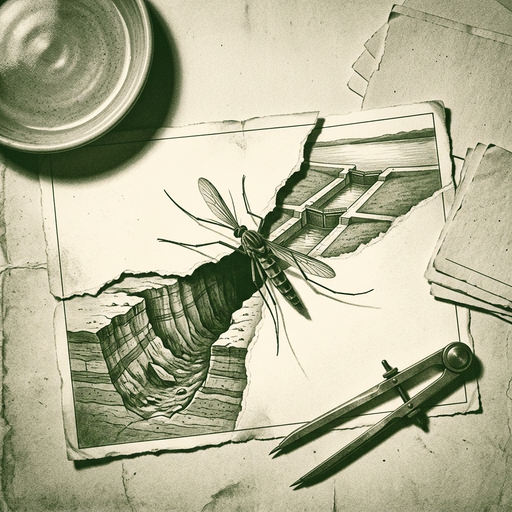
Work on the isthmus soon revealed the violent mechanics of tropical geology. The central point of crisis lay at the continental divide, an excavation known as the Culebra Cut. To cut a sea-level trench through this ridge, laborers had to dig several hundred feet down through complex layers of rock, soft shale, and saturated clay. As excavators dug deeper, they destabilized the slopes flanking the channel. Panama's intense rains saturated the newly exposed earth, turning solid embankments into moving sheets of mud.
Landslides repeatedly erased months of labor overnight. Saturated shale expanded, fractured, and buckled upward from the trench floor under the immense lateral pressure of the surrounding ridges. Steam shovels, rail spurs, and supply wagons were swallowed whole by shifting earth, requiring engineers to remove far more cubic volume than original estimates anticipated. Because a sea-level canal demands a significantly deeper cut through the ridge than a lock system, every additional foot dug down required expanding the width of the cut exponentially to prevent total slope failure.
These physical setbacks exacerbated structural problems within the French company. Administrative responsibility was fragmented among competing contractors who operated with minimal coordination. Executive directors arrived from Paris, fell ill, resigned, or died, leading to constant changes in leadership. Work schedules drifted years behind, and operational expenses soared far past the original subscriptions. Rather than acknowledging that the sea-level approach was unworkable, de Lesseps and his associates mounted aggressive public relations campaigns, issuing upbeat progress reports and paying off journalists to sustain capital flow.
By eighteen eighty-eight, the company faced catastrophic financial depletion. An eleventh-hour decision to adopt temporary locks came too late to stave off ruin. In February eighteen eighty-nine, the French courts placed the company into liquidation, wiping out the life savings of roughly eight hundred thousand middle-class French shareholders. The ensuing political fallout erupted into the Panama scandals of the early eighteen nineties, exposing systemic bribery among French legislators, cabinet ministers, and financial syndicates. While the political scandal and the excavation failures unfolded in different spheres, escalating costs in the jungle had driven the company into corrupt financial maneuvers to stay afloat.
While landslides broke the French machinery, disease dismantled its human foundation. Throughout the nineteenth century, Western medicine explained tropical fevers through miasma theory, attributing sickness to poisonous vapors rising from decaying vegetation, stagnant swamps, and disturbed soil. Sanitation efforts guided by miasma theory focused on scrubbing buildings, improving generic drainage, and avoiding damp night air. In the French hospitals at Ancon and Colon, staff placed open basins of water beneath bed legs to keep crawling insects off patients. Inadvertently, this created ideal indoor breeding grounds for the true vectors of infection.
Two distinct mosquito-borne illnesses devastated the canal workforce. Yellow fever is an acute viral infection spread primarily through the bites of female Aedes aegypti mosquitoes. In its severe form, yellow fever attacks the liver and kidneys, causing intense jaundice, black vomit from internal hemorrhaging, delirium, and high mortality. Local populations in endemic zones often carried childhood immunity, so yellow fever fell most heavily upon newly arrived European engineers, technicians, and administrators. The resulting panic drove experienced personnel to abandon their posts within weeks of landing.
Malaria presented an even larger, more persistent burden. Caused by Plasmodium parasites and transmitted by infected female Anopheles mosquitoes, malaria produced recurring bouts of debilitating chills, high fevers, chronic anemia, and spleen enlargement. Unlike yellow fever, an individual could suffer repeated malaria infections. Malaria had a lower immediate case fatality rate than yellow fever, but its relentless spread drained the physical capacity of the workforce. It left thousands of laborers too weak to wield shovels, drive locomotives, or maintain safety protocols.
Historical estimates for deaths associated with the French canal effort commonly exceed twenty thousand, with several authoritative accounts placing the total above twenty-two thousand or near twenty-five thousand. These figures reflect historical calculations rather than a comprehensive census. The French company kept detailed logs for European employees, but records for the tens of thousands of Black West Indian contract laborers from Jamaica, Barbados, and across the Caribbean were fragmented. Contractors frequently dismissed sick laborers to avoid hospitalization fees, leaving countless workers to die uncounted in informal camps along the rail line. The human cost included accidents, respiratory ailments, and dysentery alongside fevers. This relentless attrition crippled the project: illness stalled excavation, construction delays burned through cash reserves, and financial desperation left the enterprise unable to protect the lives it commanded.
The transition from fatalistic resignation to scientific intervention began not in Panama, but in Havana, Cuba. In eighteen eighty-one, Cuban physician and researcher Carlos Finlay presented a radical hypothesis to international medical assemblies: yellow fever was not transmitted by filth, bad air, or contaminated clothing, but required an intermediate biological vector. Finlay specifically identified the mosquito now classified as Aedes aegypti. For nearly two decades, mainstream institutional medicine dismissed his claims, remaining tied to miasma frameworks and bacterial contamination models.
Following the Spanish-American War, the United States Army Yellow Fever Commission arrived in Cuba in nineteen hundred to resolve the persistent health crises plaguing occupying troops. Commanded by Walter Reed, the commission worked as an integrated team comprising James Carroll, Aristides Agramonte, and Jesse Lazear, drawing directly upon Finlay’s earlier research, mosquito eggs, and clinical observations. To test whether the disease passed through airborne vapors, contaminated bedding, or insect bites, the commission conducted rigorous human experiments at Camp Lazear under strict isolation protocols.
Volunteers slept in unventilated cabins packed with the soiled garments and bedding of deceased yellow fever patients; none contracted the illness. Meanwhile, human subjects bitten by mosquitoes that had previously fed on yellow fever patients during their first days of illness developed clinical cases. The research carried terrible human stakes. Jesse Lazear permitted an infected mosquito to feed on his hand, contracted severe yellow fever, and died in September nineteen hundred at age thirty-four. Despite ongoing historical debate over whether Lazear’s exposure was deliberate or accidental, his death underscored the lethal risks inherent in proving the vector mechanism.
These Cuban findings proved that yellow fever was transmitted by mosquitoes, complementing parallel discoveries by British and Italian researchers that malaria was carried by mosquitoes of the genus Anopheles. Though each disease required distinct mosquito species and different pathogen biology, both pointed public health toward vector control. William Gorgas, who had served as chief sanitation officer in Havana, transformed his initial skepticism into practical action, applying these scientific insights to eradicate yellow fever from the Cuban capital.
When the United States assumed control of the canal project in nineteen oh four, Gorgas was appointed chief sanitation officer for the Canal Zone. He recognized that engineering could not advance without systematic environmental management. Gorgas organized specialized brigades that systematically screened living quarters, drained marshes, cut back underbrush within several hundred yards of human settlements, and covered outdoor cisterns. Workers poured oil onto standing water to suffocate mosquito larvae, sprayed chemical fumigants inside residences, and installed municipal water systems to eliminate domestic storage jars.
Gorgas’s methods achieved striking success. By late nineteen oh six, transmission of yellow fever was entirely eliminated within the Canal Zone and the neighboring terminal cities. Malaria proved far more elusive because Anopheles mosquitoes breed in rural swamps and travel greater distances, but systematic drainage and prophylactic quinine dramatically lowered its toll. Among canal employees, the malaria death rate dropped from eleven point six per one thousand in nineteen oh six to one point two per one thousand in nineteen oh nine. Science and public health had made continuous, large-scale industrial labor sustainable on the isthmus for the first time in history.
Sanitation alone did not build the canal; completing the waterway required abandoning the original French engineering design in favor of an elevated lock system. When American engineers took over the French assets in nineteen oh four, they inherited extensive topography surveys, functioning segments of the Panama Railroad, and tens of millions of cubic yards of prior excavation. Led by chief engineers John Stevens and later George Washington Goethals, the American team designed a system anchored by the construction of the Gatun Dam across the Chagres River.
The dam created Gatun Lake, a massive artificial reservoir resting eighty-five feet above sea level. Instead of carving an ocean-depth trench through the entire isthmus, engineers raised incoming ships through three flights of concrete locks. Ships traversed the elevated lake and the shortened Culebra Cut before being lowered back to ocean level on the opposite coast. Culebra remained dangerous, suffering massive landslides that forced excavators to remove tens of millions of unexpected cubic yards. Yet raising the canal bed eighty-five feet above sea level reduced the required excavation depth by hundreds of feet, making the cut achievable.
This technical shift was backed by resources no private corporation could command. The United States government financed the project directly from the federal treasury and deployed military discipline under the Army Corps of Engineers. Centralized logistical networks sustained equipment, food supplies, and medical care over a decade of continuous work.
Yet this triumph of engineering and public health was inseparable from imperial coercion. In nineteen oh three, after the Colombian Senate refused to ratify a canal treaty on terms set by Washington, the United States supported Panamanian separatists. American naval gunboats blocked Colombian troops from suppressing the uprising, securing Panama’s independence within days. Two weeks later, French engineer and investor Philippe Bunau-Varilla, acting as Panama’s minister plenipotentiary, signed the Hay-Bunau-Varilla Treaty. The treaty granted the United States sovereign authority over a ten-mile-wide Canal Zone in perpetuity, establishing a colonial enclave that partitioned the new republic.
Within that enclave, construction relied on a deeply stratified, racialized workforce. White American supervisors and skilled tradesmen were placed on the gold roll, receiving higher wages in gold currency along with furnished housing and advanced medical care. By contrast, the manual workforce consisted predominantly of Black West Indian laborers placed on the silver roll. These Caribbean workers, primarily from Barbados and Jamaica, received lower wages in depreciated silver currency and lived in crowded barracks or informal settlements. They were assigned to the most hazardous tasks: handling dynamite, laying track, and clearing earth directly beneath the sliding walls of the Culebra Cut.
Public health improvements reduced disease, but hazardous industrial labor still extracted a heavy price. Official records estimate that approximately five thousand six hundred workers died from accidents and disease during the American construction period between nineteen oh four and the canal's opening in August nineteen fourteen. The overwhelming majority of those casualties were Black West Indian laborers.
The Panama Canal stands as an enduring case study in how complex systems interact. De Lesseps failed because he assumed a technical solution could be divorced from its geography, climate, and biological environment. The canal was ultimately built only when medical research revealed the biological mechanisms of disease, and when engineers designed a lock system adapted to tropical rivers. Even then, success required an industrializing state that could mobilize federal financing and geopolitical power to enforce its will.
When we look back at celebrated megaprojects, we often attribute their success to isolated acts of individual genius. As you consider the history of the Panama Canal, look closely at the wider systems running beneath the surface. Which local environments were altered? Whose labor bore the physical cost? And what political power decided whose names were remembered, and whose were left out of the ledger?