Białowieża Forest Divided: Bison, Logging, and Border Walls in Europe’s Ancient Woodland
Białowieża Forest survived centuries of conquest, war, and logging, and its European bison returned from near extinction—but a steel wall now divides this ancient ecosystem along the Poland–Belarus border. Its story shows that saving a forest takes more than protecting trees: it means allowing natural decay, keeping wildlife connected, and confronting the human costs of decisions made at its borders.
By MyAudioBooks.ai ·
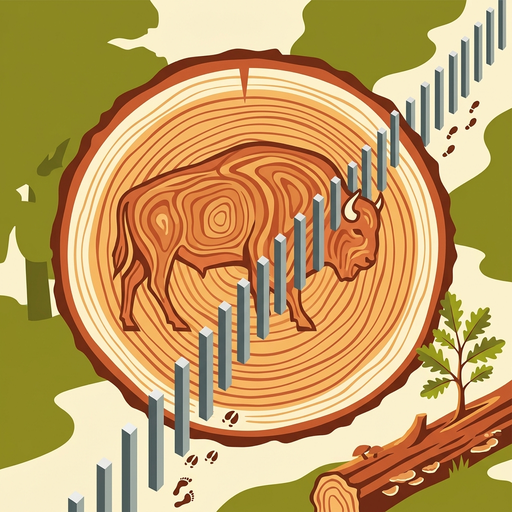
Along the frontier between Poland and Belarus, a vertical barrier of steel posts stands roughly five and a half meters high, cutting directly through one of the oldest lowland woodlands in Europe. Białowieża Forest endured centuries of royal hunting reserves, imperial partitions, and the devastation of two world wars. Its signature animal, the European bison, disappeared from the wild here around the end of the First World War, returning decades later through an intensive breeding effort based on a handful of captive survivors. The presence of this modern border wall raises an urgent question: what does it take to keep an ancient forest ancient, and who gets to decide its fate?
At My Audio Books dot A I, you can create your own audiobooks from prompts, turn your documents into audio, all with one subscription, and store your items in your own personal library.
Białowieża is a transboundary ecological landscape straddling eastern Poland and western Belarus. It represents the largest remaining fragment of the primeval lowland forest that once covered much of the European Plain. The entire woodland functions as an interconnected ecological system, yet it is divided by international borders, differing national management priorities, and an increasingly impermeable physical barrier.
To understand why this landscape commands international attention, certain ecological distinctions are essential. Foresters and biologists frequently speak of old-growth, primeval, and natural forests, but these terms describe distinct attributes. Old-growth describes a forest structure shaped over centuries, marked by towering ancient trees, a multi-layered canopy, varied tree ages, and an abundance of standing and fallen deadwood. A stand can qualify as old-growth even with a documented history of traditional human use. Primeval describes an even rarer condition: exceptional historical continuity where native species compositions and undisturbed soils have persisted without industrial clearance or commercial replanting. Natural processes refer to an environment where ecological dynamics—such as windthrow, insect outbreaks, and spontaneous regeneration—continue to direct development, regardless of earlier human intervention.
Białowieża is a mosaic of habitats rather than a uniform expanse of trees. Oak and hornbeam dominate the well-drained uplands, creating dense canopies that shelter rich woodland vegetation. In the wet lowlands, alder and ash form swamp forests where roots sit submerged in slow-moving water. Peat bogs and stands of Norway spruce occupy colder, waterlogged soils. Throughout these zones, change is continuous. Strong storms blow down mature trees, river floods carry silt across valley bottoms, and native bark beetles thin out weakened conifers. When a canopy tree falls, sunlight floods the forest floor, allowing dormant seeds and young saplings to race upward.
In this environment, deadwood is a thriving biological community. A standing dead trunk provides vital nesting cavities for rare woodpeckers and owls, as well as perches for birds of prey. Once a tree falls, the decaying log acts like a sponge, retaining moisture during summer droughts and gradually releasing nitrogen, phosphorus, and carbon back into the soil. Thousands of specialized species depend entirely on this decaying wood. Rare fungi break down stubborn fibers, while endangered wood-boring beetles spend years as larvae inside decomposing trunks. Removing dead trees breaks this life cycle, turning a complex habitat into an impoverished tree farm.
The protections governing Białowieża reflect this ecological complexity, but they also introduce deep administrative divisions. The entire complex holds World Heritage status under the United Nations Educational, Scientific and Cultural Organization, recognized for its exceptional biodiversity and ongoing evolutionary processes. On the Polish side, however, strict protection does not apply to the whole woodland. The historic Białowieża National Park covers only a fraction of the Polish forest area, where natural processes run without commercial logging. Surrounding the national park are state-managed forest districts, where timber extraction and game management have long operated alongside conservation goals under the European Union's Natura two thousand network. Across the border in Belarus, extensive protected areas apply different zoning rules under a single national park administration. These layered boundaries mean that ecological policies stop and start at jurisdictional lines, setting the stage for profound environmental conflicts.
The survival of Białowieża as an ancient forest is an accident of political power. For centuries, Polish kings and grand dukes of Lithuania maintained the woodland as a personal hunting reserve. Rulers established severe penalties for unauthorized tree-felling, land clearance, and the hunting of royal game, particularly the European bison. These protections did not stem from modern wilderness preservation; they were designed to safeguard an exclusive royal pastime. Local villagers were granted limited rights to harvest mushrooms, collect dead firewood, and practice traditional tree beekeeping, but large-scale commercial exploitation remained prohibited.
Political changes repeatedly altered the forest's governance. When the Polish-Lithuanian Commonwealth was partitioned at the end of the eighteenth century, Białowieża fell under the control of the Russian Empire. The tsars continued the royal hunting tradition, treating the forest as an imperial hunting estate and staging massive expeditions for European nobility. Under imperial administration, however, state forestry practices began to introduce commercial logging in designated sections, treating timber as an imperial commodity while preserving large game populations.
The First World War brought catastrophic destruction to this balance. Imperial German forces occupied the region and launched an industrial-scale timber extraction campaign. The occupying administration constructed narrow-gauge railways, set up heavy sawmills, and cleared millions of cubic meters of timber to fuel the war effort. The collapse of civil order during the conflict and its aftermath proved fatal to the forest's wildlife. Soldiers, poachers, and local residents facing severe famine hunted the remaining animals for meat. In nineteen nineteen, the last free-ranging lowland European bison in Białowieża was killed, ending the continuous presence of the species in the wild.
When the Second Polish Republic established control over the region in the nineteen twenties, conservationists confronted a damaged landscape. Polish scientists recognized that safeguarding what remained required institutional protections. In nineteen thirty-two, Poland established the national park that formed the historic core of contemporary preservation efforts. Meanwhile, an international campaign emerged to save the European bison from total extinction. Zoologists surveyed European zoos and private menageries, finding only a tiny handful of surviving individuals. Through carefully coordinated captive breeding, scientists began the slow work of rebuilding the population.
The Second World War brought fresh violence to the forest. Following the partition of Poland and the subsequent German invasion, Białowieża fell under the authority of the German occupation. The occupying leadership envisioned transforming the ancient woodland into an exclusive imperial hunting territory, blending romanticized forestry ideals with brutal military control. German forces carried out mass executions, razed surrounding villages, and used the forest as an operational base while simultaneously clear-cutting valuable oak and pine.
After the defeat of the Axis powers, a new international boundary between Poland and the Soviet Union split Białowieża in two. In nineteen fifty-two, Polish conservationists took a historic step by releasing captive-bred European bison back into the wild within the national park. The Belarusian side followed with its own reintroduction programs. Today, hundreds of bison roam freely on both sides of the border.
This dramatic recovery illustrates a fundamental distinction in conservation science: the difference between preservation and restoration. Preservation maintains existing ecological structures and uninterrupted natural processes. Restoration, by contrast, rebuilds an ecological component after it has already collapsed. The European bison returned to Białowieża through human intervention, veterinary care, and managed breeding. Yet restoration has inherent limits. Because every living lowland bison descends from a small group of captive founders, the herds carry low genetic diversity, leaving them vulnerable to infectious diseases and reproductive complications. Preserving the forest's continuous habitats remains vital, but maintaining restored populations demands vigilant, ongoing stewardship.
In March twenty sixteen, a regional ecological dispute erupted into an international legal battle. Poland's environment minister approved an amendment to the forest management plan for the Białowieża Forest District, authorizing a massive increase in timber extraction across parts of the managed state forest surrounding the national park.
The government defended this decision as an urgent sanitation measure. Warmer winters and prolonged summer droughts had triggered an unprecedented outbreak of the European spruce bark beetle, a native insect that burrows into the bark of Norway spruce, disrupting nutrient flow and killing mature trees. Forest officials argued that without immediate sanitation logging, the beetle population would explode and destroy surrounding commercial stands. Furthermore, they warned that dead, falling trees posed wildfire risks and severe hazards to visitors along forest paths.
Biologists, environmental researchers, and international conservation bodies disputed the government's rationale. They maintained that within an ancient woodland, insect outbreaks are natural disturbance events rather than ecological disasters. When bark beetles kill spruce, they naturally rebalance the forest, thinning out conifers planted outside their natural climate range and allowing native oaks, lindens, and hornbeams to take over. Furthermore, the commercial machinery used to harvest the trees compacts delicate forest soils, damages understory vegetation, and removes the very deadwood that thousands of protected species need to survive. A dead spruce is not a dead loss to the forest; it is an incubator for mosses, lichens, and rare insects, such as the endangered flat bark beetle and the hermit beetle.
As heavy harvesters moved into mature stands, civil society groups launched non-violent protests, physically blocking logging equipment. The dispute quickly shifted to the legal arena. In July twenty seventeen, the European Commission initiated infringement proceedings against Poland, taking the case to the Court of Justice of the European Union. The Commission argued that Poland had authorized logging without conducting an adequate environmental assessment to ensure that the activities would not damage the integrity of the Natura two thousand site. The Court promptly issued an interim injunction ordering an immediate halt to tree-felling, permitting an exception only where falling timber posed a direct threat to public safety along transit routes.
On April seventeenth, twenty eighteen, the Court of Justice delivered its final ruling. The court concluded that Poland had infringed European Union environmental law, violating obligations under both the Habitats Directive and the Birds Directive. The judgment established that the government had failed to guarantee that the logging would avoid lasting harm to the habitats of protected birds and saproxylic beetles. The court rejected the argument that widespread sanitary logging was necessary. Removing dead and dying trees, the judges noted, directly undermined the specific ecological values the site was designated to protect.
The ruling halted the large-scale logging campaign and reaffirmed the authority of European Union conservation law over national commercial forestry. However, it did not answer every practical question. The court settled the legality of specific harvesting permits; it did not dictate how foresters should balance local safety concerns along public roads with non-intervention principles across every acre of the wider landscape. The dispute revealed a profound tension between traditional forestry, which views dead trees as lost value, and ecological science, which views natural disturbance as the foundation of old-growth vitality.
In the summer of twenty twenty-one, a different crisis enveloped Białowieża Forest. Belarusian authorities began facilitating the transit of thousands of migrants and asylum seekers from the Middle East, Central Asia, and Africa, encouraging them to cross the external frontier of the European Union into Poland. People found themselves directed into the dense, marshy border zone, where tangled undergrowth, freezing temperatures, and vast swamps created life-threatening conditions.
Responding to what it characterized as a hybrid security threat, the Polish government declared a state of emergency and closed the border region to non-residents. Authorities then deployed thousands of border guards, police officers, and military personnel. To permanently seal the frontier, Poland initiated the construction of a physical barrier. Completed in twenty twenty-two, the barrier spans roughly one hundred eighty-six kilometers of the border, standing approximately five and a half meters high. That distance describes the total border project rather than the forest section alone. Built of heavy steel columns anchored in concrete, topped with coiled razor wire, and equipped with surveillance cameras, motion sensors, and patrol roads, the wall was designed to stop unauthorized human crossing entirely.
This security project had profound ecological consequences for the transboundary woodland. A fence system installed during the Soviet era had already limited large-mammal transit across portions of the frontier, but the newer structure created a far more rigid and continuous barrier directly across the forest floor.
For wildlife, the wall created immediate physical disruption. Large mammals such as European bison, red deer, roe deer, wolves, and Eurasian lynx found their migratory routes, foraging grounds, and social structures severed. Biologists documented animals pacing along the fence line, unable to reach customary winter feeding grounds or seasonal watering points. Frightened animals tangled themselves in concertina wire, resulting in severe lacerations and deaths. Heavy construction machinery damaged sensitive forest soils, while new gravel patrol roads, high-powered security lighting, and continuous motorized patrols introduced acoustic and visual disturbance into previously quiet wilderness corridors.
The impact varies sharply across species. While smaller mammals, reptiles, and amphibians can sometimes pass through engineered culverts or small gaps between steel posts, large carnivores and ungulates are completely blocked. The small, isolated population of Eurasian lynx in the Polish forest relies on breeding with Belarusian lynx to avoid dangerous inbreeding. Cutting off that dispersal corridor puts the local population at severe long-term risk. For European bison, the barrier splits the forest's transboundary population into two disconnected subpopulations, raising unanswered questions about long-term genetic health and carrying capacity. In twenty twenty-four, the United Nations Educational, Scientific and Cultural Organization noted that formal assessments were commissioned. Researchers aimed to measure the barrier's impact on mammal dispersal and the spread of invasive plants along cleared border roads.
Alongside the ecological toll, the border crisis generated an acute humanitarian emergency. Aid workers, medical volunteers, and human rights monitors documented severe cases of hypothermia, injuries sustained while traversing the barrier and surrounding bogs, restricted humanitarian access, and persistent allegations of unlawful pushbacks. The heavy militarization of the zone also restricted scientific fieldwork, preventing independent researchers from monitoring wildlife or assessing habitat damage.
The forest became the physical backdrop for competing, non-negotiable mandates. National security officials viewed the border as a line requiring defensive control; humanitarian workers saw an urgent duty to provide medical aid and shelter to vulnerable people; and conservationists saw the physical fragmentation of an irreplaceable transboundary landscape. These responsibilities collided across the very same acres of ancient woodland, with no simple legal or practical mechanism to reconcile them.
Białowieża Forest resists simple categories. It is neither an untouched wilderness free of human history nor an artificial woodland park designed for recreation. It is an ancient ecological continuum that has persisted through royal hunting regimes, imperial conquest, industrial logging, wartime devastation, and modern geopolitical conflict.
The value of this woodland does not lie merely in the survival of monumental trees. It lives in the uninterrupted continuity of ecological processes: the slow accumulation of soil, the rise and fall of insect populations, the decay of fallen giants, and the natural regeneration that fills each newly opened canopy gap. To protect such a forest, managers must protect not only living wood, but also natural disturbance, rot, and decay.
The return of the European bison underscores both the potential and the boundaries of conservation science. Through coordinated breeding and reintroduction, scientists rescued an iconic mammal from the brink of total extinction. Yet that success cannot restore the rich genetic inheritance carried by the wild herds that vanished in nineteen nineteen. Restoration can reintroduce a lost species, but it cannot instantly rebuild the genetic diversity that centuries of natural evolution created.
The legal battle over bark-beetle logging demonstrated that enforceable international treaties can stop damaging commercial activities inside protected habitats. But a judicial ruling remains a defensive measure. It sets legal limits on state intervention, yet it cannot eliminate the administrative friction between conservation science and timber production, nor can it settle how foresters respond to future climate-driven disturbances.
The modern border barrier introduces a challenge that domestic legislation cannot solve alone. Ecological systems do not recognize political sovereignty. When a steel barrier fragments a landscape, habitat acreage may remain protected on paper, but the functional connectivity that allows animals to feed, breed, and adapt is cut in half. A protected forest divided into sealed enclaves ceases to function as a unified ecosystem.
The guiding question—what does it take to keep an ancient forest ancient, and who gets to decide—yields no singular answer. Power over Białowieża is fractured across institutions with fundamentally divergent mandates. National governments prioritize territorial security; international courts enforce environmental treaties; state foresters balance safety and resource targets; conservation biologists track population genetics; and local communities seek livelihoods and stability. No single designation or legal order guarantees the forest's survival.
Critical questions remain unresolved for the years ahead. Can cooperative wildlife passages be engineered into a militarized international border without compromising national security? Will transboundary scientific research be permitted to cross political divides to track genetic health and disease in fragmented herds? And can modern states protect their frontiers while upholding both international conservation treaties and the fundamental human rights of vulnerable people seeking refuge?
Keeping an ancient forest ancient demands more than drawing a boundary on a map. It requires active restraint: the political willingness to allow natural disturbance and decay to unfold without commercial interference. It also demands the active defense of the physical connectivity that makes wild ecosystems resilient. Preservation is not a finished achievement; it is an ongoing negotiation that must be renewed by every generation that holds power over the land.
As you consider the fragile boundaries of Białowieża, carry the distinction between preservation and restoration into the next conservation landscape you encounter. Notice what still survives, what has been rebuilt, and which human decisions will determine whether either can endure the pressures of our time.